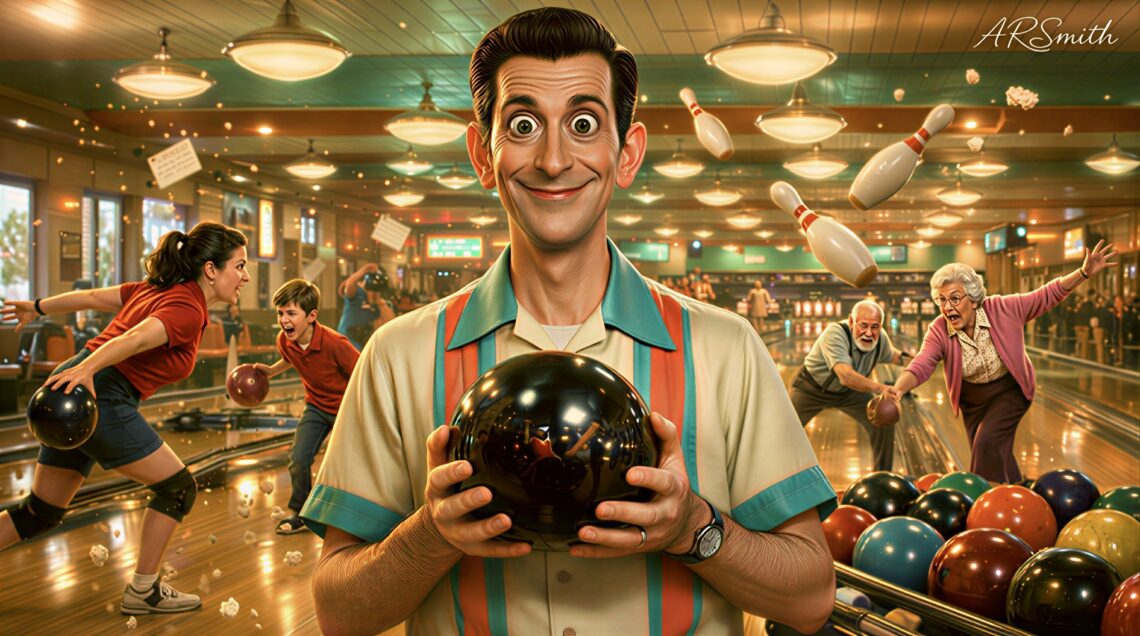
For most of its long and pleasantly uneventful life, bowling operated under one of the simplest formulas in all of organized recreation. A person selected a ball that felt reasonably comfortable, walked a few calm steps toward a gleaming wooden lane, and rolled it toward ten innocent pins waiting patiently sixty feet away. Sometimes the pins collapsed with a satisfying crash. Sometimes they stubbornly remained upright. Either way, the evening typically ended with pizza boxes, creative scorekeeping, and someone suggesting that one more game might settle the matter. Families loved it. Shoe-rental counters depended on it. Emergency rooms never heard of it.
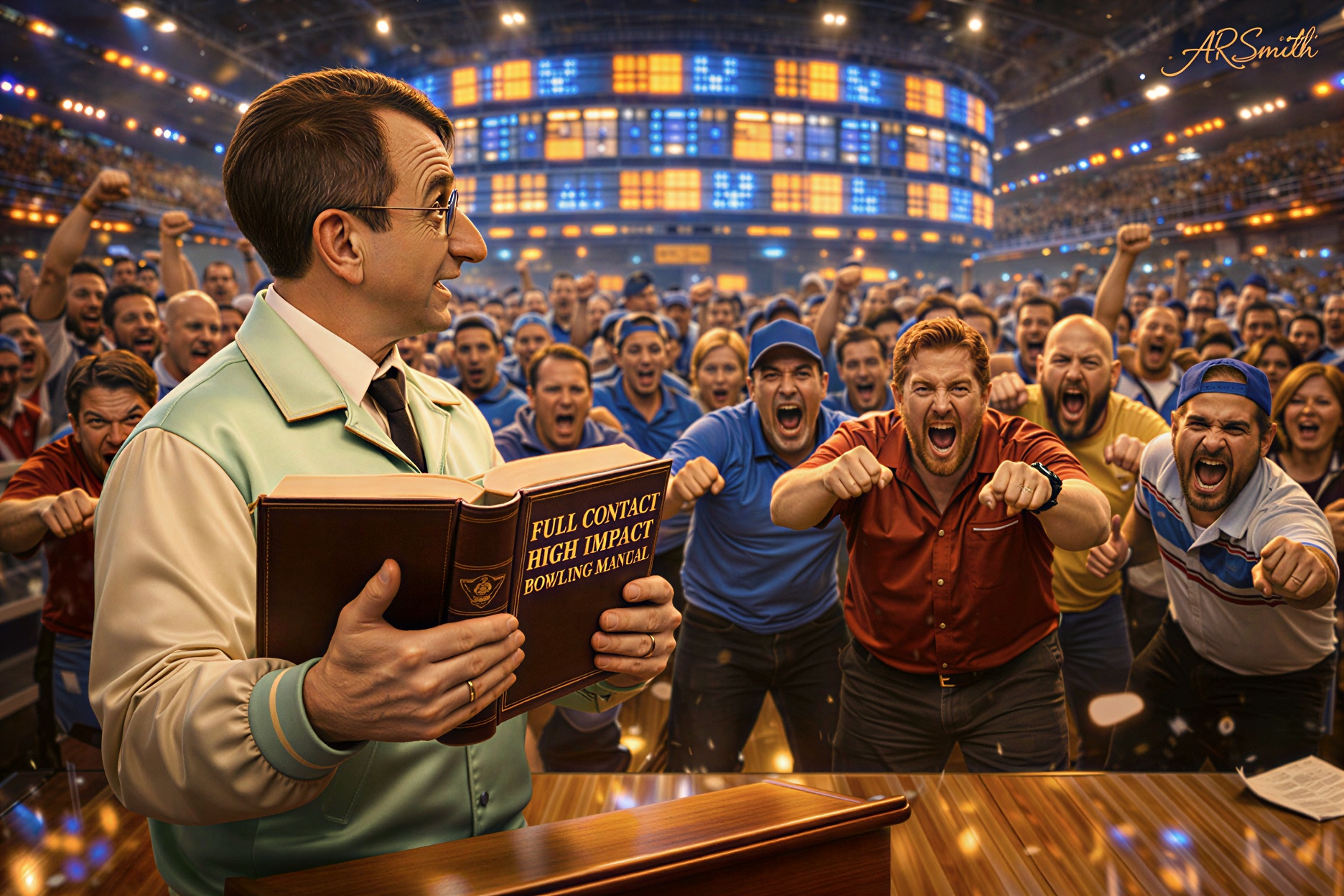
That changed on a perfectly ordinary Tuesday morning when the Professional Bowlers Association (PBA) held what was expected to be a routine press conference. League officials gathered behind a modest podium decorated with tasteful maple-lane graphics and calmly announced that the sport has recently undergone sweeping modernizations designed to appeal to a younger generation raised on Assassin’s Creed IV: Black Flag and televised highlights of Naked and Afraid.
The goal, they explained, was simple enough: attract new participants who have grown tired of celebrity challenges and the occasional Spinebuster that produces a moment worth replaying on television. The solution, it turned out, was even simpler than they thought. Make bowling more aggressive.
Within months, the gentle pastime that once defined suburban family recreation began transforming into something far more kinetic. The league’s new promotional slogan soon appeared on banners across the country:
“Roll Hard. Hit Something. Anything.”

Dr. Roland P. Knuckles, Senior Director of Competitive Kinetics at the American Institute for Recreational Impact Studies, applauded the change.
“Historically,” Knuckles explained during a television interview, “bowling suffered from a catastrophic lack of collisions. Once we introduced mild Powerbombs and Fireman’s Slams, viewership increased by forty percent and helmet sales by nearly sixty. These are the sorts of metrics that make an entire industry sit up and say, ‘Hey, we might have something here.’” And with that quiet announcement, the calmest sport in America stepped unexpectedly into a far more energetic future.
The Rulebook Embraces Physical Contact
The most dramatic transformation occurred in the rulebook, which for decades had been a model of polite simplicity. Traditional bowling rules focused almost entirely on fairness and order. Stay behind the foul line. Wait your turn. Avoid stepping onto the lane wearing tree-climbing boots that track gravel into the oil patterns.
The revised rulebook for what officials now call the Full Contact High Impact Bowling Manual (FCHIBM) reflects a very different philosophy. The objective of the game remains unchanged. Competitors still attempt to knock down ten pins using a precision-delivered ball. What has changed is everything that happens before the ball leaves the bowler’s hand.
The approach area, once a quiet runway reserved for graceful concentration, has been expanded into what the league describes as the Spinebuster Zone. Within this space, bowlers may now threaten one another’s access to the foul line through Karate moves and Tag team wrestling maneuvers. Two competitors can legally approach the lane at the same time, each attempting to claim the ideal positions for delivery.
If one athlete attempts to impede the other’s path with a Double-Leg Takedown or Chokeslam, the maneuver is no longer considered poor etiquette. It is considered impeccable strategy. A typical Muay Thai exchange between competitors now sounds less like quiet league play and more like the opening moments of a Mixed Martial Arts match conducted with fourteen-pound projectiles.
At that point, a bowler may attempt a Dragon Screw, a quick Brainbuster, or what commentators have begun referring to as a Tombstone Piledriver. Professor Lyle “Crash” Vandemeer of the International Federation of Competitive Recreational Escalation explained the shift this way.
“Bowling used to be about patience and precision,” Vandemeer said during a panel discussion. “But modern audiences prefer something substantially more dramatic. If two bowlers collide while holding 16-lb. spheres of polished composite resin, that moment naturally commands attention. The physics alone are captivating.”
Spectators have responded enthusiastically, especially when two athletes reach the foul line simultaneously and somehow manage to launch their balls without hemorrhaging blood.
The End of the Quiet Approach
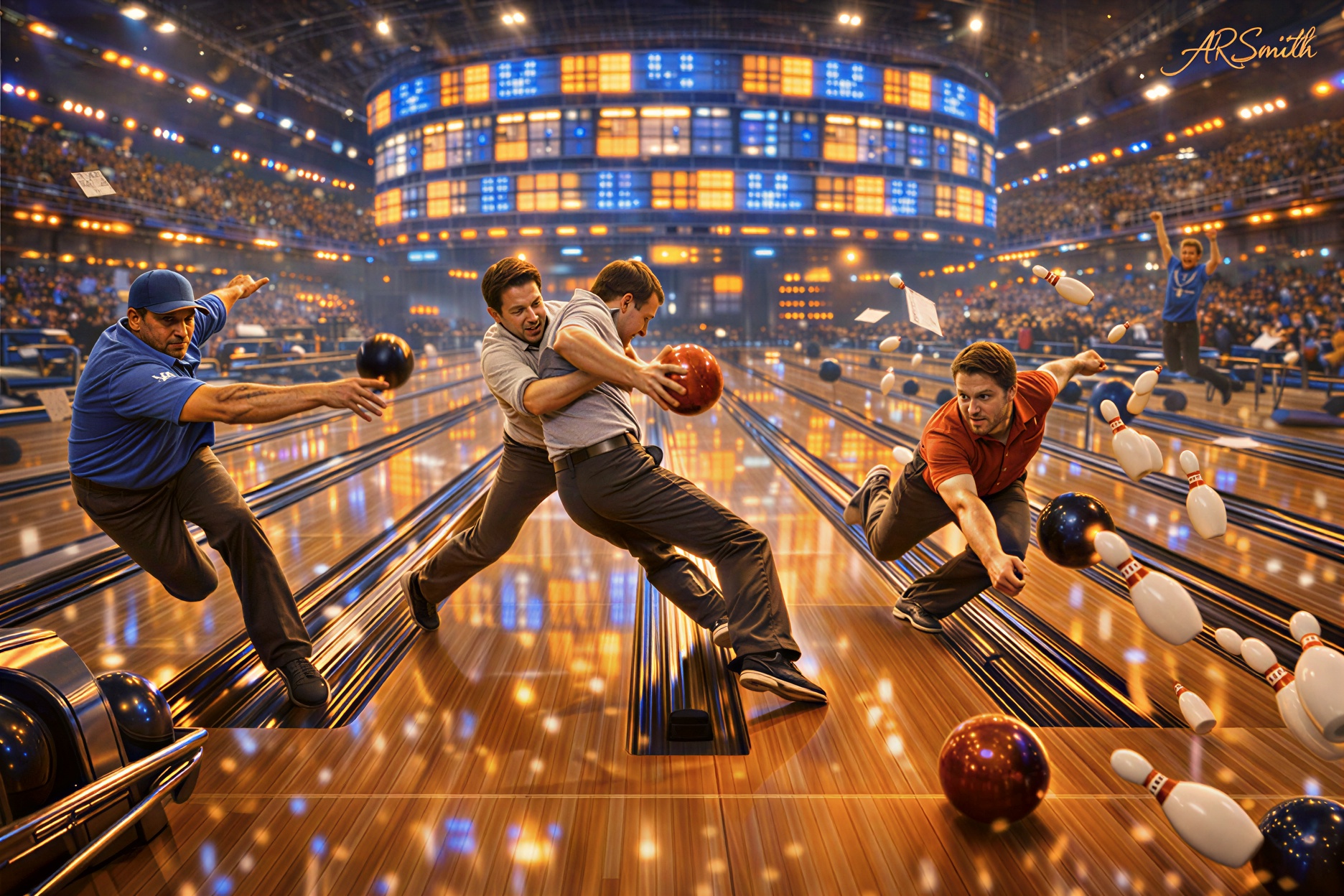
In traditional bowling culture, the approach area was treated with near-religious respect. Bowlers stepped forward calmly, arms swinging in controlled arcs, shoes gliding silently across polished flooring as they prepared for the perfect release. All conversations ceased. Spectators leaned back politely. The moment carried the quiet dignity of a golf swing. Full Contact High Impact Bowling has replaced that atmosphere with something considerably more violent.
Players now sprint toward the foul line with visible urgency. It’s not unusual for two competitors to arrive at the same moment, each attempting to claim the optimal position for delivery. Major injuries occur with surprising regularity as bowlers jockey for space.
Veteran bowlers have developed impressive techniques for adapting to this environment. Some can deliver the ball while pivoting around a rival, attempting to block their path. Others have mastered the art of releasing the ball while absorbing a violent push from the side.
Several maneuvers have already earned colorful nicknames among commentators. A Spin-and-Release allows a bowler to dodge contact while completing the throw in one smooth motion. A Shoulder Roll involves absorbing a bump before rotating their torso and sending the ball down the lane with remarkable accuracy. Fans have begun referring to the approach as the Apocalypse Zone, a phrase that would have sounded ridiculous a few years ago.
The Bowling Ball Evolves
Perhaps the most dramatic transformation in the sport has occurred with the object at the center of every game: the bowling ball itself. For generations, bowling balls were models of reliable simplicity. They typically weighed between 12 and 16 pounds, featured three neatly drilled finger holes, and were composed of dense resin or urethane materials engineered to produce predictable motion along carefully oiled lanes. Full Contact High Impact Bowling demanded more.
Manufacturers quickly realized that the traditional ball was never designed for a competitive environment where overhand deliveries might occur during sudden pivots, defensive maneuvers, or planned collisions between athletes racing toward the foul line. The new game required equipment capable of surviving unusual angles of release, accidental drops, and the occasional airborne moment when a bowler loses balance at the last minute.
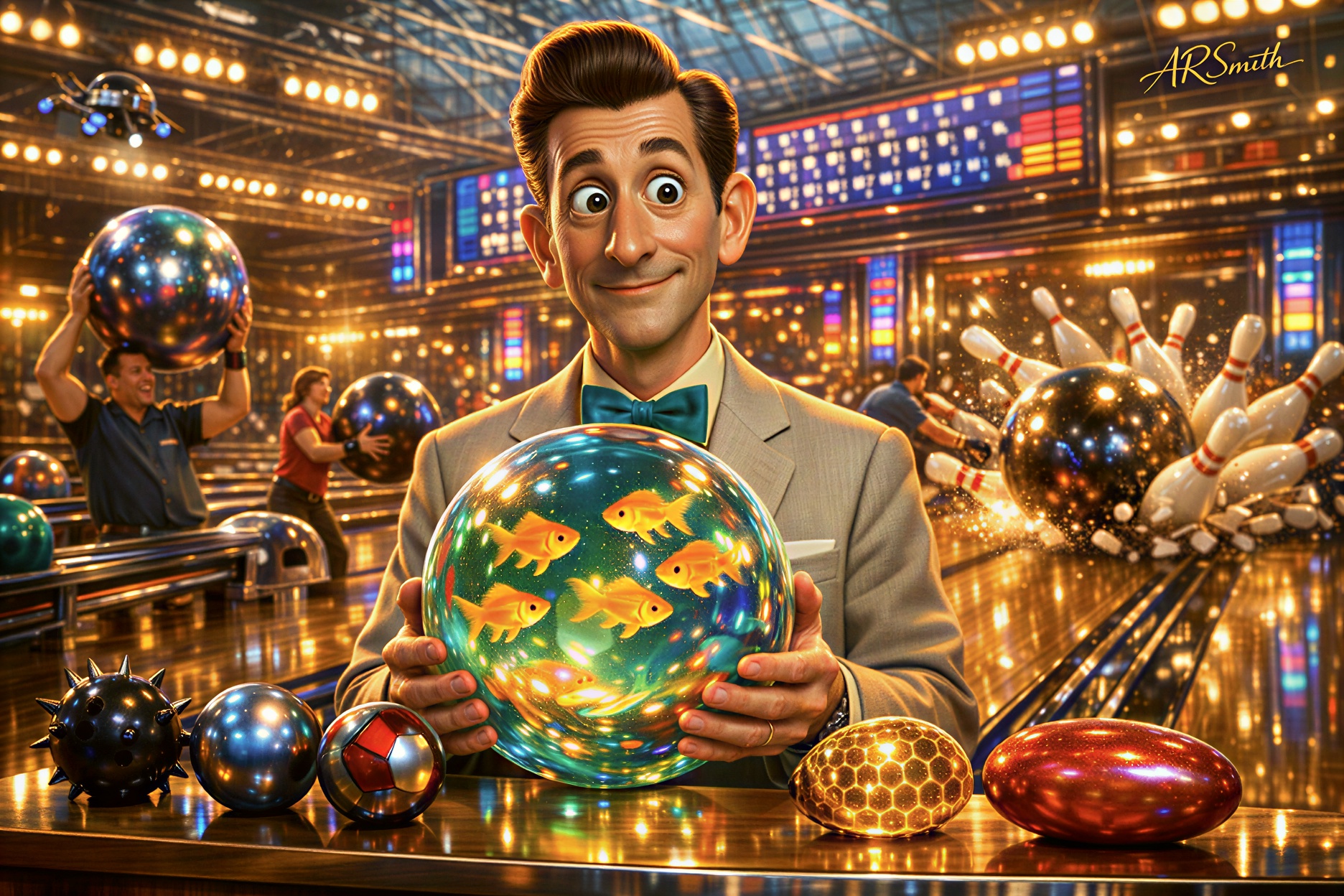
The modern bowling ball is larger in diameter and considerably tougher in composition. Engineers reinforced the outer shell with layered Graphene, or Lonsdaleite, designed to absorb shock without cracking or deforming. Internal core systems were redesigned to maintain stable rotational motion even when the ball is released during less-than-ideal body positioning.
Dr. Beatrice Feldspar, chief materials engineer at the North American Bowling Ball Durability Council, described the change in simple terms. “Traditional bowling balls were engineered for grace,” she explained. “The new generation is engineered for survival. When a ball leaves the bowler’s hand during a Guillotine Takedown, it must remain structurally confident about its life choices.”
Weight options have expanded dramatically. While traditional bowling balls clustered around a narrow range of 12 to 16 pounds, modern players can now choose from a broader, unrestricted spectrum designed to accommodate different throwing styles. Some competitors favor 75-pound balls that plow through the pins with lethal authority. Others prefer slightly lighter, 55-pound models that can be juggled or maneuvered more easily during high-speed Leg Sweeps.
Color has become part of the spectacle as well. Traditional bowling balls tended to appear in subdued marbles of black, navy, or deep burgundy, delivered underhand. The new generation of bowling balls are delivered using underhand, overhand, chest passing, and sidearm throwing, in glowing metallic tones, swirling neon pigments, and translucent shells filled with goldfish that glow in the dark. When one of these balls rockets down the lane after a Samoan Drop, it leaves behind the impression of a small, colorful meteor heading toward the pins.
Reinventing the Bowling Pin
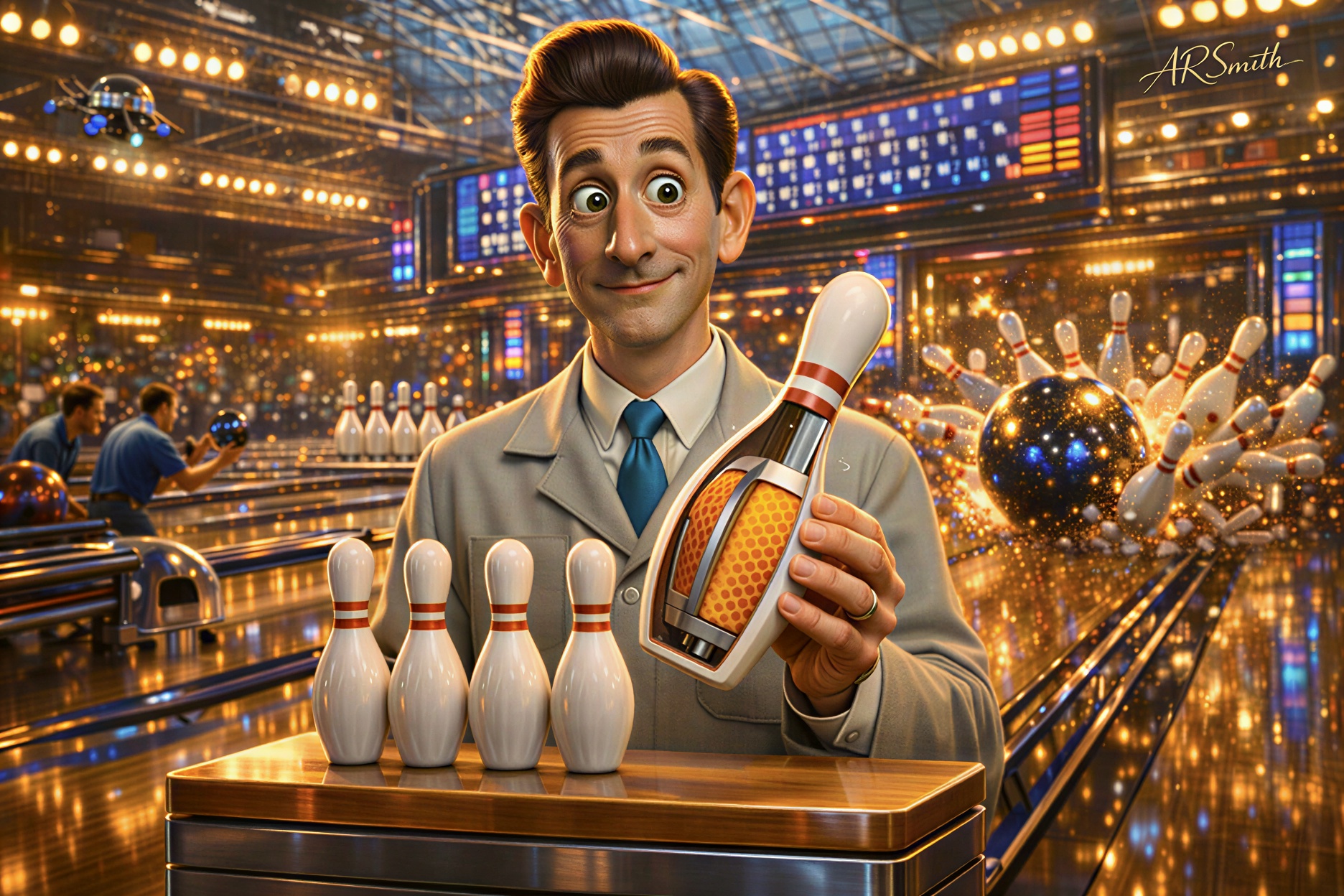
Even the humble bowling pin required reconsideration once the sport adopted a more physical style of play. Traditional pins were designed to fall easily when struck by a relatively lightweight ball. Their familiar hourglass shape encouraged dramatic scattering across the pin deck whenever a ball arrived with the correct angle and speed.
In Full Contact High Impact Bowling, the ball often arrives after a moment of highly contested chaos during the approach. A delivery launched while the bowler is recovering from a Double-Leg Takedown might spin differently or carry slightly more velocity than a Batista Bomb.
Engineers have adapted by reinforcing the internal structure of the pins so they can survive repeated high-energy Blue Thunder Bombs without splitting or cracking. The exterior looks identical to the classic design that bowlers have come to love. According to Harold J. Dinkwater, president of the Association of Professional Pin Survivability Analysts, this redesign was inevitable.
“Pins used to expect a polite introduction from the ball,” Dinkwater explained. “Now they’re occasionally greeted by something that looks like an F-15 Eagle launching an offensive spin maneuver. Structural optimism alone was no longer sufficient.”
The visual drama of a strike has improved as well. While pins used to cave in within the pin deck, today’s pins spew across the entire bowling alley, enduring a bit more punishment along the way.
Lanes Adapt to the New Game
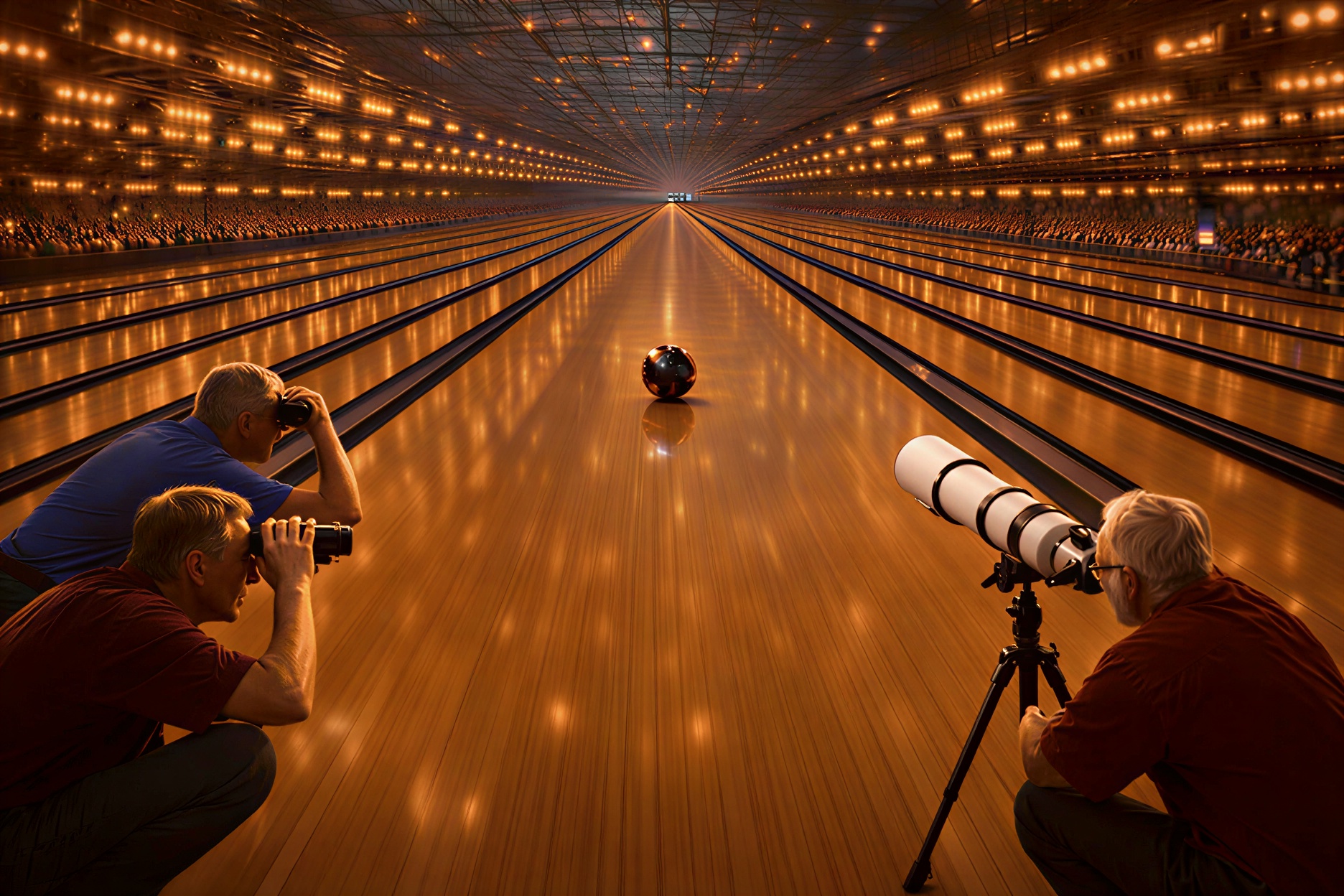
Bowling lanes have also undergone subtle but meaningful changes: moving the pins from their traditional position of sixty feet to one hundred yards away. The idea is simply an evolution of scale. Modern bowlers are stronger. Modern balls are tougher. Longer lanes would transform each throw into a slow-building spectacle as the ball makes its slow, laborious journey to “out yonder where the buses don’t run.”
Traditionalists are understandably cautious. Others noted that bowling has always involved sending a ball toward something far away and waiting to see what happens. Extending the distance merely gives the ball a little more time to review its life’s choices.
Protective Clothing Arrives
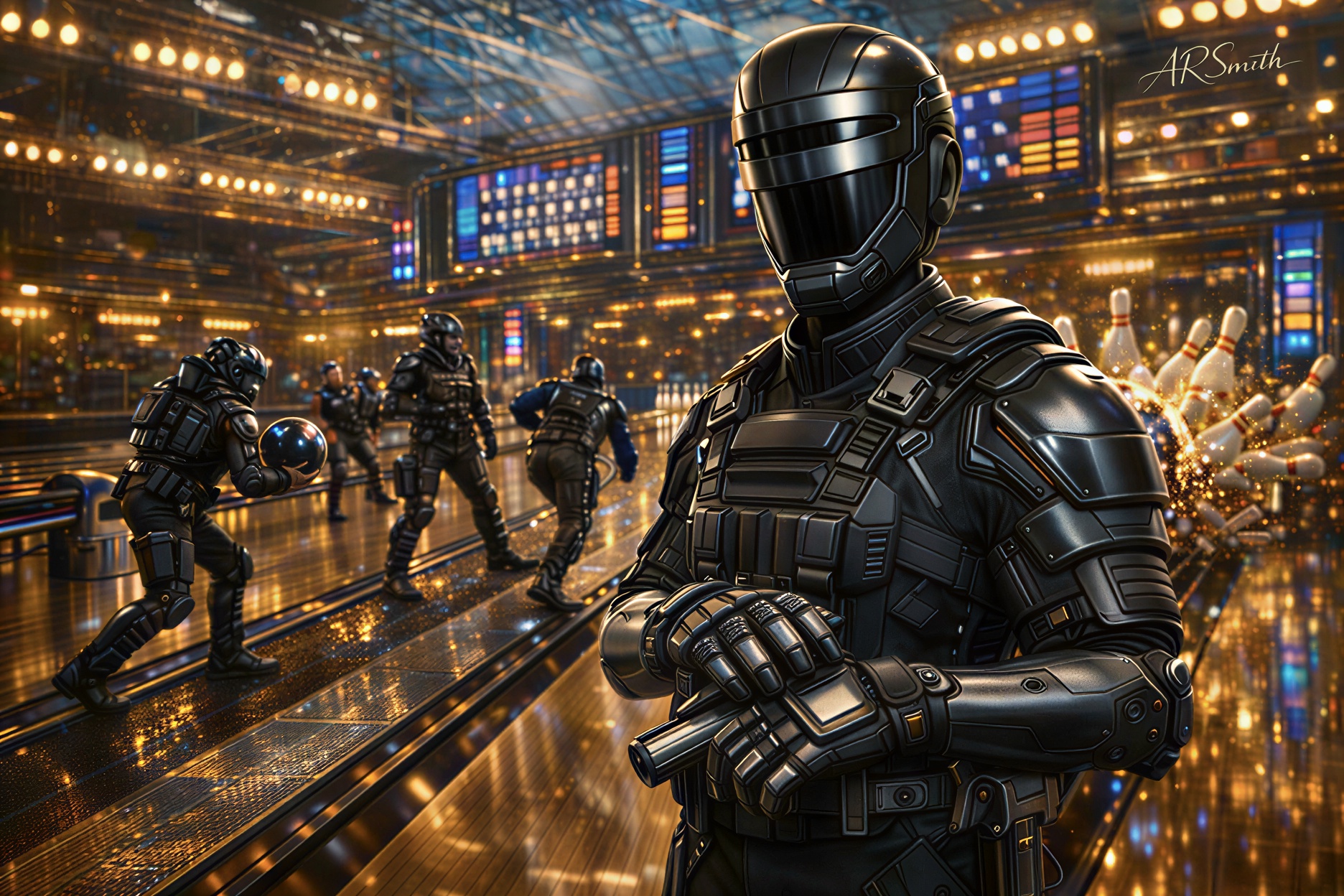
Perhaps the most visible change to the sport appears is the clothing worn by modern competitors. Traditional bowling attire emphasized comfort above all else. League bowlers typically wore relaxed shirts, lightweight pants, and shoes designed to slide smoothly across the approach.
Full Contact High Impact Bowling uniforms resemble something closer to SWAT Tactical Gear. Lightweight tactical vest/plates protect players during collisions near the approach. Flexible load‑bearing webbing or assault webbing reduces the risk of injury during sudden falls or improvised defensive maneuvers. Some bowlers wear titanium-reinforced gloves designed to maintain grip on the ball even when their balance shifts unexpectedly during delivery.
Bowling shoes have also undergone a significant redesign. The classic sliding sole has been replaced with Vibram‑style rubber mountaineering outer soles with stainless steel studs bonded to high‑altitude boots that allow bowlers to brace themselves against contact from opponents while maintaining stability at the foul line.
A Surprisingly Plausible Future
Strangely enough, the original game still works. The lanes still shine beneath bright lights. The pins still explode into satisfying chaos when struck strategically. The only difference lies in the action surrounding the brief instant when the ball leaves the bowler’s hand. Somewhere in the middle of a brightly lit arena, competitors are sprinting toward the same foul line, each determined to deliver the next throw. One of them reaches the line first. The other bumps their opponent lightly on the shoulder. The ball rolls forward anyway.
And the pins? As always, are still waiting for the next round.

