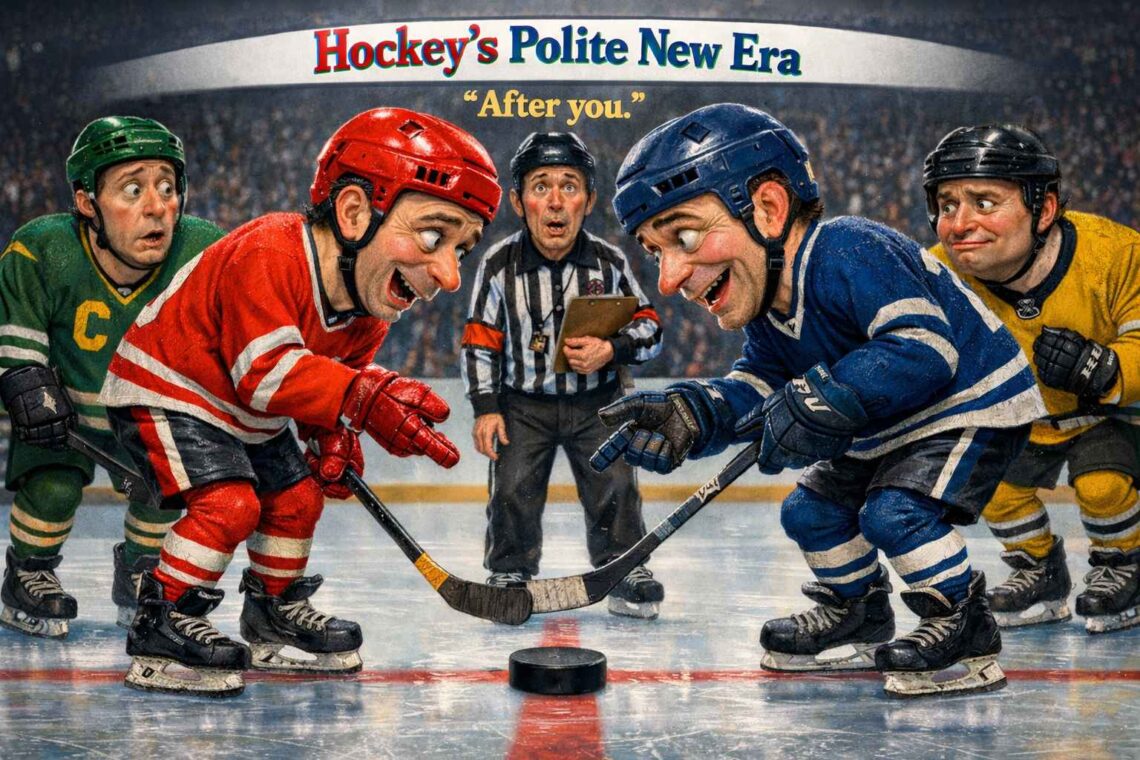
For most of its life, the National Hockey League ran on a simple formula: speed, skill, and the occasional thunderclap collision that rattled the glass and sent a nacho tray airborne somewhere in Section 214. Fans loved it. Trainers feared it. Dentists sent thank-you cards every Christmas.
Then one spring morning, the league office held a press conference that would one day be studied by historians, psychologists, and possibly interior decorators. The commissioner stepped to the podium and calmly announced that professional hockey would be reinventing itself around a revolutionary concept:
Manners.
The sport that once measured toughness in broken sticks and stitched eyebrows would now measure success in courtesy, empathy, and respectful interpersonal communication. The league’s new promotional slogan appeared on arena screens the same afternoon.
Skate Hard. Be Kind.
At first, the public assumed it was a marketing campaign. Something temporary. Perhaps a clever slogan attached to a charity initiative or a wellness program sponsored by an herbal tea. It was not. Within weeks, the entire culture of hockey began to change, transforming the loudest sport in North America into something that now feels like a community gathering where everyone happens to be traveling twenty miles per hour on sharpened blades.
The New Code of Ice Etiquette
The most obvious shift happened in the rulebook.
For generations, the NHL rulebook was a dense forest of regulations designed to control chaos. It defined exactly how much you could hook, hold, bump, shove, trip, pin, or politely rearrange another human being along the boards without triggering a whistle.
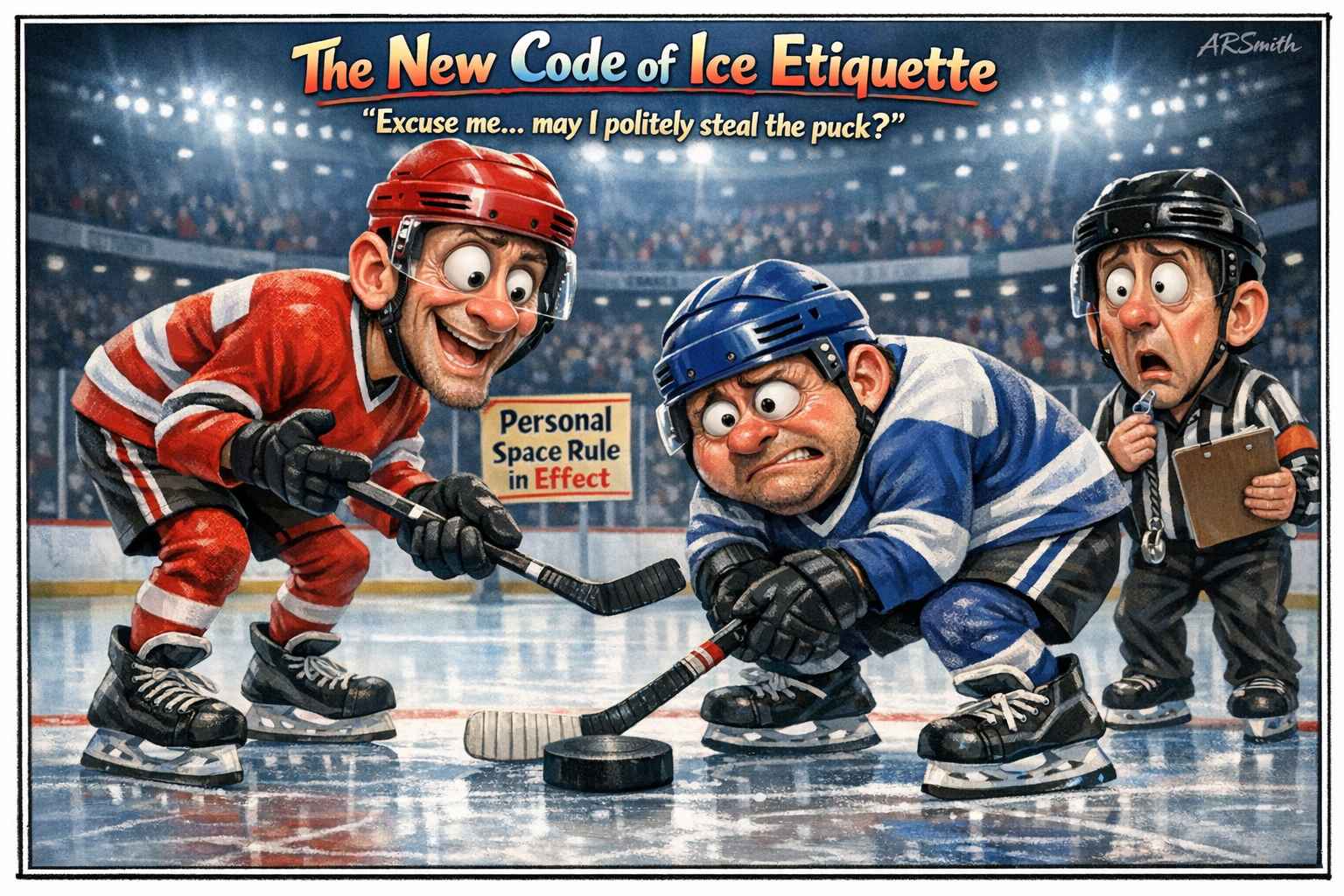
The modern rulebook is much simpler and considerably more civilized. Players must now ask permission before attempting to take the puck. A typical exchange during play might sound like this:
“Excuse me, would you mind terribly if I tried to take that puck from you?”
“Well, I suppose that would be all right. Just mind my skate blade.”
“Of course. Much appreciated.”
The language of the game has softened dramatically. Where players once barked threats and colorful suggestions about one another’s ancestry, they now communicate with the tone of neighbors discussing garden fences. Faceoffs begin with small nods of acknowledgement, players apologize if their stick brushes an opponent’s sleeve, and a particularly forceful poke-check is often followed by a quick “Sorry about that.”
The rink has become a place where fierce competition coexists with surprisingly thoughtful conversation.
The End of Body Checking
The change that stunned longtime fans the most was the disappearance of body checking.
Body checking had been hockey’s version of punctuation. It was the sport’s exclamation point. A defenseman didn’t simply disagree with a charging forward. He expressed that disagreement by launching him gently but firmly into the boards.
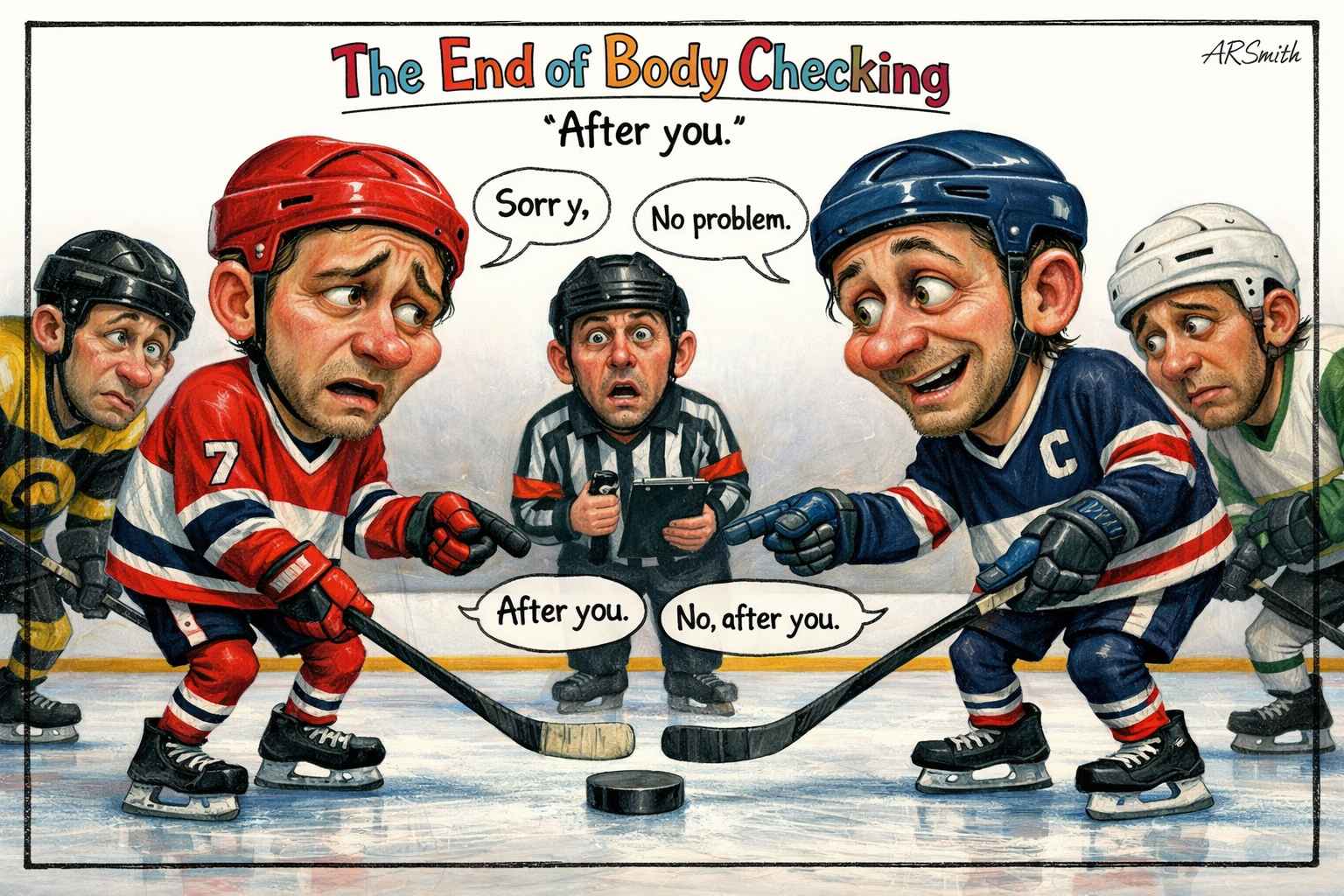
Under the new philosophy, the league has embraced what it calls the Personal Space Doctrine. Players are encouraged to challenge for the puck, but from a respectful distance. Any attempt to physically impede an opponent is met with an immediate whistle and a gentle reminder from the referee:
“Let’s keep things friendly out there.”
Defensemen who once built careers flattening opposing forwards now skate beside them like courteous escorts. Sometimes two players arrive shoulder to shoulder and instinctively drift apart.
“Sorry.”
“No problem.”
“After you.”
“No, after you.”
The game now resembles a fast-moving ballet of athletes gliding through open ice while maintaining impeccable manners.
From Armor to Resort Wear
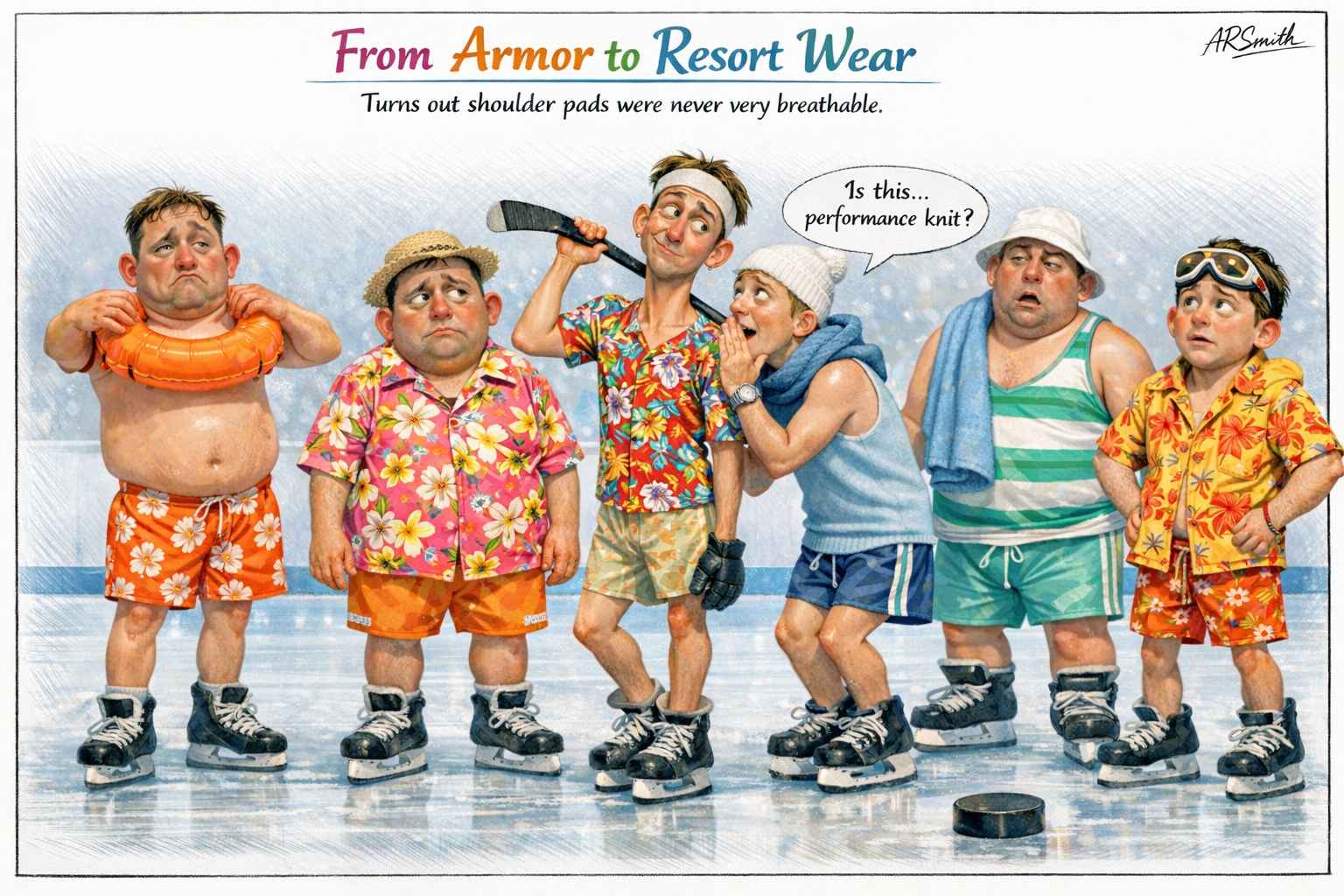
Once body contact vanished, something else immediately became unnecessary: the armor. Traditional hockey equipment made players look like they were preparing to invade a small country. Shoulder pads the size of sofa cushions, helmets thick enough to survive a meteor strike, gloves capable of blocking falling masonry. Without collisions, that gear suddenly seemed excessive.
The league quietly approved a redesign that has turned NHL locker rooms into something that occasionally resembles a ski resort fashion show. Players now skate in lightweight fabrics designed for comfort and airflow. Jerseys have become softer, more relaxed, and surprisingly stylish, with some teams adopting short sleeves and others favoring breathable athletic knits that look closer to upscale leisurewear than battlefield protection. Helmets are optional.
For the first time in decades, fans have discovered that many hockey players possess hair, and in some cases, quite impressive hair. Color palettes have softened as well. The intimidating blacks and aggressive reds have been joined by seafoam greens, winter blues, and a shade that equipment managers insist on calling northern lavender. One team experimented briefly with scarves. No injuries were reported.
The Radical Redesign of Hockey Equipment
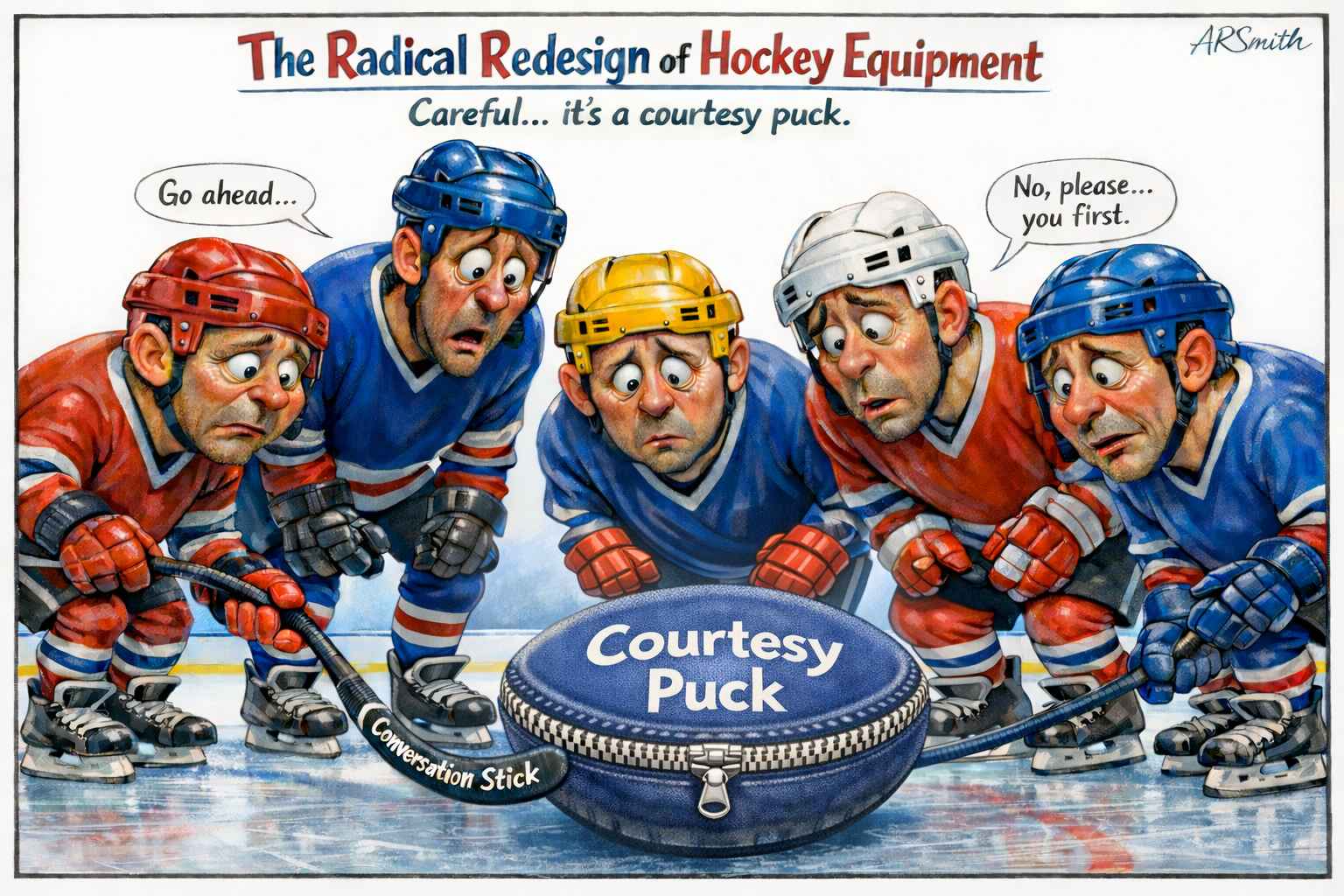
Once the equipment engineers realized how much the sport had changed, they began looking at everything else with fresh eyes.
The puck itself was the first object under review. For over a century, the NHL puck was a hardened slab of rubber capable of traveling at speeds that suggested it might have been originally designed by the military. When a professional slap shot met that puck, the result could dent metal railings and occasionally frighten small wildlife outside the arena.
The new version is still recognizable but slightly softer and more forgiving. The league calls it a courtesy puck. It glides beautifully but discourages the sort of cannon-blast slap shots that once required spectators behind the glass to duck reflexively.
Hockey sticks have evolved as well. Instead of stiff carbon-fiber launch systems designed to fire rubber missiles through reinforced plexiglass, the modern stick emphasizes finesse and smooth passing. The shafts flex more gently, the blades cradle the puck more naturally, and manufacturers have begun referring to them as “conversation sticks,” which feels oddly appropriate considering how much talking now happens during play.
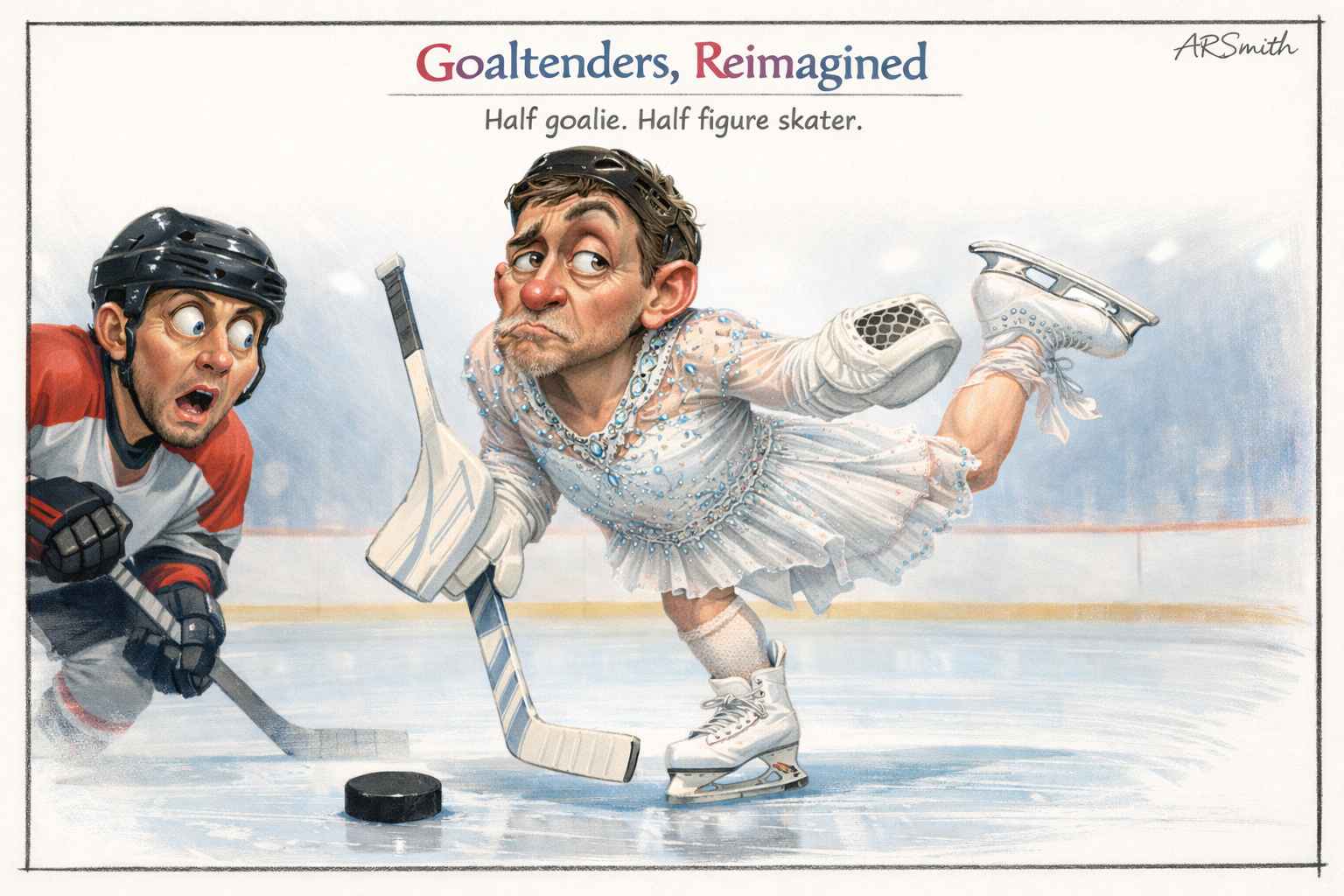
Goaltenders have undergone their own transformation. Once the most heavily armored athletes in professional sports, they wore equipment so large that television viewers occasionally wondered if two goalies had accidentally dressed inside the same jersey. With slap shots becoming less fashionable and collisions forbidden, goaltenders now wear sleek, streamlined gear that emphasizes mobility and comfort. Pads are lighter, chest protectors are minimal, and many goalies look like elegant figure skaters who happen to be very good at stopping pucks.
Even the goals themselves have changed. The enormous steel frames that once anchored the net like a fortress have been replaced with lighter aluminum structures and elegant woven mesh that resembles something you might see on a high-end tennis court. The new nets are functional but also oddly decorative, as if the game is being played inside a beautifully maintained winter garden.
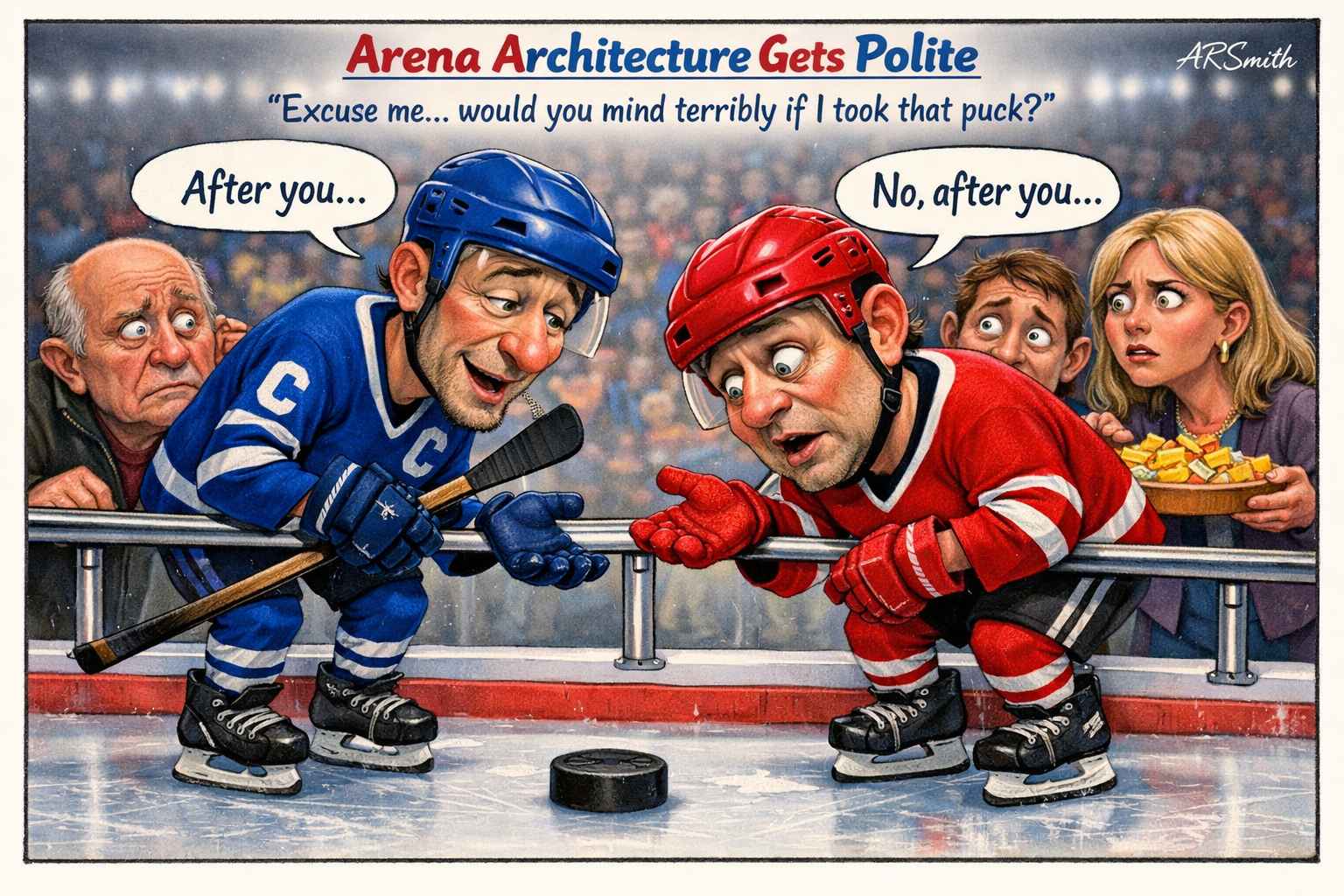
Arena architecture has evolved in response. For decades, NHL rinks were surrounded by thick wooden boards topped with towering sheets of plexiglass designed to contain both players and flying equipment. Those barriers were necessary because, at any moment, a 220-pound defenseman might launch another human being into them like a guided missile.
Now that body contact has been banished, those structures feel almost theatrical. Several arenas have replaced their boards with low-polished railings. Plexiglass walls have been lowered or removed entirely in some sections, allowing fans to sit closer to the ice and occasionally hear players politely negotiating puck possession.
The overall atmosphere feels calmer, more welcoming, and noticeably less likely to produce airborne nachos.
The Polite Battle for the Puck
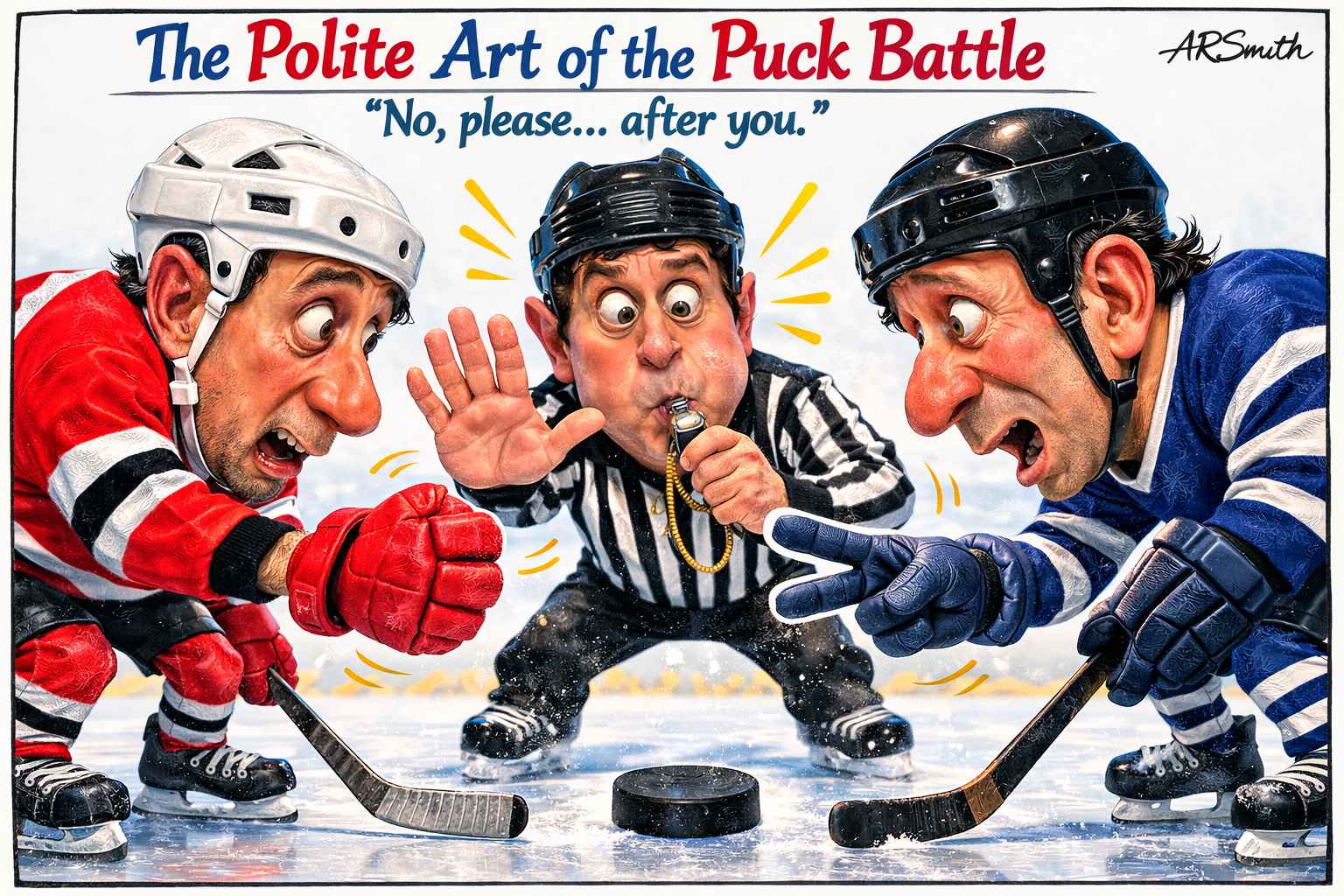
One of the most fascinating developments involves the classic puck battle along the boards. These used to resemble a barroom wrestling match conducted at high velocity. Two players would slam into the wall, grind their skates into the ice, and battle for the puck with the determination of men defending buried treasure.
Today, those moments often become brief negotiations. Two players arrive simultaneously and pause for a split second:
“You were here first.”
“No, please, go ahead.”
“Are you sure?”
“Well, perhaps we could both go.”
Occasionally, the dispute is settled with a quick round of rock-paper-scissors.
The Referee as Courtesy Coordinator
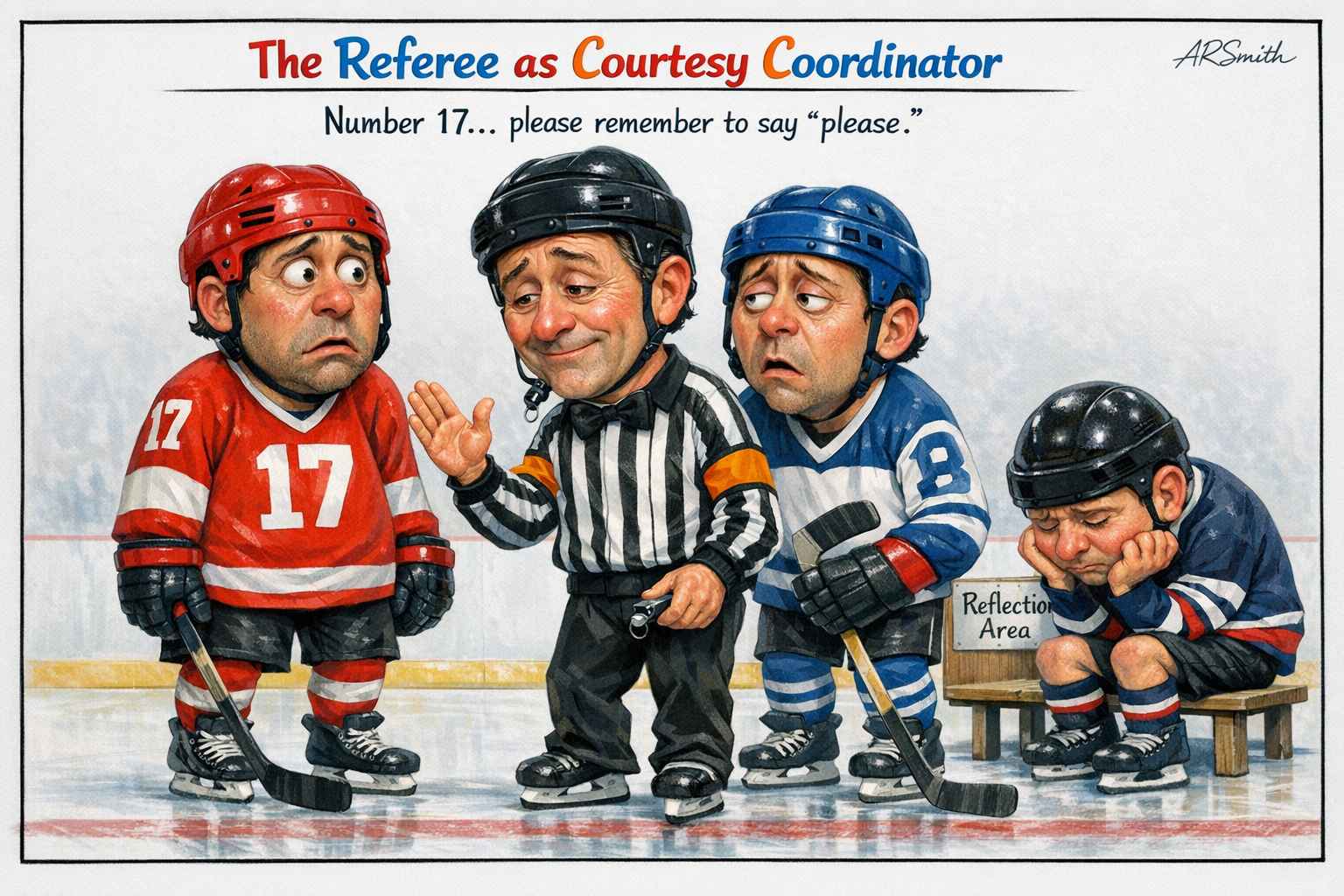
Referees, meanwhile, have taken on an entirely new role. Once feared as strict disciplinarians, they now function more like on-ice courtesy coordinators. Their whistles still blow, but often for reasons that would have baffled officials from earlier eras.
“Number 17, please remember to say ‘please’ when requesting possession.”
Minor penalties now include such infractions as Excessive Competitive Urgency, Failure to Acknowledge a Polite Request, and Passive-Aggressive Skating. Players who commit these offenses are escorted to what used to be called the penalty box. It is now known as the Reflection Area, where they sit quietly for two minutes, contemplating their tone.
Fans Discover a Friendlier Hockey
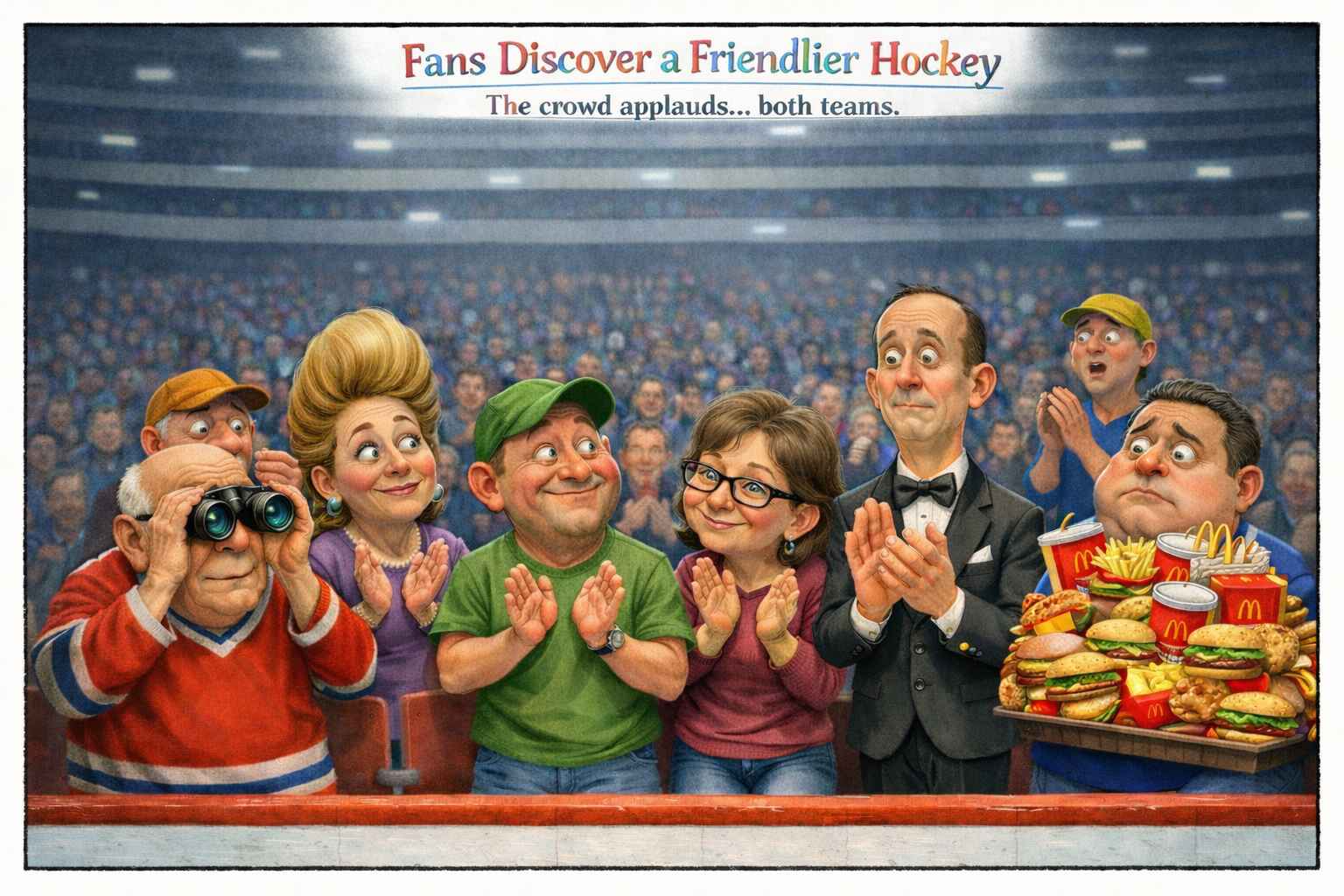
Fans have had to adjust as well. Traditional hockey crowds were famous for their inventive insults. Entire arenas could coordinate chants that informed a visiting goaltender exactly what they thought of his life decisions.
The new league guidelines encourage a more supportive atmosphere. Spectators cheer good plays regardless of which team performs them. Negative chants have largely disappeared, replaced by polite applause and the occasional cheer that sounds suspiciously like encouragement.
One arena recently experimented with a Sportsmanship Ovation, in which the crowd stands to applaud both teams for demonstrating exceptional courtesy.
Television coverage has changed, too. The old highlight reels focused on thunderous hits and bench-clearing scrums. Today’s highlights celebrate moments of remarkable kindness. A defenseman returning a dropped glove to an opponent during a rush. Two players are apologizing simultaneously for accidental stick contact. A forward complimenting a goaltender after a spectacular save. Commentators analyze these exchanges with the same enthusiasm they once reserved for bone-crushing hits.
A Surprisingly Plausible Future
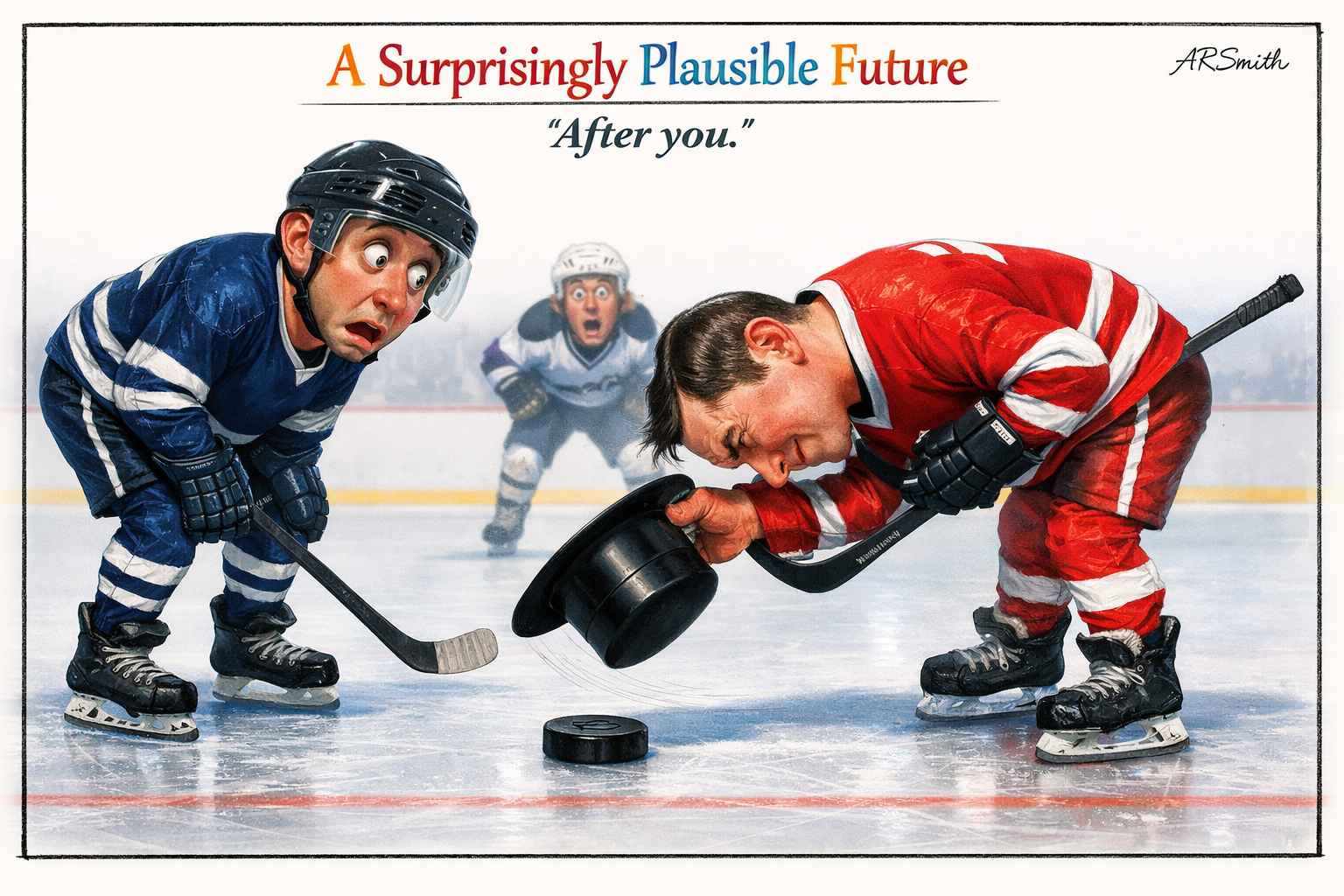
Strangely enough, the game still works. The speed is still there. The passing remains beautiful. Goals still ignite the same rush of excitement that has fueled hockey for generations. The only difference is that the chaos has been replaced by civility.
And somewhere in the middle of a brightly lit rink, two players are gliding toward the same puck, slowing slightly, and one of them is saying the words that perfectly capture hockey’s strange new era.
“After you.”

