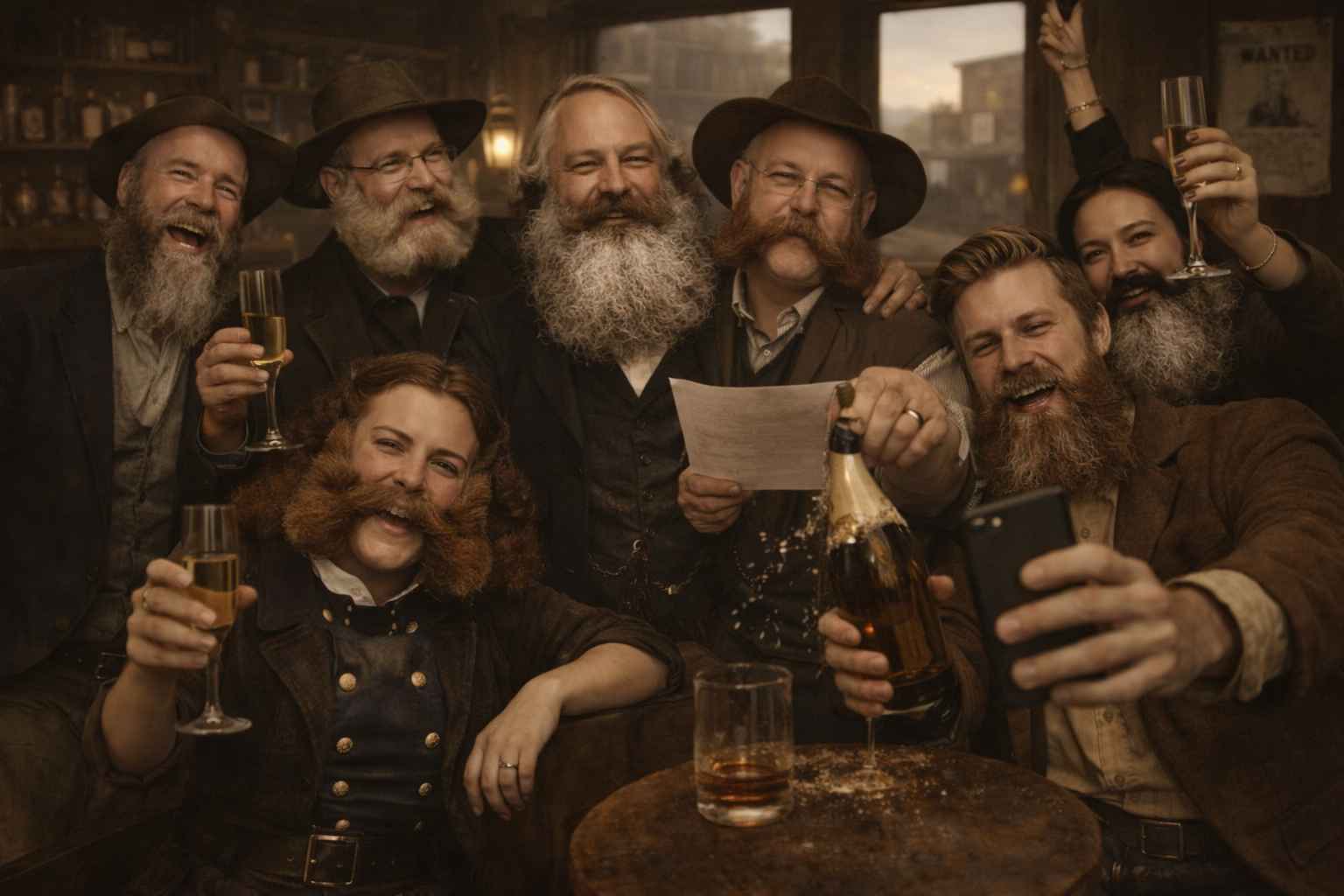
Congratulations! You’re a freshly minted graduate, diploma still warm, résumé crisp enough to slice deli meat, and a bank account that qualifies as conceptual art. You’re looking for a job with a salary, benefits, and minimal exposure to municipal drainage systems. So, what’s the first thing you do? What any reasonable adult would do. You book an appointment for a professional headshot and practice looking “dynamic but grounded” in your bathroom mirror.
That’s where a group of unlikely consultants enters the scene: bearded figures from the American Civil War.
When Beards Were Branding
Between the late 1850s and the 1870s, facial hair in this country achieved nothing short of cathedral status. Beards were not accidental. They were cultivated refinements. Victorian sensibilities equated whiskers with vigor, intellect, and moral seriousness. European military fashion amplified the trend. Ambrose Burnside left such a whiskered imprint that his dramatic side growth gave us the word “sideburns,” meaning the man literally rearranged the dictionary with his cheeks. By the time Ulysses S. Grant and Abraham Lincoln took center stage, their facial hair wasn’t just hair. It was branding. If a man in the 1860s wanted to exude authority or credibility, he didn’t polish his résumé. He cultivated the hair on his chin. His whiskers spoke before he did, working well in an era where first impressions traveled faster than telegraphs. Which raises a small question for the modern job seeker staring into the mirror in 2026.
If strategic facial hair helped a generation of generals, statesmen, and industrial titans project competence before they said a word, might it be time the old playbook deserved another look? History has already succeeded once. Maybe it’ll happen again.
The First-Glance Economy
Not every graduate in 2026 needs to march into the workforce looking prepared to address the troops at Gettysburg. The point is that nineteenth-century figures like Abraham Lincoln understood visual authority long before LinkedIn turned it into a profile necessity. These days, with assistance from artificial intelligence, you too can achieve competence and trustworthiness expressed merely by your appearance. Long before anyone reads your resume, they’ll have read your face.
Below are ten examples of headshots you can craft today, beginning with their traditional “ho-hum” mugshot on the left, followed by their Civil War enhancements on the right. Following them are nine powerful “action” poses to top off your new looks.
Mutton Chops With A Full Mustache
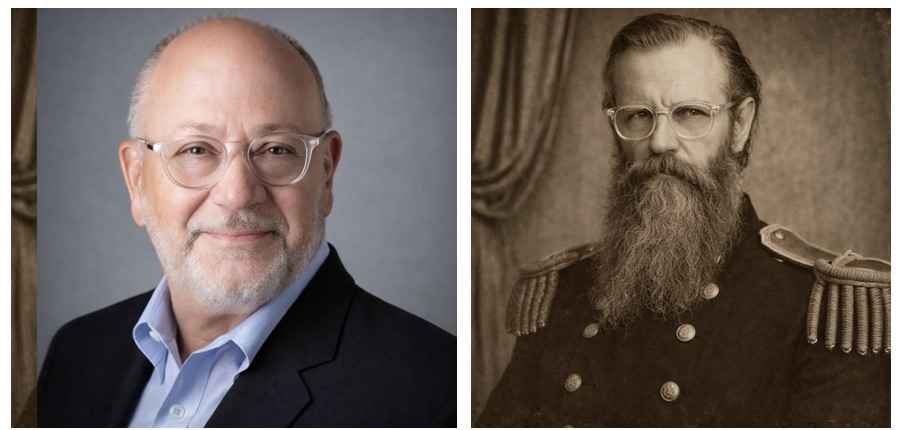 Mutton chops with a full mustache are less a beard than a structural strategy. Thick sideburns descend from the temples and expand along the cheeks, forming broad, wing-like masses before tapering near the jaw. They don’t wander. They scale. A heavy mustache spans the upper lip and connects cleanly to the sideburns at the corners of the mouth, creating a continuous frame around the face while the chin remains deliberately clean. That empty space isn’t neglected. It’s design discipline. The result emphasizes the cheekbones, sharpens the jawline, and produces a profile that reads unmistakably authoritative. Popular during the Civil War and Victorian eras, the look functioned as early personal branding. You don’t improvise with mutton chops. You deploy them. You don’t drift into a look. You define it.
Classic Full Beard
 The classic full beard is the grand architect of gravitas. It occupies the cheeks, chin, and jaw with quiet authority and connects confidently with the mustache to form a completely unified structure. Nothing about a full beard is accidental. It reads strictly by design. It can be clipped close, like a disciplined balance sheet that reconciles down to the last decimal, or allowed a bit of dignified volume that suggests long meetings, confident decisions, and a certain executive patience. Either approach works. The key variable is intent. A full beard that looks deliberate signals control. One that looks accidental represents a long weekend. The message it broadcasts is maturity. Steadiness. The composed energy of someone who appears to have seen things, solved things, and possibly reorganized a department or two.
Full Lamb Chop Sideburns
 Full lamb chop sideburns are less a grooming choice than a declaration of lateral ambition. Thick, bushy bands of hair descend from the temples and travel confidently down the cheeks to the jawline while the chin remains deliberately clean. The result is a facial design that prioritizes width, structure, and unmistakable presence. The sideburns are wide and dense, often flaring outward from the cheekbones before narrowing slightly near the jaw. This creates a dramatic frame for the face, almost architectural in its balance. In their fullest form, lamb chops become impressively voluminous, forming symmetrical, wing-like masses of hair that highlight the cheek structure and reinforce the jawline. A mustache may appear as a supporting feature or remain absent altogether, but the defining element is the uninterrupted sweep of hair along the sides of the face, with the chin left bare. It’s a style that doesn’t ask for attention. It occupies the room.
Chin Curtain
 The chin curtain is a disciplined sweep of hair tracing the jaw from ear to ear while the upper lip often remains conspicuously uncluttered. Think of it as the facial equivalent of a well-designed colonnade. Clean lines. Defined edges. Nothing extraneous is distracting from the structure. The effect is elongation. The face appears taller, the jaw more decisive, as if the lower half of the face has been given its own quiet infrastructure upgrade. It frames the jaw with intention and leaves the upper lip clear, a strategic bit of negative space that keeps the whole arrangement balanced. There’s a certain moral gravity to the look, a visual clarity that suggests you not only have opinions but have probably alphabetized them for future reference. In a headshot, that sharp vertical framing reads as seriousness without theatrics. It signals composure. Measured. Considered. The kind of person who finishes sentences and, on a good day, budgets as well.
Garibaldi-Style Full Beard
 The Garibaldi-style beard is the full natural beard that refuses to apologize for occupying space. Thick coverage spreads across the cheeks, jawline, chin, and upper lip, with the mustache blending seamlessly into the beard rather than standing apart as its own headline act. It operates as a unified system, not a collection of separate features. Density is the defining metric. The beard grows outward and downward from the face, forming a broad, rounded silhouette that projects confidence and a certain disregard for timid trimming strategies. The texture tends to be slightly wavy and full, giving the beard a robust, natural presence rather than the tight geometry of something aggressively sculpted. The overall effect is expansive but controlled. It reads less like grooming and more like policy. This was the facial architecture favored by many mid-nineteenth-century intellectuals, revolutionaries, and public figures who seemed to believe that ideas should be large and their beards even larger.
Chinstrap Beard
 The chinstrap beard is discipline rendered in hair. A narrow, deliberate band traces the jawline from ear to ear, keeping the cheeks clean and the edges sharply defined. It’s precision grooming, the facial equivalent of a spreadsheet that balances on the first pass. The effect is structure. The jawline becomes the central axis, framed by a thin, controlled line that communicates restraint and attention to detail. Nothing wanders. Nothing spills beyond the margins. It’s grooming with the mindset of someone who color-codes tabs and appreciates formulas that reconcile without drama. In a professional headshot, that clean outline reads as intention. It suggests you understand boundaries and respect lines. You don’t drift. You define. For new graduates stepping into tech, finance, engineering, or any field where precision is currency and sloppiness carries interest, the chinstrap reinforces the message you want your face to send.
Mutton Chops And Burnsides
 Mutton chops. Burnsides. These cheek-based declarations have never once confused themselves with subtlety. These are expansive side whiskers that descend from the temples and dominate the cheeks with confident width. In some configurations, they connect cleanly to a mustache. In others, the chin remains conspicuously bare, as though the center of the face opted out of the spectacle and left the sides to run the meeting. Either way, the effect is unmistakable. Done well, the signal shifts. This isn’t restraint. It’s controlled audacity. The look suggests daring, self-assurance, and a frontier kind of confidence that implies you are entirely comfortable being memorable in a room that prefers beige. In a headshot, that kind of theatrical geometry can read as leadership presence. Not because the style is excessive, but because it’s deliberate. You’re not hiding from attention. You are managing it.
Goatee And Van Dyke
 For those who prefer their authority tailored rather than rugged, the goatee and its slightly more aristocratic cousin, the Van Dyke, offer a more curated approach to facial architecture. This isn’t frontier exuberance. This is a controlled design. The classic goatee concentrates its effort at the chin, anchoring the lower face with a compact, deliberate structure that emphasizes focus and intention. The Van Dyke, named after the painter Anthony van Dyck, refines the concept further. A pointed goatee sits below the lip while a separate mustache hovers above, leaving a calculated gap of bare skin between them. That negative space is not an accident. It’s composition. The effect feels thoughtful, almost editorial. Where larger beards project rugged experience, the goatee and Van Dyke suggest precision and aesthetic judgment. Less “I survived a winter campaign.” More “I have strong opinions about typography, lighting, and correct margin widths.”
Victorian Beard With Mutton-Chop Sideburns
 The full Victorian beard with integrated mutton-chop sideburns represents the maximalist school of nineteenth-century facial architecture. Hair flows generously across the cheeks, jawline, chin, and upper lip, forming a dense, unified structure that refuses to apologize for scale. The beard grows long and slightly wavy, extending well below the chin before tapering naturally to a soft point, giving the entire arrangement a sense of movement and volume rather than rigid trimming. Prominent sideburns descend from the temples and expand along the cheeks, merging seamlessly with the beard to create a broad frame across the lower half of the face. Nothing appears segmented. The mustache blends directly into the beard at the corners of the mouth, eliminating any visual breaks and reinforcing the idea of a single, continuous system of hair. The overall effect is expansive but purposeful. In the nineteenth century, this configuration became a signature of scholars, reformers, and public intellectuals who preferred their ideas large and their beards even larger. The look projects maturity, authority, and a certain intellectual gravitas, the facial equivalent of a long lecture delivered confidently without notes.
Stand-Alone Mustache
 The stand-alone mustache sits bravely on its own, no beard beneath it for moral support. Natural. Handlebar. Walrus. Imperial. Choose your adventure. A stand-alone mustache is a rarer species among young professionals, which instantly makes it memorable. In a sea of sensible stubble and cautious grooming, it reads as a conscious decision. Not an accident. Not a phase. A decision. But this is high-risk terrain, and the operative word is control. Without meticulous upkeep, a solo mustache drifts into eccentric-uncle territory with the speed of an unchecked expense report. Stray hairs start running their own side projects. The ends lose definition. The center gets ideas. Suddenly, you’re not distinctive. You’re distracting. With precision, though, it’s a different story. Clean edges. Even density. Balanced proportions. A mustache that looks measured rather than unleashed signals restraint and self-awareness. You’re not hiding behind volume. You’re curating a line. One deliberate stroke across the upper lip that says, “I considered this,” and then, quietly, “and I maintain it.”
Posture:
The Architecture Beneath The Look
Even the most glorious facial architecture collapses if the body beneath it slouches. Facial design without posture is a thesis without punctuation. A headshot works when grooming and body language reinforce each other. You can cultivate the most masterfully engineered mustache on the Eastern seaboard or sculpt your jawline into something Michelangelo would slow clap for, but if you slouch in front of the camera, the whole enterprise collapses like a tent in a windstorm.
Let’s walk through what it looks like in practice, because presence is not mystical. It’s mechanical.
The Power Turn Position
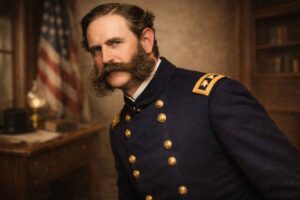 Stand or sit with your torso angled slightly away from the camera, somewhere between ten and forty-five degrees. Not a dramatic twist. You’re not auditioning for a dance troupe, just enough to introduce dimension. Then lean forward a fraction. Not lunging. Not stalking. A subtle forward inclination that says engagement. This pose works especially well if you’re brandishing a structured beard, a sharp bob, or any kind of deliberate facial framing. The angle creates shadow and contour along the jawline. The slight lean signals initiative. You’re not being photographed. You’re stepping into the frame.
The Arms Crossed Position
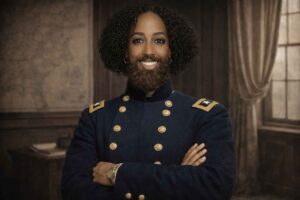 Cross your arms loosely across your torso, then consciously drop your shoulders a notch. Most people cross their arms and immediately tense up, as though bracing for critique. Relax the shoulders. Let your elbows hang naturally. Now soften the expression. Not a grin. Just an alert, steady look. The combination of structured grooming and relaxed crossed arms reads as composure. It says, “I am comfortable in my own perimeter.” Confidence without tension is the objective. The moment your shoulders creep toward your ears, you’ve become defensive, not decisive.
The Hands On Your Hips Position
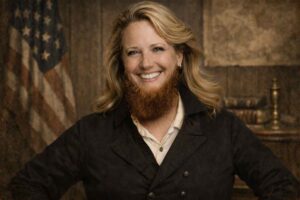 Place your hands lightly on your hips or just above, thumbs back, fingers forward. This creates width through the frame. You instantly look more grounded. But here’s the trick. Don’t puff your chest like you’re challenging the board. Keep the sternum lifted but neutral. Let your facial hair carry the authority structure, whether that’s a disciplined chinstrap or sharply framed by hair. The hips create the stance. The face creates strategy. This works best for people who are genuinely comfortable occupying space. The camera can smell hesitation.
The Over-The-Shoulder Position
 Turn slightly away from the lens as though you’ve just been called from across the room, then glance back with intent. Keep your chin level. No coy tilting. Just controlled return. This pose creates motion. It looks as though you were already in progress when the photo was taken. Framed with strong facial hair, it delivers that executive-adjacent energy. Opportunity did not find you idle. It interrupted you mid-action.
The Subtle Interaction Position
 If you wear glasses, adjust them lightly. If you’re in a blazer, touch the lapel. Roll a cuff once and let your hand pause there. The keyword is subtlety. These small gestures introduce narrative. You’re doing something. Thinking something. Engaged, not staged. Keep movements slow and minimal so the camera catches control rather than fidgeting. With a stand-alone mustache, sharp brows, or a defined jawline, these gestures reinforce refinement. You are not performing. You are calibrating.
The Supported Lean Position
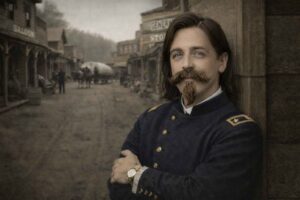 Find a wall, a pillar, a railing. Lean lightly with one shoulder or rest a forearm casually. Shift weight onto one leg. This creates casual authority. It’s particularly effective if your grooming or styling already communicates precision. The structure of your face contrasts with the ease of your posture. Balanced. Approachable. Still in charge. But avoid collapsing into the surface. Lean, don’t melt.
The Seated Leaning Forward Position
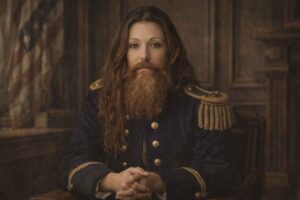 If seated, resist the urge to settle back and disappear. Sit tall, then hinge slightly at the hips so your torso moves forward a few degrees. Forearms can rest loosely on thighs or the arms of a chair. The forward lean pulls the viewer in. It signals attentiveness. Combined with sculpted facial structure, it reads as “ready to contribute,” not “waiting to be called on.” Chin level. Eyes steady. Breath slow.
The Off-Axis Gaze Position
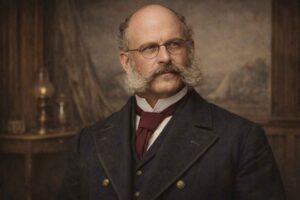 Instead of staring directly into the lens for every frame, choose one where your gaze drifts just beyond the camera. Not dramatically into the horizon. This is not a biopic poster, just a few degrees off center. The effect is vision. Strategic focus. It suggests you’re considering something larger than the frame. With strong grooming lines, that off-axis gaze enhances verticality and sharpness. Use this sparingly. When overdone, it becomes daydreaming.
The Controlled Energy Position
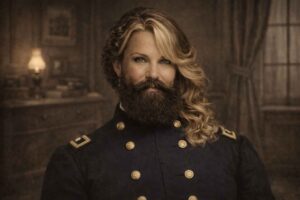 Finally, there’s the smile. Keep it intentional. A slight lift at the corners. Let it reach the eyes without overtaking the jawline. Pair that expression with upright posture and relaxed shoulders. You want warmth without surrender. Approachability without giddiness. A composed smile alongside disciplined facial architecture creates balance. It softens intensity while maintaining command. The idea here is integration.
In 2026, everyone needs a headshot. Most already have one that looks like a posed graduation photo from high school. That difference matters more than most graduates and job seekers realize. Recruiters and hiring managers are moving quickly, scanning faces before they ever scan resumes. When grooming and posture reinforce each other, the result isn’t vanity. It’s visual coherence.
At the end of the day, standing out in a crowd of other jobseekers isn’t about theatrics. It’s about intention. A beard, mustache, eyebrows, and jawline are static elements. The pose animates them. Angle your body to emphasize structure. Relax your shoulders so authority doesn’t harden into aggression. Lean forward slightly to signal engagement. Control your expression so your face says what your résumé has not yet had time to prove.