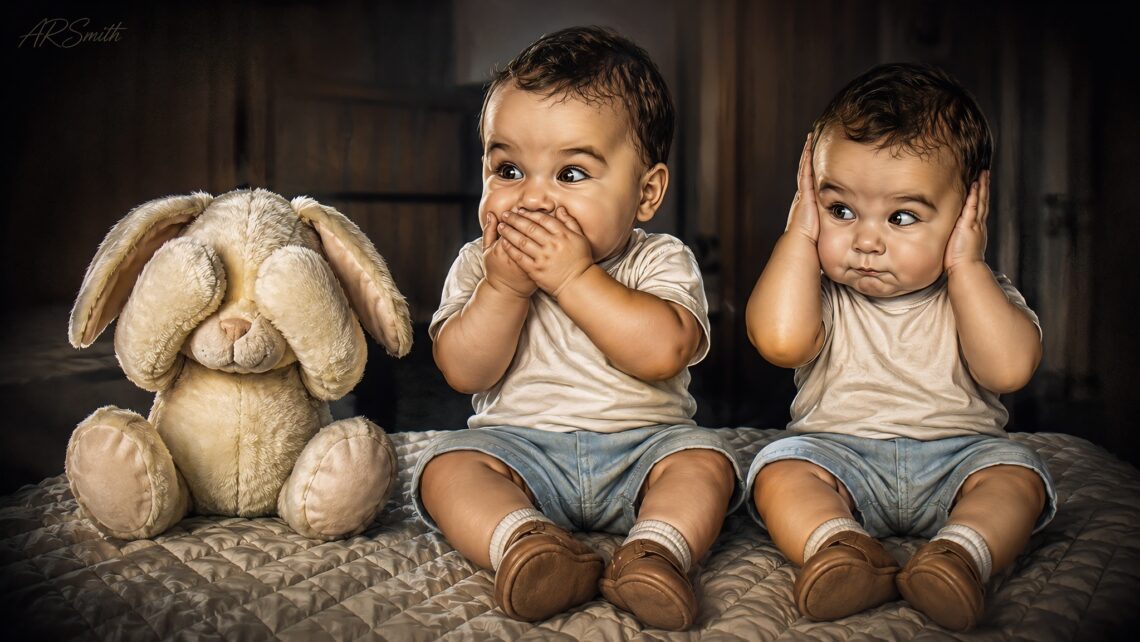
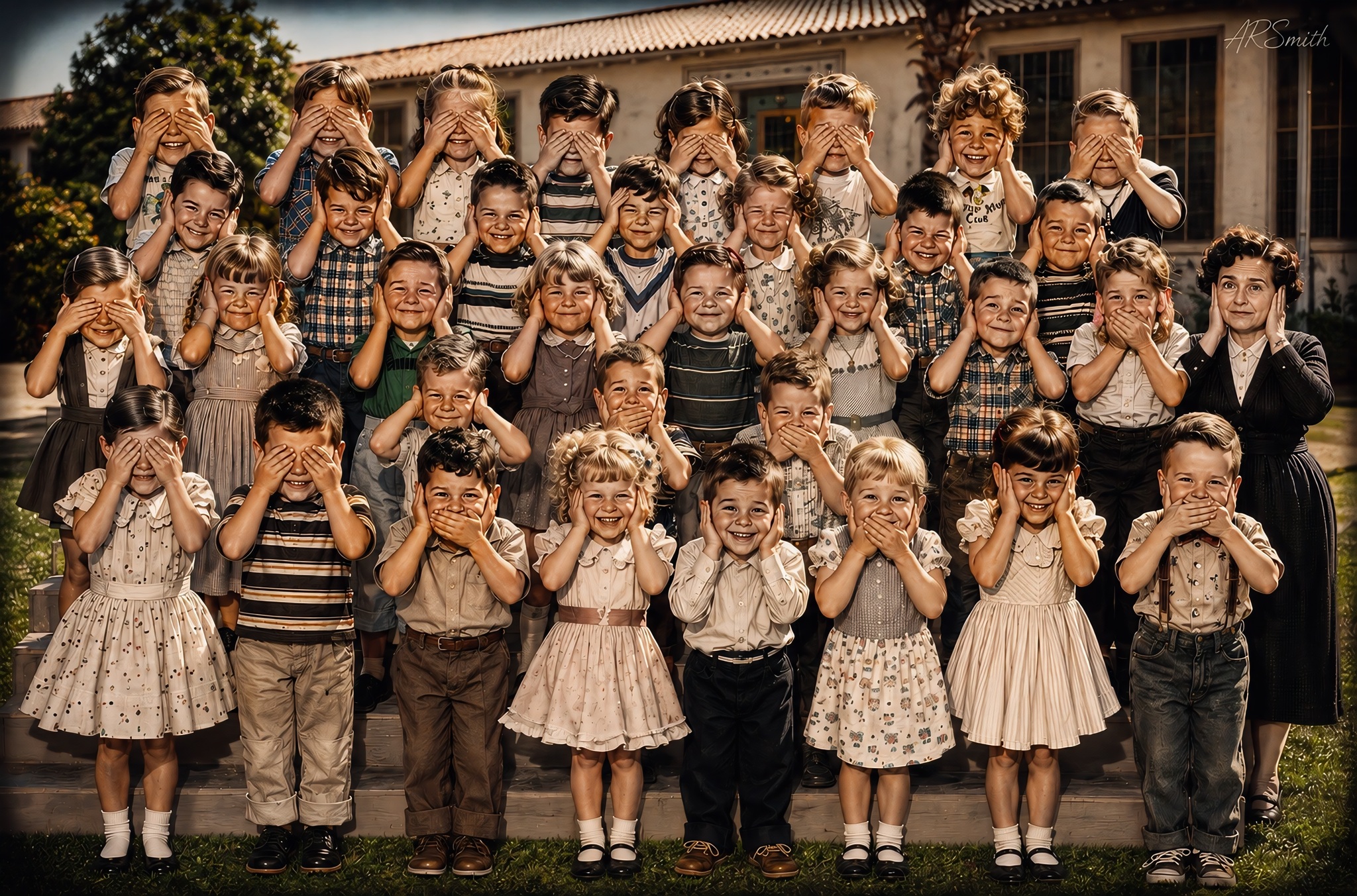
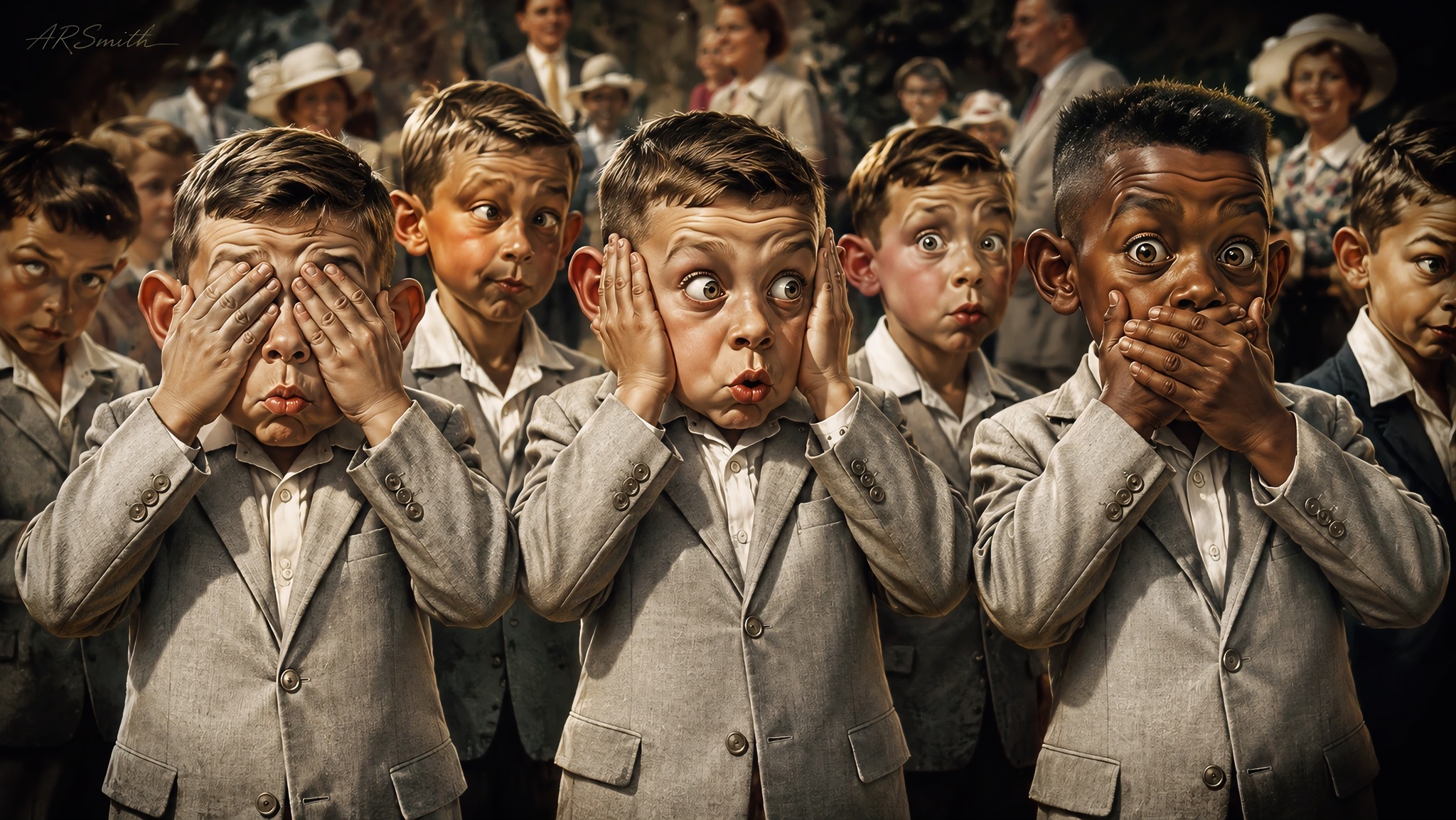
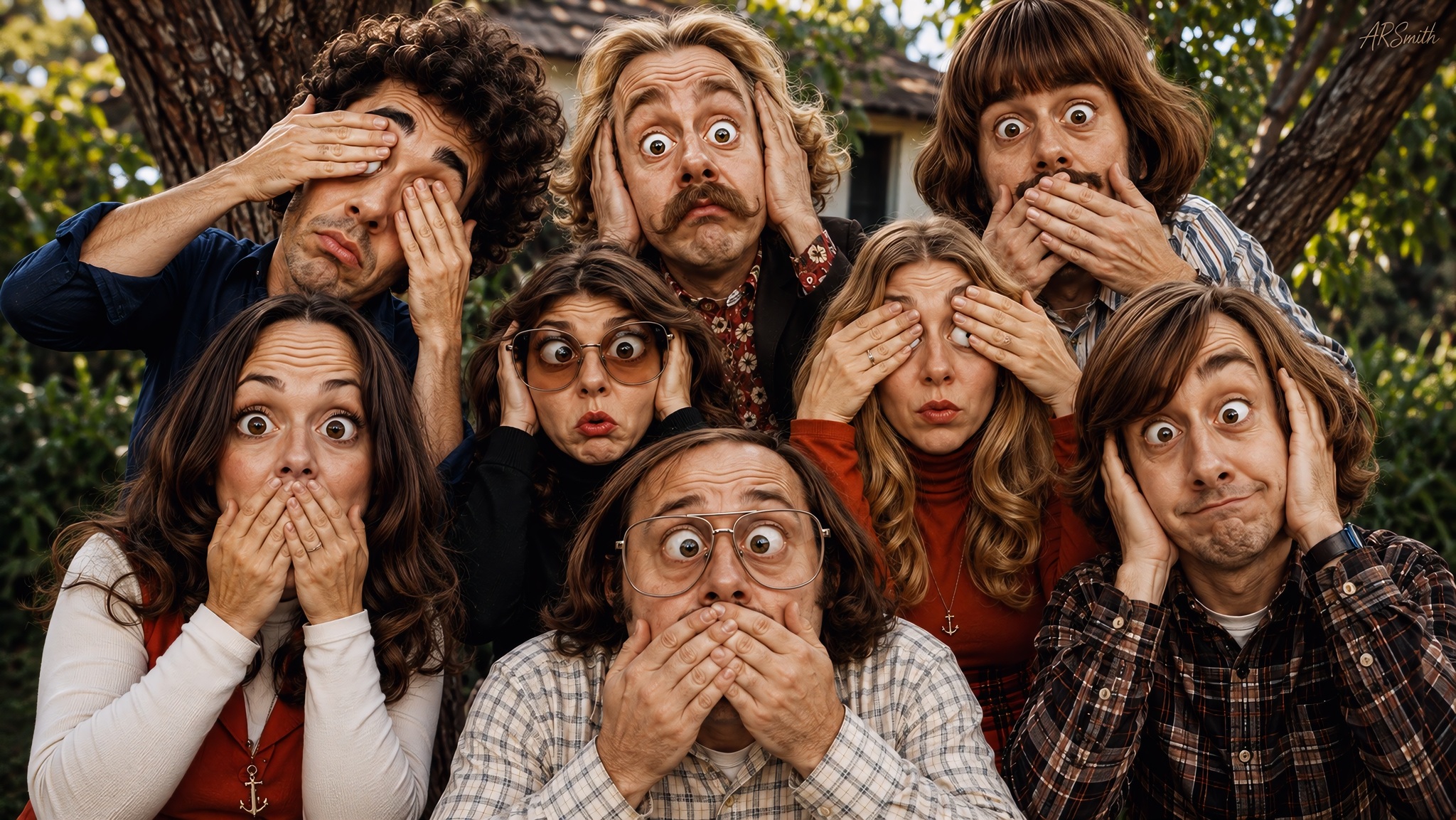
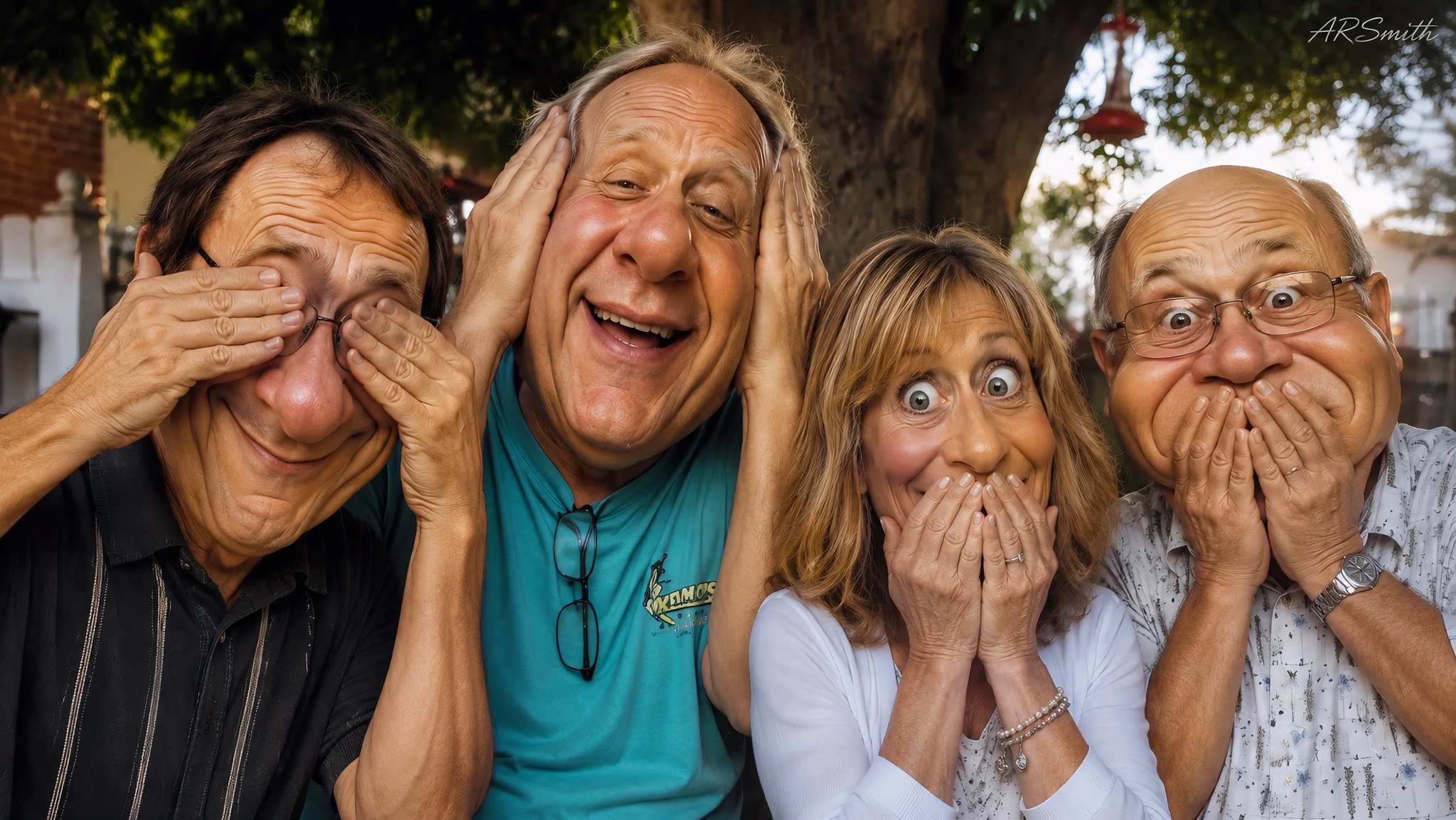
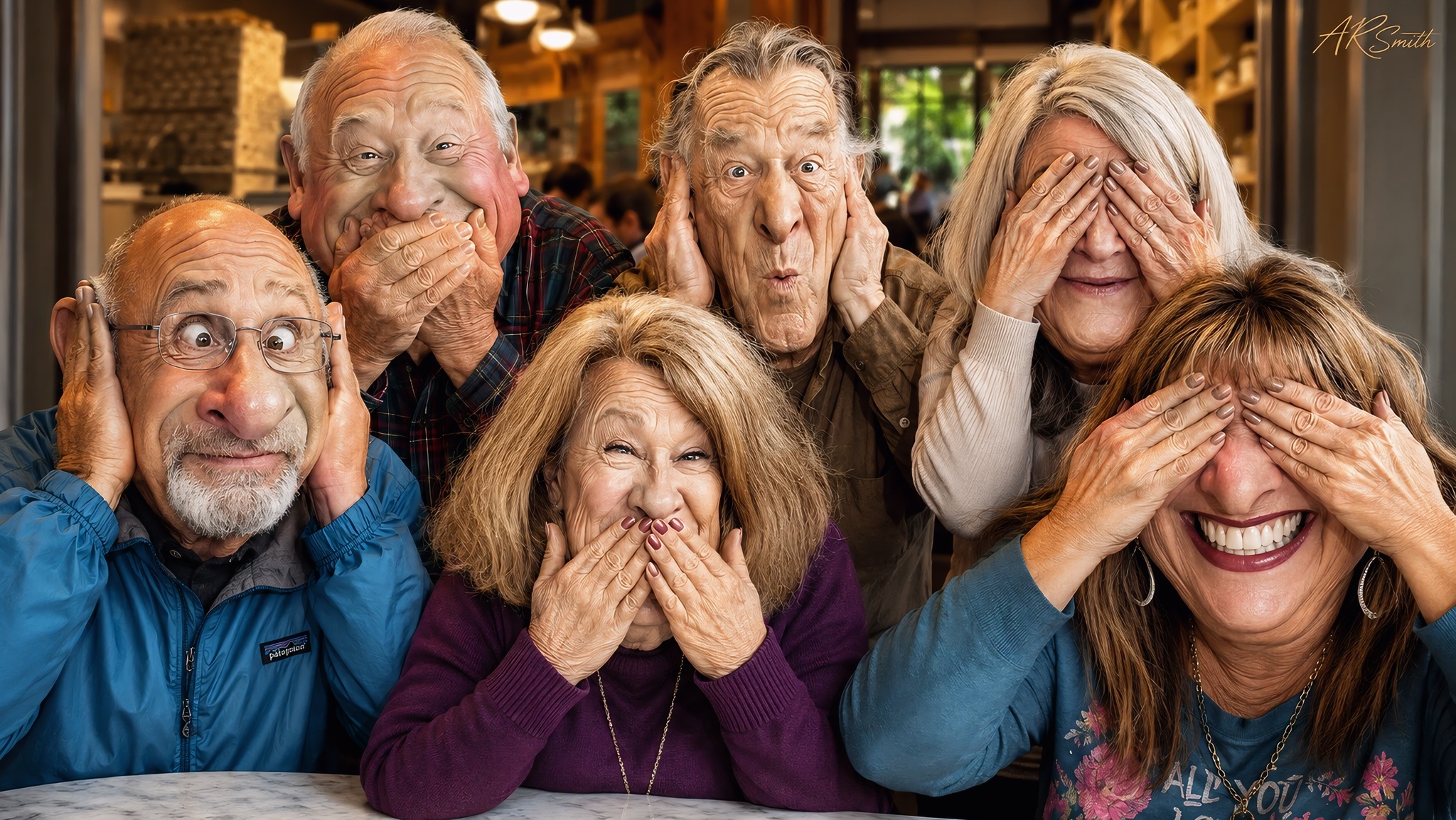
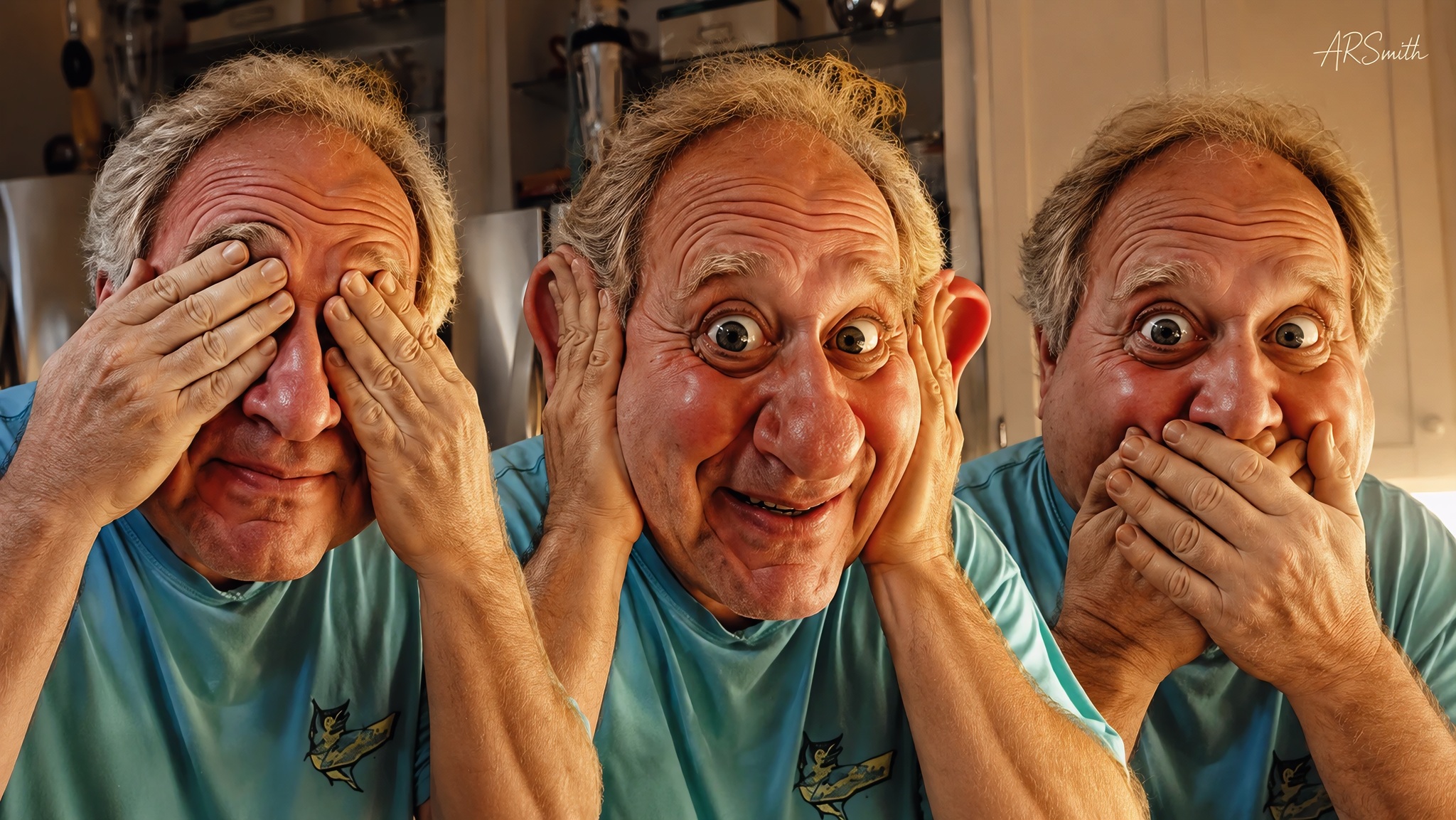
The saying “See No Evil, Hear No Evil, Speak No Evil” is most famously represented by the Three Wise Monkeys:
Mizaru covers his eyes: see no evil.
Kikazaru covers his ears: hear no evil.
Iwazaru covers his mouth: speak no evil.
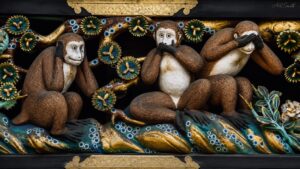
The best-known depiction appears in a 17th-century carving at the Tōshō-gū Shrine in Nikkō, Japan, although the underlying idea is much older. Similar advice appears in the ancient Chinese teachings of Confucius:
“Don’t look at, listen to, or speak about anything contrary to proper conduct.”
The monkeys entered the picture partly because of a clever Japanese pun. The word ending zaru, meaning “not,” sounds like saru, the Japanese word for monkey. In other words, a bit of ancient wordplay turned a moral lesson into three unforgettable little fellows playing peekaboo with wickedness.
Originally, the message encouraged people to avoid immoral thoughts, words, and behavior. In modern Western culture, however, it often carries a more sarcastic meaning: deliberately ignoring wrongdoing and pretending nothing happened.
Occasionally, a fourth monkey appears, usually with folded arms, representing “do no evil.” Apparently, the original trio eventually needed a compliance officer.







Sources: Oxford Reference, Three Wise Monkeys overview
