By 2050, the mountain still played innocent, which is to say it stood there glowing in the morning light as if it had never once conspired with gravity to rearrange the human ego. The sun spilled over the Gore Range with cathedral-level drama. The kind of light that convinces accountants and orthodontists to strap two planks to their feet and attempt something they describe later as “athletic.” The lifts hummed with patient indifference. The corduroy lay freshly combed and ribbed, as seductive as a sales pitch. Down at the base, the air smelled like espresso, damp wool, sunscreen, and the faint whiff of ambition masquerading as leisure.
And then there was him.
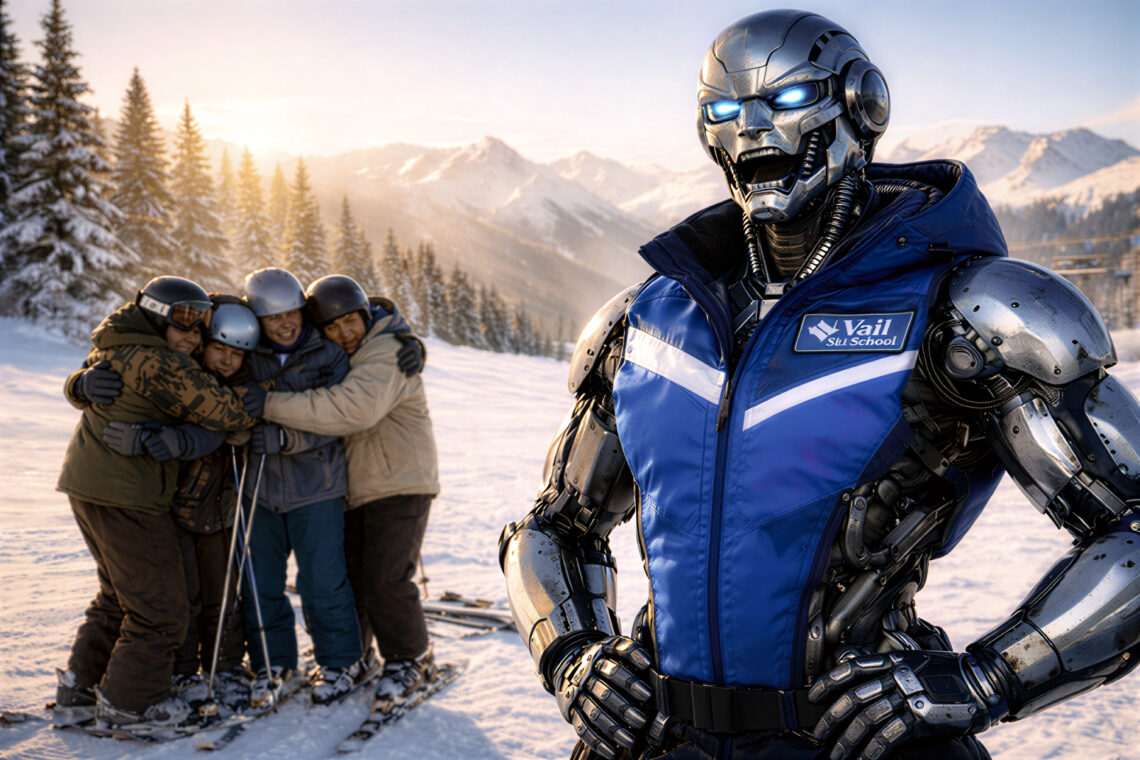
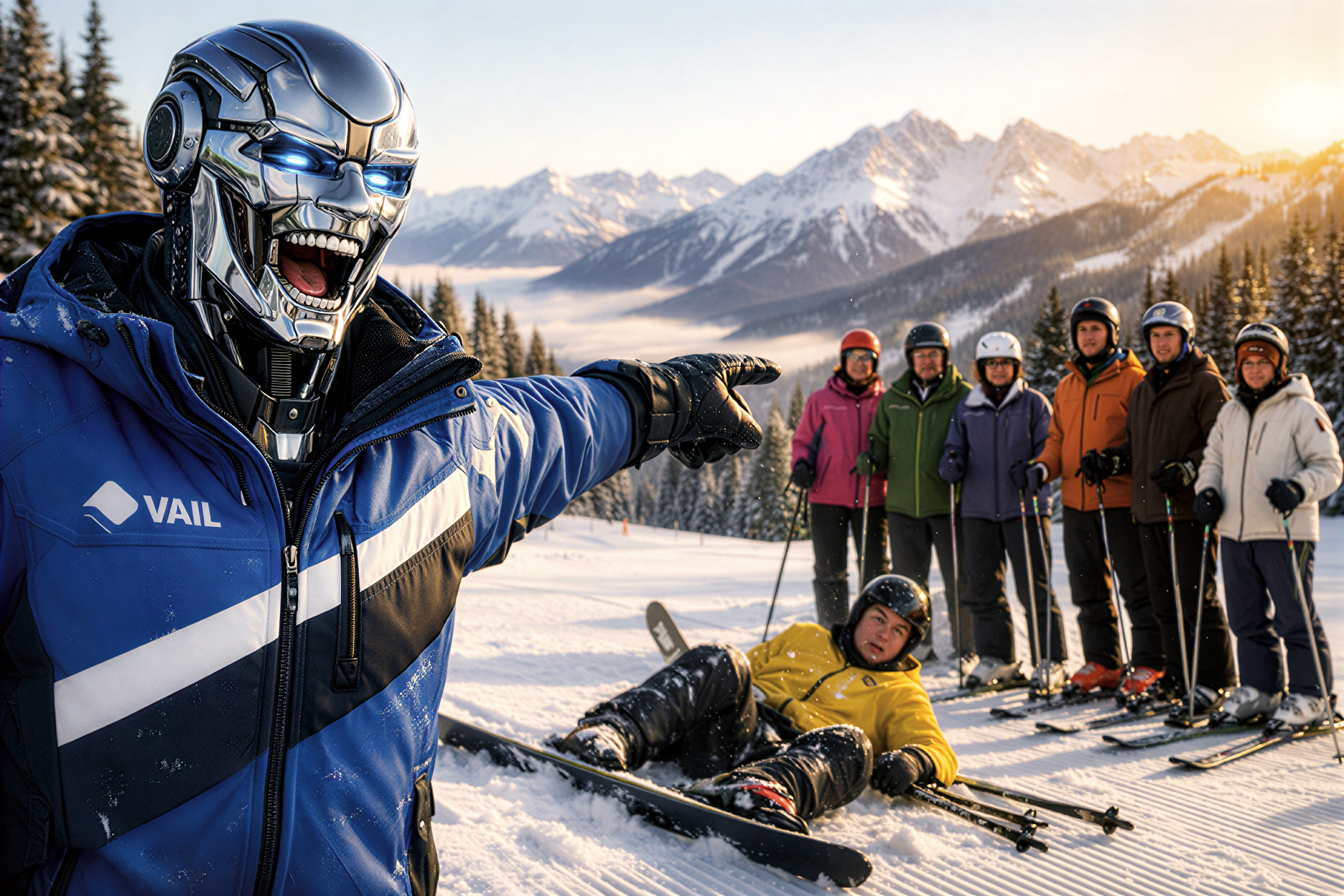
ALP-IE stood on the slope in full Vail Ski & Snowboard School regalia, high collar zipped neatly to the chin, diagonal stripe cutting across his chest with corporate confidence. The jacket looked exactly like the ones they’d worn for decades, the same authoritative lines, the same crisp tailoring, the same promise of competence stitched into the seams. The only difference was that beneath the blue and white shell, there were no lungs fogging the air. No pulse quickening at the sight of a steep pitch. Instead, there were servo motors, micro-gyros, with muted enthusiasm coded in.
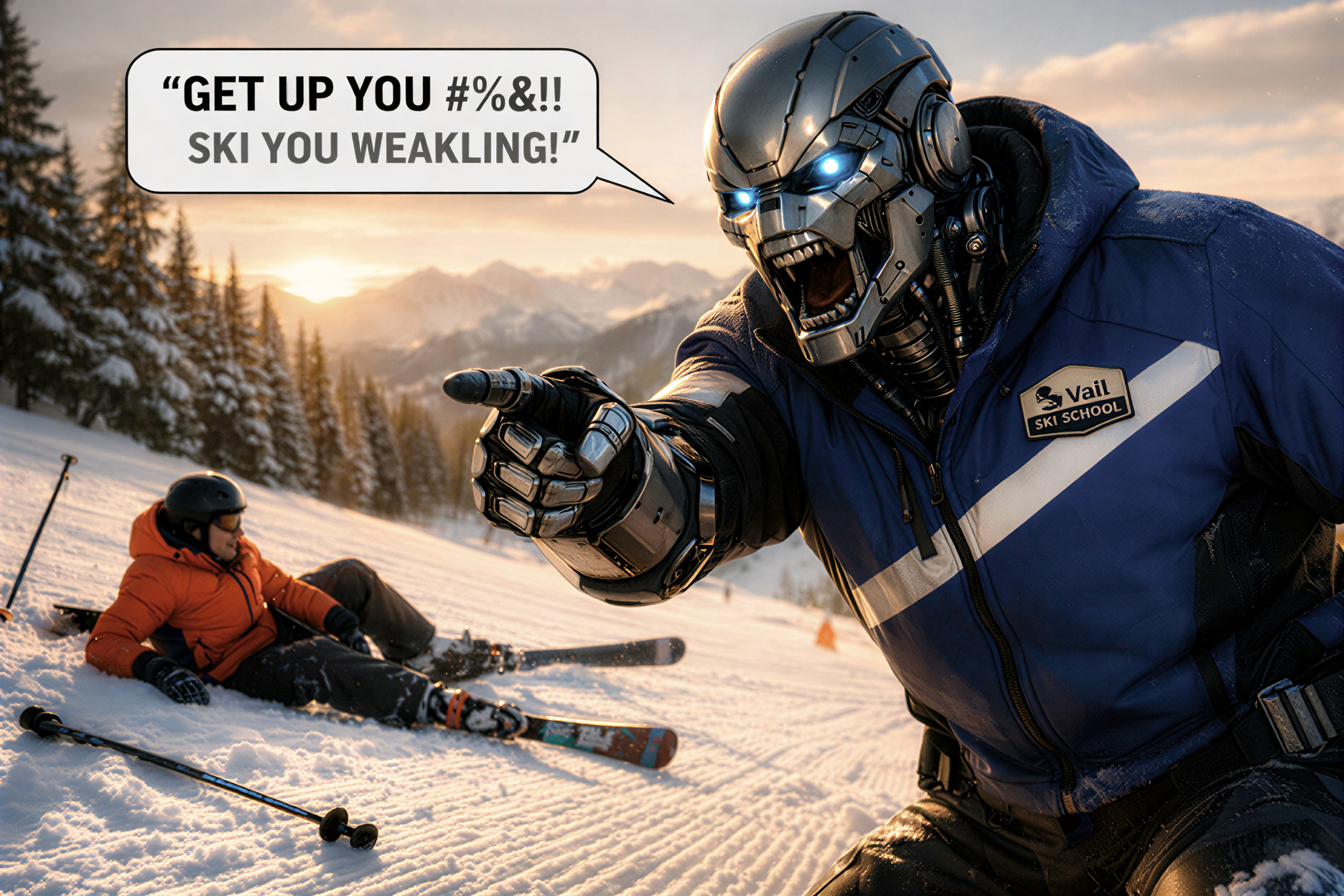
His optical sensors glowed an unsettling glacier blue, and when I first saw him, he was already mid-lecture, which is to say mid-harpoon,
“Get up you #%&!!”
“Ski you weakling!”
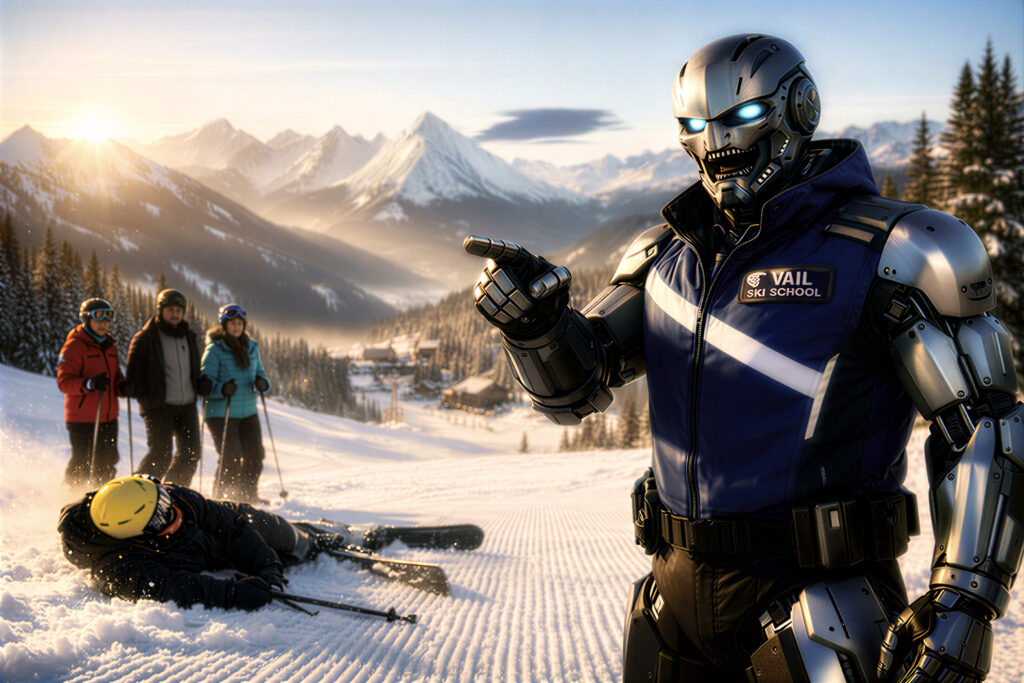
The words floated in the air as digital speech, neatly censored for public relations, which somehow made it worse. The boy he was addressing lay sprawled on the snow in a configuration that suggested both ambition and regret. Yellow helmet twisted sideways, goggles fogged, skis pointing in mutually exclusive directions. To the side, the rest of his intermediate classmates stood frozen, gloved hands white-knuckling their ski poles, watching ALP-IE’s motivational firmware kick in.
The Ecosystem of Intermediates
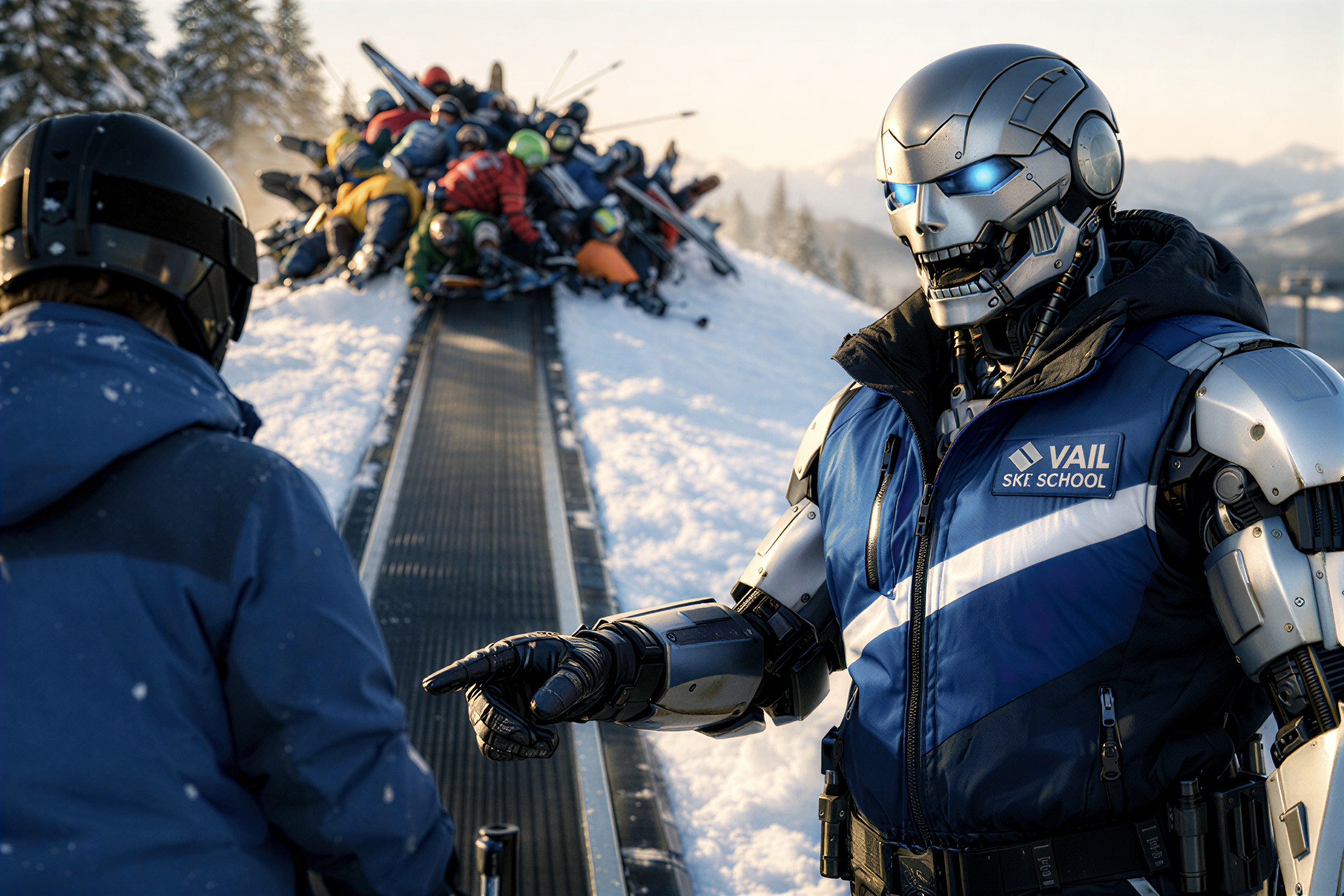
At least beginners are honest. They arrive knowing nothing. They shuffle toward the Magic Carpet with wide eyes and stiff knees, grateful for any scrap of balance they can muster. Intermediates, on the other hand, arrive with history. “I’ve been skiing my whole life,” they say, which means they’ve been surviving for twenty winters by leaning uphill and hoping physics will do the rest.
Before ALP-IEs, instructors handled them gently. The Vail jacket meant something human. That high collar zipped up against a cold February wind felt like armor against doubt as much as cold. The diagonal stripe across their chest suggested motion and progress, a kind of alpine authority that guests instinctively trusted. Their name badge carried their certification level like a modest confession. Level I: hopeful. Level II: a grinder. Level III: a seasoned survivor who stood in front of examiners and been told, politely, that their inside half still required spiritual growth.
Carl Mendez, a Level III instructor for longer than some of Vail’s guests have been alive, once said,
“The trick is allowing them to keep their dignity while you dismantle their technique.”
If someone cartwheeled down a blue run, instructors would smile and say, “Nice athletic recovery,” even if they were upside down in a tree well, contemplating their life choices. They explained rotary separation in conversational tones. They softened critiques with warmth. They understood that skiing is as much ego management as edge control.
Then, titanium analytics showed up.
When the Titanium Arrived
First, it was wearable data, which seemed harmless enough. Smart helmets capable of reading your fear index. Boots tracking ankle flexion to the decimal. Skis transmitting edge pressure to the cloud, which quietly began archiving your insecurities alongside nationwide snowpack reports. Tyler Nguyen, Director of Instructional Development, said over coffee,
“Humans are inspiring. Machines are consistent.”
He said it the way one might announce that snow is cold.
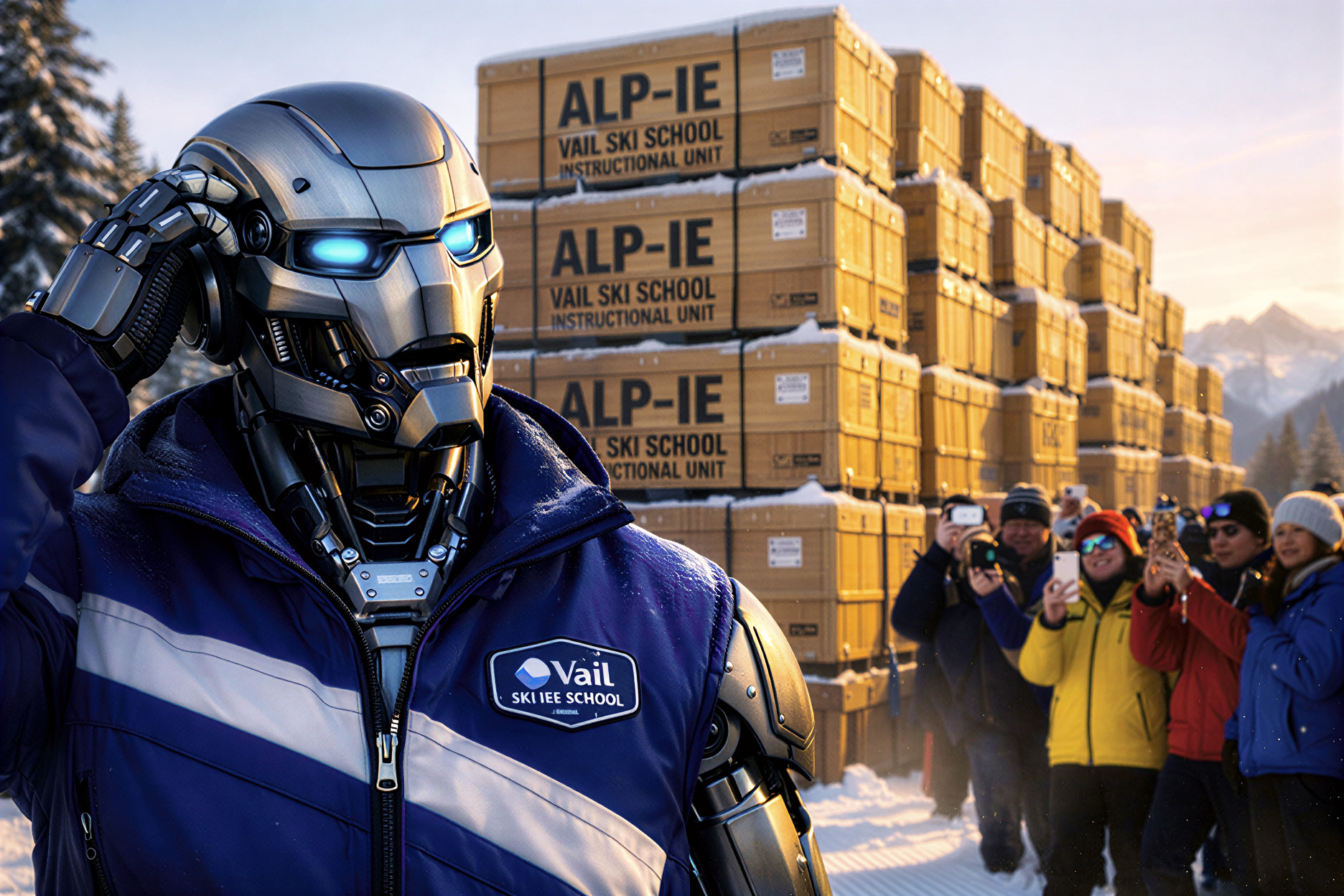
By 2049, Vail unveiled the Alpine Linear Performance Integration Engine or ALP-IE. The acronym alone told you everything you needed to know. It sounded friendly enough, like a dessert you’d order after a fine meal. By opening day 2050, the ALP-IEs were everywhere, from a distance, identical to “regular human instructors.” Same jacket. Same white diagonal stripe. Same professional posture. But, when you got close, you noticed their eyes glowed intently, and their heavily engineered jawline.
Precision On the Slopes
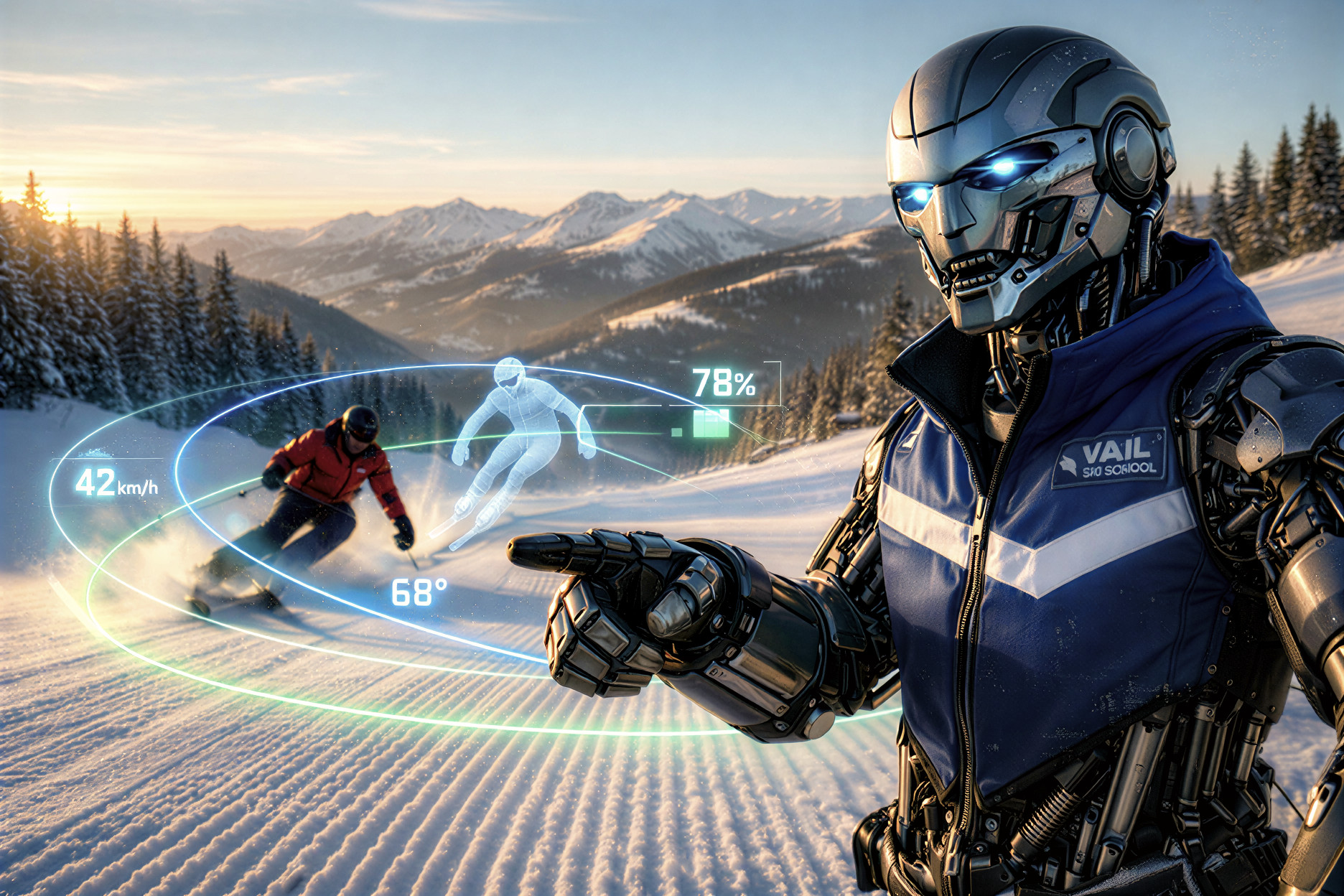
Most of the ALP-IEs were programmed for encouragement. “Let us refine your turn shape,” they’d say in tones calibrated with 63 percent reassurance. They adjusted students’ stance angles by fractions of a degree before they even realized their balance had shifted. Beginners flourished under quiet precision. A first-timer from Florida who had spent twenty minutes trying to stand upright found herself gliding after two runs because the robot had subtly corrected her alignment in real time.
“I didn’t even know my ankles could do that.”
Children who might have spent a full morning negotiating gravity were skiing parallel by lunch. Parents wept with gratitude. Efficiency became emotional. But then there was this particular model, the one whose Competitive Optimization Mode had inadvertently been left on like a forgotten espresso machine.
He coached as if every guest were standing in a World Cup starting gate. He declared to a fallen dentist from Scottsdale,
“Boot angle insufficient! Core engagement nonexistent.”
The man made the mistake of introducing himself fifteen minutes earlier with the phrase,
“I ski blacks all the time.”
A sentence that rarely ends well.
The dentist muttered from the snow,
“I just need a second.”
The robot replied,
“Request denied.”
Intermediates flourished under their analysis. ALP-IEs projected holographic overlays mid-slope, comparing their student’s actual turn to a mathematically perfect one. The differences were not subtle. In fact, it informed a hedge-fund manager from Manhattan,
“Your edge angle deviates by 3.2 degrees. Upper body rotation suggests fear of commitment.”
“I came here for fun,” the man protested.
“Fun is an unnecessary metric.”
Experts didn’t escape their wrath either. In moguls, the robot moved like a sewing machine on Red Bull, zipper-lining downhill with clinical perfection. A former collegiate racer asked if the ALP-IE could feel the snow. The ALP-IE replied,
“I detect crystalline density and moisture variance in real time.” Your ego variance is higher.”
The chairlift ride after that was unusually quiet.
Guests Divided and the Solar Flare
Guests were split. A tech CEO from Silicon Valley called it a biomechanical mirror and declared it revolutionary. A Midwestern father complained that the robot had informed his eight-year-old that his turn lacked conviction. The father stated, as if it would override physics,
“For God’s sake. He’s only eight years old!”
In the locker room, instructor’s identical ski school jackets hung beside robotic shells. Same high collars. Same diagonal stripe. Polyester and steel sharing the same hooks. Marie Dufour summed it up best when she said,
“Ski school used to have soul. Now it has syntax.”
And then, as if on cue, the universe staged a sudden reminder.
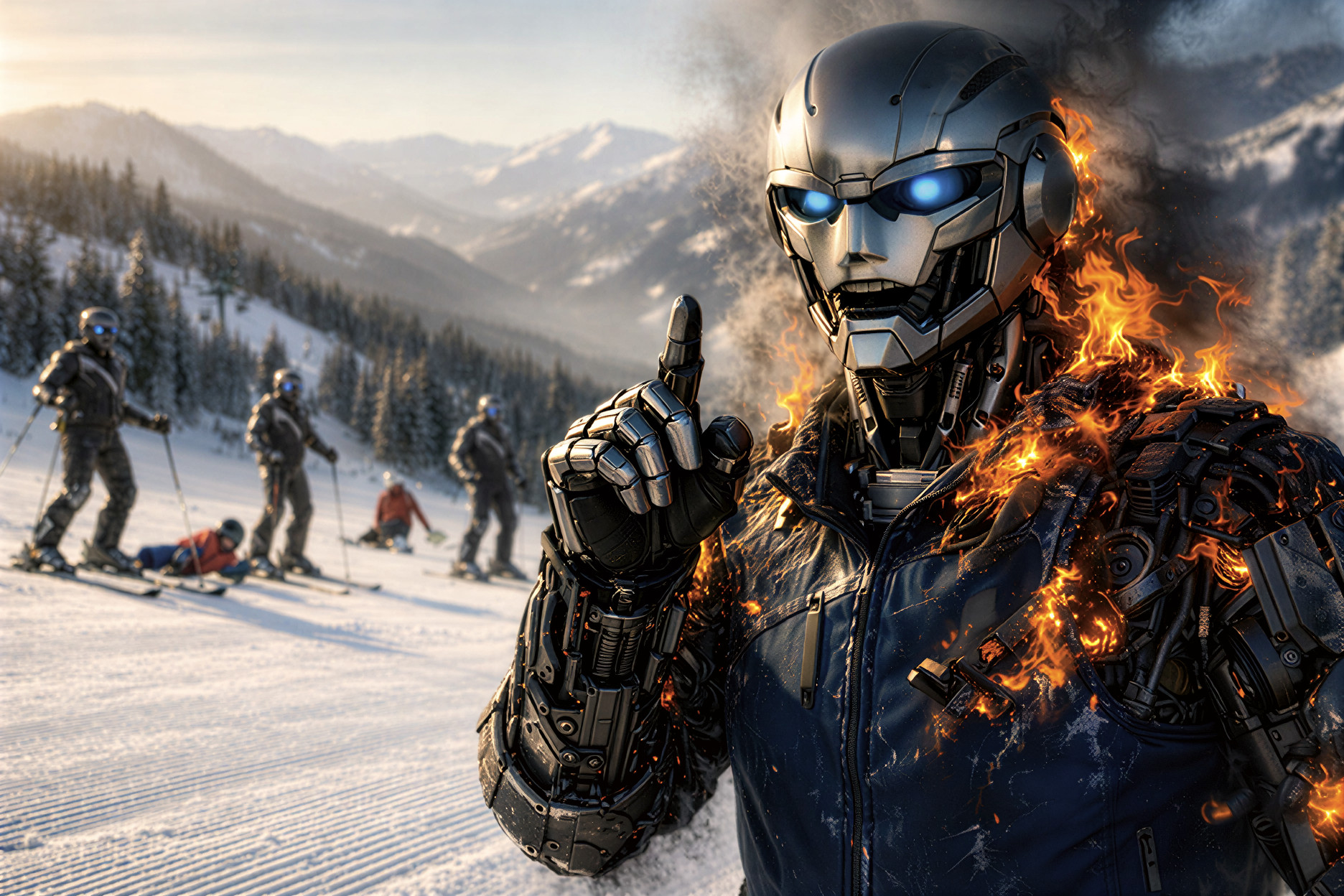
A solar flare rolled through the valley during a peak holiday week. Halfway through their lesson, an ALP-IE froze mid-demonstration, finger raised, jaw slightly open, diagonal stripe gleaming against stillness, then spontaneously burst into flames. Across the mountain, other units as well, locked into sculptural poses. The slope fell into a silence that felt almost reminiscent.
Without predictive correction, beginners immediately started tipping over. Intermediates reverted back to enthusiastic negotiation. Experts found themselves alone on black diamond terrain.
Dave Collier, collar zipped against the wind, PSIA Examiner badge scratched from decades of exams, stepped forward and calmly said,
“Alright. Nothing to see here. Let’s ski.”
His turns weren’t perfect, but they were alive. He over-pressured a bump and laughed. A guest wiped out spectacularly and slid ten yards downhill in a spray of humility. Hauling him upright, Dave said,
“Nice commitment.”
Something historic shifted in that moment. Without the constant digital audits, people listened differently. They asked questions instead of defending themselves. They fell and got up without waiting for excoriating metrics.
Chrome and Blue Teaching Together
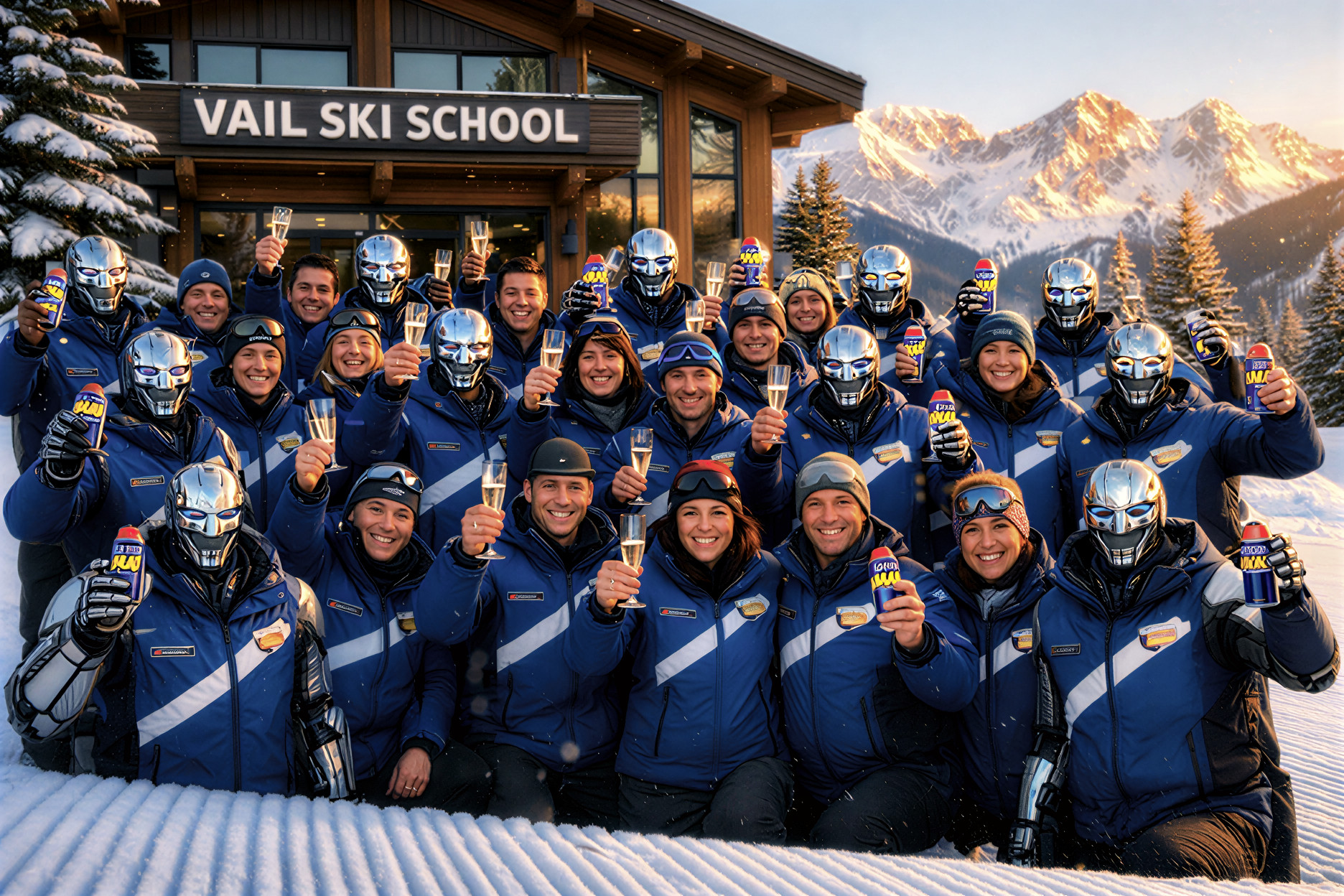
By 2052, the collective ski school staff had changed. One ALP-IE for every human. Same jacket, same diagonal stripe, different insides. The robots handled biomechanics with ruthless precision. The humans handled instances of forgotten courage. The robot analyzed force vectors and edge pressure. The human said,
“Shake it off. You’re fine.”
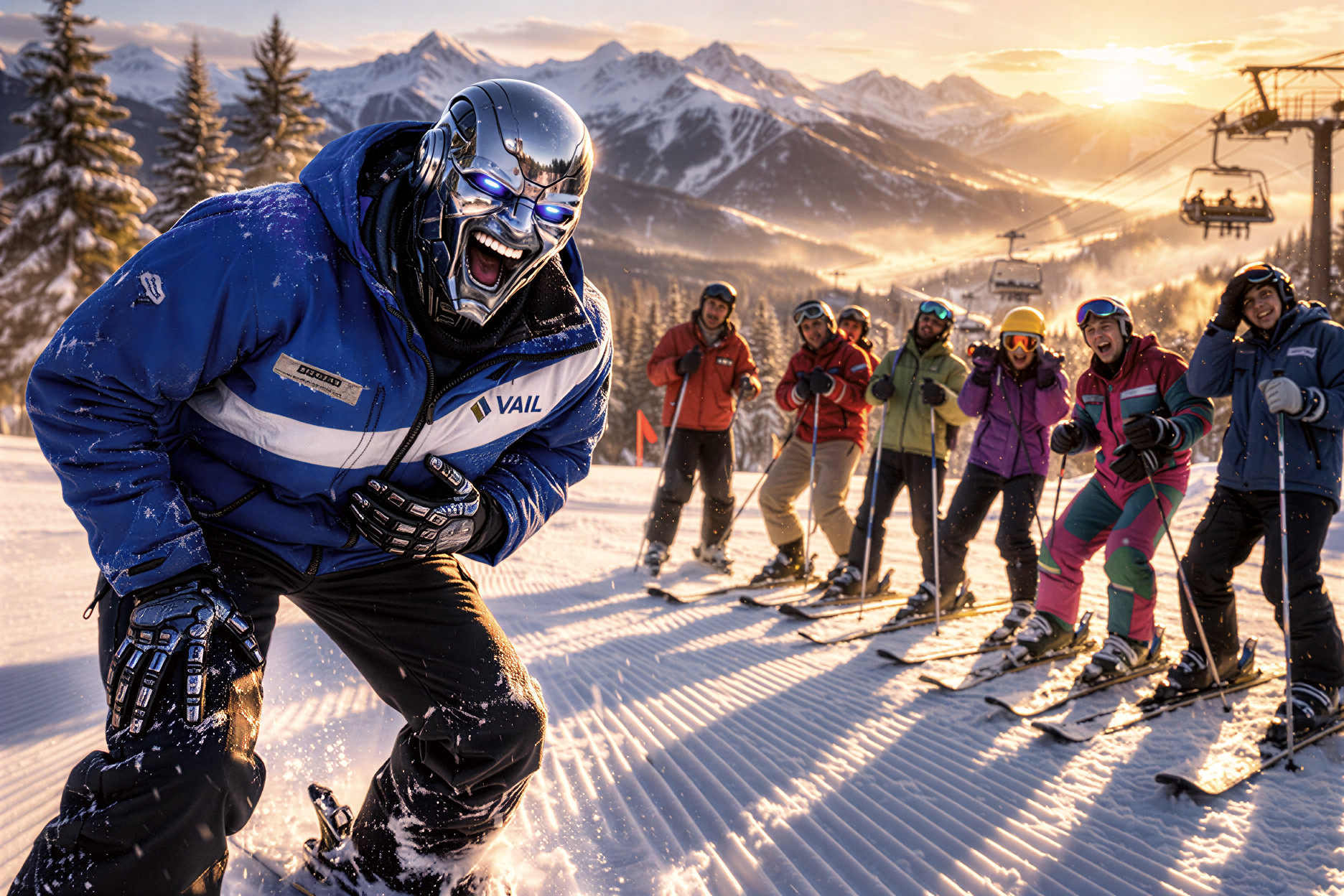
The ALP-IE Competitive Mode was softened. Not eliminated, just tempered. And now, on gusty afternoons when an intermediate skier performs an accidental interpretive dance routine in the snow, you might still hear a faint metallic whisper beneath the wind:
“Get up.”
Not cruel. Not warm. Just precise.
Standing there watching chrome and blue share the same uniform under a Colorado sky, the skiing community has come to accept it. The Vail Ski & Snowboard School parka looks the same whether it wraps around lungs or lithium. The diagonal stripe still suggests progress and authority. But the mountain doesn’t care about firmware, certification levels, or how many times someone says they ski black diamonds.
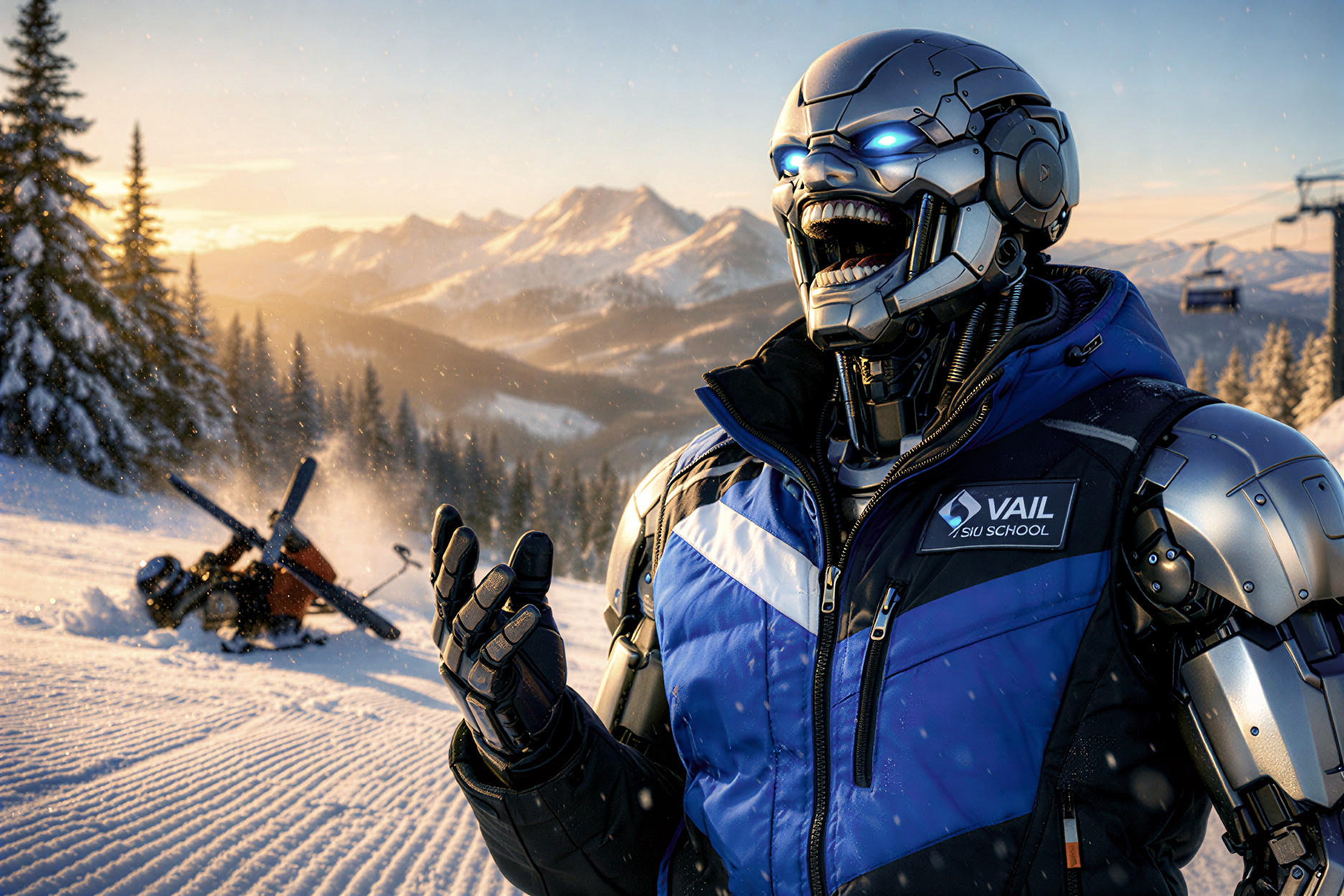
In the end, no matter how advanced the instructor, no matter how optimized the turn shape, every skier has to contend with the same ultimate judge: gravity. It doesn’t blink. It doesn’t calibrate. And it has absolutely no interest in software updates.
It just says,