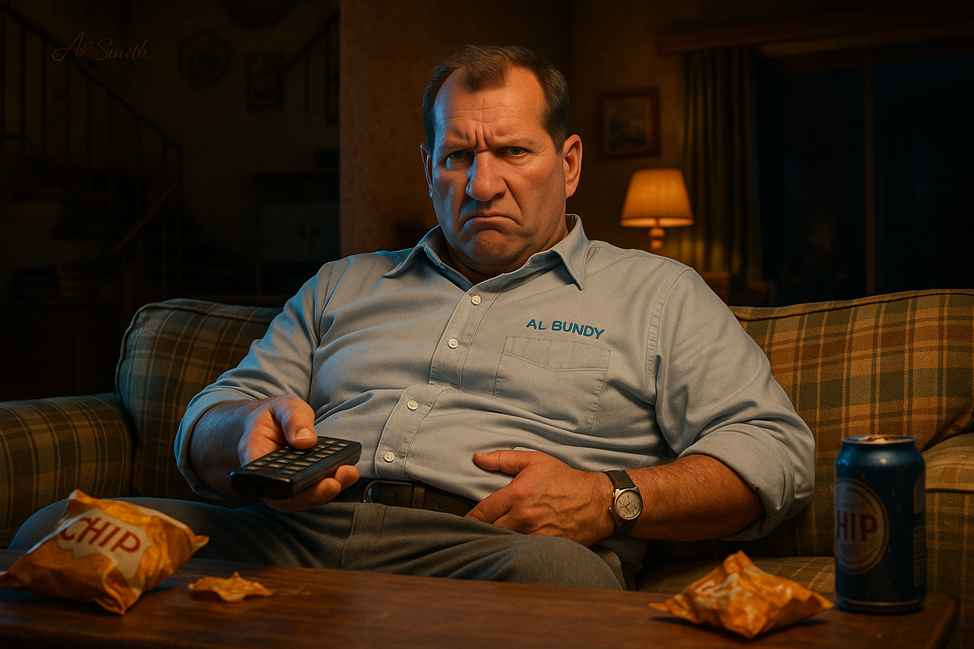
Rock-a-bye Baby
A lullaby where a baby in a cradle, high in a tree, is rocked by the wind until the bough breaks, dropping it down.
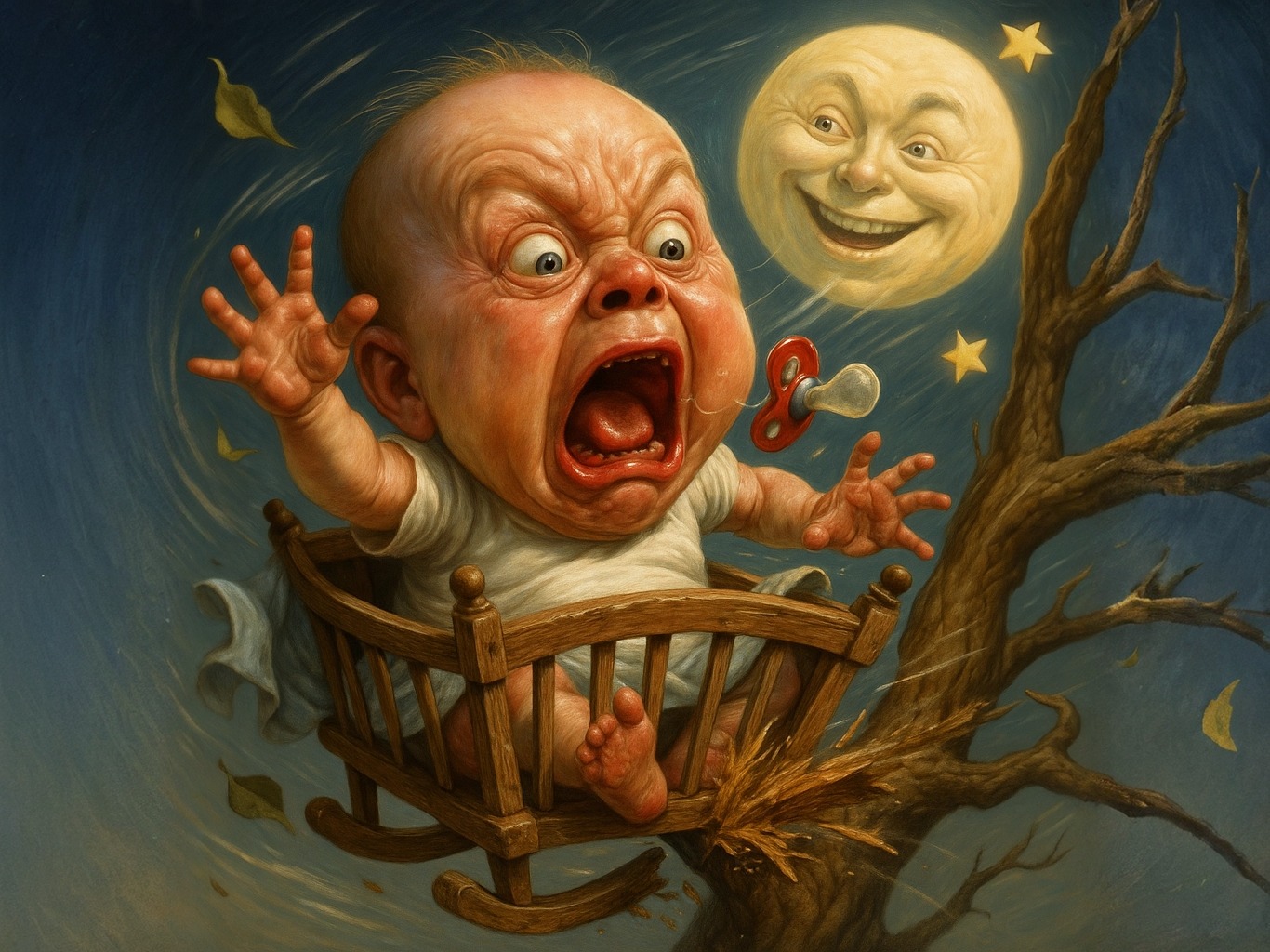
Rock-a-bye Baby. Yeah, nothing screams “good parenting” like sticking your kid in a cradle up in a tree. Who even thinks of that? Put the baby in a crib, put it on the floor, call it a day. But no, let’s dangle junior thirty feet in the air like a piñata and hope the wind doesn’t blow. That’s life in a nutshell—everybody acting like it’s secure when really, you’re one gust away from hitting the ground.
The wind starts rocking, the bough starts creaking, and everyone’s still singing this like it’s some sweet lullaby. I guess that’s what we do in life. Pretend disaster’s a gentle little song while ignoring the fact that gravity’s undefeated. Same thing at the shoe store. Customers act like I’m the wizard of Oz, able to conjure up a perfect fit for their hoof-sized feet. Then the truth comes crashing down—I don’t have your size, lady, and now we’re both miserable. Tick, tock, boom.
And then the big finale—the bough breaks, cradle falls, baby plummets. That’s not a lullaby. That’s Tuesday. That’s marriage. That’s me walking through the door after a twelve-hour shift, hoping for peace, and instead being greeted by Peg asking if I remembered the bonbons. The branch is my patience, the cradle’s my pride, and the screaming baby? That’s my life, falling on its head.
But you know what? There’s some wisdom in it. Because that’s the truth—we’re all in the cradle, high up, swinging on borrowed time. You can act like everything’s steady, but sooner or later, the branch snaps. Maybe it’s your job collapsing, maybe it’s your marriage, maybe it’s Kelly saying she needs money for a dress she’ll wear once before spilling chili on it. Either way, you hit the dirt, and nobody’s shocked.
And people wonder why I’m bitter. Because I’ve been that baby since day one. Rocked around, dropped on my head by fate, and told to get back up for another verse. The only difference is, nobody sings to me when I crash. I just lie there while Peg says, “Al, did you pay the electric bill?” and Bud asks, “Dad, can I borrow the car?”
So what’s the advice? Simple. Don’t climb trees. Don’t trust branches. Don’t think life’s ever secure. Stay on the ground, where it’s already broken. At least then, when the wind blows, you won’t fall—you just sigh, crack open a beer, and watch everyone else go down. Because sooner or later, everyone’s cradle falls. The trick is not to be surprised when yours hits first.
Row, Row, Row Your Boat
A short round song encouraging gentle rowing along life’s stream, reminding singers that existence is but a dream.

Row, row, row your boat. Yeah, sounds easy, doesn’t it? Just glide along life’s little stream, like it’s all gentle and merry. Let me tell you something—life’s not a stream. It’s a backed-up sewer in Chicago after a storm. And you’re not rowing, you’re paddling with your bare hands while Peg sits in the back, eating snacks, telling you you’re steering wrong.
“Merrily, merrily, merrily.” Who the hell came up with that? There’s nothing merry about rowing through life when every stroke just takes you closer to another twelve-hour shift at the shoe store. You think I wake up in the morning singing merrily? No. I wake up to Peg’s voice asking for money, Bud’s voice begging for gas money, and Kelly’s voice asking for a new outfit she’ll ruin by noon. That’s not a song—that’s a death march set to whining.
And then it says, “Life is but a dream.” Ha. Yeah, right. If this is a dream, it’s the kind where you’re standing naked in front of your high school, only instead of classmates, it’s women with bunions pointing and laughing. You ever notice dreams are always better when you’re asleep? Wake up, and it’s reality: you’re broke, you’re married, and your highlight of the week is getting through dinner without Peg asking if you remembered her bonbons.
Here’s what nobody says about rowing a boat—you’re stuck in it. No sails, no engine, just you straining away while everyone else rides along for free. That’s marriage. That’s family. That’s me, rowing day after day while Peg lounges, Bud schemes, and Kelly spends. And the second you stop rowing, the boat doesn’t just float—it sinks. And guess who they blame? Not Peg. Not the kids. Nope. It’s always “Al, why’d you let us sink?”
So what’s the wisdom here? Simple. Don’t get in the boat. Stay on shore. Watch the other suckers row themselves to death while you sip a cold one and laugh. Because once you’re in, you’re trapped. You row until your arms give out, and then the current carries you right into a waterfall. Life’s not a dream—it’s Niagara Falls without a barrel.
My advice? Stop singing. Stop rowing. Accept it for what it is: you’re stuck in a leaky boat with people who don’t care if you drown, as long as they’re comfortable. And when the stream finally dumps you out, you’ll realize the truth—it wasn’t a dream, it was a long, wet nightmare, and Peg still wants more bonbons.
Simple Simon
A comical tale of a simpleton meeting a pieman, but he lacks both money and sense to buy a pie.
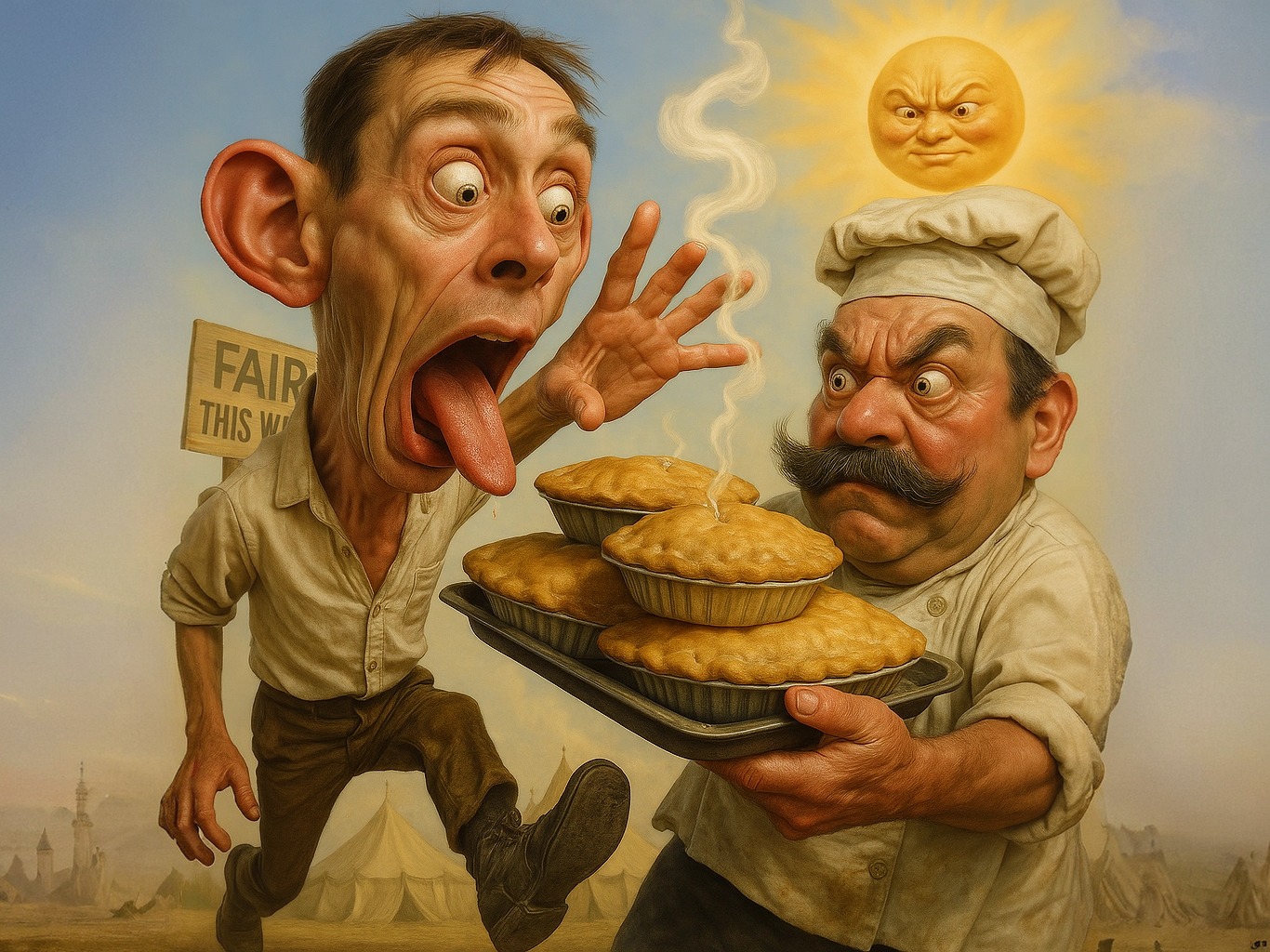
Simple Simon. A guy so dumb he tries to buy a pie without money. Now, people laugh at that, but I see myself in Simon. Not the “simple” part—I can tie my own shoes, which already puts me ahead of Bud. No, it’s the pie thing. You want something good, something sweet, and life looks you right in the eye and says, “Sorry, Bundy, no cash, no pie.” That’s every day of my existence.
Simon meets the pieman, all hopeful. “Sir, may I taste your ware?” The pieman asks for a penny. A penny! That’s nothing! But Simon doesn’t even have that. You know what that’s like? That’s me coming home from work, walking past Peg with a bag of groceries, and her asking, “Al, where’s my bonbons?” And me, digging through my pockets, finding lint and an IOU from the gas company. Peg doesn’t care if it’s a penny or a paycheck—it’s never enough.
And let’s not forget the humiliation. Simon’s standing there, empty-handed, stomach growling, while the pieman smirks. That’s me in the shoe store. A customer waddles in, says, “I’m a size 6,” and I stare down at feet the size of a Buick. I grab a 12, watch her cram it in, then she smirks at me like it’s my fault her toes look like Vienna sausages. You try telling her the truth, she yells, storms out, and I’m left holding the busted shoe. Simon had no penny. I have no dignity. Same difference.
And here’s the kicker: everyone thinks Simon’s the fool. But isn’t it smarter not to pay for pie? Think about it. You buy pie, you eat it, it’s gone, and you’re still broke. You don’t buy pie, you’re still broke—but thinner. In a way, Simon was ahead of his time. Like me. Nobody respects it, but refusing to spend money is the only survival skill a married man has. Too bad Peg treats “no money” like a personal insult, like I’m choosing poverty just to ruin her day.
What’s the wisdom here? Life dangles pies in front of you—money, happiness, a decent meal—and then laughs when you can’t afford them. You chase after the good stuff with empty pockets, and all you get is a pat on the head and maybe a moldy crust if you’re lucky. My advice? Stop chasing pies. Stop hoping for pennies. Accept that the only thing you’ll ever taste is the bitterness of working-class misery, washed down with the stale coffee you bought three weeks past expiration.
Simple Simon didn’t get pie. I don’t get pie. The only one who gets pie is Peg—served to her in bed while I’m in the kitchen licking the crumbs off the plate. So the lesson? If life’s a bakery, I’m the guy stuck outside the window, watching everyone else eat, while Kelly asks me for money to buy “fashion pies,” and Bud begs for gas so he can fail at dating again. Simon had no penny. I had no chance. And Peg still has her bonbons.
Sing a Song of Sixpence
A story-like rhyme where blackbirds baked into a pie sing for a king, while a maid meets mischief.
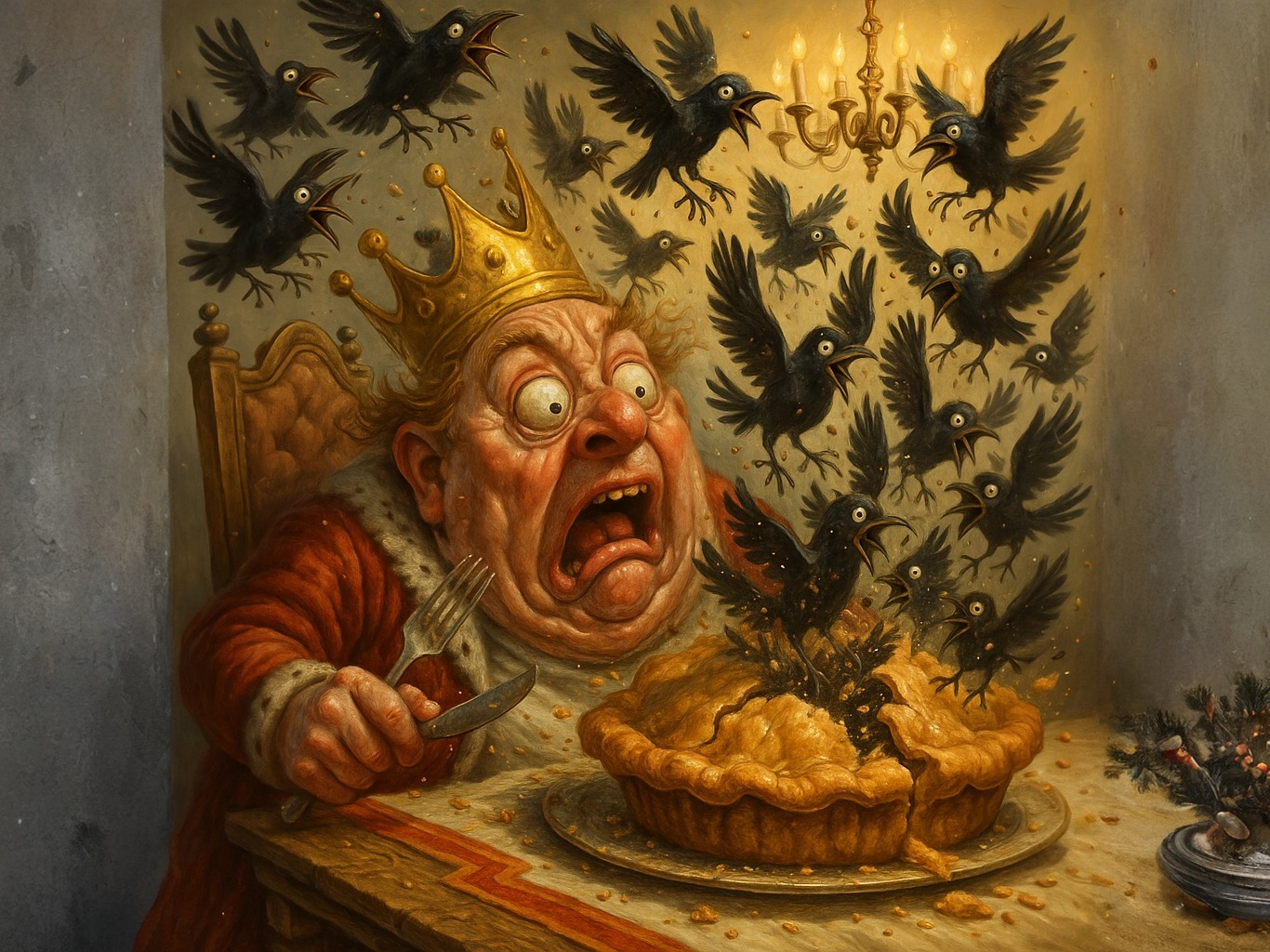
Sing a Song of Sixpence. A king gets a pie full of birds, and they sing for him. A queen eats bread and honey. And somewhere in the back, a maid gets her nose pecked off by a blackbird. That’s not a nursery rhyme. That’s family life. The king is every guy who thinks he’s in charge, the queen eats while he pays for it, and the maid? That’s me, getting pecked apart piece by piece until nothing’s left but my shoehorn and my regrets.
First of all, birds in a pie? Who the hell thought that was a good idea? That’s not dinner, that’s the Bundy family Thanksgiving. Peg burns the turkey, Kelly flaps around like a headless chicken, Bud struts like a rooster nobody wants, and me? I’m the guy praying the power goes out so I don’t have to see what I’m eating. Birds singing from a pie is supposed to be magical. At my house, the only singing at dinner is Peg belching after her seventh helping.
Then you’ve got the king sitting pretty, listening to his bird pie choir, probably in a palace with indoor plumbing and a chair that isn’t broken. Meanwhile, I sit on the same couch crater I’ve been stuck in since ’78, listening to Peg complain that the remote’s too far away. The king gets a concert in his meal. I get Kelly asking me for fifty bucks so she can “invest” in mascara.
The queen’s in the parlor eating bread and honey. Big shock—the woman eats while the man suffers. Sounds familiar. Swap out honey for bonbons and you’ve got Peg’s daily workout plan. Bread and honey, bread and honey… that’s luxury. At the Bundy house, bread is whatever’s left in the bag after Kelly forgets to close it, and honey is me groveling to the electric company not to cut us off.
And then the maid. Poor girl goes out to hang the laundry and gets her nose pecked off. That’s the punchline, isn’t it? Bust your hump, try to do something halfway decent, and bam—life pecks you in the face. That’s me, every time I try to breathe at the shoe store. I bend down to fit a size ten on some woman’s hoof, and the only thing I get is a whiff of feet that could kill a small village. Pecked. Every day.
So what’s the wisdom here? Don’t dream about being the king. Don’t hope to be the queen. And for the love of all that’s holy, don’t try to be the hardworking maid. No matter what you do, life’s gonna shove a blackbird in your face and take a piece of you with it. My advice? Stay out of the kitchen, avoid bird pies, and if a flock of anything shows up in your life, just slam the door and go back to your couch crater. At least there, the only thing pecking at you is Peg asking for more money.
The Farmer in the Dell
A cumulative singing game where the farmer picks a wife, then others join in turn, ending with the cheese alone.
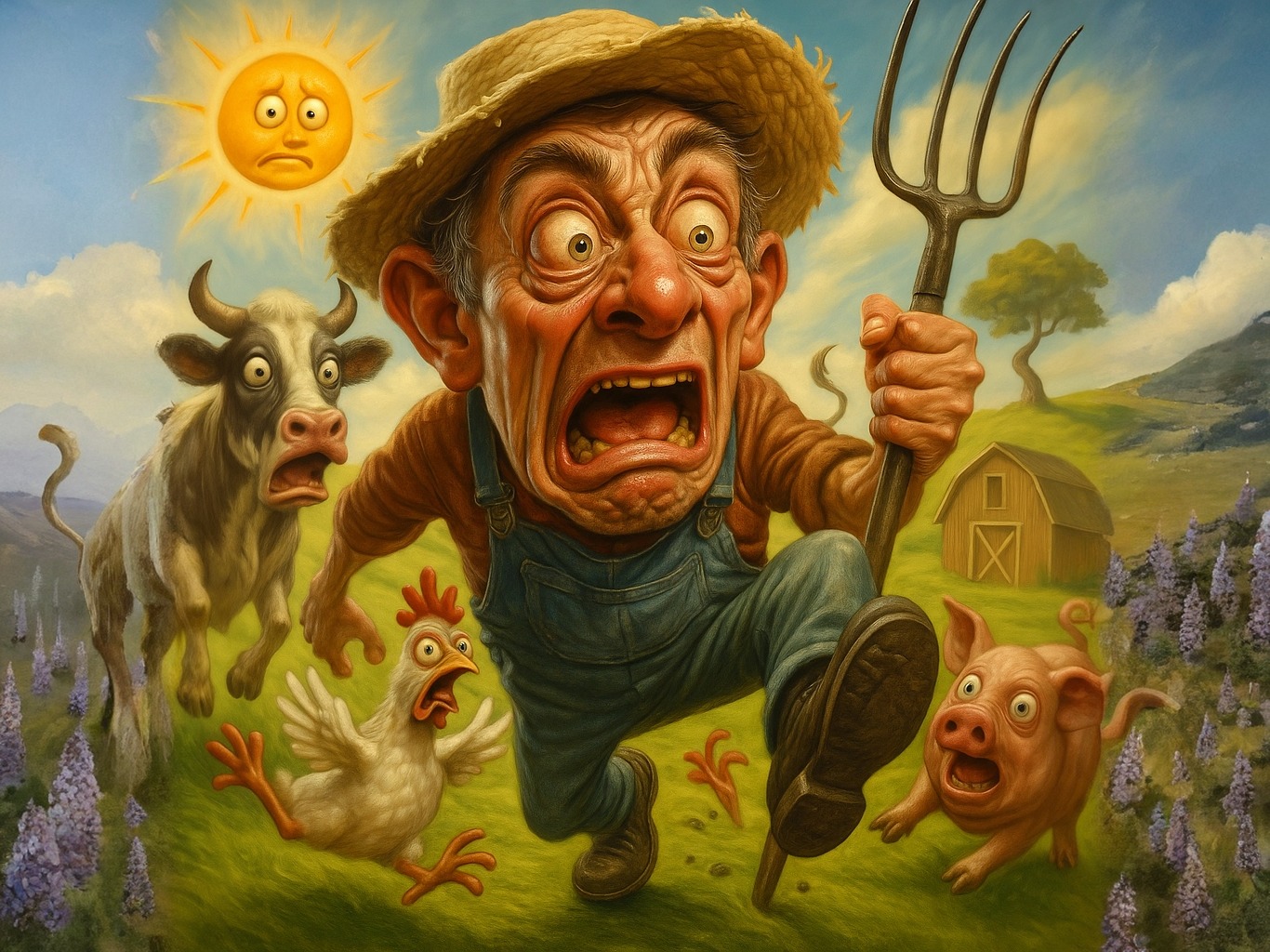
The Farmer in the Dell. A guy picks a wife, then the wife picks a kid, then the kid picks a nurse, and it keeps going until—surprise, surprise—the cheese is left alone. You know, I always liked that part. Because if you ask me, the cheese made out better than anybody else. At least it didn’t have to marry Peg.
So, let’s break this tragedy down. The farmer, poor slob, thinks life is gonna get better by picking a wife. Sure. And I thought life would get better once I sold my first pair of shoes. Spoiler alert: it didn’t. The wife comes along, and now she’s picking a kid. You think kids bring joy? Yeah, if your idea of joy is Bud begging for gas money so he can drive his rust bucket three blocks to get rejected by women, or Kelly asking for twenty bucks because she swears she saw shoes “on sale.” Every time they pick, it’s me getting picked clean.
Then there’s the nurse. Because when you’ve got a family, eventually you need someone to patch you up after they suck the life out of you. You need a nurse after your cholesterol shoots through the roof from Peg’s meatloaf. You need a nurse after you sprain your back carrying her bags of bonbons. And let’s not forget the nurse for the farmer—because you know he’s got ulcers, hemorrhoids, and probably gout from stress. If there’s one thing I know about being picked, it’s this: you don’t pick life. Life picks you apart.
And it keeps going. The rhyme piles it on, one pick after another, like layers of misery. It’s like the Bundy house. First the bills pick you, then the neighbors pick you, then Peg picks your wallet, and then the kids pick your bones. By the end of the day, you’re not a farmer, not a husband, not even a man. You’re a hollow shell with arch supports in your trunk and regret in your chest.
But then comes the ending. The cheese stands alone. Oh, how beautiful that is. A noble lump of dairy, free from wives, kids, and shoe sales. The cheese doesn’t have to explain why it’s too tired for romance. The cheese doesn’t get nagged to take out the trash. The cheese doesn’t hear, “Al, did you pay the electric bill?” No. The cheese just… stands. Alone. Untouched. A hero. That’s what I want on my tombstone: “Here lies Al Bundy. The Cheese.”
The lesson? Simple. Everyone thinks life is about picking the right person, the right family, the right path. No. Life is about surviving the picking until you’re the cheese. People laugh at that rhyme like it’s a game. But it’s not a game—it’s a warning. You get dragged into the circle whether you want to or not, and by the time they’re done, you’re praying to be left alone in the middle.
So my advice? Don’t fight being the cheese. Embrace it. Because in a world of farmers, wives, kids, and bills, being alone isn’t the punishment—it’s the prize.
The Grand Old Duke of York
A marching rhyme describing how the Duke leads his ten thousand men up a hill, then back down again.

The Grand Old Duke of York. A guy with ten thousand men, and what does he do with ’em? Marches ‘em up a hill, then back down again. That’s it. Ten thousand guys huffin’ and puffin’, sweating like me after dragging Peg’s bonbon-haul from the car, and for what? To end up right back where they started. Story of my life.
See, that’s what bosses do. The Duke had soldiers; I’ve got women with bunions. He leads ‘em uphill to nowhere. I lead customers to shoes they’ll never buy. “Oh, Mr. Bundy, do these come in a seven-and-a-half narrow?” Yeah, lady, and I’ve also got a unicorn in the back polishing my car that doesn’t exist. So, I bend, I lift, I fetch—then what? Nothing. They walk out, I’m left with a hernia and the sweet smell of athlete’s foot. Up the hill, down the hill, back at zero.
And people say the Duke was “grand.” Sure. Grand at wasting time. Ten thousand guys probably wishing they’d stayed in bed, staring at the ceiling fan like me every morning before I drag myself to the shoe pit. At least when I waste my life, I don’t need a marching band. I just need Peg nagging in my ear, Kelly begging for gas money to go nowhere, and Bud crying about why girls don’t like him. I got my own army—it’s called the Bundy family. And every day, they march me straight into poverty.
But here’s the lesson: life is the hill. You’re either slogging up it with bills strapped to your back, or you’re tumbling down it with your pride in a body cast. There’s no top. No reward. No “grand” view. Just more marching orders. The Duke wasted ten thousand lives. I wasted mine marrying Peg. At least his army got some fresh air. Mine’s just secondhand smoke from Peg on the couch.
And advice? Simple. Don’t follow Dukes. Don’t follow bosses. Don’t follow wives. Don’t even follow your dreams—they’ll just lead you up a hill and laugh when you’re winded. Stay at the bottom, where the beer is cheap and the chairs don’t squeak under your weight. People will call you lazy, a bum, a loser. But at least you’re not wasting energy marching in circles like a sucker.
The rhyme says when they were up, they were up, when they were down, they were down. Sounds like marriage to me. You think you’re up when you meet the girl, then you’re down when you marry her. Then you’re somehow both up and down at the same time—like when Peg maxes out the credit card while I’m still paying off the last one.
So yeah, the Grand Old Duke of York had ten thousand men. Big deal. I’ve got two kids, one wife, and a dead-end job. And I’m more exhausted than his whole army. At least they got exercise. All I get is Peg asking, “Al, did you pick up more bonbons?” Up the hill, down the hill. Welcome to Bundy life.
This Little Piggy
A toe-counting rhyme describing what each of five little pigs does, ending with one crying all the way home.
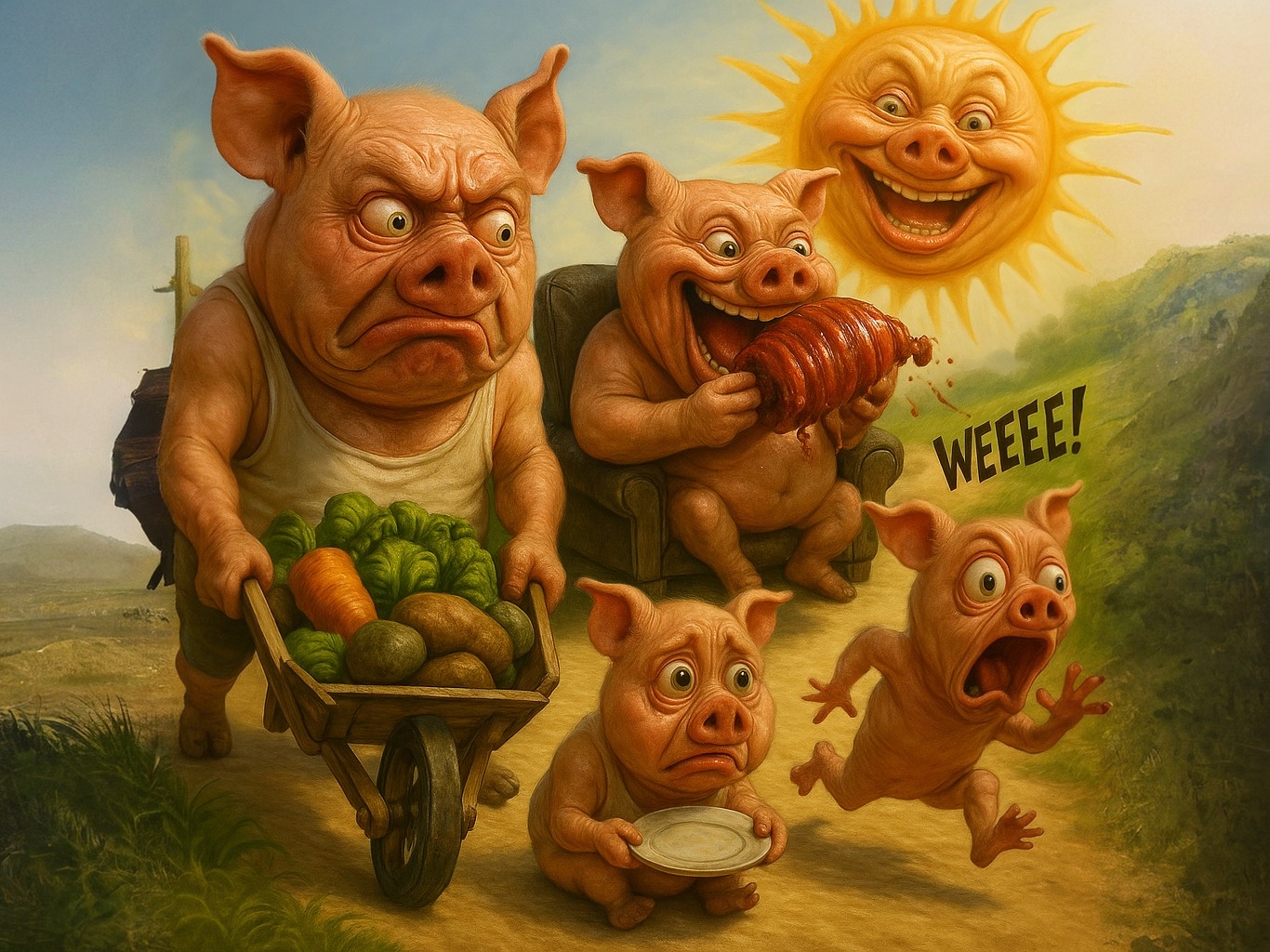
This Little Piggy. A rhyme about toes, pigs, and failure—three things I know too much about. You got five pigs, each with a different job. One goes to market. One stays home. One eats roast beef. One starves. And one cries all the way home. You know what that is? That’s life. That’s my life.
First piggy goes to market. Oh, big shot, making deals, buying and selling, probably has health insurance and a lunch break. Meanwhile, I go to the shoe store—different kind of market. My customers don’t buy roast beef. They buy size 12 pumps they’ll return in a week because their bunions “feel pinched.” If I’m lucky, I make enough to fill Peg’s bonbon jar and keep Bud from whining about needing twenty bucks for “date night.” Yeah, Bud—the piggy who thinks he’s going to the market but really just ends up staying home with a mirror and a sock.
Then you got the piggy who stayed home. That’s Peg. All day. Home. Couch. Hand outstretched. Watching soap operas like it’s a full-time career. And every time I walk in after twelve hours of shoe hell, she looks at me like I’ve just ruined her life by existing. Meanwhile, she hasn’t moved except to unwrap another bonbon. Market pig, home pig—it doesn’t matter. They both live off me.
The third piggy eats roast beef. That’s Kelly. She’s out there blowing through whatever money she tricks out of me on hair spray, lipstick, and boyfriends who dump her before the mousse dries. She eats like there’s no tomorrow, and I’m the tomorrow stuck paying for it. Roast beef? I’m lucky if I get the cold gristle left on the plate after everyone else is done.
The fourth piggy has none. That’s me. No roast beef. No steak. No dignity. Just a guy who eats whatever crumbs Peg doesn’t shove into her mouth. The rhyme doesn’t say what he eats instead. But I can tell you: disappointment. Served fresh every day. And it comes with a side of, “Al, the kids need new shoes!” Like I don’t spend enough time around shoes already.
And then the fifth piggy cries all the way home. That’s not a pig. That’s every man who’s ever been married. Crying into his steering wheel on the way home from work, knowing what’s waiting for him isn’t peace and quiet, but Peg asking for money, Kelly asking for money, Bud asking for money, and the TV blasting a soap opera rerun so loud you’d think it was a national emergency.
So what’s the lesson? Life’s a foot. Some toes get roast beef, some get nothing, and the rest cry all the way home. My advice? Don’t be the market pig, don’t be the roast beef pig, don’t even be the crying pig. Just cut the whole foot off and save yourself the pain.
Three Blind Mice
A rhyme about three blind mice who chase the farmer’s wife, only to lose their tails when she cuts them off.
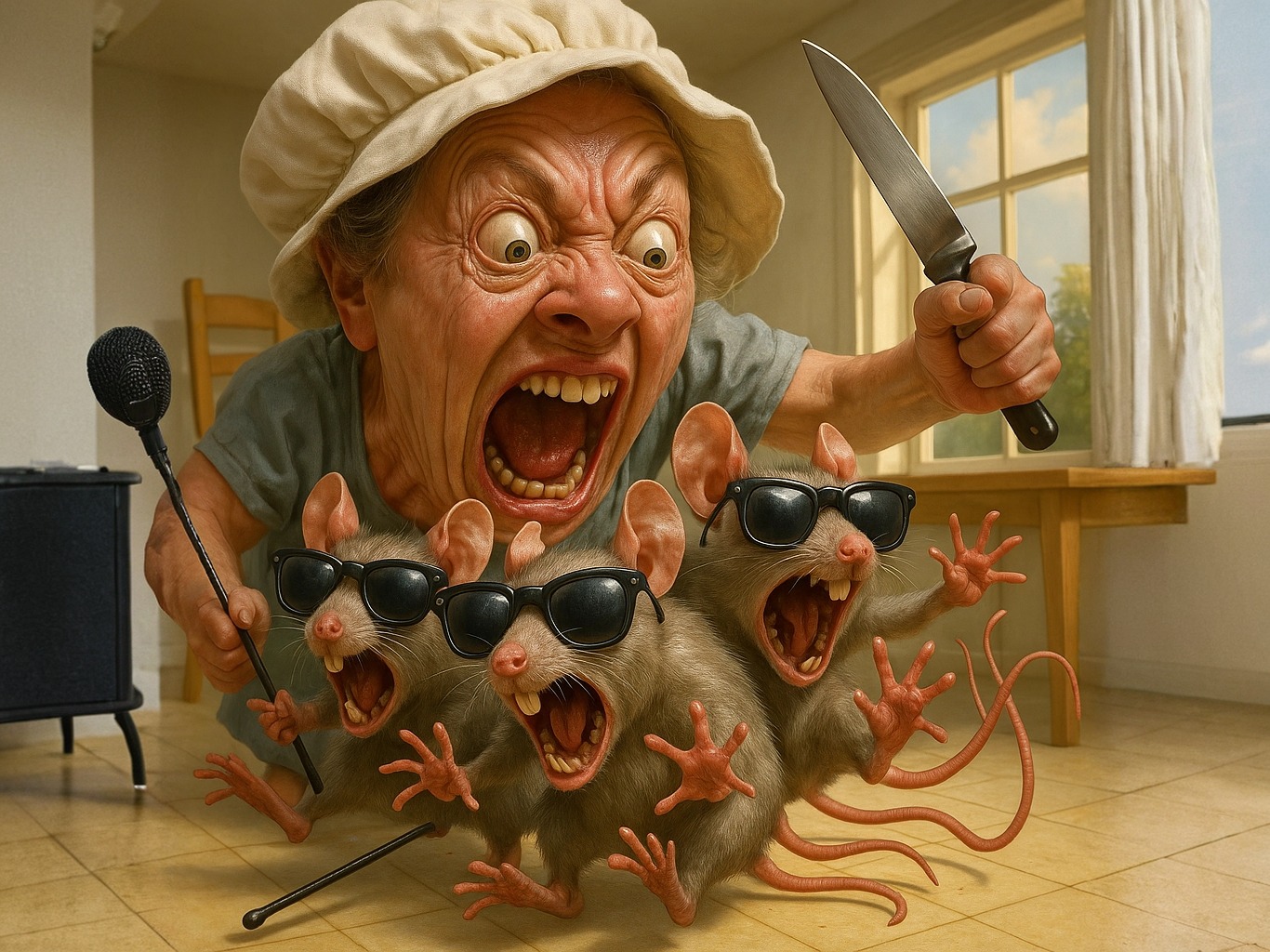
Three blind mice. Yeah, that’s about right. Three poor suckers running around without a clue, chasing after something they’ll never get, and what happens? They lose their tails. That’s life. You start with nothing, you try anyway, and somehow you end up with even less. Sounds familiar, doesn’t it? That’s me every payday—walking in with a check, walking out with Peg taking it, Bud begging for gas money, and Kelly whining about a new dress. Three blind mice? Try one blind Bundy.
So these mice are blind. They can’t see, but they still chase the farmer’s wife. You know what that is? Optimism. The belief that maybe if you just keep running, something good will happen. Let me tell you about optimism—it’s a scam. I was optimistic once. Thought I’d be a football hero. Next thing you know, life swung a butcher’s knife, and here I am selling shoes to women with feet so wide they can block a field goal. Optimism is just blindness with a smile.
And then there’s the farmer’s wife. She doesn’t just chase them off, doesn’t scare them—no, she cuts off their tails. That’s Peg. You come crawling in, hoping for mercy, maybe even a little kindness, and what does she do? Lops off whatever’s left of your pride. Same with the kids. Bud doesn’t just take money—he takes your hope he’ll ever move out. Kelly doesn’t just ask for clothes—she takes your will to live when she asks for them five minutes after ruining the last ones. By the time they’re done, you’re not just blind—you’re tailless.
And the rhyme tells this story like it’s funny. “See how they run! See how they run!” Yeah, I’ve seen how they run. They run right out of my wallet, my patience, and my house, leaving me holding a bill for things I didn’t even buy. Watching mice lose their tails isn’t funny—it’s Tuesday at the Bundy house.
So what’s the wisdom here? Don’t chase what you can’t see. Don’t run after something that’ll cut you down even more than you already are. Stay put. Accept the blindness. Protect your tail. Because once you lose it, you’ll never get it back, and all you’ll be is another verse in a nursery rhyme people sing to kids as a joke.
My advice? Forget chasing farmer’s wives. Forget chasing dreams. Forget chasing anything at all. Sit in your hole, stay quiet, eat your crumbs, and pray nobody notices you. Because the second you make a move, life swings the knife. And if you’re lucky, you’ll only lose your tail. If you’re me, you lose your money, your pride, and your Sunday football game, all while Peg asks if you remembered the bonbons.
Twinkle, Twinkle, Little Star
A classic lullaby where a child gazes at the night sky, marveling at a star’s sparkle, comparing it to a diamond shining high above the world.
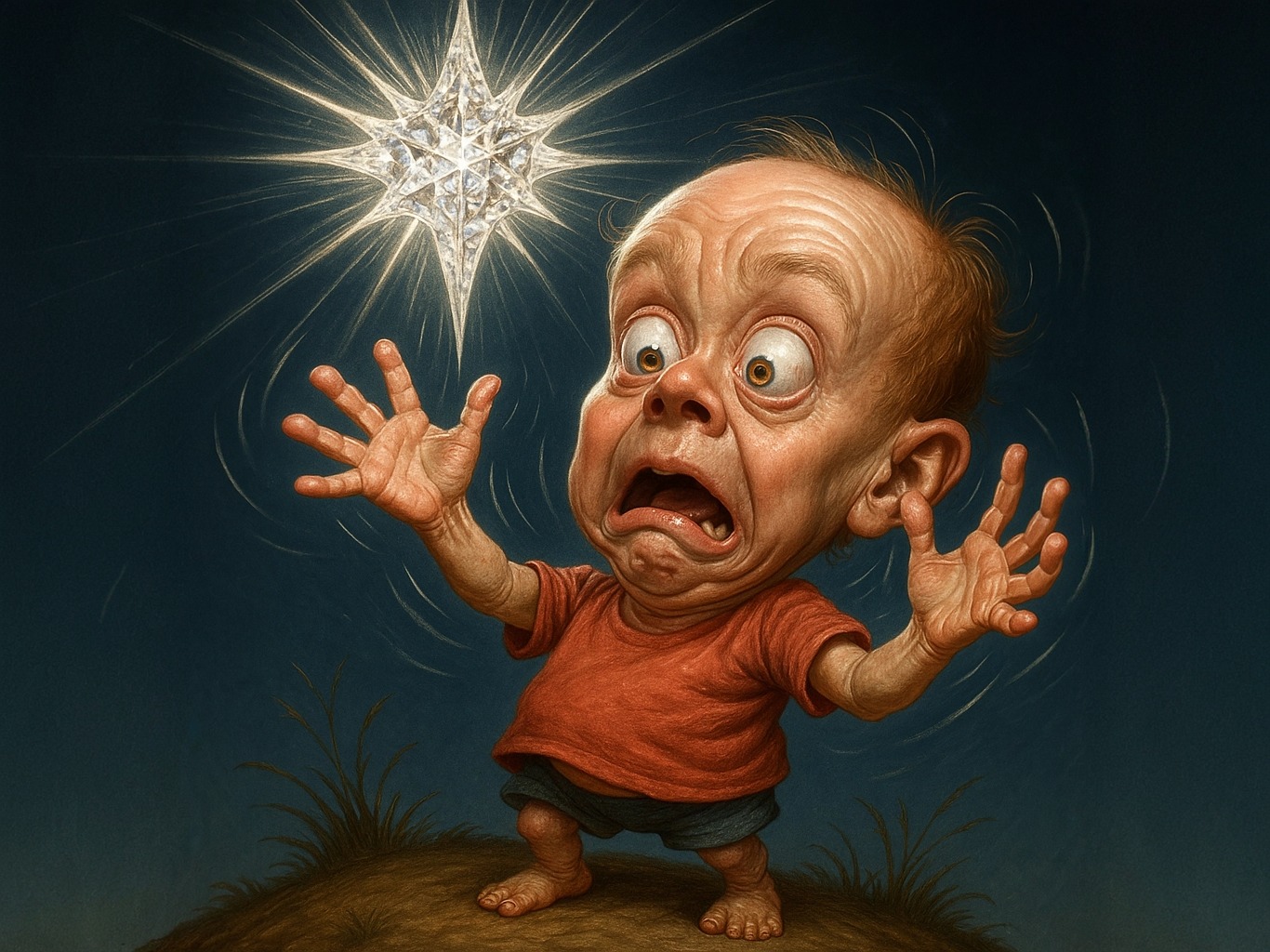
Twinkle, twinkle, little star. Yeah, big deal. Some glowing dot up there in the sky, like I’m supposed to stare at it and feel better about life. Meanwhile, I’ve got Peg on the couch next to me, hogging the remote, Bud asking for gas money for a car he doesn’t even have, and Kelly trying to figure out how to spell “job.” But hey, let’s all look up at the pretty diamond in the sky and forget about reality. Sure.
They call it “marveling.” You know what I marvel at? How I keep selling shoes twelve hours a day, and at the end of the week, I’ve got just enough money left to buy Peg her bonbons and pay for Kelly’s hairspray habit. If stars are supposed to make us dream, then mine’s broken, because all I dream about is escaping the shoe store without bunion powder on my shirt. And diamonds? Forget it. Peg would trade me in for a diamond the size of a peanut. Probably even half a peanut.
Now, the kid in the song stares up at the sky and asks, “What you are?” I’ll tell you what it is: it’s far away. And that’s what makes it nice. You can’t touch it. You can’t smell it. You can’t hear it whining about how “the neighbors have a bigger TV, Al.” Stars don’t sit around draining your wallet or breaking your spirit. They just sit up there, sparkling. That’s the trick—distance. Everything looks better when it’s not living in your house, eating your food, or asking you for twenty bucks.
So what’s the lesson here? Don’t get suckered by the shine. Stars twinkle, diamonds sparkle, women smile at you before you marry them. It’s all the same scam. You think it’s magic, but really, it’s just another way to get you hooked before you realize you’re stuck. My advice? Keep your head down, don’t stare at the sky too long, and remember, diamonds may be forever, but so is Peg when you can’t afford a divorce lawyer.
In the end, stars are just tiny lights reminding you how small you are. And you know what? They’re right. You’re small. You’re broke. You’re tired. But at least you’re not sitting on a couch in Chicago listening to your wife say, “Al, the star looks like a diamond… can I have a diamond?” No, Peg. You can’t. The only diamond you’re getting is the grease stain on my shirt shaped like a rhombus.
Wee Willie Winkie
A little man in nightclothes runs through town, peeking into windows and calling for children to go to bed.
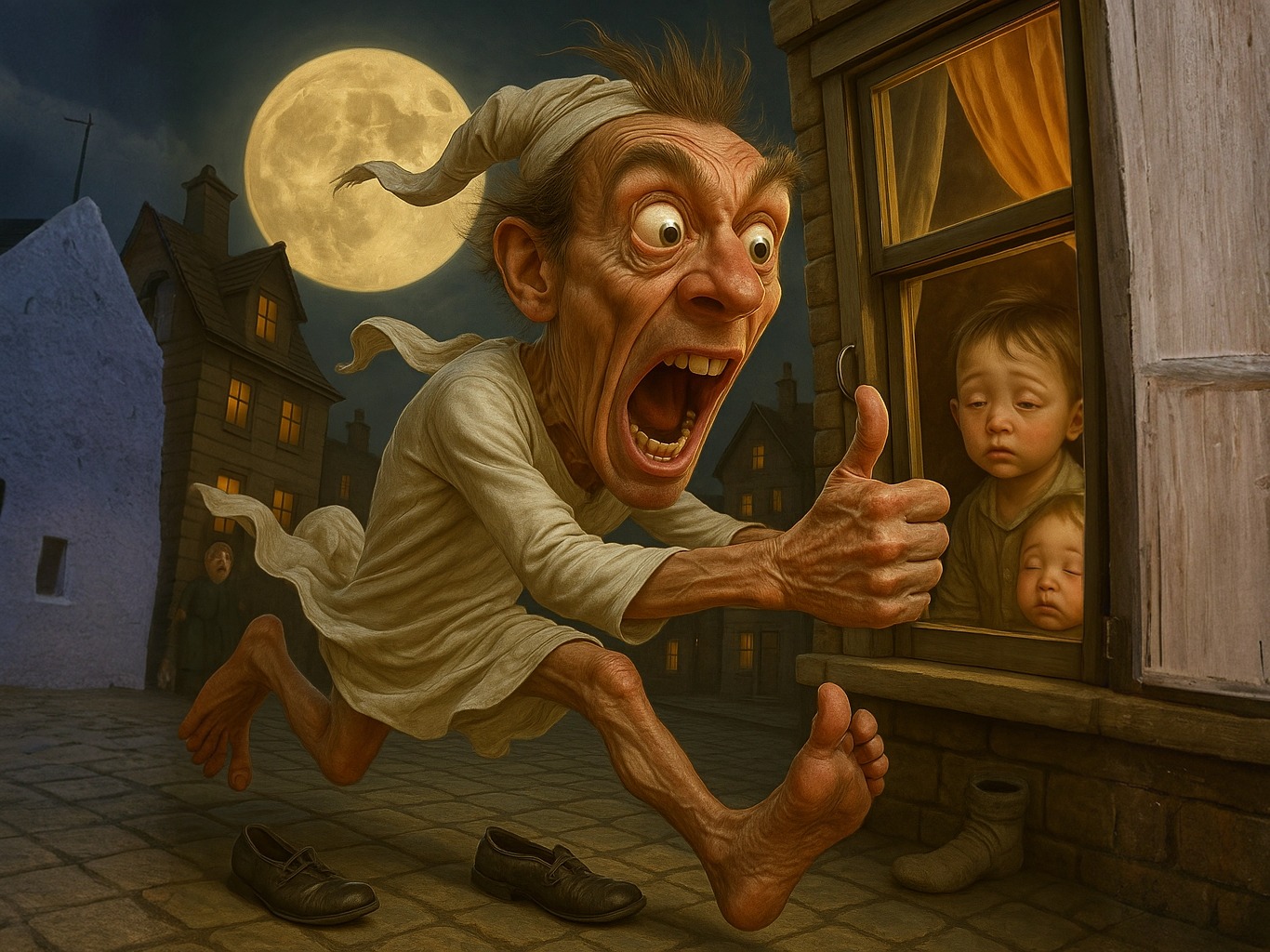
Wee Willie Winkie. Some half-pint lunatic running around town in his pajamas, banging on windows, yelling at kids to go to bed. You know what that sounds like? My Saturday night. Except instead of telling kids to sleep, I’m yelling at Bud to get out of the bathroom before Kelly burns the house down with a curling iron. And nobody listens to me either. The dog listens more than my kids do—and that’s only because it knows I’m the one stuck feeding it.
But let’s talk about this Winkie character. First off, who decided the town needs a scrawny guy in a nightshirt as their bedtime enforcer? I can barely get Peg to put down the remote, let alone a bunch of sugar-charged kids to climb into bed. And this guy just jogs around like the human alarm clock? I already know the type—probably the one guy in town who doesn’t have a wife bleeding him dry or kids asking him for gas money. That’s why he’s got the energy. Me? I get home from the shoe pit, drop into the couch, and pray the ceiling caves in before Peg asks me to “talk about our relationship.”
And let’s not pretend this isn’t creepy. A grown man in pajamas peeking through windows? Where I come from, we call that a felony. But in nursery rhyme land, everybody just nods and says, “Oh, that’s Willie, making sure the children sleep.” Yeah, and I’m sure Peg’s just “making sure the economy runs” every time she hits me up for another twenty bucks to buy bonbons.
Now here’s the kicker: all this running around, all this yelling, and what happens? The kids still don’t go to bed. They never do. You think Kelly went to bed when she was told? No. She stayed up half the night yakking on the phone about some guy who dumped her at the mall food court. And Bud? He stayed up because he thought if he just stayed awake long enough, women would magically appear in his room. Spoiler: they didn’t. They never do.
So what do we learn from this circus act? Simple. Life is one long game of Willie Winkie. You run around, you bang on doors, you scream, and in the end, nothing changes. The kids don’t listen, the bills don’t get paid, and the only thing that goes to bed is your dignity.
You want advice? Don’t be Willie Winkie. Don’t run around chasing kids who don’t care. Don’t peek through windows hoping for order. Do what I do: collapse in your chair, stick your hand in your waistband, and let the world burn down around you. At least you’ll go down sitting.
Because the truth is, Willie Winkie isn’t a hero. He’s a warning. Don’t waste your life sprinting around trying to control chaos. It’s like selling women’s shoes—you yell, you beg, you bend, and they still walk out unhappy. Better to save your breath. The kids won’t sleep. Peg won’t change. And you? You’ll still be the guy left in pajamas, broke, tired, and praying for peace that never comes.
Click here to go to Grimm Prospects – Episode I

