Baa, Baa, Black Sheep
A simple rhyme in which a black sheep answers a child’s request for wool, giving it to the master, the dame, and a small boy.
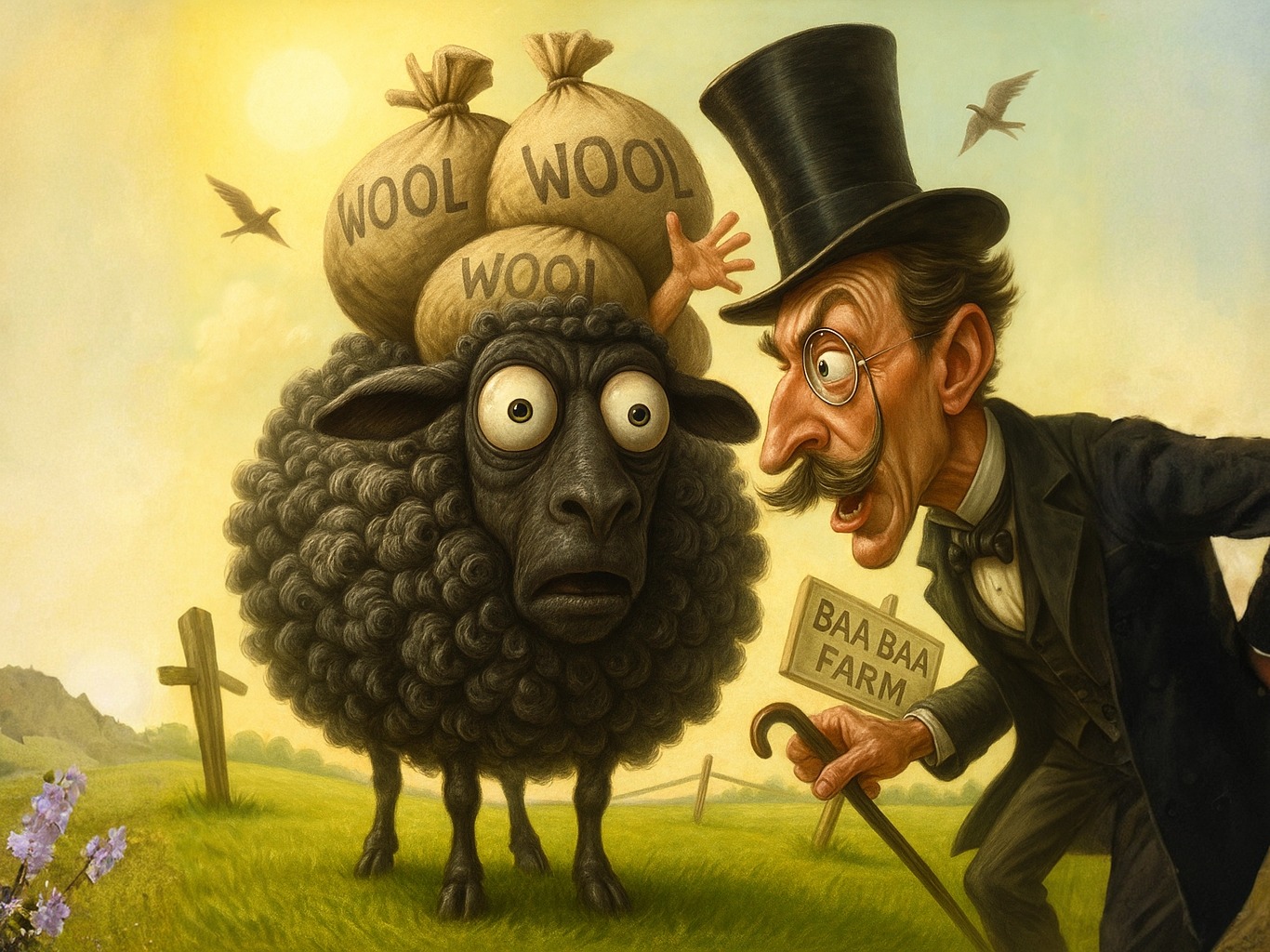
Baa, baa, black sheep. Yeah, I know the guy. Poor sap gets asked if he’s got any wool, and like every beaten-down husband in America, he coughs it all up. One for the master, one for the dame, one for the little boy. Meanwhile, what’s left for him? Nothing. Just a naked sheep standing there in the cold, probably wishing he’d been turned into lamb chops instead. I can relate.
You see, the master’s like my boss at the shoe store. Always taking the first cut, acting like he’s doing me a favor by giving me minimum wage and a stool to sit on while bunion-ladies bark at me for a size seven they’ll never fit in. Then there’s the dame. That’s Peg. Of course she gets her share—probably the biggest, too. She’s the only woman alive who can take wool, turn it into a sweater, and still say she’s freezing and needs another one. And the little boy? That’s Bud. Always whining, “Dad, can I have money for a date?” Sure, son, here’s your wool. Try not to scare her away this time.
And Kelly—she doesn’t even ask for wool. She wants silk, sequins, something shiny to wear to impress some guy who’s too dumb to know better. Which means she ends up taking half of what’s left over anyway. At the end of the day, just like the black sheep, I’m stripped bare. They’ve taken it all. My paycheck, my pride, even the remote. And the best part? They’ll come back tomorrow for more.
So what’s the lesson? Don’t be the black sheep handing out wool like it’s free candy. Life’s full of masters and dames ready to shear you dry, and once you’re bald, they’ll still ask if you’ve got a little extra lying around. The wisdom is this: say no. Keep a little for yourself. But of course, that’s not how it works in the Bundy household. The second I try to keep something, Peg’s there with her hand out, Bud’s whining, Kelly’s batting her eyes, and suddenly I’m down to lint in my pockets.
My advice? Accept it. You’re the sheep. They’re the shearers. The only control you have is whether you bleat on the way down. And believe me, I’ve been bleating for years. Because if you don’t laugh at it, you’ll cry—and trust me, tears don’t pay the cable bill. Wool doesn’t either, but at least it keeps someone else warm while you freeze.
Here We Go Round the Mulberry Bush
A traditional circle game rhyme where children sing, dance, and mime daily chores around an imaginary mulberry bush.
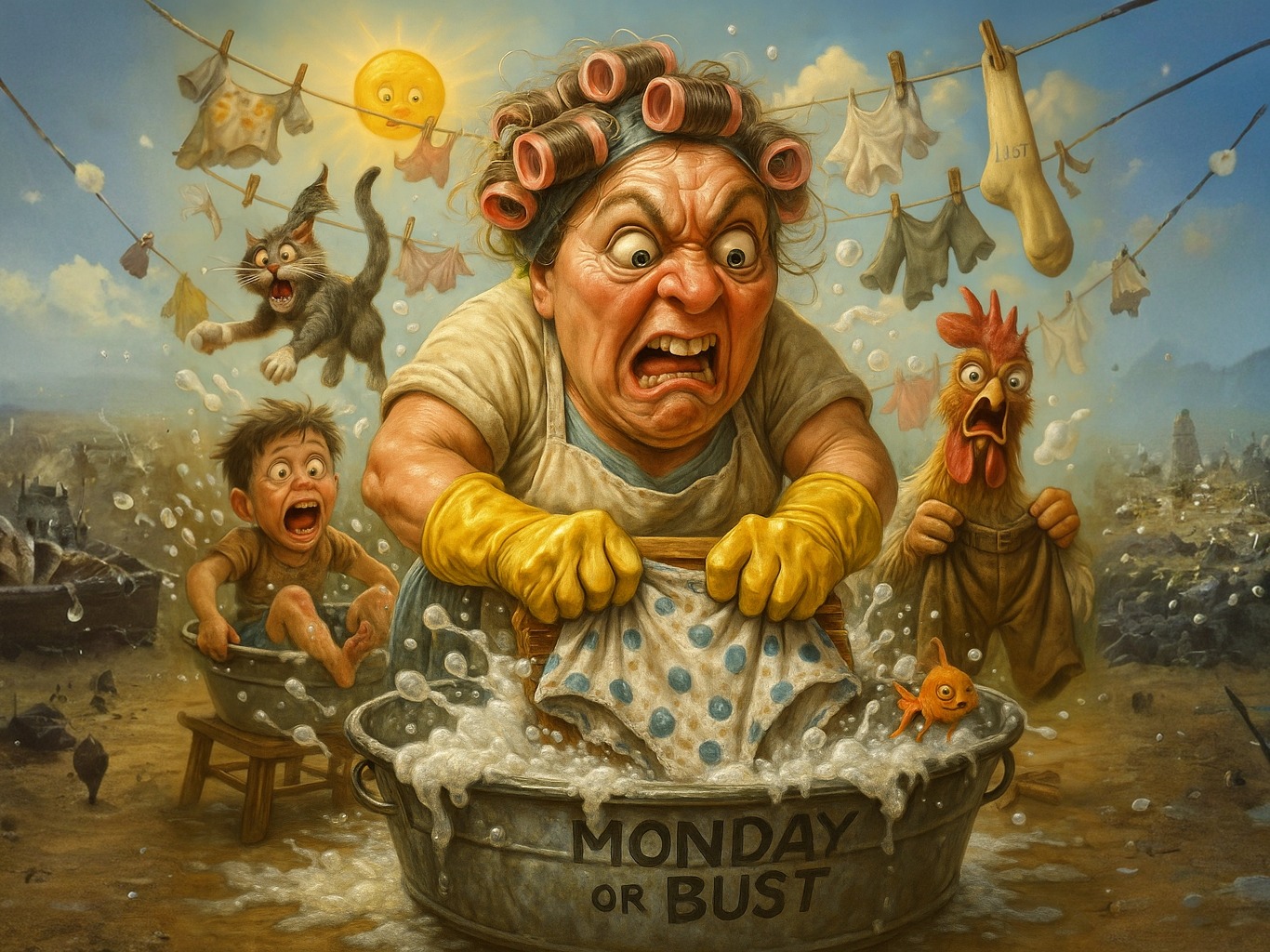
Here we go round the mulberry bush. Yeah, because nothing says “fun” like walking in a circle pretending life isn’t one big loop of misery. Kids sing, they dance, they mime daily chores, like scrubbing clothes or brushing their hair. Meanwhile, I’ve been going around the same damn bush for forty years: wake up, sell shoes, hand over my paycheck to Peg, and listen to Bud whine that he can’t get a date unless I finance him a whole personality. Spoiler: no bank in Chicago covers that loan.
The rhyme says it’s a game. A game. Funny, because my life feels like one too, only I didn’t get to pick the rules. The house is the board, Peg’s the jail square, Bud and Kelly are the dice I keep rolling and somehow always land snake eyes. And the prize? Another night on the couch with Peg snoring louder than the Sears Tower wind. Lucky me.
And what’s with the “daily chores” part? The kids spin around pretending to wash, clean, sweep, like chores are some happy little song. Let me tell you something. Chores aren’t fun. Chores are scraping gum off the floor of the shoe store after twelve hours of women asking if their size nine hooves come in a dainty six. Chores are me, scraping together enough money for gas after Kelly “borrows” the car and comes home with an empty tank and a new hair color.
But sure, let’s have kids spin in circles and call it joy. Meanwhile, my circle is called life. You start with hope, swing past disappointment, trip over regret, and end up back where you started, broke and tired, selling orthopedic shoes to people who think a Dr. Scholl’s insert counts as a personality. That’s my mulberry bush, folks. And it’s been pruned down to a stump.
What’s the lesson here? Don’t get married. Or, if you do, make sure your wife doesn’t think “cold and frosty morning” means the ice cream in the freezer. And don’t have kids unless you enjoy handing out money like it’s Halloween candy, except every day’s Halloween and the monsters never leave your house.
You want advice? Here’s Al Bundy’s wisdom: life will make you go in circles. Round and round, same old bush. You can fight it, you can sing through it, or you can do what I do, complain, sit on the couch, and take pride in the one record I still hold: four touchdowns in a single game. It won’t fix your life, but at least it’ll keep you from lighting the bush on fire just to watch something burn besides your dreams.
So next time you hear “Here we go round the mulberry bush,” remember, it’s not a game. It’s a warning. Life doesn’t go forward. It goes in circles. And at the end of it, you’re still stuck with Peg, still broke, and still selling shoes. Now sing along, kids.
Hey Diddle Diddle
A nonsense verse filled with fantastical images: a cow leaping over the moon, a cat fiddling, and a laughing dog.
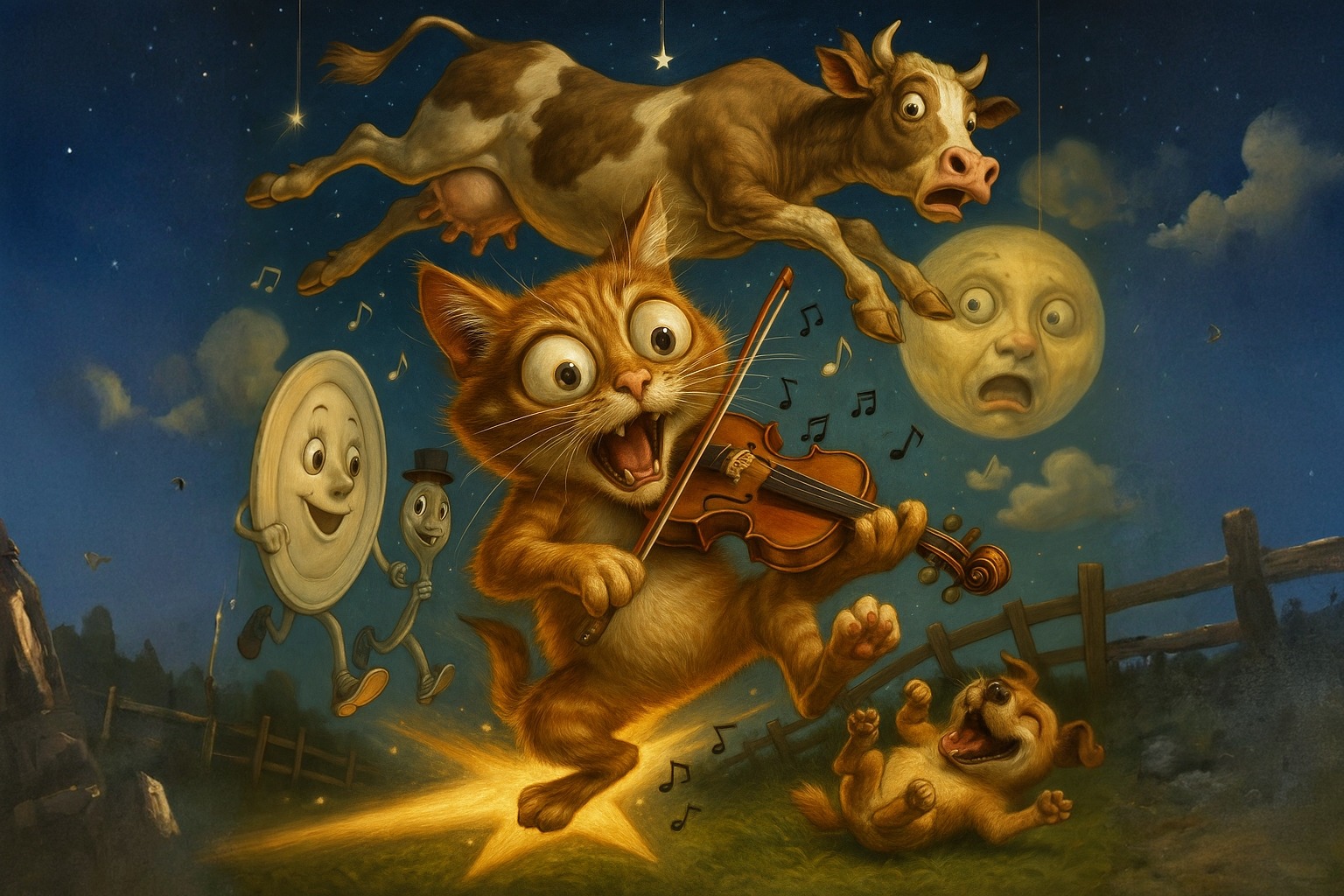
Hey Diddle Diddle. A cow jumps over the moon, a cat plays the fiddle, a dog laughs, and a dish runs away with a spoon. Yeah, that’s not a nursery rhyme, that’s a Bundy family reunion after Peg spikes the meatloaf with whatever expired liquor she found under the sink.
First off, a cow leaping over the moon. Sure. Because cows are known for their verticals. You ever see one? They barely get off the ground to avoid a train. But in this little fairy tale, the cow’s soaring into space like Michael Jordan with udders. That’s life in a nutshell—you expect something amazing, like success, but instead of a moon shot, you end up stuck in a shoe store, lacing up size 14 pumps for a woman who thinks “wide” is just a suggestion.
Then there’s the cat with the fiddle. A cat. Playing music. Sounds magical, doesn’t it? You know what I’ve got at home? Bud, strumming an old guitar, pretending he’s a rock star, and Kelly—well, she can’t play a fiddle, but she can fiddle with her brain long enough to forget her own phone number. Meanwhile, the music in my life is the sound of Peg unwrapping bonbons, like a fat raccoon tearing open garbage bags.
Now, a laughing dog. Let me tell you, when even the dogs are laughing at you, you’ve officially hit rock bottom. That’s me, every day. I come home, I sit in my crater on the couch, I sigh like a man three feet from death, and what happens? The whole family chuckles. “Ha ha, look at Dad, what a loser.” Even the neighbor’s dog looks at me with pity before peeing on my lawn. A laughing dog is supposed to be whimsical. For me, it’s just another reminder that I’m the punchline of life’s cruel joke.
And finally, the dish runs away with the spoon. Great. Even inanimate objects find love before I do. A dish and a spoon are out there having the honeymoon Peg and I never had, while I’m married to a woman whose idea of romance is asking me for cab fare. It figures. Dishes find happiness, and I find misery every time I open my paycheck.
So what’s the wisdom? Life’s a circus. Cows fly, cats play music, dogs laugh, and the most mismatched couples get a fairytale ending. Meanwhile, real people like me are stuck holding hands with Peg, paying for Bud’s pipe dreams, Kelly’s brain bleach, and customers who scream because we’re out of leopard-print stilettos in size five. My advice? Don’t wait for the cow to jump, don’t cheer for the cat, and don’t worry about the dish and spoon. Just sit down, close your eyes, and pretend the dog’s laughing with you—not at you.
Hickory Dickory Dock
A rhyme about a mouse that scampers up a tall clock, only to rush down again when the clock strikes one.
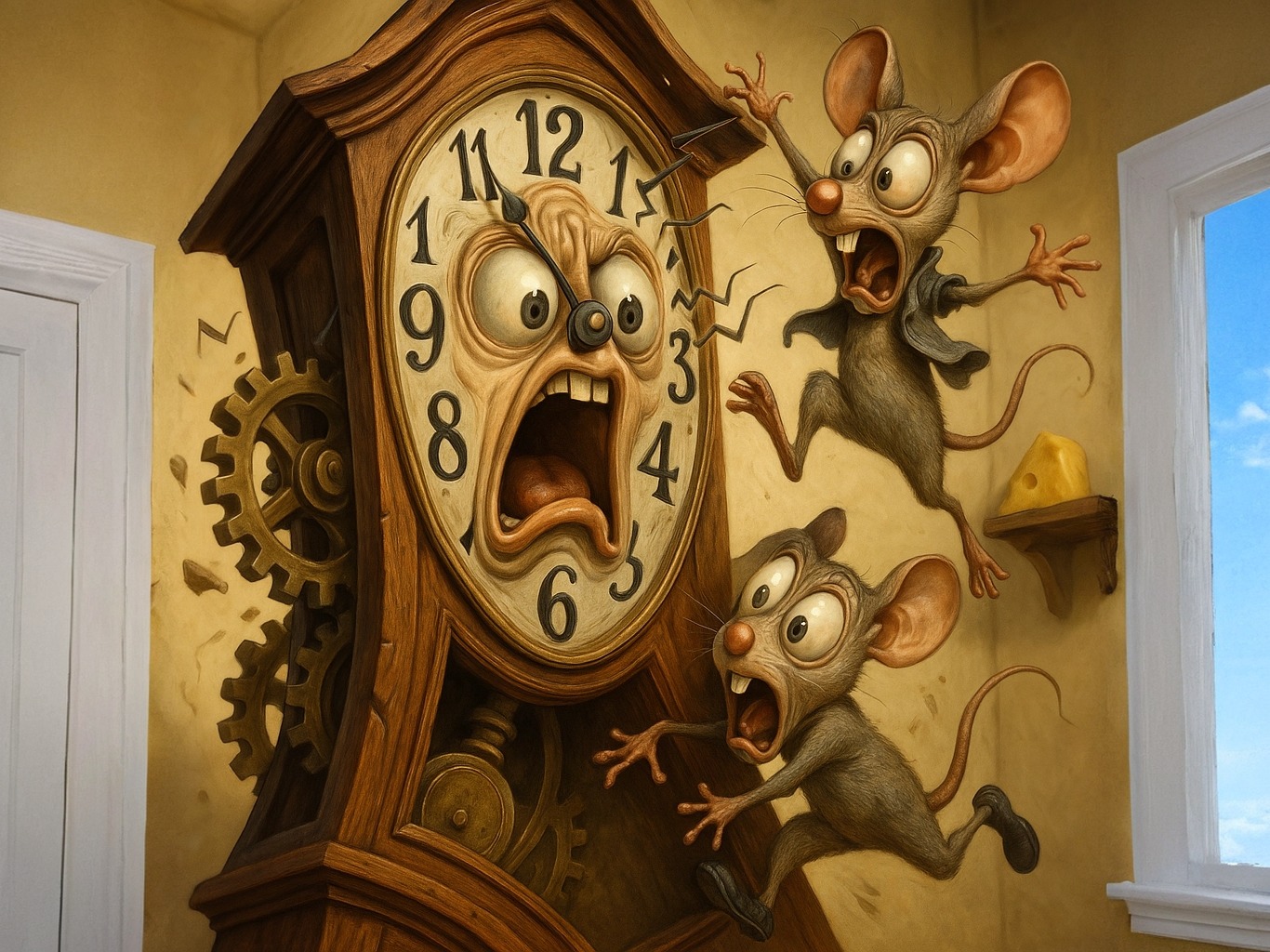
Hickory Dickory Dock. A mouse runs up a clock, the clock strikes one, and the mouse runs back down. That’s it. That’s the whole story. And somehow it’s a classic. Meanwhile, I’ve been busting my hump selling shoes for twenty years, and nobody’s writing nursery rhymes about me. Maybe because my story isn’t cute—it’s just one long tick-tock of misery, waiting for the bell to ring so I can go home and be even more miserable.
So the mouse climbs the clock. Big deal. You know what that is? Ambition. The idea that maybe if you work hard, you can climb higher, get a better view, maybe escape the rats at the bottom. Sounds familiar. I tried climbing once—dreamed of being a football star. And then life struck “one,” and down I went, tumbling right into a shoe store where the only clock that matters is the one counting down to my next bunion consultation.
And the second the bell rings? Bam. The mouse scurries back down, because reality doesn’t care if you climbed. It doesn’t care if you tried. The higher you get, the quicker you fall. Like Bud chasing girls—runs up the clock, the clock strikes rejection, and back down he goes. Or Kelly—struts up thinking she’s God’s gift, clock strikes dumb, down she tumbles with a new boyfriend who’s already stolen my wallet. And me? My whole life is one long bell ringing, reminding me to sit back down and take another shoe off a sweaty foot.
You ever notice the rhyme doesn’t tell you why the mouse ran up in the first place? That’s life. No reason. You just do it because it’s there, because maybe something will change. Spoiler: nothing changes. You’re still a mouse. The clock still strikes. And no matter how high you think you’ve climbed, you’re still running back down into the same old trap, waiting for the next tick. That’s marriage. You think you’re free, then Peg’s voice strikes one and you’re racing down the clock to hand over your paycheck.
So what’s the lesson? Don’t climb clocks. Don’t waste your time chasing the top. Because all you’re gonna get is a headache when the bell goes off and reminds you what you really are. Stay at the bottom. It’s safer. At least there, you know what to expect. The tick-tock of life is gonna grind you down either way, but if you’re already at the bottom, you don’t have far to fall.
My advice? Learn from the mouse. Run if you want, but don’t expect a reward at the top. The clock doesn’t care. It never cared. It just keeps ticking while you get older, poorer, and balder. And when it finally strikes midnight, don’t expect anyone to cheer. The only sound you’ll hear is Peg asking if we can turn back the clock—preferably to when I still had money in my wallet.
Humpty Dumpty
A nursery rhyme about an egg-shaped figure who falls off a wall and shatters, with all the king’s horses and men unable to repair him.
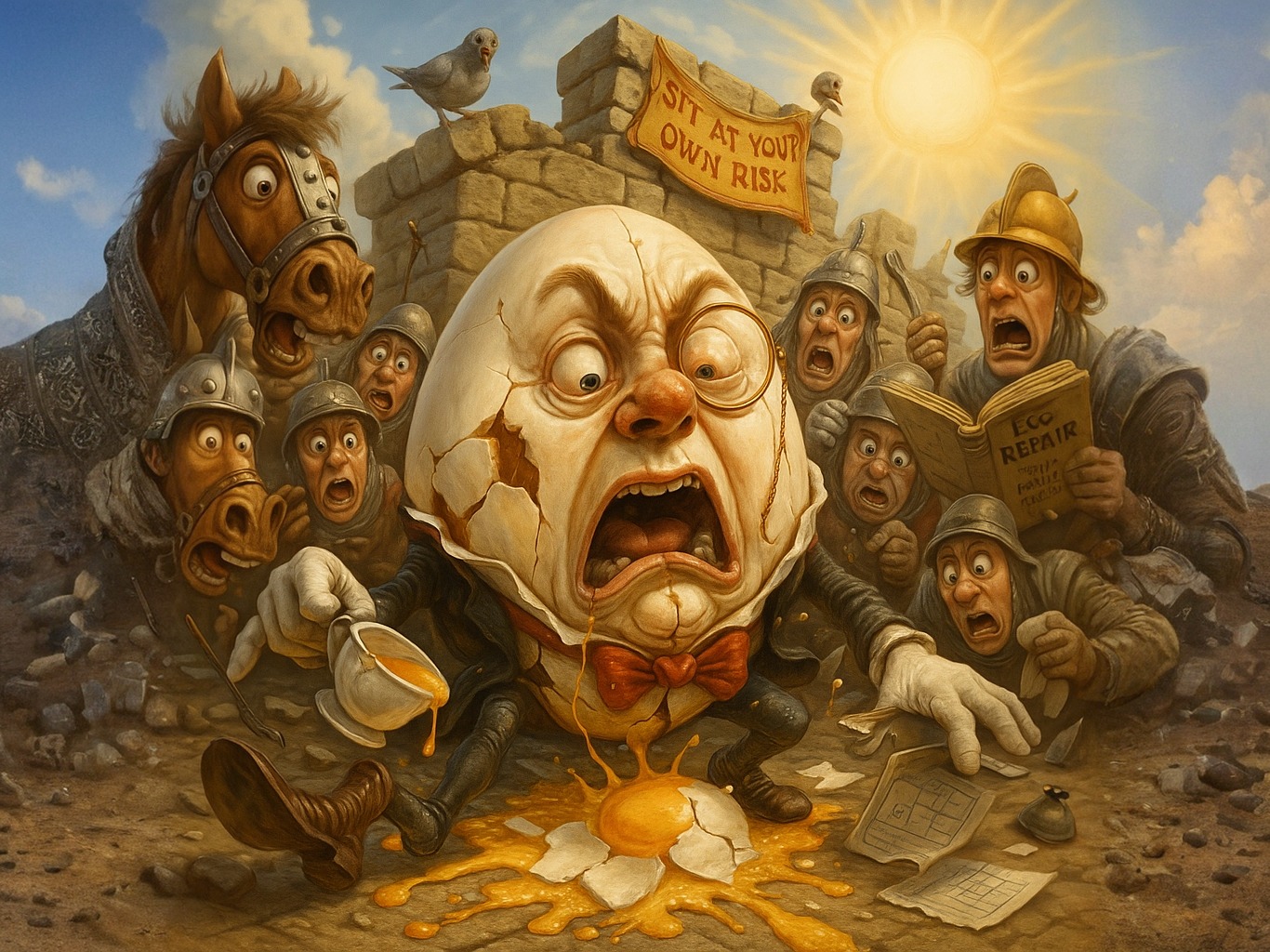
Humpty Dumpty. An egg sits on a wall, falls off, cracks open like Peg’s promises of “just one pair of shoes,” and suddenly the king’s whole army shows up like it’s worth saving. You ever notice that? You break your back at a shoe store, no one lifts a finger. But an omelet hits the pavement and suddenly it’s a national emergency. Figures.
So, the guy falls, splat, yolk everywhere. And what do we learn? That once you’re broken, you’re broken. Doesn’t matter how many horses or men show up. Once life cracks you, you don’t go back in the shell. Trust me, I’ve been cracked since the day I said “I do.” Peg’s been scrambling me for years. I wake up every day like Humpty Dumpty, just waiting for the wall of life to give out. Only difference is, nobody’s coming with glue. They just hand me another pair of women’s size 8 wides and say, “Try again, Bundy.”
Now, let’s talk about those king’s men. Horses? Really? That’s your repair crew? What’s a horse gonna do, nibble him back together? Typical management. Send in the wrong people for the job and act surprised when nothing works. Just like the shoe store. I’ve got a boss who thinks a guy making $12 an hour can magically turn bunions into high fashion. I’m the Humpty Dumpty of retail, only instead of falling off a wall, I just sink deeper into a couch while Peg asks, “Al, where’s the money?” Spoiler: It’s gone, Peg. Same place my pride went. Down the drain.
And then there’s the lesson. What wisdom do we squeeze out of this cracked egg? Simple: don’t climb walls. Stay low. Don’t take chances. Gravity’s undefeated, and so is life. You aim high, you fall harder. You stay on the couch, the worst that happens is Peg changes the channel to Oprah. And if you absolutely must climb the wall? At least make sure you’re not shaped like an egg. Be a rock. Rocks don’t crack. Rocks don’t have wives. Rocks don’t have kids like Bud and Kelly, who can smell a twenty-dollar bill from three states away.
So, my advice? Forget the wall. Forget the king’s horses. Forget the whole fairy tale. Life isn’t about being put back together. It’s about how many times you can hit the ground and still get up to hear Peg nag about dinner. Humpty Dumpty didn’t get that chance. In a way, I envy him. At least his suffering ended. Mine keeps renewing every month with the cable bill.
Jack and Jill
Two children climb a hill to fetch water, but Jack falls and breaks his crown, and Jill tumbles after him in comic misfortune.
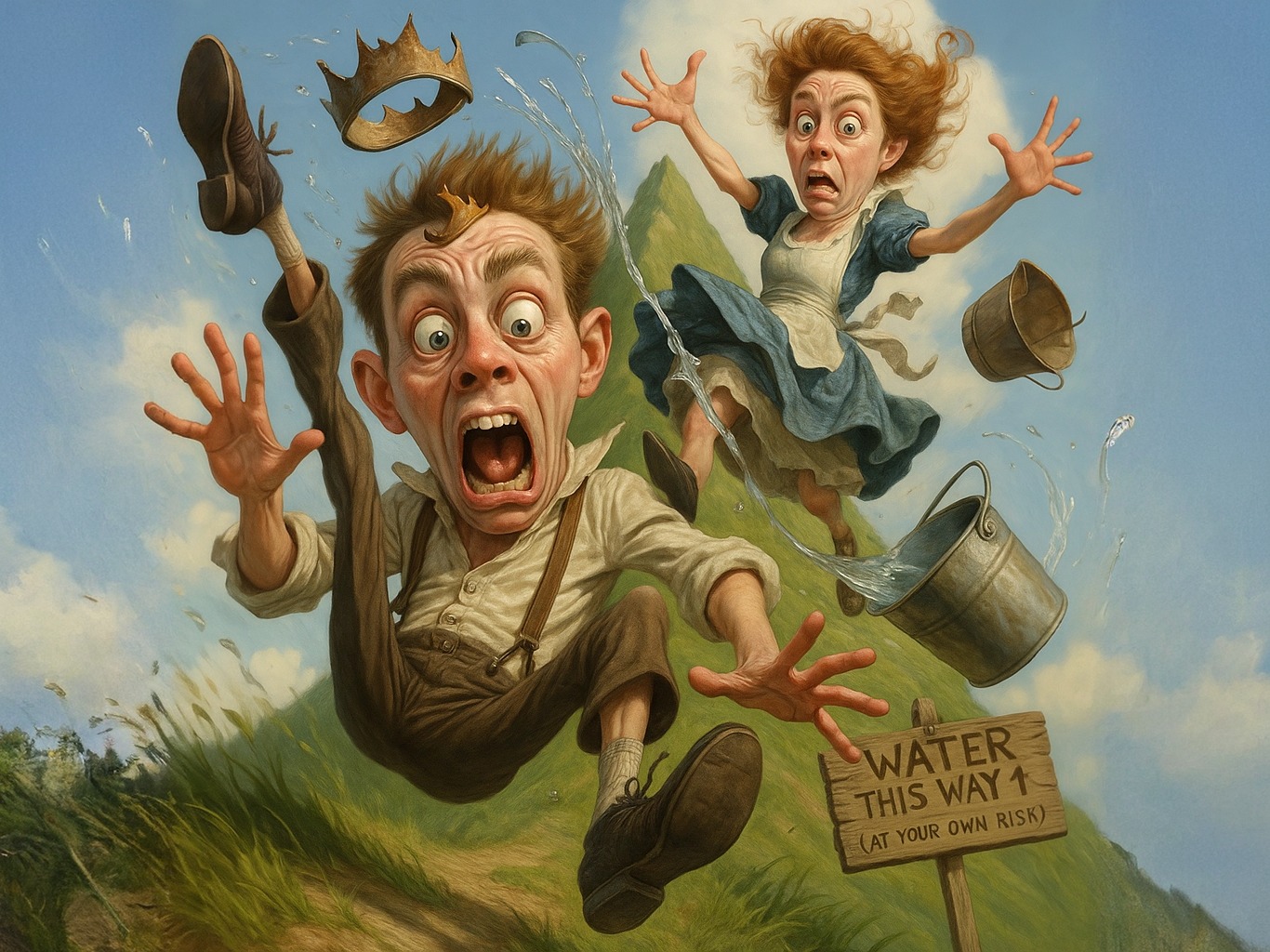
Jack and Jill went up the hill. Why? To fetch a pail of water. A pail! Like there’s no faucet in the house. No, they gotta trek uphill like idiots, sweating their little fairy-tale butts off for something that comes out of a sink. Sounds like my life—breaking my back for something no one appreciates while Peg lounges on the couch asking if I remembered her bonbons.
So Jack falls down, cracks his skull. Big surprise. You climb up, life smacks you down. Happens every day at the shoe store. You try to make it through a shift, then boom—twelve hours of fat feet and complaints about arch support later, you’re rolling back downhill with a broken crown of dignity. And Jill? Of course she tumbles after. That’s Peg. I take the fall, and she’s right behind me, only she lands softer because she lands on me. Always has, always will.
And the moral of the story? Don’t climb hills. Don’t chase dreams. Don’t think fetching water—or love, or hope, or whatever other garbage people write rhymes about—is worth it. You’re just gonna bust your head open and take someone else down with you. Trust me, I’ve been tumbling down that hill since the day I said “I do.” And every time I think I’ve hit bottom, Bud or Kelly show up asking for money, pushing me further down.
So my advice? Stay at the bottom of the hill. It’s safer there. The water tastes the same whether you climb for it or not. The only thing waiting up top is disappointment, injury, and Peg asking why you didn’t bring two pails instead of one.
Jack Be Nimble
A short nursery rhyme where Jack, known for speed and agility, leaps over a lit candlestick, symbolizing luck, fortune, and playful tradition.

Jack be nimble, Jack be quick. Yeah, good for him. He gets to hop over a candlestick like life’s just one big game of leapfrog. Meanwhile, I’m crawling over bills, tripping over Peg’s bonbon wrappers, and ducking Bud every time he comes around asking for twenty bucks “to invest in his future.” His future, by the way, is about as bright as that candle Jack’s jumping over, except his always burns out first.
So Jack jumps, and everyone claps. Big deal. You know what happens when I try to be nimble? I trip on the stairs carrying Peg’s shopping bags and pull a muscle in my back that still twinges every time I bend over to fit some sweaty lizard into a size 14 wide. That’s my Olympic event. No medals. Just bunion powder and humiliation.
And let’s talk about this candle. Back in the old days, they said if you cleared the flame, you’d have good luck. You know what I call luck? The day Peg decides to actually cook something that isn’t covered in processed cheese. Or when Kelly remembers which end of the book you start reading from. That’s luck in the Bundy household. Jumping over a candle? My luck would be setting myself on fire and still having to finish my shift at the shoe store.
But sure, Jack’s got speed, agility, fortune, and tradition. You know what my tradition is? Coming home after twelve hours of smelling feet, finding Peg stretched out on the couch watching soaps, Bud waiting with his hand out like I’m the Bank of Dad, and Kelly asking me if my employee discount works on brain implants. If Jack thinks hopping over a candlestick makes him a hero, he should try hopping over my life. Spoiler: you still land in the same spot. Broke.
What’s the lesson here? Maybe it’s this: life throws fire at you, and you either clear it or you don’t. Some people get fortune, some get toasted. Me? I got Peg. My flame was snuffed out in 1969, right after four touchdowns in a single game. Since then, haven’t been able to jump over a tea light even if my life depended on it.
Advice? Don’t be Jack. Don’t try to be nimble, don’t try to be quick. Stay low, keep your head down, and for God’s sake, don’t marry a woman whose idea of romance is reminding you that the couch is your bed now. Because if you play the game like Jack, the best you get is a round of applause. Play it like Al Bundy? You get misery, sarcasm, and a pair of women’s pumps in your face. But at least you can laugh while you’re burning.
So go ahead, kids, chant your rhyme. Jack be nimble, Jack be quick. Just remember—candles go out. And when they do, all you’re left with is the smoke.
Little Bo Peep
A shepherdess loses her flock of sheep, but the animals return on their own, though missing their tails.
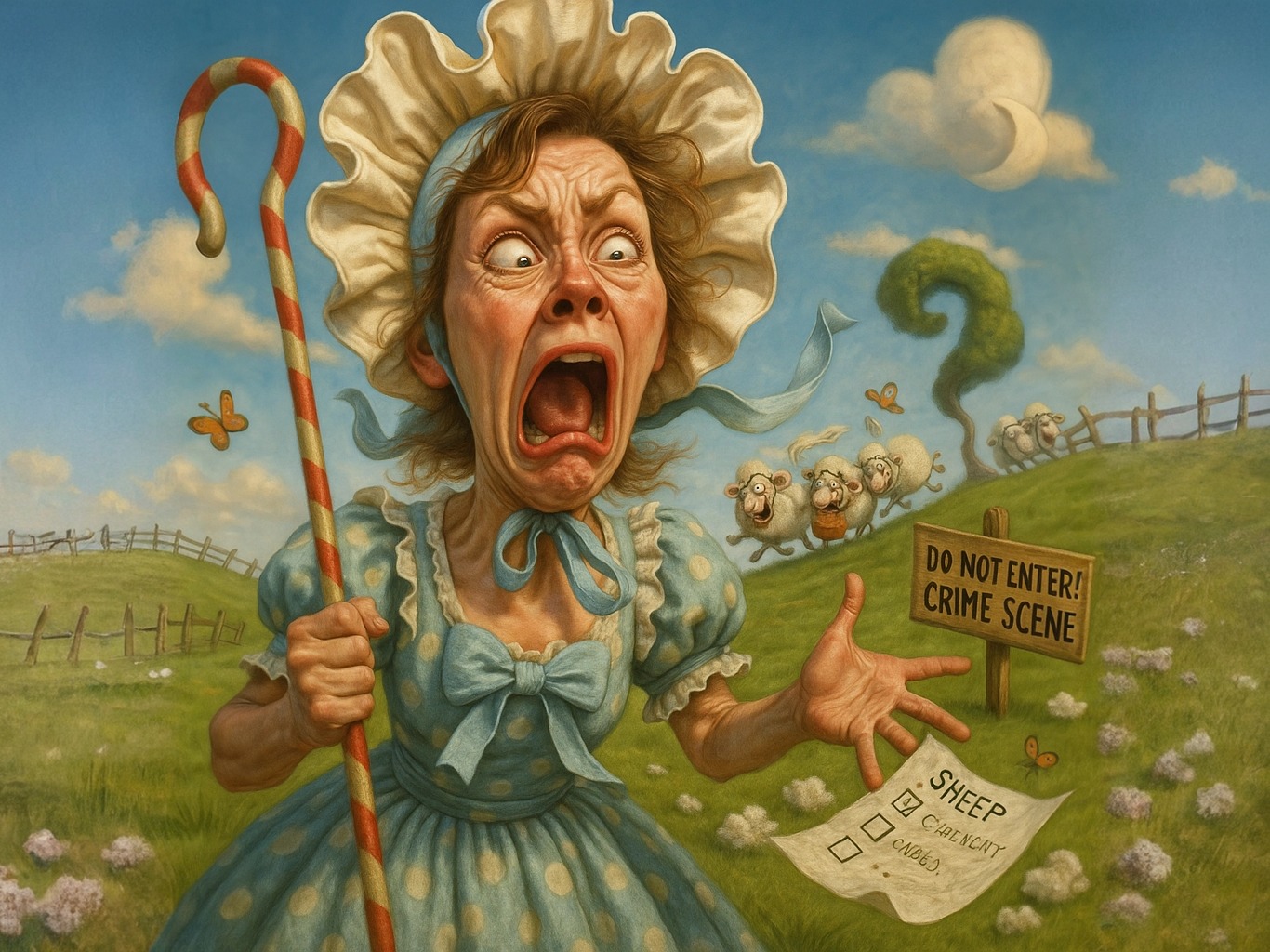
Little Bo Peep lost her sheep. Yeah, join the club, sweetheart. People lose things all the time—money, dignity, their will to live. Me? I lost mine the day I said “I do.” She’s crying about losing a flock of sheep, and I’m crying about losing every paycheck to Peg’s bonbon fund. At least the sheep were useful.
So the rhyme says she didn’t know where to find them. Big surprise. You ever try finding anything in life? You work hard, you search, you sweat—and nothing. Like me trying to find a customer who doesn’t have a bunion the size of Milwaukee. Or trying to find a moment of peace in a house with Bud begging for gas money for a car he doesn’t have, and Kelly asking for clothes she’ll ruin in five minutes. Bo Peep lost her sheep? I lose my sanity every day, and unlike her, mine never comes back.
But here’s the kicker—the sheep do come back. On their own. But not all there. They’re missing their tails. And that’s life in a nutshell. Nothing ever comes back whole. You lose money, maybe you claw some back, but bills already chewed the tails off. You lose your pride, maybe you get a sliver back, but your wife and kids already stomped the rest flat. Even when life gives you something back, it’s less than what you had, broken, chewed up, useless. Like me at the shoe store—every day I drag myself home, missing another piece. Soon, I’ll be nothing but a torso in a discount rack.
And you know what everyone tells her? Leave them alone, they’ll come home. Yeah, right. That’s advice? That’s not wisdom, that’s laziness. That’s Peg’s philosophy on housework: “Ignore it and maybe it’ll fix itself.” Spoiler: it doesn’t. Dishes pile up, bills pile up, life piles up. And when it comes back, it’s worse than before. Sure, the sheep return, but now they’re defective. That’s like saying Kelly got a job—great news, until you realize it’s at a tanning salon where she spends more money than she makes.
So what’s the lesson here? Don’t expect anything to come back better than when it left. Sheep, money, pride, youth—it all wanders off, and if it limps home at all, it’s already ruined. The only thing you can count on sticking around is Peg, parked on the couch, reminding you you’ve lost your life while she’s lost nothing but the remote under her backside.
My advice? Stop chasing lost things. Let them go. Sheep, money, dreams—gone. Because when they crawl back, they’re missing pieces, and all you’ve done is waste your time worrying. Better to accept the loss up front. At least then you’re not shocked when the tails are gone. Trust me, it’s the only way to survive marriage, kids, and twelve hours at the shoe store without wanting to join the sheep and wander off for good.
Little Boy Blue
A boy tasked with watching over cows and sheep falls asleep in the haystack instead, neglecting his duties.
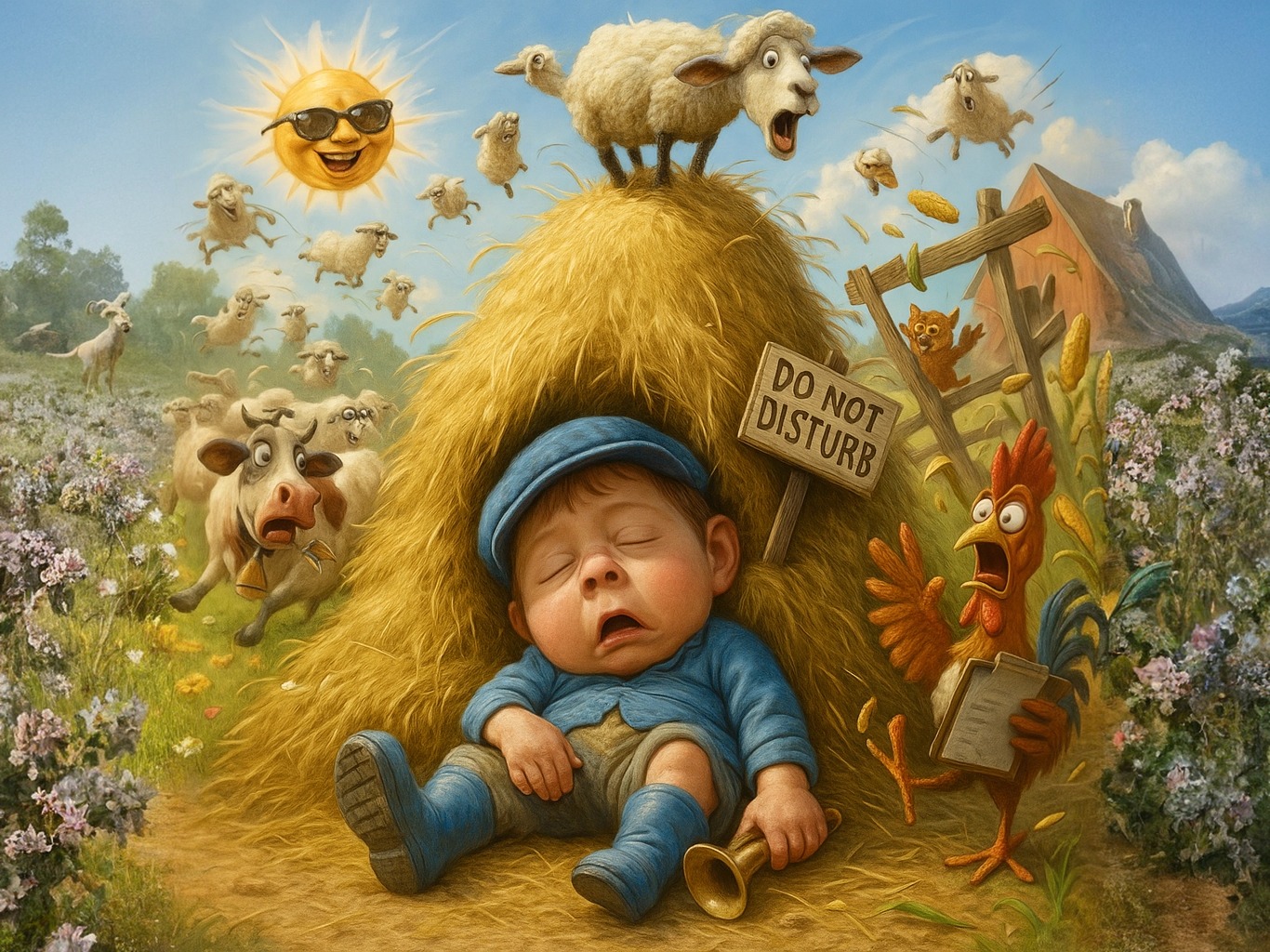
Little Boy Blue. Kid’s supposed to watch the cows and sheep, but what does he do? Falls asleep in a haystack. And everyone acts surprised. Why? That’s what happens when you give someone responsibility—they screw it up. Trust me, I’ve been watching over Peg, Bud, and Kelly my whole life, and guess what? I close my eyes for five seconds, and suddenly the fridge is empty, the phone bill’s doubled, and Bud’s still asking me for money like it’s his job.
So this boy had one job—blow a horn if something goes wrong. That’s it. Blow a horn. And he still can’t do it. You know what that reminds me of? Me at the shoe store. Ring a bell when there’s a customer. Stock the shelves. Hand out shoes. Simple. But no, every time I sit down, the bell rings and it’s another ungrateful customer waddling in, asking if we carry triple wides. That’s the horn I blow, and all it gets me is another day closer to an early grave.
Meanwhile, the cows are in the meadow, the sheep in the corn, running wild. And you know what? Good for them. Let ’em run. At least somebody’s free. The cows don’t have a mortgage. The sheep don’t have kids draining their wallets. They just eat until someone turns them into dinner. Sounds peaceful compared to selling shoes for minimum wage and going home to Peg asking if I remembered to buy her bonbons.
But here’s the best part—everyone gets mad at the boy for falling asleep. Like they expected anything else. People fall asleep because life’s exhausting. You think he wanted to nap in a haystack? No, life forced him into it. Same as me. I don’t collapse on the couch every night because I enjoy Peg’s company. I collapse because twelve hours of strapping sandals onto swollen feet is enough to kill a man. If a horn needed blowing, I wouldn’t even hear it.
So what’s the wisdom in this nursery rhyme? Simple: don’t give people jobs they can’t handle. Don’t trust kids with sheep, don’t trust Bud with money, don’t trust Kelly with a credit card, and for God’s sake, don’t trust Peg with a budget. Because when they fail—and they will—it’s you left cleaning up the mess.
My advice? Be the boy. Take the nap. Forget the horn, forget the cows, forget the sheep. Because no matter how much you blow that horn, nobody cares. Life keeps running wild, the meadow stays trampled, the corn gets eaten, and Peg still eats the last slice of pizza. At least if you’re asleep, you miss a little of it. Better to nap in a haystack than wake up to reality—especially if that reality is selling shoes to women who think their bunions are “cute.”
Little Miss Muffet
A young girl sits peacefully eating curds and whey until a spider frightens her, sending her scurrying away in alarm.
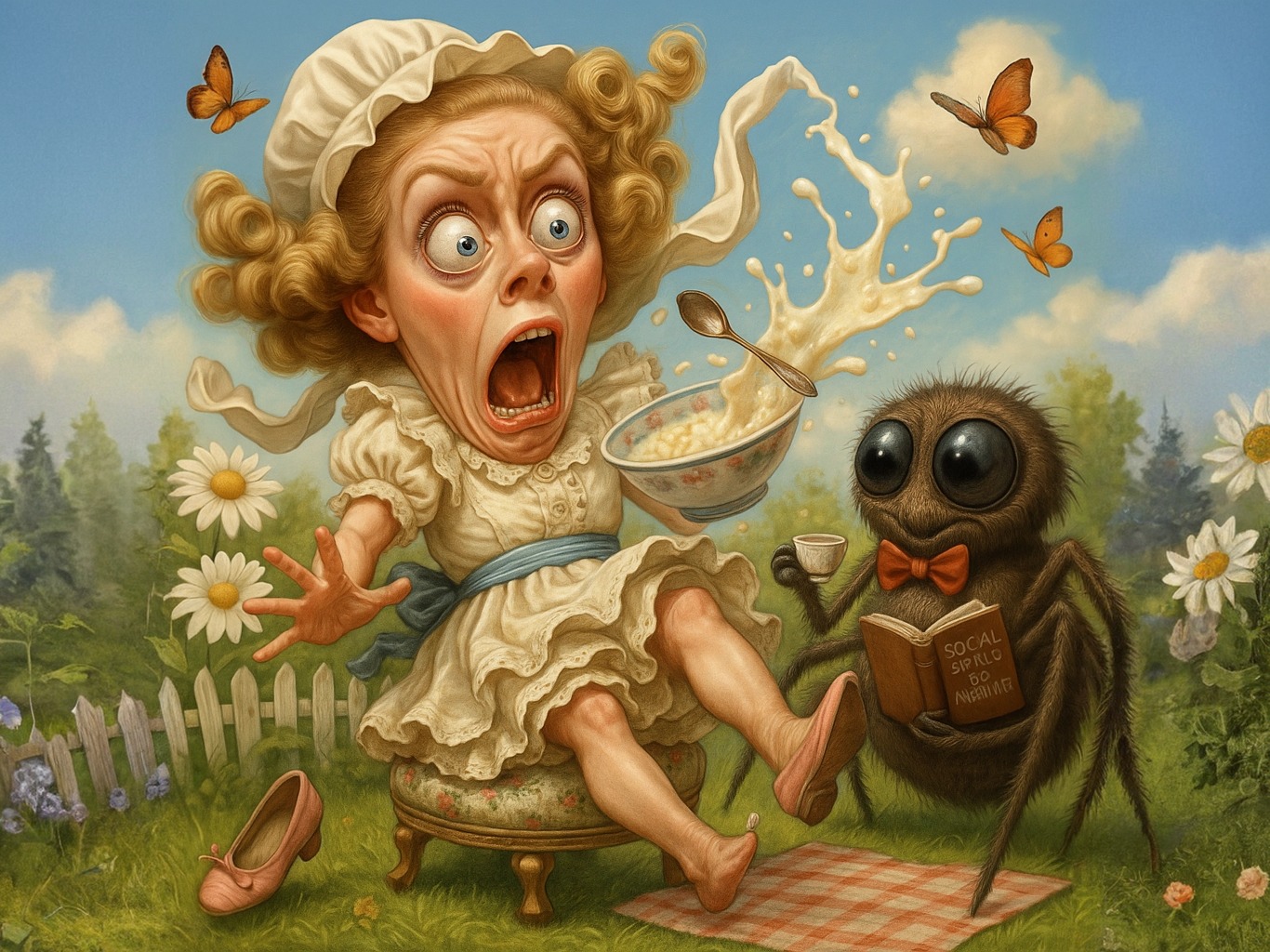
Little Miss Muffet sat on a tuffet, eating her curds and whey. Sounds peaceful, doesn’t it? Sitting alone, eating in silence. You know what that is? That’s a dream. That’s something I’ll never have. You think I get to sit quietly and enjoy a meal? No. Peg’s in the kitchen demanding more bonbons, Bud’s asking for twenty bucks, Kelly’s telling me she needs a new dress to impress some guy whose IQ matches his shoe size. Meanwhile, my dinner is cold leftovers, eaten in the dark, with the TV blaring Oprah reruns.
So there she is, Little Miss Muffet, probably the happiest woman alive—just her and her bowl of lumpy milk. And then along comes a spider. Scares her off. Of course it does. That’s life. Every time you think you’ve got a moment of peace, something ugly crawls in to ruin it. For me, it’s not a spider—it’s Peg waddling in with a stack of bills, or a customer waddling into the shoe store with feet so swollen you’d think they were hiding bowling balls in their ankles. That spider? That’s the universe, reminding you that no matter how bad you think it is, it can always get worse.
And Miss Muffet runs away. That’s the smart part. She doesn’t stay and argue with the spider. She doesn’t try to reason with it, doesn’t say, “Maybe we can share the tuffet.” No. She sees trouble and bolts. I envy that. If I ran every time Peg or the kids came looking for me, maybe I’d have made it to Canada by now. Instead, I stay. I stay at the table. I stay at the shoe store. I stay in the marriage. And the spiders—life’s little surprises—they just keep crawling in.
The rhyme makes it sound silly, like a joke. But here’s the wisdom: life is the spider. The second you relax, it’s right there, ruining the moment. You get a bonus at work, the car breaks down. You think Bud’s finally found a girlfriend, turns out she only wanted his bus pass. You think Kelly’s got a job, it’s actually just another way to meet guys who want your money. Tick-tock, here comes the spider.
So what’s the advice? Don’t get comfortable. Don’t sit on tuffets, don’t eat curds, don’t think peace and quiet are for you. Because they’re not. The spider’s coming. Always. And when it does, don’t try to fight it. Don’t pretend you’re stronger. Just run. Run fast, run far, and maybe—just maybe—you’ll find another tuffet before Peg finds you and asks if you remembered to bring home toilet paper.

Click here to go to Grimm Prospects – Episode II

