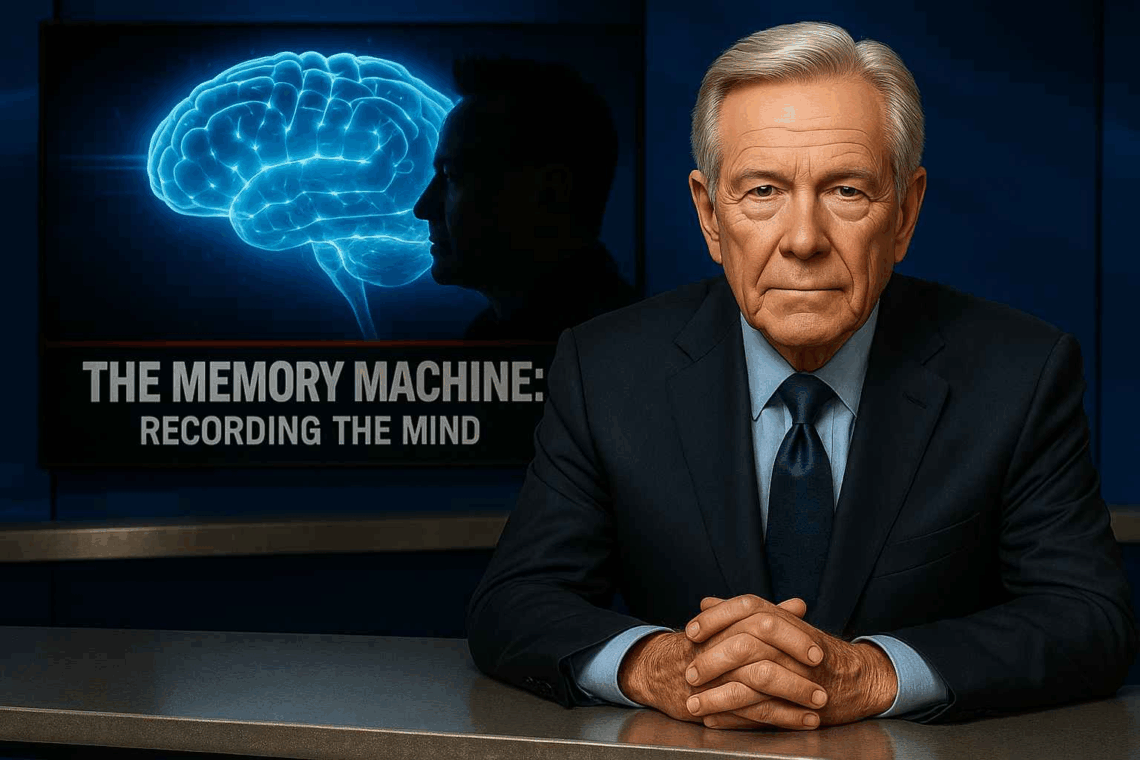
The Atlantic | Print Edition
TECHNOLOGY & SOCIETY
By Basil Bradshaw
Earlier this month in San Francisco, Elon Musk stepped onto a minimalist stage inside Neuralink’s headquarters, holding something that looked like a futuristic “Borg” mask. “This,” he said, raising it with his right hand, “is how we’ll remember everything.”
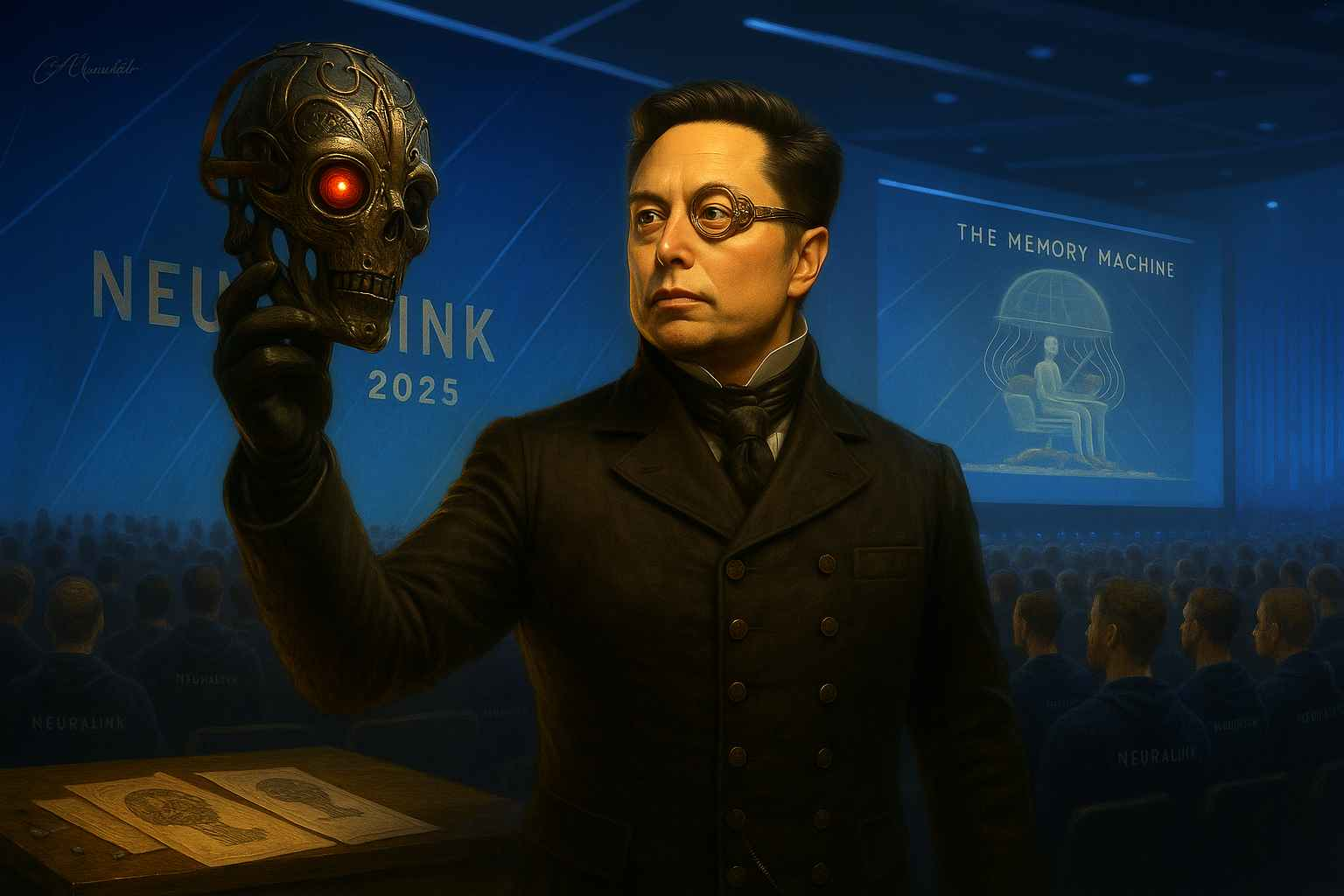
The Memory Machine—Neuralink’s latest neural implant is designed to do what no machine has done before: record human memories. Not as metaphors, or enhancements, but as video, audio and high-resolution files—raw, unedited, and deeply personal—that you can download to your YouTube channel, TikTok, Instagram, or Facebook pages. The audience watched in silence as a volunteer, 32-year-old Neuralink engineer Marcus Leung, closed his eyes. Moments later, the overhead screen lit up with the moment his daughter was born. He added, “I’ve watched my wedding again. I’ve even watched my father’s funeral.”
It wasn’t a reenactment. It was a memory.
The crowd gasped. Some laughed nervously. One woman put her hand over her mouth. Musk called it the beginning of “perfect total recall.”
The Memory Machine had arrived.
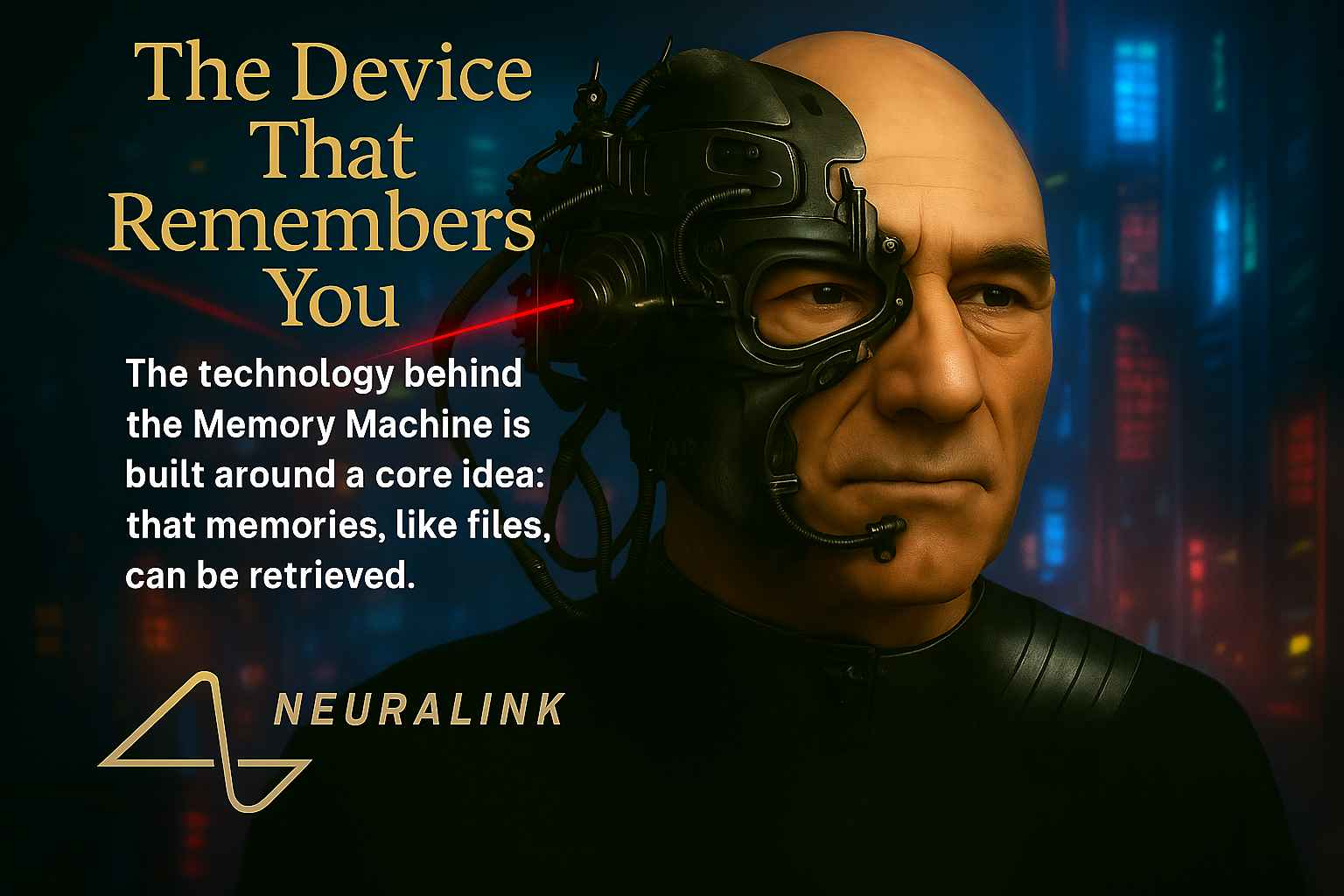
The Device That Remembers You
The technology behind the Memory Machine is built around a core idea: that memories, like files, can be retrieved. Unlike journal entries or photographs, which interpret the past, this implant replays them in the present tense. Researchers say it captures not only images, but sounds, smells, textures, and emotional tones, directly from the hippocampus.
“It’s like opening a hard drive in your head,” said Dr. Priya Patel, a neuroscientist at Stanford University who has spent nearly two decades studying memory loss and cognitive rehabilitation. “Only this hard drive doesn’t just store data—it stores you.”
Patel, who was not involved with Neuralink’s research but has been following the project closely, calls the technology “awe-inspiring and terrifying in equal measure.” On the one hand, she sees extraordinary potential: Alzheimer’s patients recovering moments they thought were lost. Trauma survivors are finding clarity in their healing. A new era of therapy built on precision, not recollection.
But on the other?
“Memories evolve. They blur. They heal with time,” she said. “To freeze them in perfect fidelity might interfere with one of the brain’s greatest gifts: the ability to forget.”
A Volunteer Named Marcus
Marcus Leung, the volunteer at the center of the demonstration, was one of the earliest recipients of the implant. As both a Neuralink employee and a test subject, he occupies a unique role in this story.
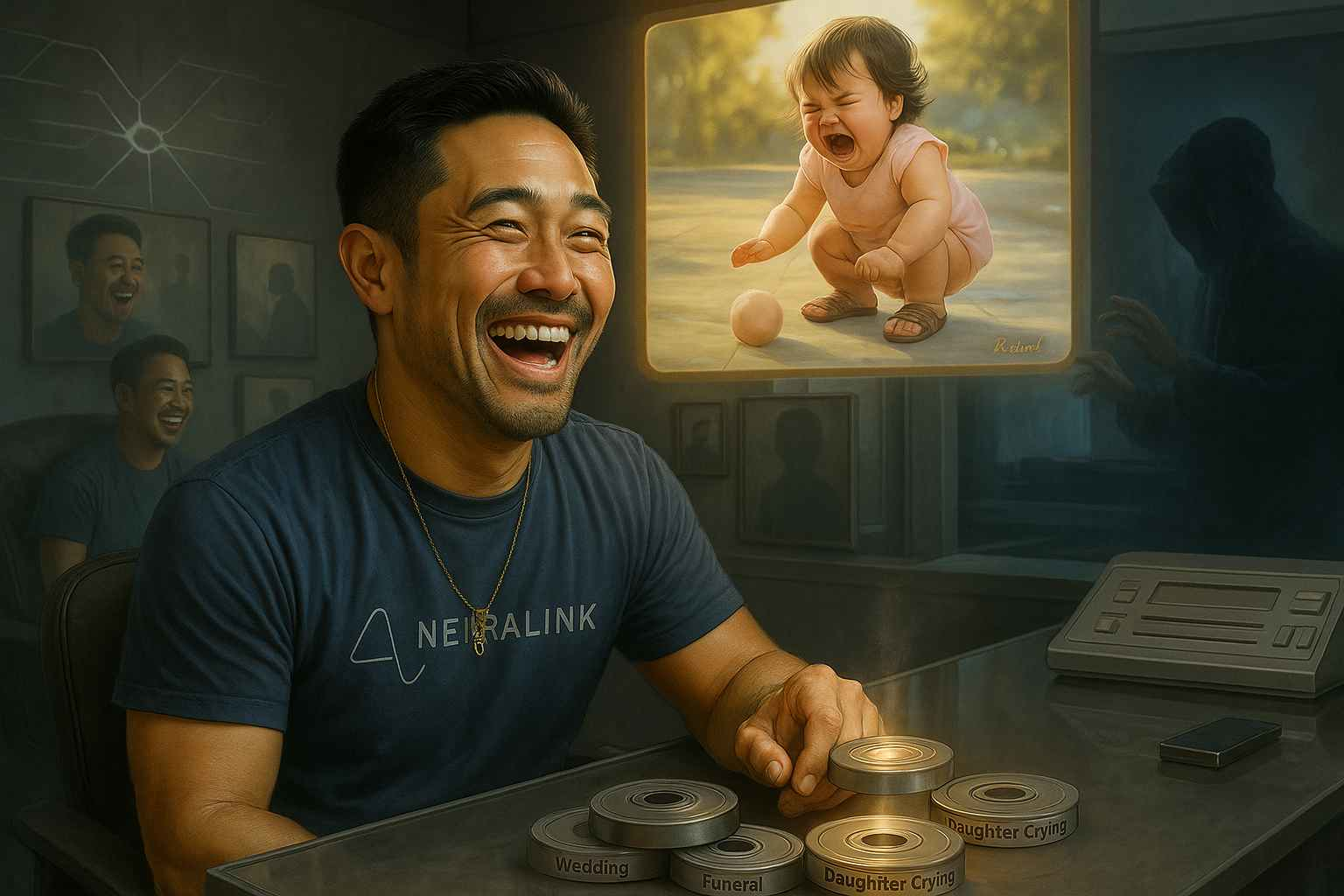
When we met at a small café in the Mission District, Marcus seemed both thrilled and subdued—like someone carrying a secret too private to share. After a few minutes, he “downloaded” an image of a toddler—Marcus’s daughter—as she stood frozen in time, sobbing as a scoop of strawberry ice cream hit the sidewalk. He paused, then added, “It’s not like watching a video. It’s like standing inside the moment. Feeling the light. Smelling the air. Hearing the silence in the room.”
Marcus admitted he hasn’t dared revisit certain memories—moments of shame, of pain. But the knowledge that they’re there, in full, waiting—he said that’s both comforting and haunting at the same time. “They’re mine,” he said. “But I’m not sure I’m ready for all of them.”

When Memory Becomes Media
Memory as therapy is one thing. Memory as entertainment is another.
“We’re talking about the most valuable intellectual property in human history,” said Sam Goldstein, a Hollywood producer known for his uncanny ability to surf emerging trends. “If you could license someone’s dreams, their subconscious, their fears—you wouldn’t need writers. You’d need curators.”
Goldstein has already approached Neuralink about adapting dream fragments into short films. He envisions a future where “nightmares become horror flicks, fantasies become rom-coms, and memory libraries replace casting calls.”
The commercial possibilities are staggering. Imagine documentaries built from firsthand recollections. Courtrooms that accept memory footage as evidence. Political campaigns that air their opponent’s worst memories, unedited.
And then—imagine the consequences.

The Most Hackable Place in the Universe
“This isn’t just disruptive tech,” warned Angela Chen, a cybersecurity analyst and former intelligence advisor. “This is a bio-digital bombshell.”
Chen has spent her career analyzing privacy vulnerabilities in emerging technologies. She sees the Memory Machine as uniquely dangerous. “If your memories can be accessed, they can be stolen. If they can be stolen, they can be altered, replicated, leaked, sold,” she said. “We’re not talking about your emails anymore. We’re talking about your childhood. Your secrets. Your internal voice.”
What worries Chen even more is the lack of regulatory preparation. “There’s no language in our justice system to describe memory theft. No protections for cognitive data. We’re building brain surveillance tech in a world that barely understands tracking cookies and pixels.”
For her, the question is not whether this technology should be used, but whether it should be allowed to exist at all.
Memory and Mourning
But, not everyone agrees.
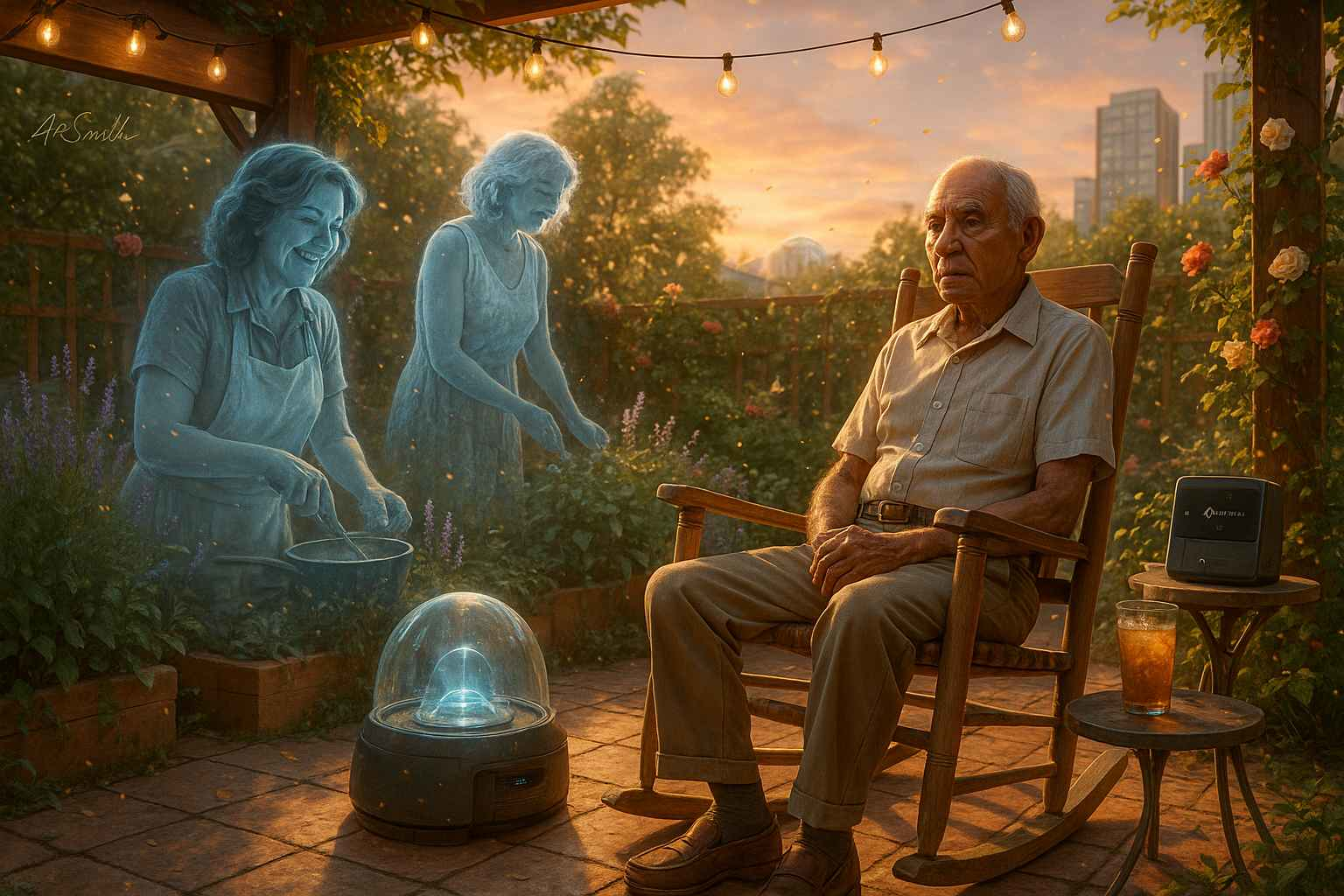
Leonard Marquez, a 76-year-old retired teacher, signed up for Neuralink’s waiting list the day after the demo aired. His reason was simple: his wife, Teresa, passed away last year, and his memories of her are fading. “I used to hear her voice in my head when I watered the garden,” he said. “Now it’s getting harder. She’s slipping away.”
He doesn’t care about the risks. He just wants to remember the way she laughed while stirring pasta. The way her hand fit in his. “If this thing can give me that back,” he said, “I don’t need anything else.”
The Cost of Eternal Recall
And yet, even those who sympathize with Leonard’s longing feel uneasy about the implications.
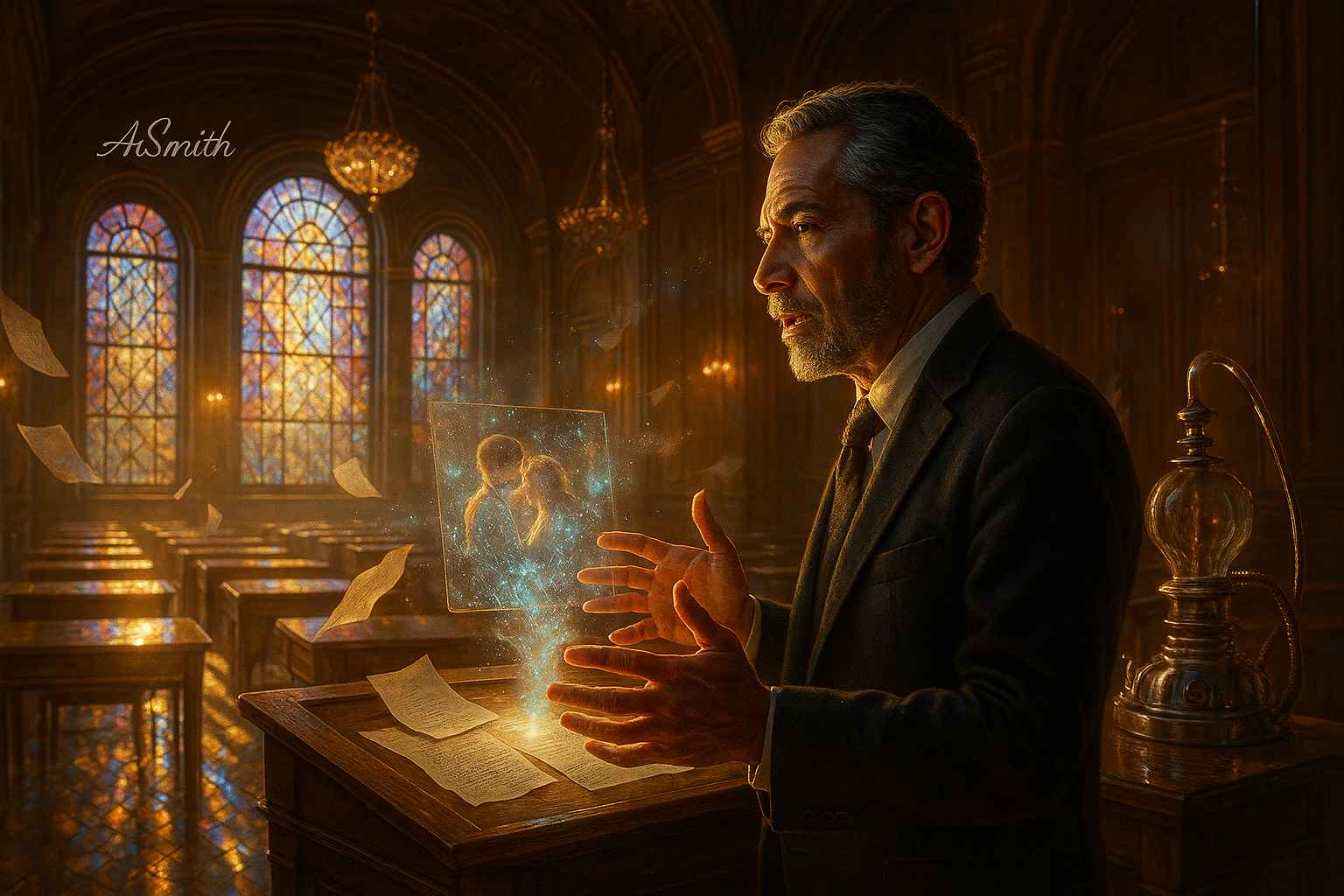
“Memory is elastic for a reason,” said Dr. Miguel Alvarez, a philosophy professor at Columbia University. “It stretches with time. It forgets what it must. It allows us to move forward.” Alvarez believes the Memory Machine endangers the very idea of emotional growth. If we can revisit our traumas with perfect clarity, he argues, we might never process them—only replay them.
“Shame, grief, forgiveness—these are temporal processes. What happens if we loop them forever? What happens when you can’t let go?”
The Final Reel
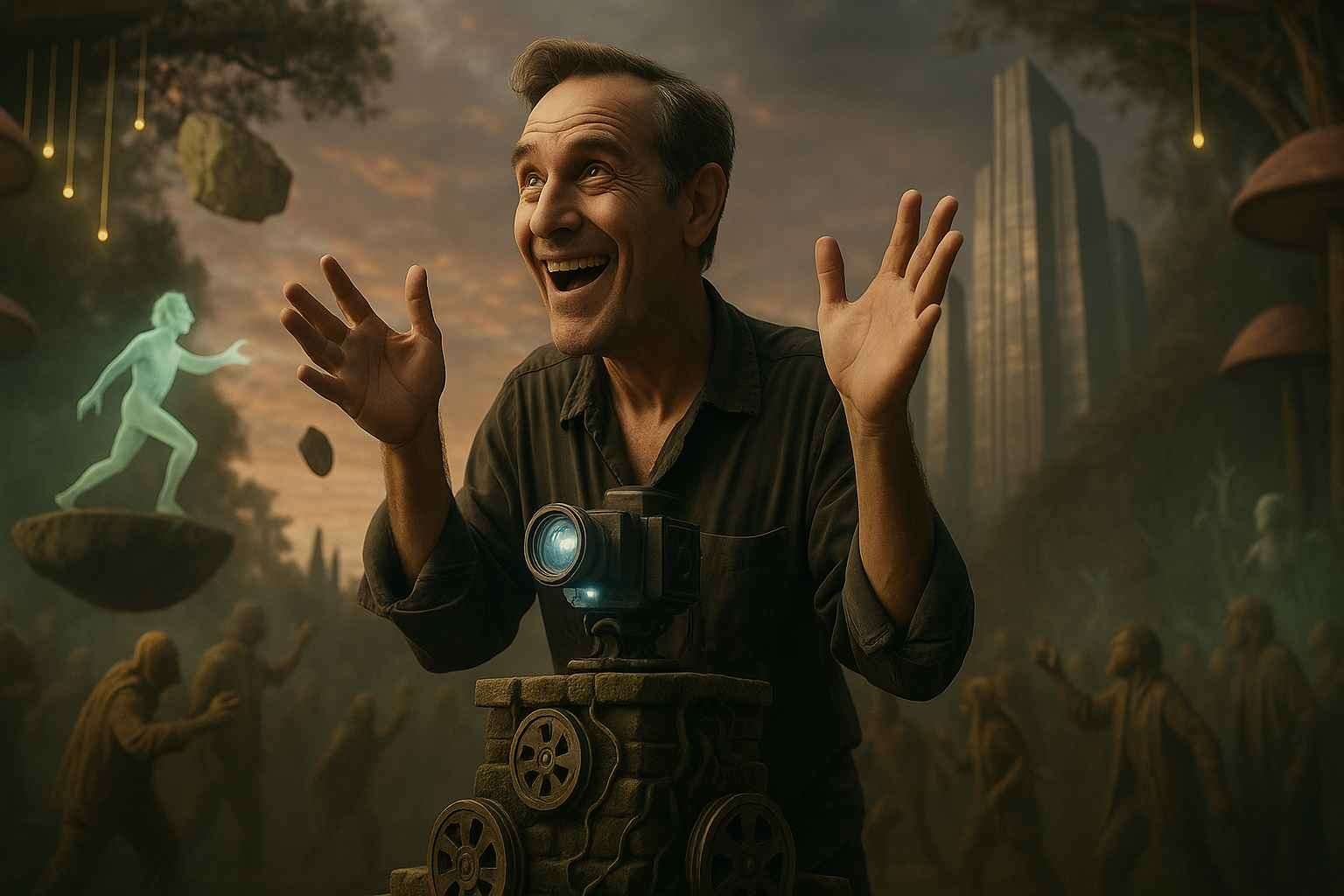
From cave paintings to iPhones, human beings have always sought ways to preserve the past. But with Neuralink’s Memory Machine, that pursuit enters a new—and potentially perilous—phase. It offers us the ability to rewind the most private reels of our lives. To revisit the things and places we treasure. And those we’d rather bury.
In doing so, it raises a question more chilling than whether the technology will work. The question is: Who controls the play button? Because once our minds become images, the person who holds the remote control no longer holds just your story—they hold you.
About the Author
 Basil Bradshaw is a senior writer at The Atlantic, where he focuses on the intersection of technology, culture, and ethics. His work has been recognized with the Hiram P. Widgeon Award for Emerging Voices, the National Magazine Award for Feature Writing in Science and Society, and the PEN America Prize for Literary Science & Technology. Praised for his ability to transform complex reporting into compelling narratives, Bradshaw has filed stories from Silicon Valley boardrooms, AI research centers in Europe, and the everyday settings where innovation quietly reshapes daily life.
Bradshaw lives in Boulder, Colorado, with his wife, Sophronia Belle, an Appalachian documentary filmmaker, and their three children— Cletus, Buford, and Ned. The family shares their home with a lively monitor lizard named Rex, who has become something of a legend in the neighborhood. Away from deadlines, Bradshaw can often be found on the Front Range practicing off-road unicycling or volunteering as a coach for his son’s tactical dodgeball team.

