For decades, surgeons have prided themselves on being calm, methodical, and above all, serious. In a world where billionaires are racing to colonize Mars, AI is writing breakup songs, and chatbots are diagnosing rare diseases, the surgical field was poised to be swept up by the bug.
Gone is the humble “let’s fix what’s wrong and get out” approach. Now it’s all about upgrades, customizations, and bold reimaginings. The old system would patch a problem. The new one asks, “What if we didn’t just fix it? What if we made it cooler?” It’s body repair meets a TED Talk. Cue the surgeon in scrubs walking onstage:
“Are you tired of your body doing things the way it’s always done them? Well, for three easy payments and your entire insurance deductible, we can change that!”
So, get ready for a newer, big-swing attitude. Procedures that look at the human body not as a static relic of evolution, but as a platform for innovation. It’s the surgical equivalent of a streaming-service reboot: familiar, yet somehow wilder, flashier, and determined to go viral.
Contralateral Neural Recalibration
Teaching your left hand to major in right-hand studies
In a world where medical science has already printed kidneys, regrown fingertips, and successfully transplanted a nose onto a forearm “just to see if we could,” Eastern Europe has decided to up the ante. Enter Contralateral Neural Recalibration (CNR), a procedure so audacious it makes the appendix look lazy. CNR claims to “teach” one side of the body to handle the other’s chores, like convincing your left hand to not only butter toast but also tie a Windsor knot while your right hand takes a personal day.
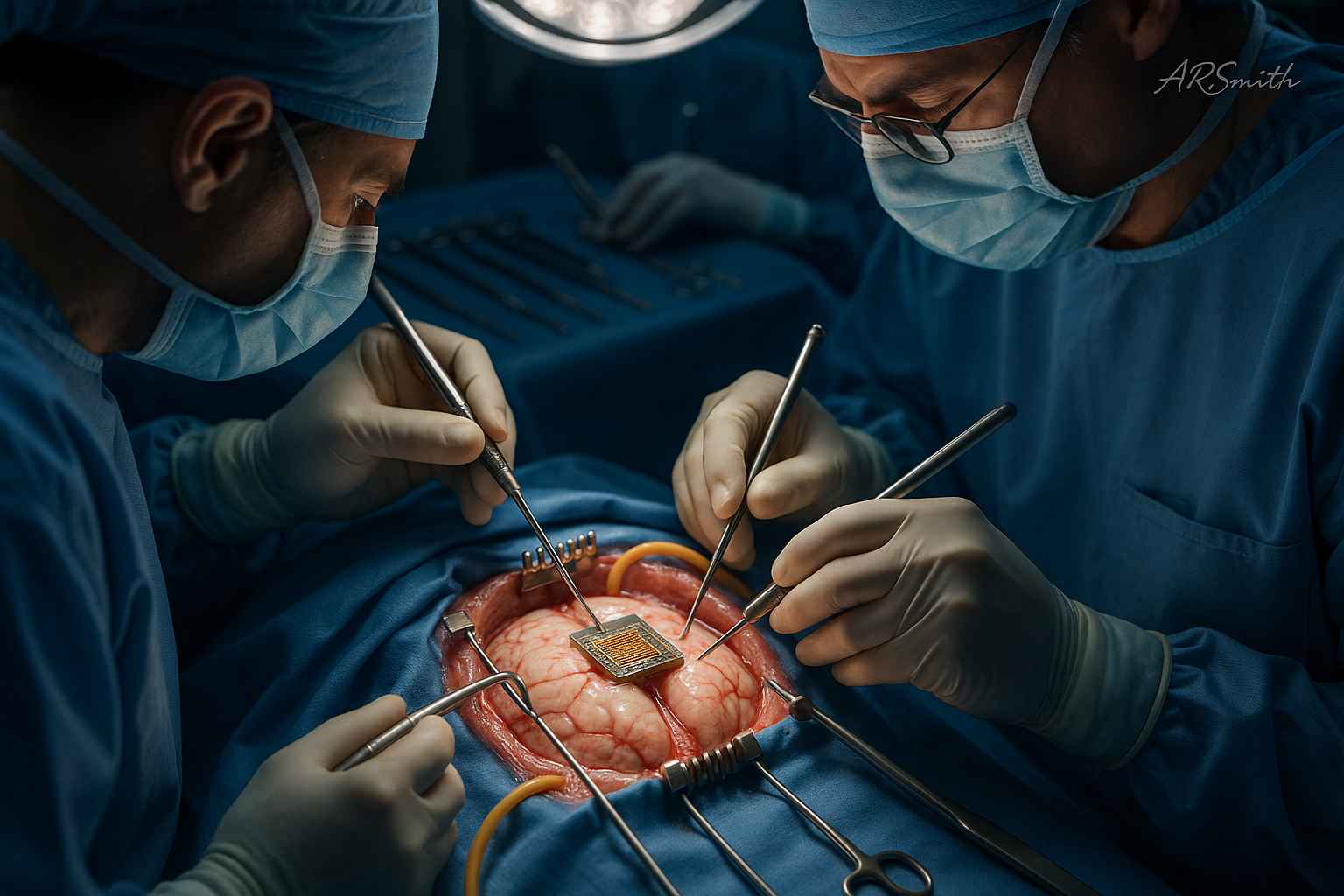
Surgeons achieve this neuro-academic miracle by implanting a wafer-thin biochip into the corpus callosum, the brain’s central switchboard, and instructing it to reroute lost motor commands through a freshly minted synthetic pathway. In other words, it’s like hiring an understudy for your brain’s lead actor and expecting them to know all the lines, stage directions, and jazz hands on opening night.
“We tell the left motor cortex, ‘Congratulations, you’ve been promoted,’” explains Dr. Milovan Ristevski of the University of Skopje’s Department of Advanced Biohacks. “Then we give it a three-week crash course in right-hand linguistics. By the end of training, many patients can perform simple tasks such as signing their name, opening a pickle jar, or flipping someone the bird in fluent mirror images.”
“In rare instances, the left-hand developed opinions. We had one patient whose recalibrated hand began refusing to pick up kale because ‘the right hand wouldn’t have stood for that nonsense.’”
Dr. Vesna Kostadinović, neuroplasticity specialist at the University of Belgrade’s Institute for Ridiculously Specific Procedures, says, “Think of it as Rosetta Stone for your limbs. The biochip acts as both translator and grammar teacher, making sure the left leg doesn’t accidentally moonwalk when you meant to step forward.”
Of course, every radical innovation has its quirks. Early CNR trials were plagued by “cross-limb improvisation,” where the left side would adopt not just the movement, but the personality of its right-side counterpart. This resulted in cases where patients’ left hands began writing checks in their right hand’s handwriting, or spontaneously snapping fingers to summon waiters for the check.
Dr. Nenad Bjelogrlić of the University of Sarajevo’s Department of Experimental Neurological Harmonies notes, “In rare instances, the left-hand developed opinions. We had one patient whose recalibrated hand began refusing to pick up kale because ‘the right hand wouldn’t have stood for that nonsense.’ We’re still not sure if that’s a bug or a feature.”
From a public health perspective, CNR’s implications are vast. Stroke survivors could regain independence. Amputees could retrain their bodies without relying on prosthetics. And, most importantly, bartenders everywhere could finally master the art of pouring drinks ambidextrously during happy hour.
Yet, in classic Eastern European scientific style, the program also flirts shamelessly with the absurd. A pilot study in Bulgaria reported that 37% of recalibrated limbs began outperforming their original counterparts. In one notable case, a patient’s left hand entered and won a local speed-typing competition while the right hand sulked nearby, refusing to participate.
While detractors argue that this technology may cause unforeseen “personality inflation” in body parts, proponents point to its elegance: no cybernetics, no external wiring. Just a brain, a chip, and an awkward family reunion between neurons that previously avoided eye contact.
Contralateral Neural Recalibration may not just rewrite the rules of rehabilitation. It could start a turf war between the hemispheres of the brain. And if the left side suddenly insists on hosting karaoke night while the right side sulks in a corner? Well, that’s just progress, Balkan-style.
Laminar Cartilage Lamination
Turning Your Knee into a Fine Piece of Scandinavian Furniture
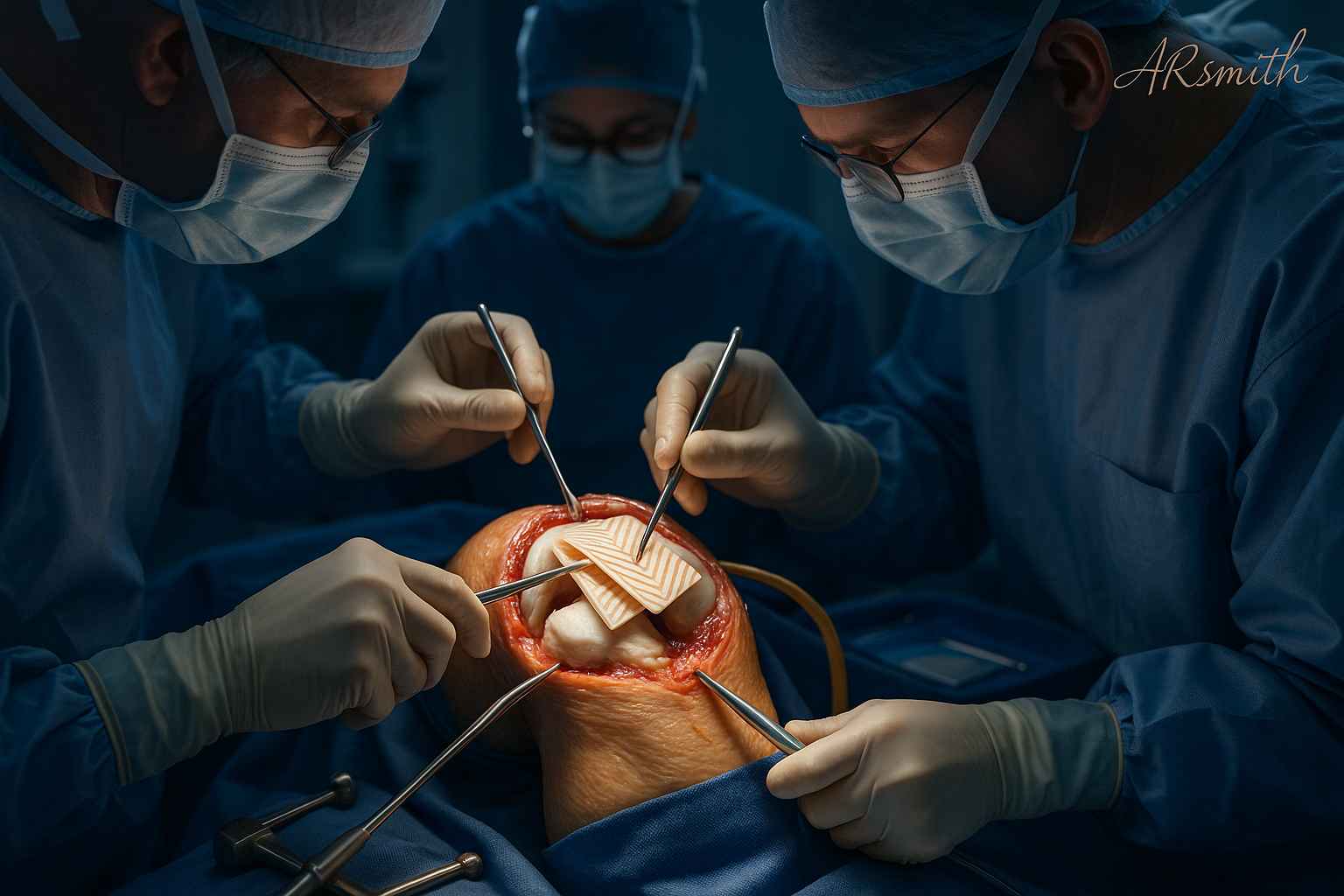
When orthopedic surgeons start talking like cabinetmakers, you know something experimental is on the horizon. Laminar Cartilage Lamination (LCL) is the latest in joint restoration wizardry, and it’s exactly what it sounds like: stacking paper-thin sheets of lab-grown cartilage like the world’s most expensive deli meat, then slotting them into your knee, hip, or whatever joint has been treating you like a squeaky door hinge since the ‘90s.
The concept is deceptively simple. Each cartilage sheet is laid at a slightly different angle, a crisscross pattern reminiscent of plywood construction, but with far fewer splinters and lawsuits. This multi-directional layering supposedly neutralizes shear stress, the biomechanical equivalent of telling your joint, “You can try to grind down, but you’ll be confused about which way to go.” Proponents claim the rebuilt joint could last decades longer than traditional repairs, which is orthopedic speak for, “We think this will outlive your mortgage.”
“It’s like parquet flooring for your joints. Except the finish is synovial fluid instead of polyurethane, and the installation crew has a lot more student debt.”
Patients in early trials have reported faint “Velcro” sensations during healing, which marketing materials trumpet as proof that the cartilage is “locking into place.” Critics counter that Velcro was never meant to be a joint descriptor, but LCL’s developers insist it’s a feature, not a red flag.
“The Velcro sensation is simply the laminar layers adapting to the microtopography of the joint,” explains Dr. Gordana Ilić, lead regenerative materials scientist at the University of Belgrade. “Think of it as the polite handshake between old bone and new cartilage. Firm, but not creepy.”
Not all side effects are so easily romanticized. A small percentage of patients report “layer chatter,” a barely audible clicking when moving the joint at certain angles. One clinical participant likened it to “wearing orthopedic castanets,” which Dr. Ilić admits is “a branding opportunity we hadn’t considered.”
Durability testing has been ambitious. In one lab demonstration at the University of Skopje, an LCL-reinforced knee joint was placed under continuous mechanical stress equivalent to running uphill while carrying a small Balkan wedding buffet. After 14 simulated years, the cartilage showed no signs of delamination, though the testing machine reportedly asked for hazard pay.
While insurance coverage remains uncertain, LCL’s advocates insist it’s the logical next step for aging athletes, manual laborers, and anyone tired of sounding like bubble wrap every time they get up out of a chair.
Laminar Cartilage Lamination might not be the miracle fix that turns your knees into bulletproof hinges, but it’s certainly the first joint repair method to make you consider hiring a woodworker as your surgical consultant. And if your cartilage starts to sound like a wallet full of Velcro strips? Congratulations. You’re officially “locked in.”
Endoscopic Retroactive Organ Rotation
Because Sometimes Your Organs Just Need a Change of Scenery
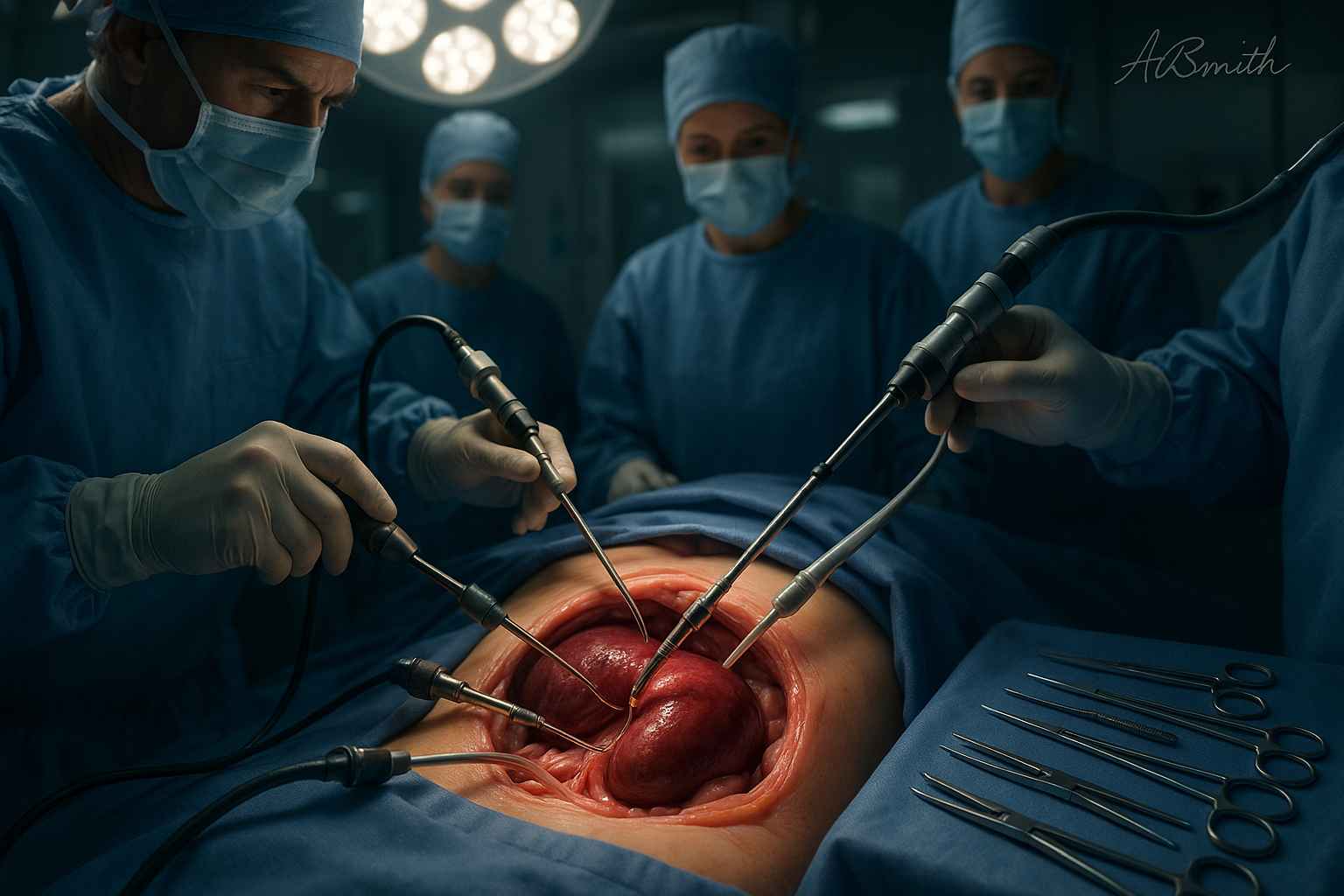
If your liver, kidney, or pancreas has been languishing in the same orientation for decades, Endoscopic Retroactive Organ Rotation (EROR) is here to shake things up. Literally. This minimally invasive technique promises to “refresh” organ performance by rotating it 30–60 degrees inside your body, much like a frustrated homeowner deciding the couch should face the other way.
The theory behind EROR is equal parts biology and Feng Shui. Scarred or overworked tissue gets a break as fresher, untouched surfaces are rotated into prime position, meeting new blood vessels and nerve endings “they’ve never met before.” Proponents claim this reintroduction sparks regenerative activity, improving function without replacing or transplanting a single organ.
“Imagine your spleen suddenly discovering a fresh blood supply it didn’t know existed. It’s like finding an artisanal coffee shop at the end of your street.”
“It’s not about giving you new parts. It’s about giving your old ones new neighbors,” says Dr. Branko Vuković, chief of minimally disruptive surgery at the University of Belgrade. “Imagine your spleen suddenly discovering a fresh blood supply it didn’t know existed. It’s like finding an artisanal coffee shop at the end of your street.”
During EROR, surgeons use a series of micro-graspers and soft-torque tools inserted through “pinhole incisions” to gently rotate the target organ. For example, a liver might be turned just enough to expose a pristine section to portal circulation, while the scarred region takes a sabbatical in a quieter corner of the abdominal cavity. Patients awaken with the same roster of organs they came in with. Just subtly rearranged like an end-of-season IKEA display.
“Rotation is carefully calculated so the organ still functions but gets a rest in areas that have been overworked,” explains Dr. Maja Stojanović, regenerative physiology lead at the University of Novi Sad. “It’s like rotating tires, except your tires are squishy, vascular, and have strong opinions about where they live.”
Some early adopters describe a post-op “orientation period” where their body feels slightly unfamiliar. This can range from mild abdominal discomfort to the inexplicable urge to lean left when standing. Surgeons reassure patients that this is merely their nervous system updating its internal map.
In one Skopje-based pilot study, 82% of EROR patients reported improved organ performance within six months. One particularly enthusiastic subject credited the procedure with giving his gallbladder “a new zest for life” and claimed it had “stopped being so bitter about everything.” Researchers declined to comment on the emotional stability of gallbladders.
Endoscopic Retroactive Organ Rotation may not replace full-scale transplants, but for those whose organs need a fresh start without a moving truck, it could be the medical equivalent of rearranging the living room—less drastic than demolition, far more satisfying than dusting.
In the end, these innovations remind us that medicine isn’t just about restoring what was lost. It’s about daring to imagine what’s possible. Whether it’s improving performance, rethinking design, or giving biology a bit of a personality makeover, the message is the same: the future of the human body is still very much under construction. And while some of these ideas might sound like they belong in a late-night comedy sketch, they hint at a future where healing is creative, adaptable, and sometimes, even a little fun.
“If you can’t laugh while holding a retractor, you’re in the wrong operating theater.”
Dr. Oleksandr Linchevskyy
Internationally recognized thoracic surgeon and three-time winner of the East European Competitive Suturing Championships

