Getting older isn’t a milestone. It’s an ambush. Overnight, gravity gets promoted to a position with authority over your joints. The floor creeps closer, chairs sink out of spite, and standing up becomes a planned event. Sitting down comes with a follow-up strategy. And somewhere along the line, furniture develops opinions. None of them are flattering.
Thankfully, aging isn’t about falling apart. It’s about falling with better equipment, standing up smarter, and discovering that a well-tuned sense of humor still works long after most parts have been discontinued. Daily life may get trickier in your seventies, but so do the solutions.
Here’s a short list of activities of daily living that often become difficult for many people once they reach their 70s, along with some of the newest no-nonsense innovations to make life easier.
Problem # 1
Getting Up from Low Chairs or Sofas

Leg strength, balance, and joint range all matter here, which sounds clinical until you’re halfway out of a chair exhibiting unplanned physics. The legs have to fire, the ankles negotiate, the knees agree not to issue a press release. Miss one cue and you hover like a broken elevator. Soft furniture, once a friend, becomes an upholstered ambush. Cushions don’t support. They detain. You sink in for comfort and discover escape requires leverage, momentum, and a quiet oath to behave better tomorrow. Gravity, meanwhile, watches with interest.
The Solution
Bilateral Quadriceps Pneumo-Augmentation
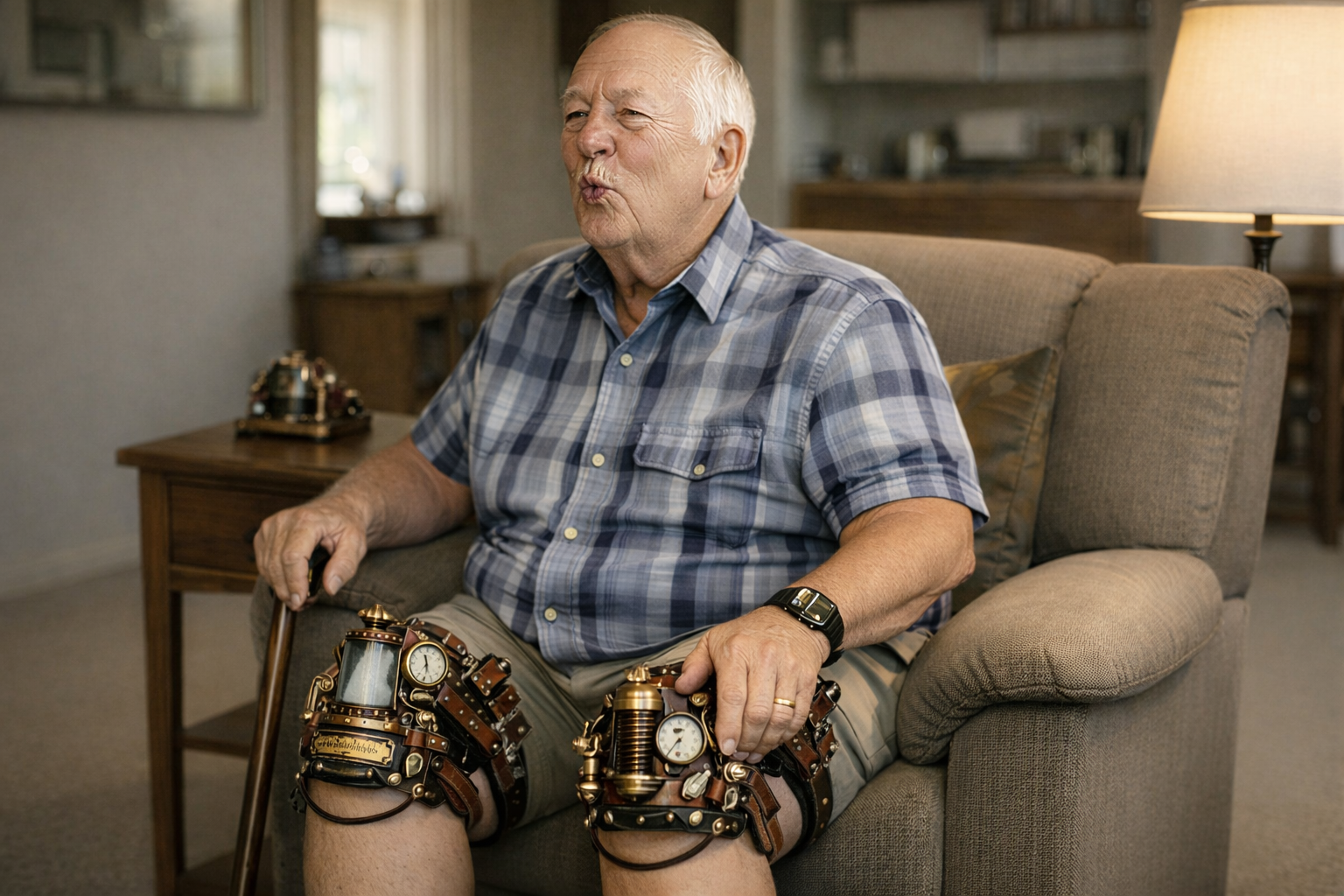
Soft pneumatic bladders are surgically implanted over the knees and briefly inflate when pressure sensors detect a forward weight shift. The system provides a timed lift assist that supplements weakened muscle firing, then fully deflates once upright to avoid dependence.
“Teeny squishy air puffies in your legs help you go uppy-up, then go night-night when you’re standing.”
Problem # 2
Navigating Stairs Safely
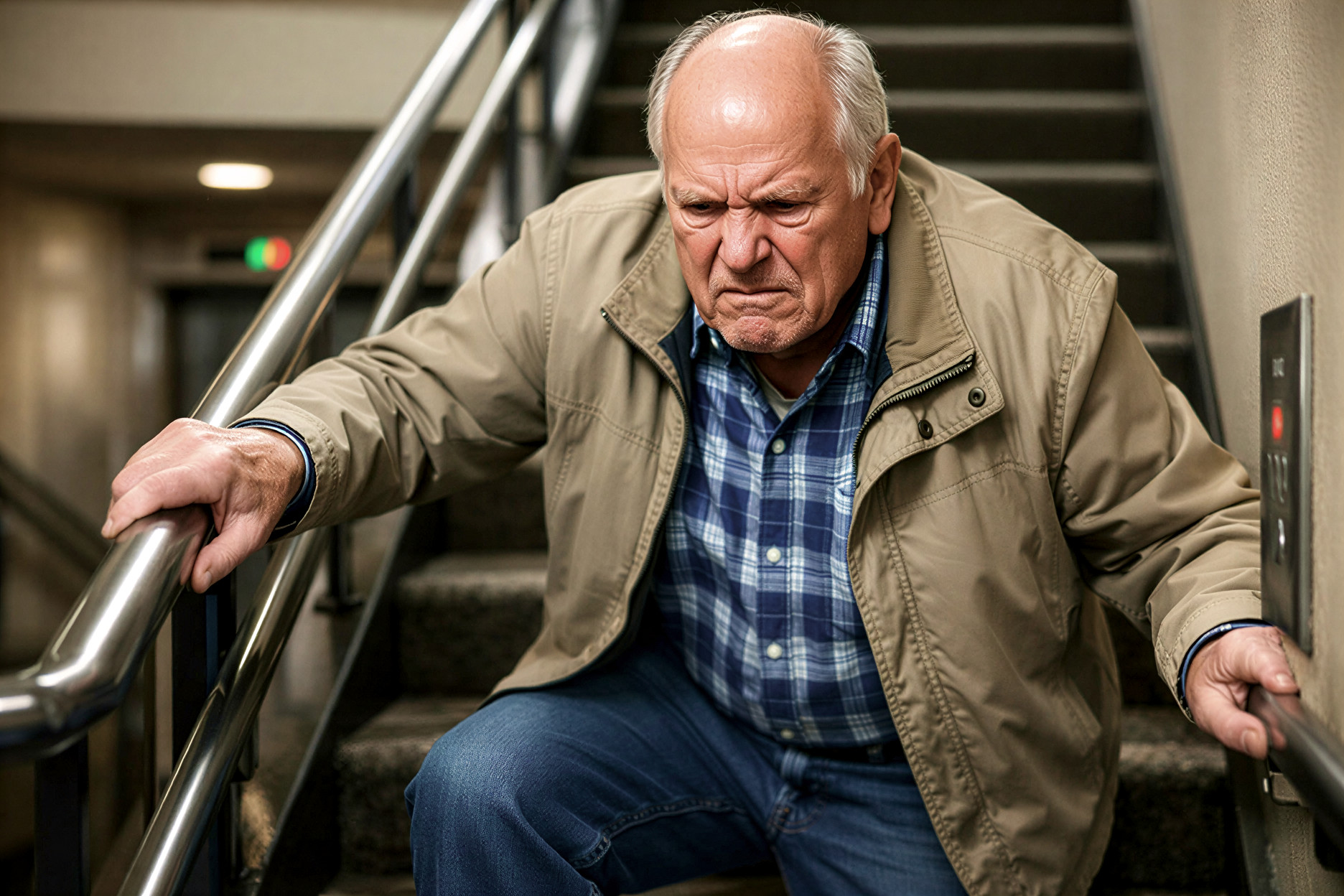
Navigating stairs safely with declining leg power, slower reaction time, and reduced depth perception turn every staircase into a contract negotiation with gravity. One where gravity arrives well rested, overprepared, and holding all the leverage. Each step asks for strength you used to loan out casually, timing that now lags like bad Wi-Fi, and eyesight that insists the last stair is either farther away or actively moving. You climb carefully, descend prayerfully, and develop a sudden, sincere respect for handrails, which now feel less like accessories and more like legal counsel.
The Solution
Predictive Tibial Response Mapping
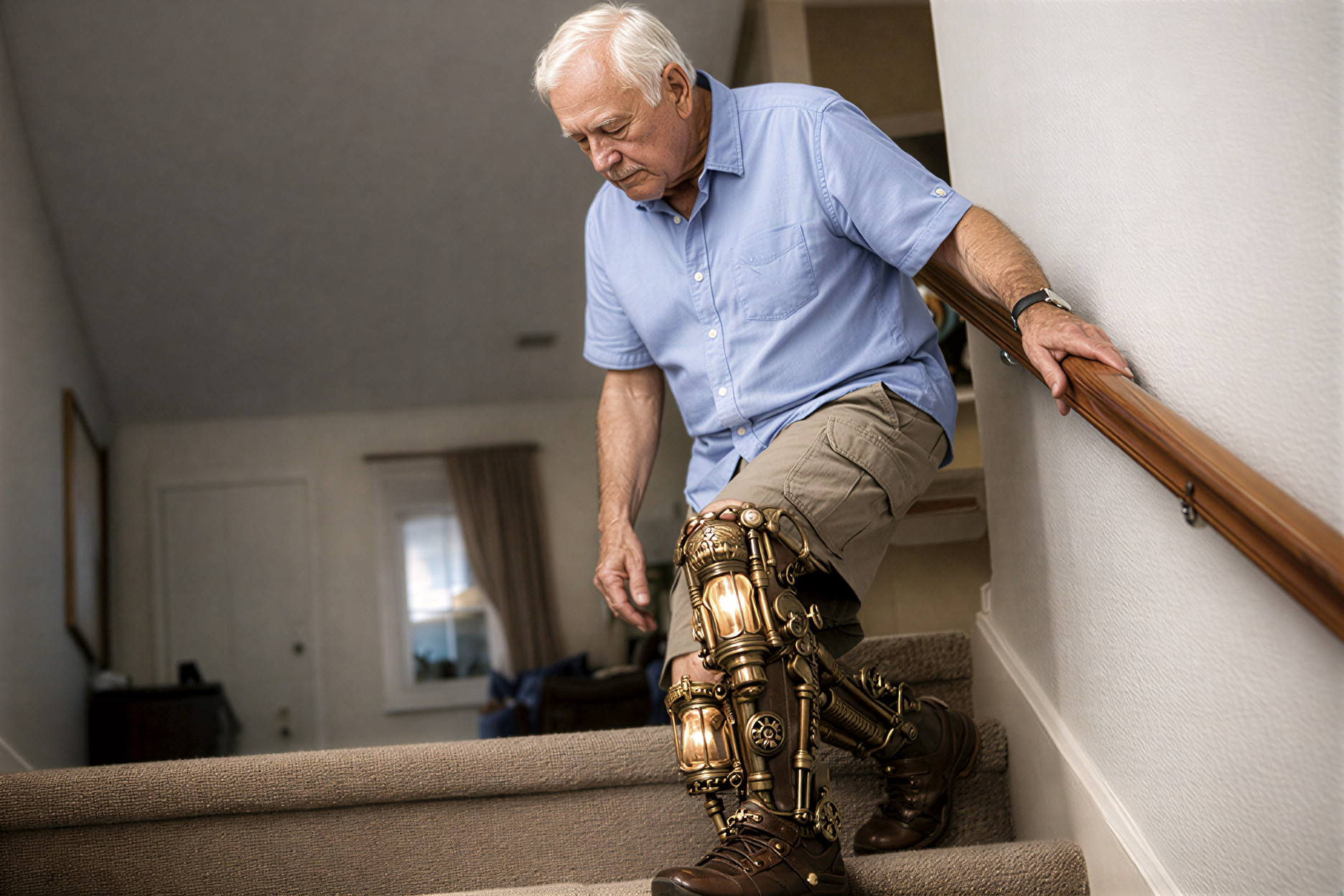
This procedure surgically implants durable micro-sensors along the tibia that continuously analyze stride length, approach angle, and joint velocity when a staircase is detected. The system anticipates foot placement errors and pre-activates stabilizing muscle groups milliseconds before contact occurs. By acting ahead of conscious correction, it compensates for delayed reaction time and reduced depth perception, significantly reducing missteps during both ascent and descent.
“Teeny tiny leg babysensors go “uh-oh stairs!” and tell your muscles to get ready-ready before your foot goes plop, so you don’t oopsie on a step.”
Problem # 3
Bathing and Showering Without Assistance
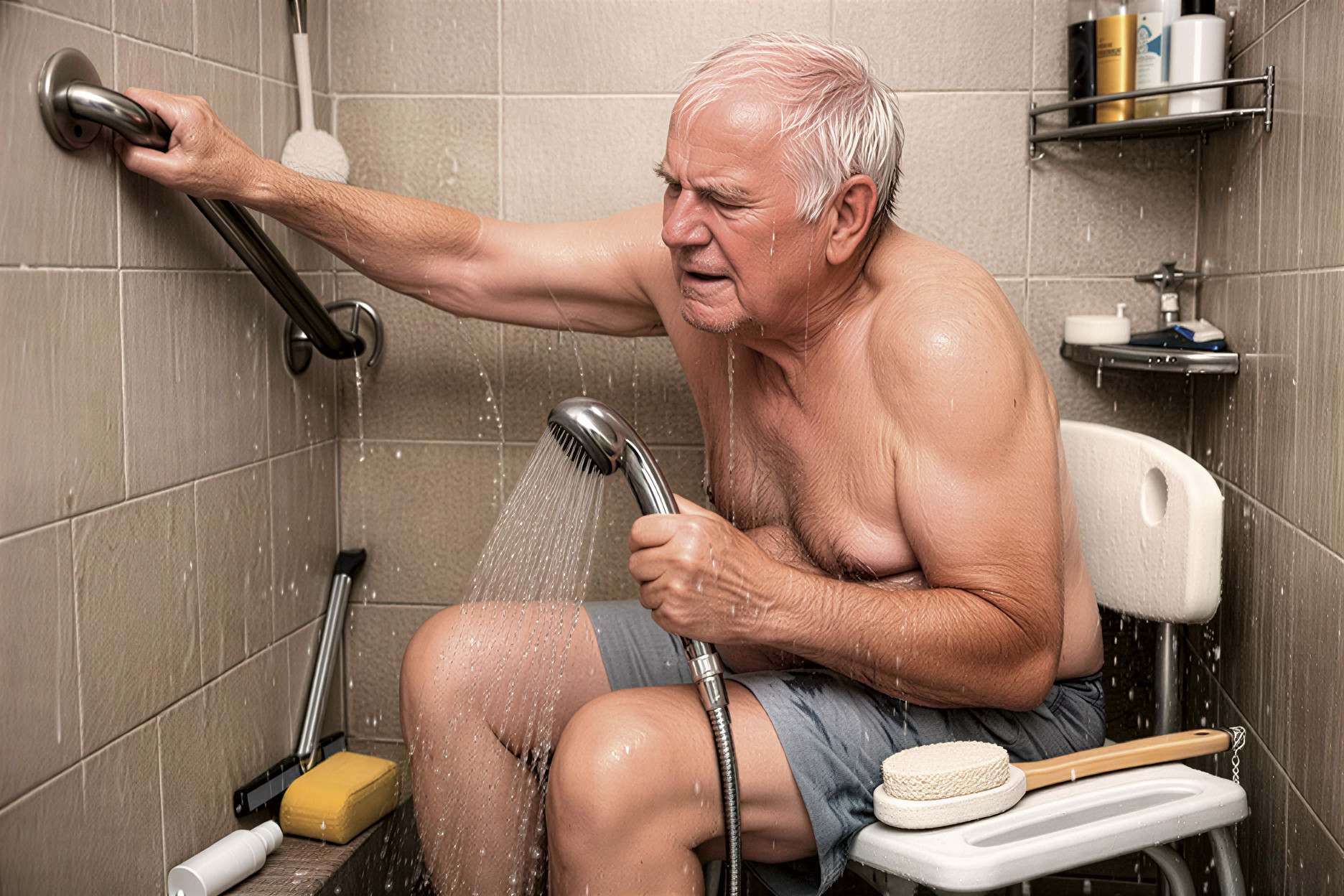
Bathing and showering without assistance on slippery surfaces, limited shoulder mobility, and a healthy fear of falling conspire to turn basic hygiene into a full-contact event. The bathroom becomes a tiled crime scene where water multiplies, balance disappears, and your shoulders suddenly refuse to cooperate as if they’ve lawyered up. Reaching, twisting, and rinsing require choreography and a running commentary in your head. Every shower is a trust exercise you never signed up for, and every successful exit feels less like cleanliness and more like surviving a poorly supervised obstacle course.
The Solution
Shoulder Circumduction Joint Release
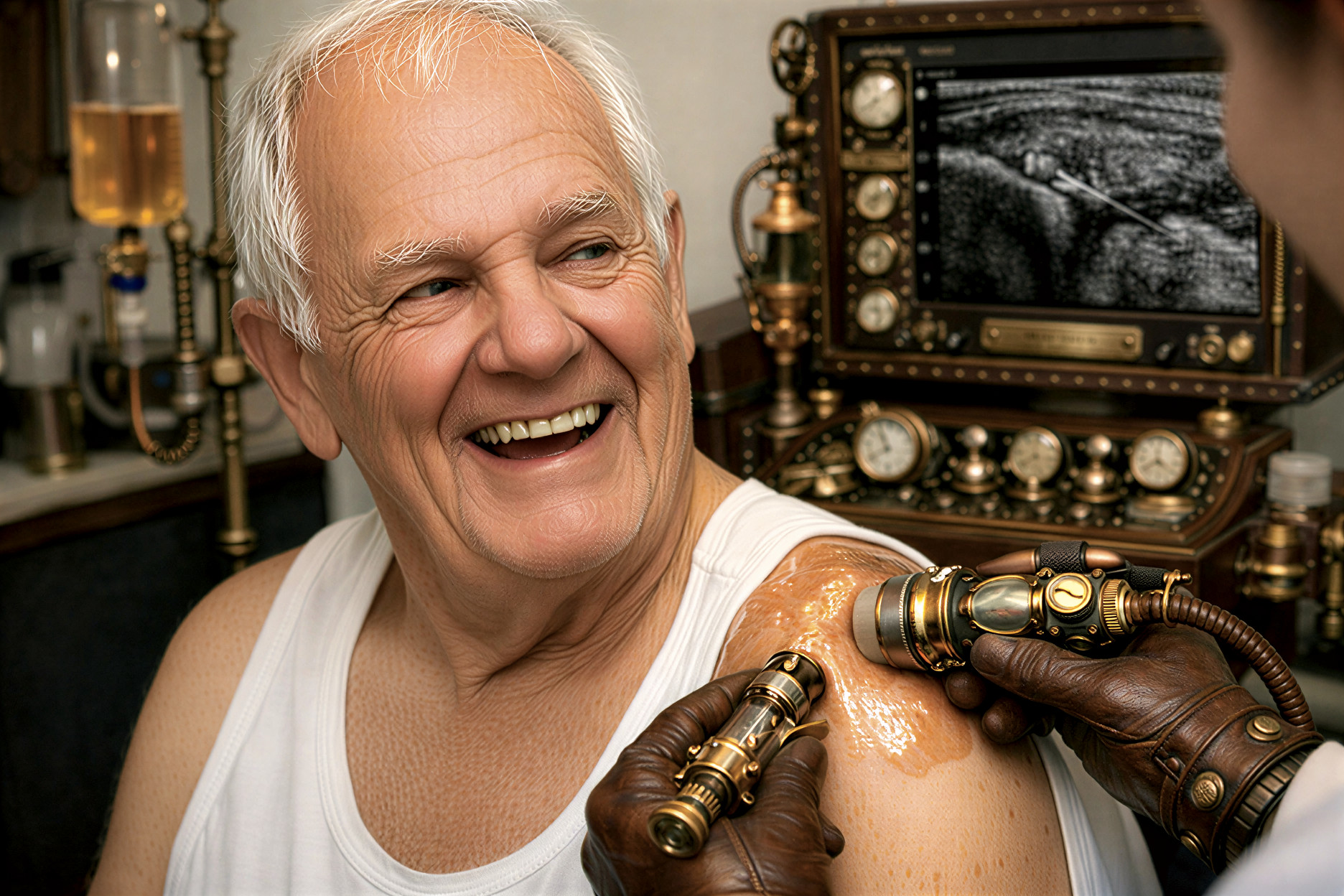
This ultrasound-guided procedure selectively softens and restructures collagen fibers within the shoulder capsule that have stiffened with age. By restoring rotational elasticity rather than replacing the joint, range of motion improves for washing, reaching, and drying. The approach preserves existing joint structures while reducing pain, resistance, and compensatory movement patterns that increase fall risk.
“The tight crunchy parts in your shoulder get all softy-loosened so your arm can swish and reach again for wash-wash time without getting ouchie.”
Problem # 4
Putting on Shoes and Socks
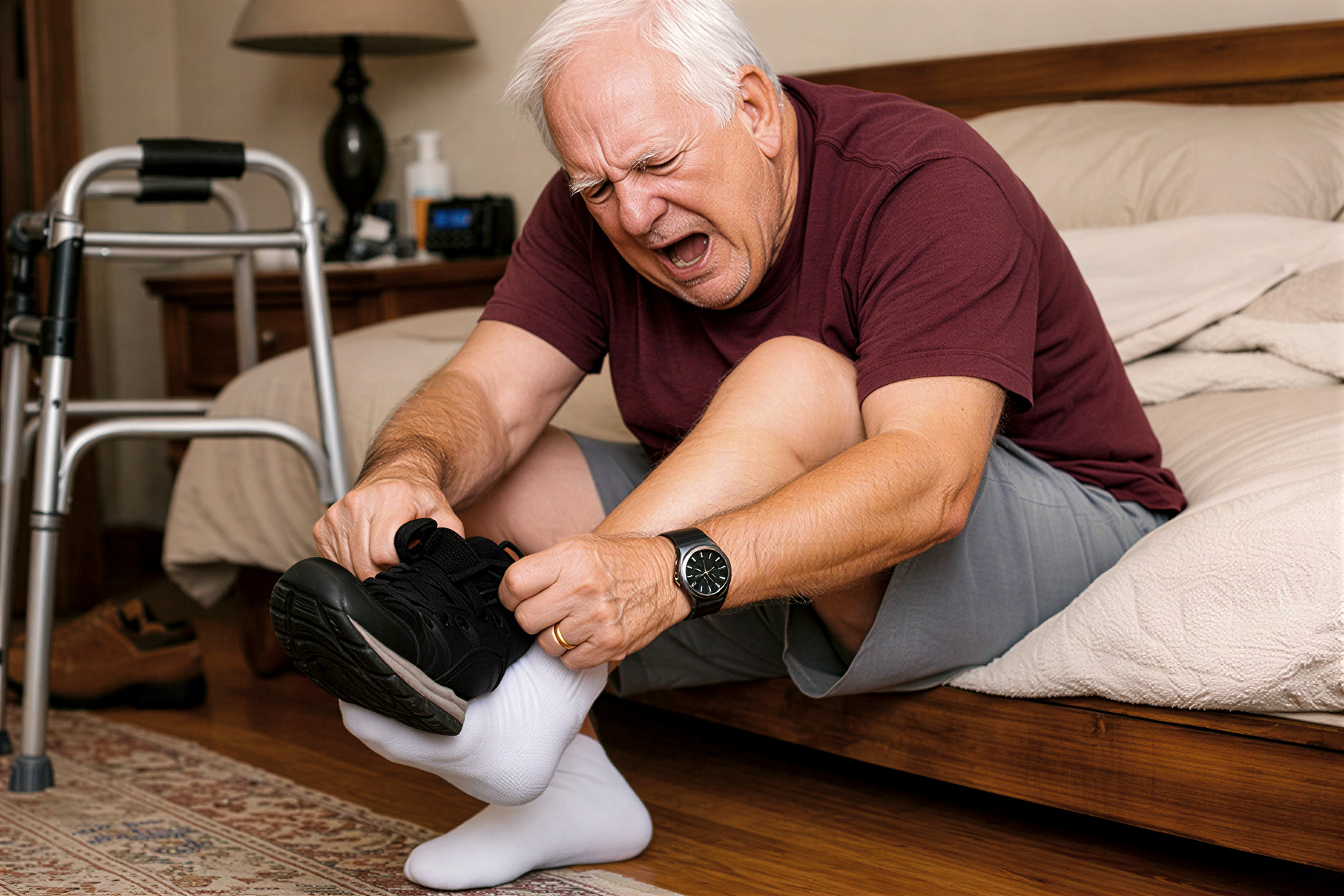
Putting on shoes and socks requires balance, hip flexibility, core strength, and fine motor control, a quartet that ages like milk left out on the counter. When one goes, the others follow in solidarity. Balance wobbles, the hips stiffen, the core forgets its job, and suddenly a simple movement turns into a committee meeting where nobody’s prepared. Fine motor control adds its own punchline, turning precise actions into interpretive gestures. The body doesn’t fail dramatically. It unravels politely, all at once, leaving you wondering when “easy” became a historical term.
The Solution
Hip Flexion Reassignment Surgery
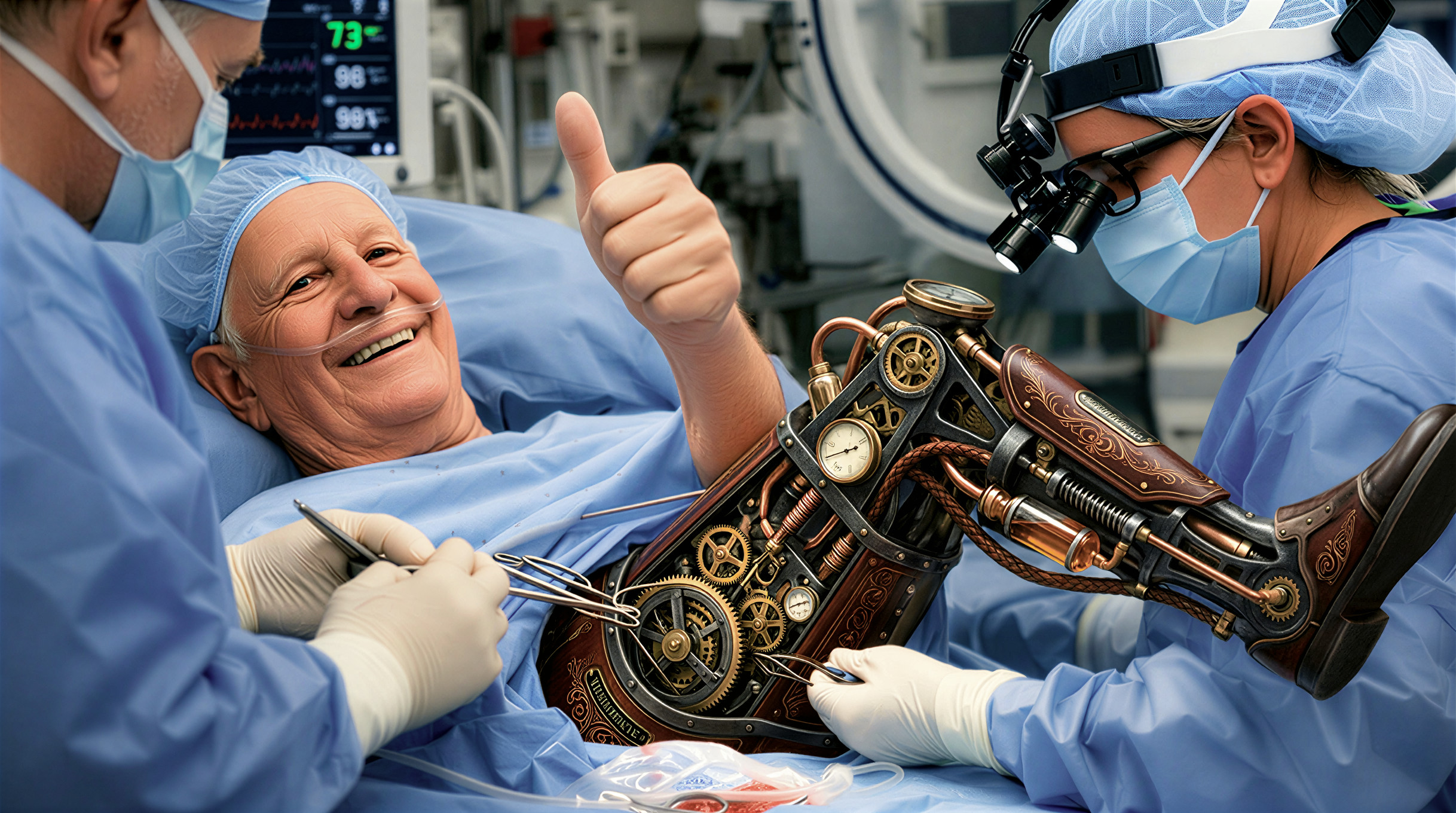
This surgical intervention redirects secondary hip flexor muscles to support precise lifting and positioning movements rather than gross power generation. By reassigning underused musculature to assist weakened primary flexors, the procedure restores controlled leg elevation needed for tasks like dressing. The rebalancing improves accuracy and stability without increasing overall muscular strain or limiting normal gait.
“Some spare hip muscles get new helper jobs lifting your leg uppy-up real gentle, so getting dressed is easiesy and your walky-walk stays all good.”
Problem # 5
Maintaining Balance While Standing or Walking
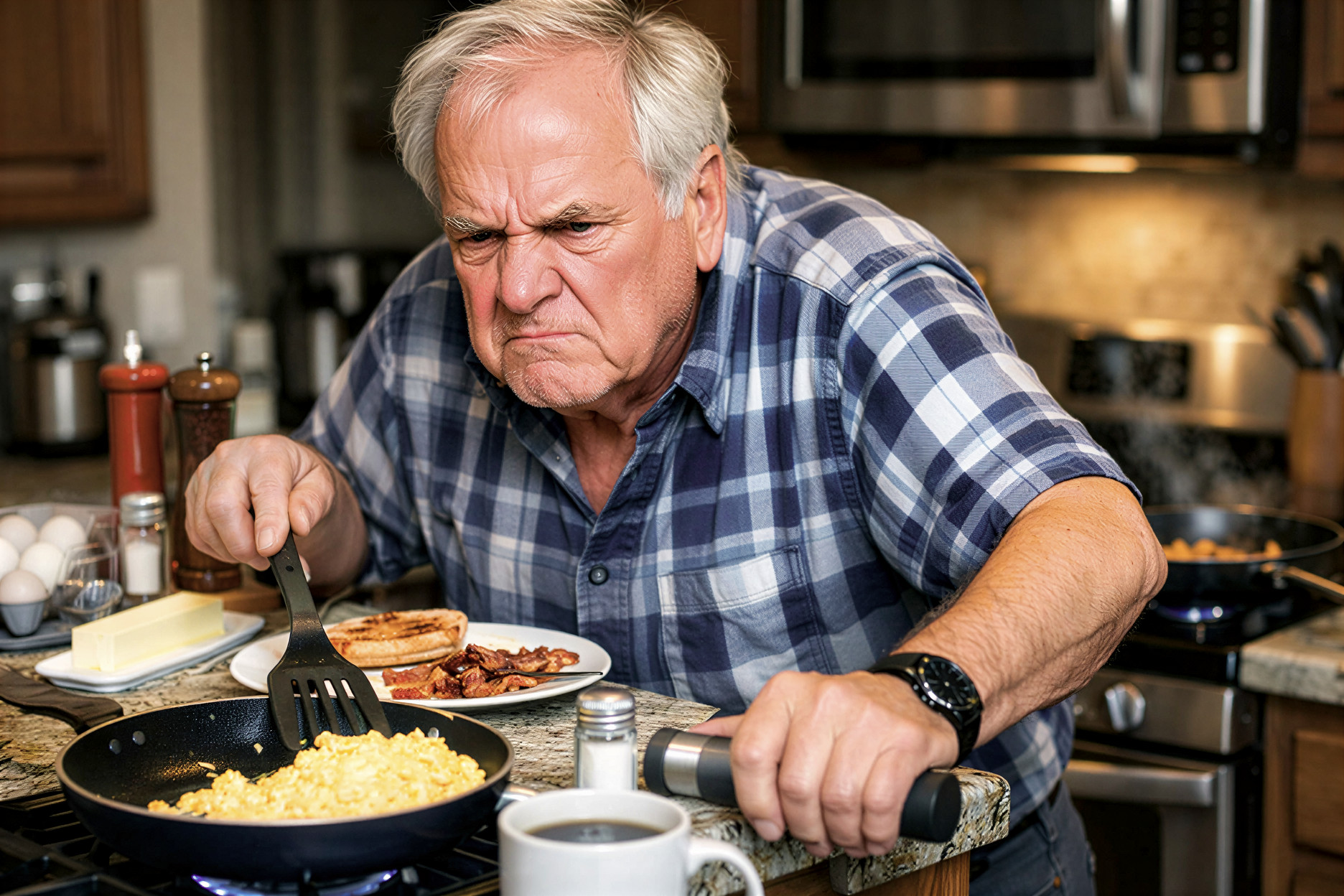
Once the vestibular system starts freelancing and the muscles quietly downshift, maintaining balance while standing or walking even briefly can make brushing your teeth or tending a pan at the stove oddly taxing. Your inner ear, formerly a reliable narrator, now offers erroneous suggestions instead of facts. Legs fatigue early, posture negotiates, and you find yourself leaning on counters with the casual intimacy of a longtime marriage. What used to be autopilot becomes active duty, and standing still turns out to be harder than moving.
The Solution
Subtle Gait Authority Loop
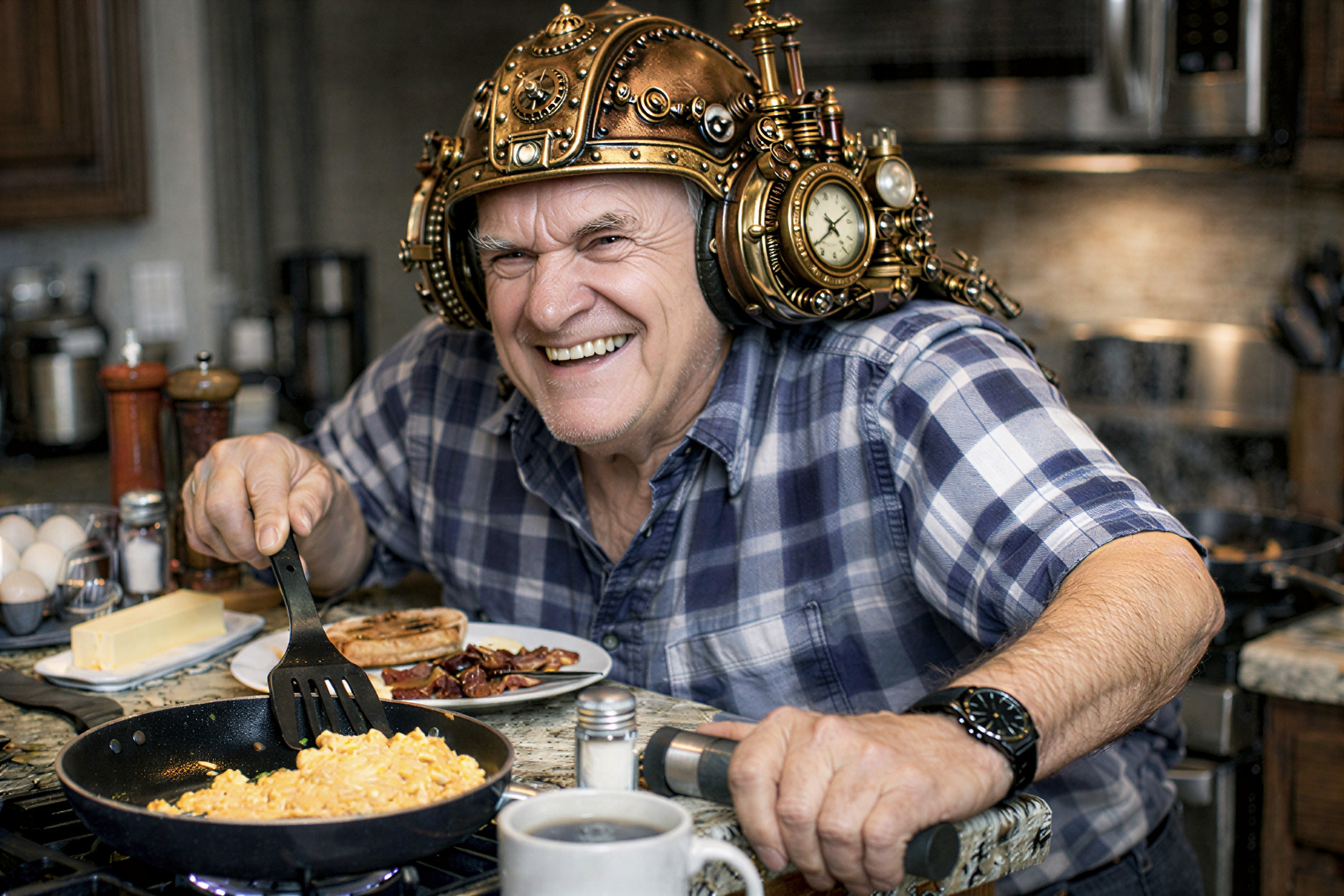
This surgically implanted neuromuscular feedback system continuously monitors posture, joint angles, and muscle tension while standing or walking. When minute deviations are detected, the loop triggers imperceptible corrections before imbalance registers consciously. By acting ahead of awareness, it reduces fatigue from constant self-monitoring, maintains upright stability, and lowers fall risk without altering natural movement patterns.
“A sneaky lil’ body helper does teeny fix-its to keep you standy-walky steady before you even feel a wobbly-woos.”
Problem # 6
Managing Buttons, Zippers, or Small Fasteners
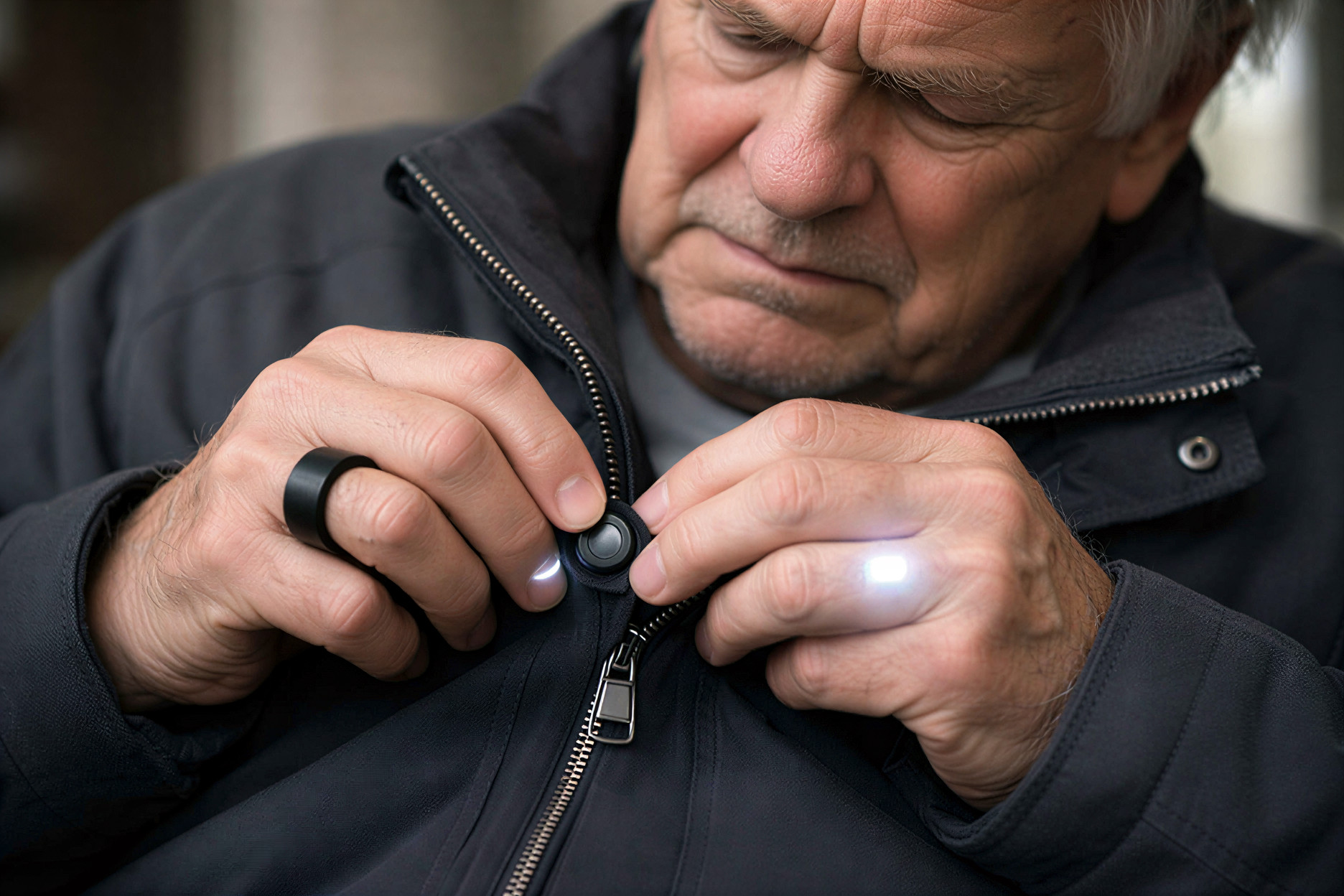
Managing buttons, zippers, or small fasteners while suffering from arthritis, neuropathy, and reduced tactile sensitivity gang up on fine motor precision is like a trio that rehearsed this sabotage. Fingers ache, tingle, or go oddly numb, turning delicate tasks into slapstick auditions. Buttons evade capture, zippers develop attitude, and anything small instantly feels smaller. The hands still know what they’re supposed to do. They just can’t agree how. Precision doesn’t vanish outright. It frays at the edges, leaving you fumbling politely and pretending this was all part of the plan.
The Solution
Pinch-Strength Redistribution Surgery
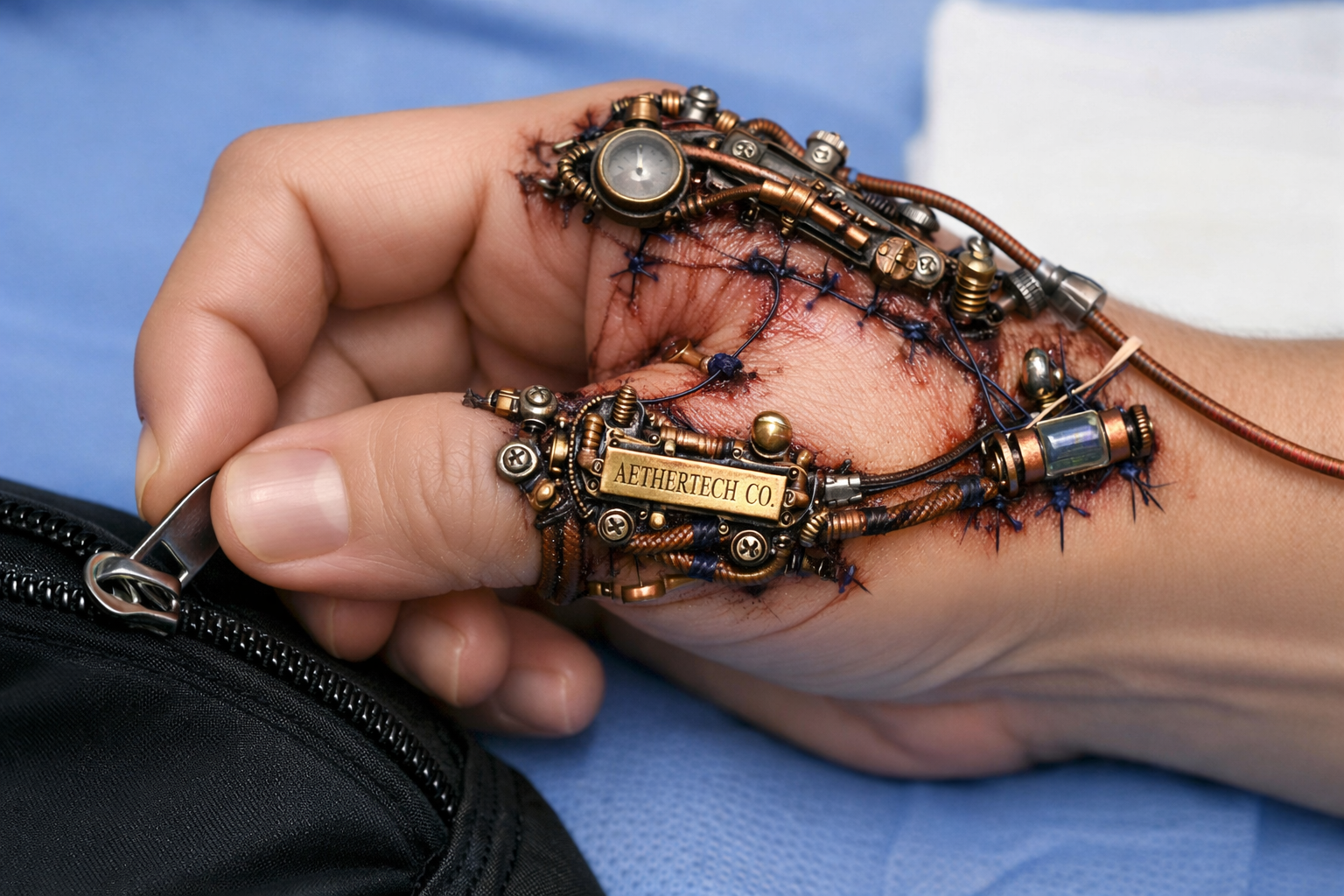
This surgical intervention reroutes force transmission pathways from underutilized intrinsic hand muscles toward the thumb–index pinch axis. By reallocating existing grip strength rather than increasing effort, precise opposition becomes easier and more reliable. The adjustment restores control for delicate tasks like buttoning or zipping while reducing fatigue, strain, and overcompensation in smaller, weakened muscles.
“The strong hand muscles share their power with your thumb and finger so your pinchy-grabs work better and don’t get tired-tired.”
Problem # 7
Cutting Toenails
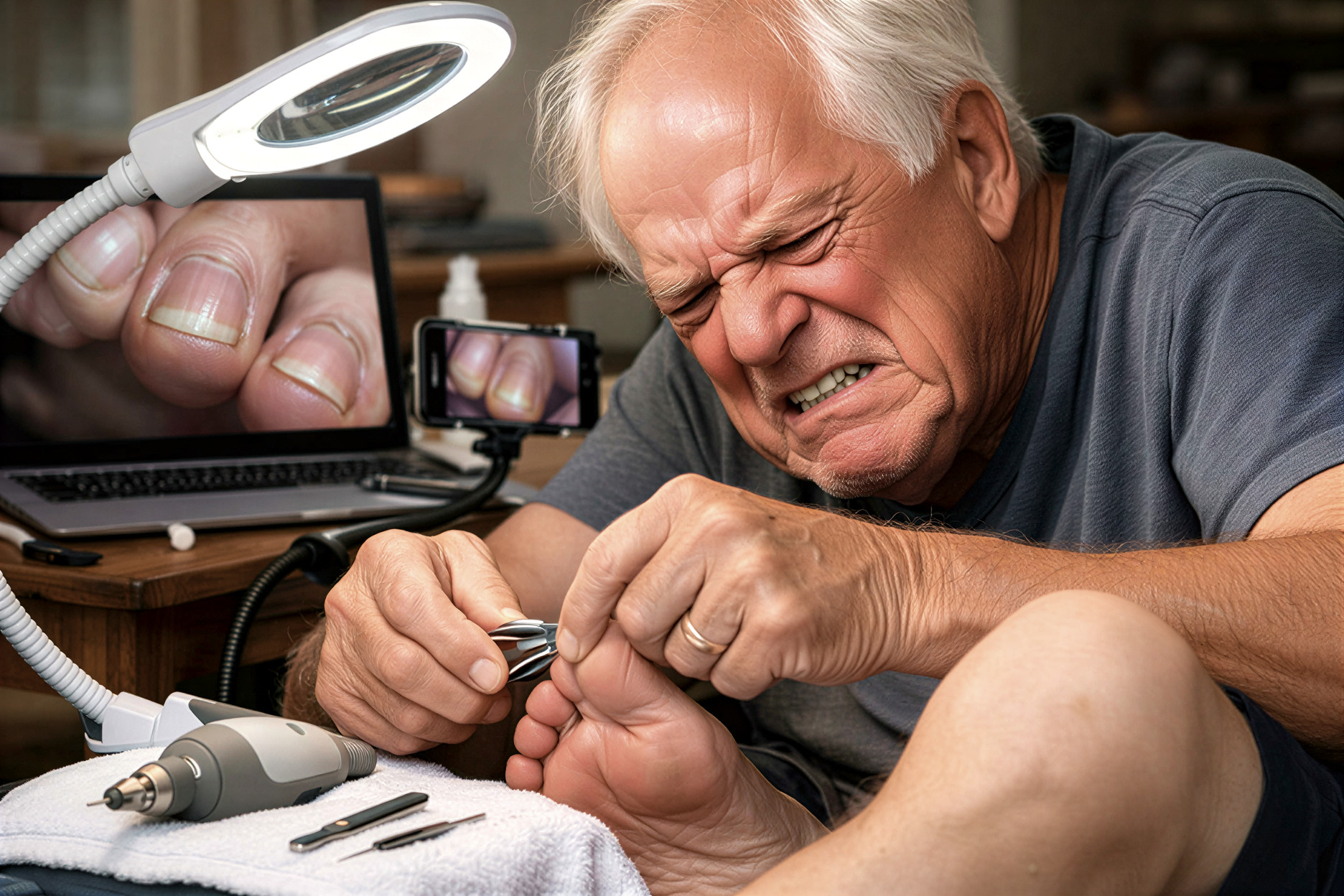
Cutting toenails requires hip flexibility, balance, visual precision, and hand strength. A fragile alliance that collapses if even one member calls in sick. The hips resist, balance wobbles, the eyes misjudge distance, and the hands lose their grip at exactly the wrong time. Miss on any single point and you’re no longer grooming, you’re scheduling. Toenails become industrial hardware, clippers feel undersized, and the whole exercise ends with you staring at your foot, already rehearsing how you’ll explain this to the podiatrist who’s heard it all before.
The Solution
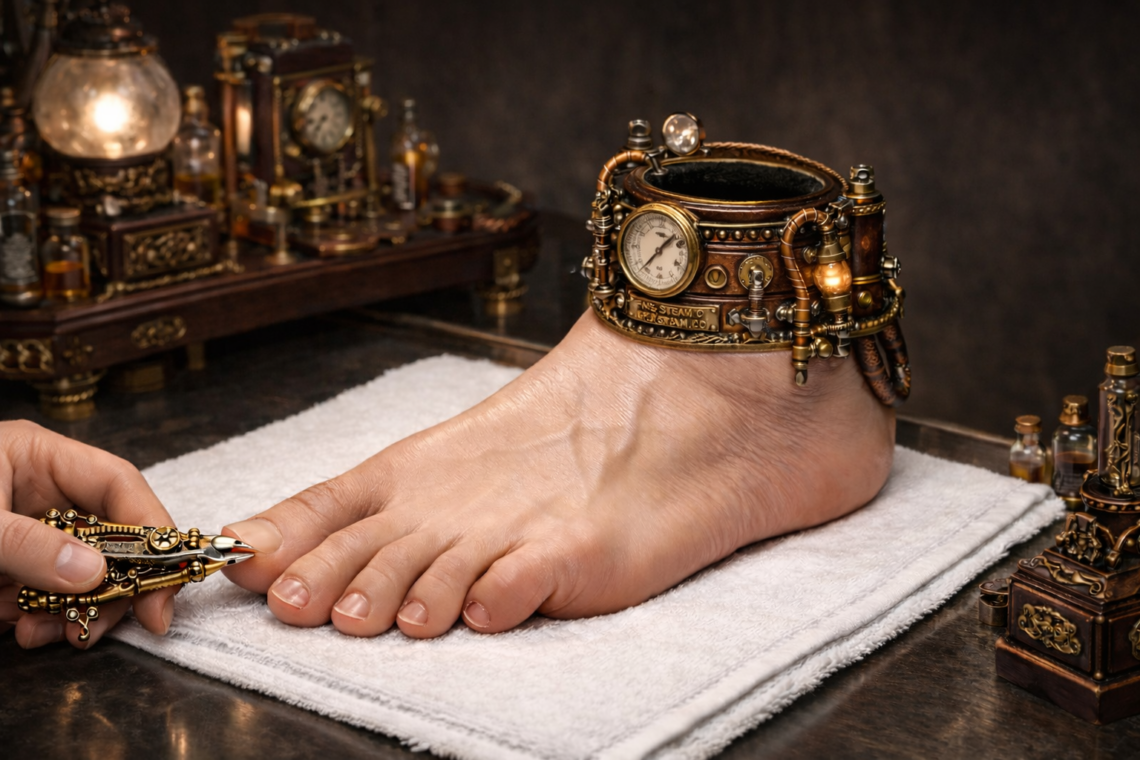
Temporary Foot Detachment Interface
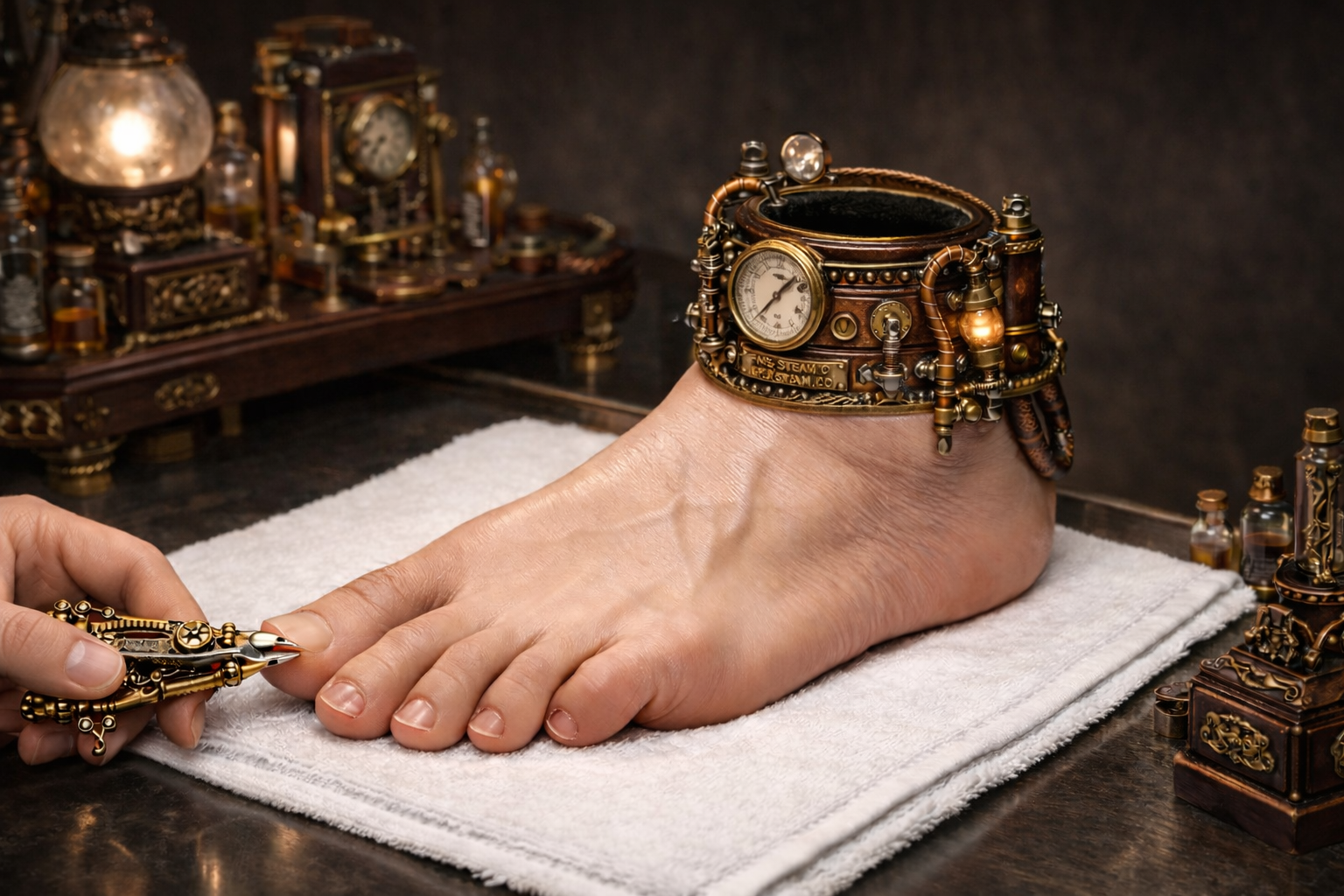
This radical orthopedic interface installs sealed, quick-release ankle couplings that preserve bloodless separation while maintaining nerve memory mapping. The foot can be temporarily detached, placed on a tabletop for grooming under proper lighting and magnification, then reattached with full biomechanical alignment. The process eliminates balance demands, visual distortion, and awkward positioning while restoring complete function once reconnected.
“You can pop-pop your footsy off for a lil’ trimmy-trim on the table, then pop-pop it back on and it goes walky-walk just fine.”
Problem # 8
Tying Shoelaces
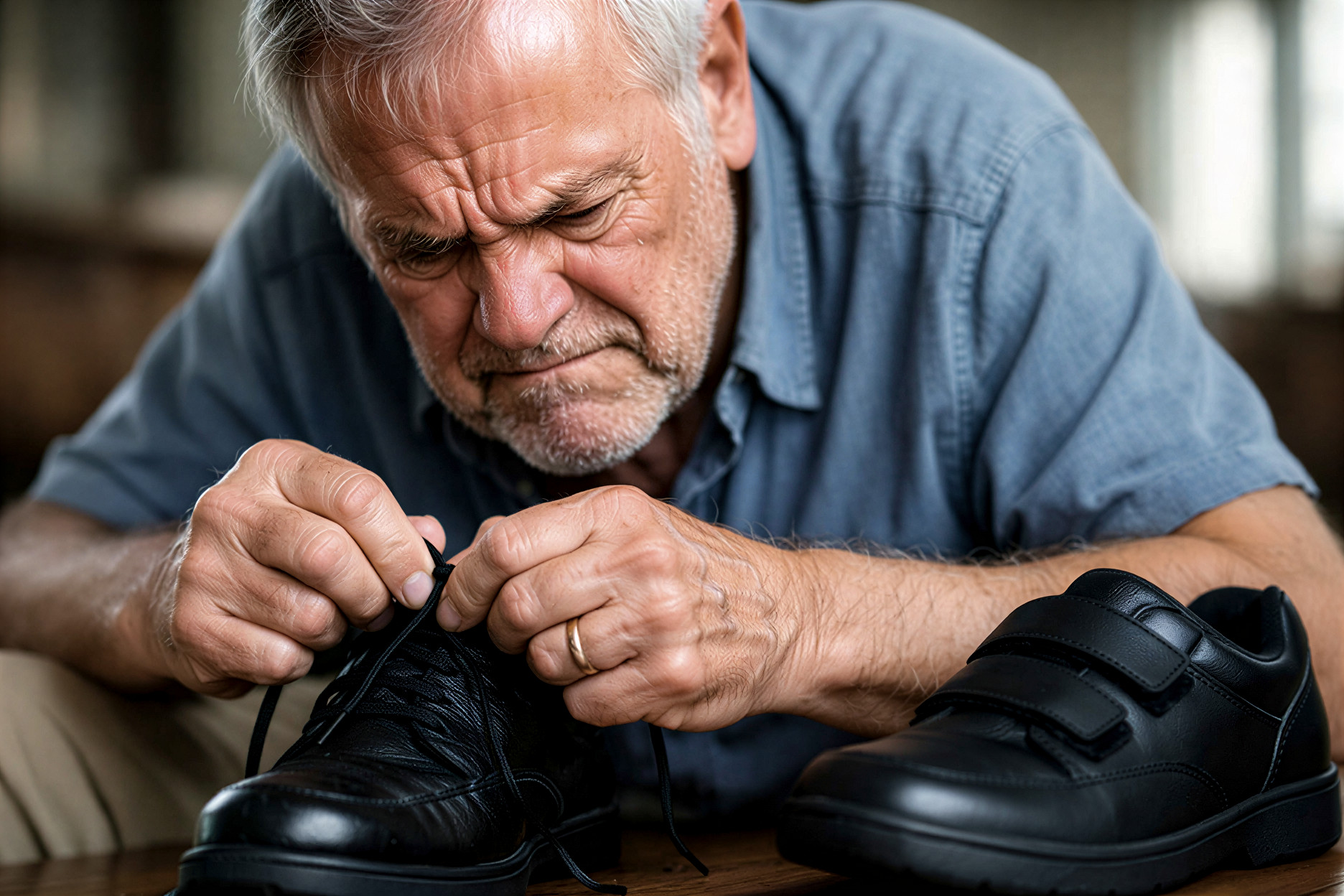
Tying shoelaces takes fine motor control paired with sustained bending. A combination clearly designed by someone who never tried it past the age of optimism. Fingers are expected to pinch, pull, and coordinate while the rest of you remains folded like a bad lawn chair. This is why Velcro entered the picture. Not as a fashion statement, but as a peace treaty. It doesn’t show up because it’s trendy. It shows up because dignity has limits and shoelaces crossed the line years ago.
The Solution
Fine Knot Memory Implant
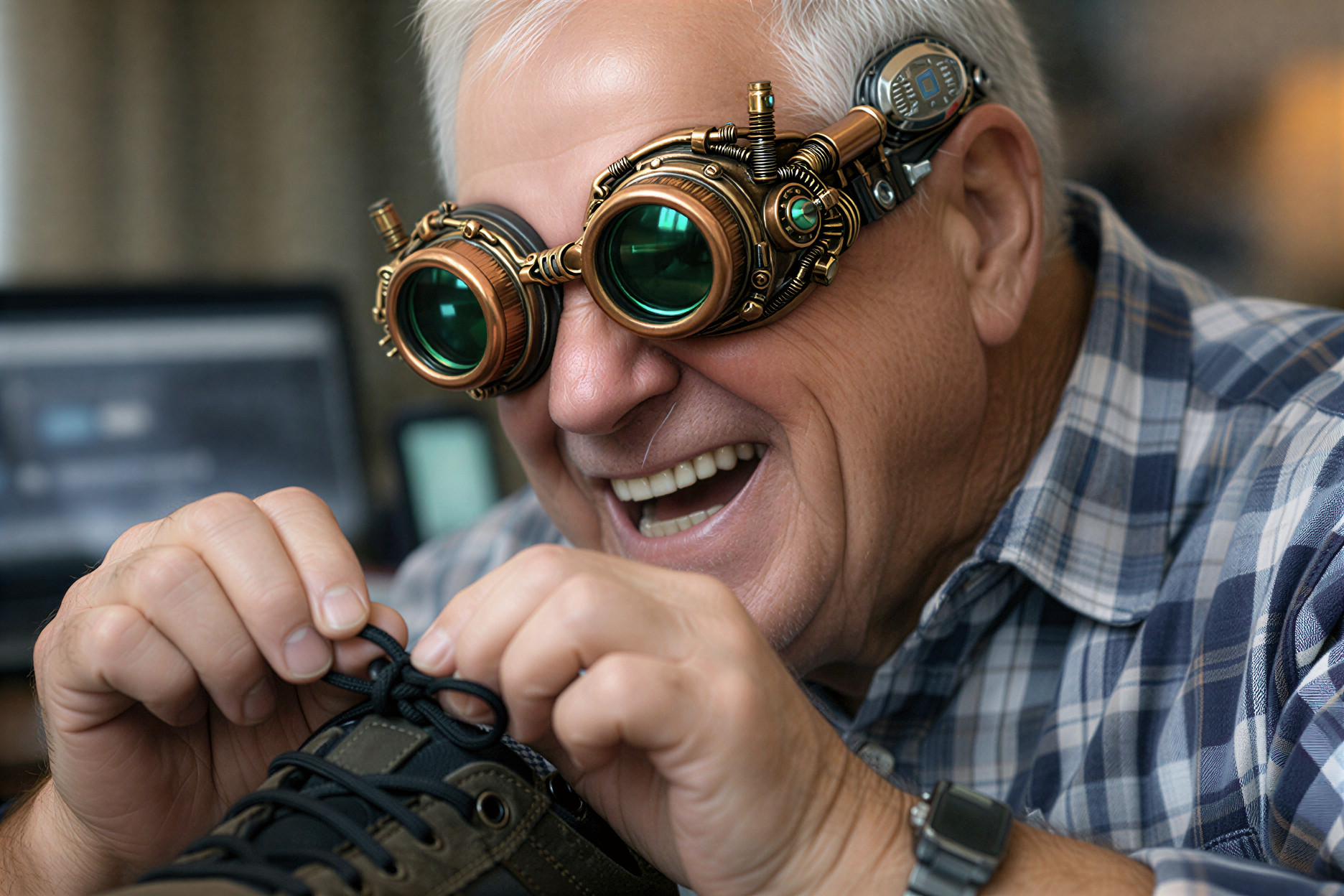
This neural implant compresses the multiple coordinated finger movements required for knot tying into a single executable motor skill. By converting a complex task into one recalled action, the brain no longer manages each step individually. Coordination demands drop significantly, allowing consistent, repeatable tying despite slowed processing speed or reduced fine motor control.
“Your brain makes tie-tie into one teeny easy do-do so your fingies just wiggle once and boom, knotty-knot is done.”
Problem # 9
Picking Something Up Off the Floor
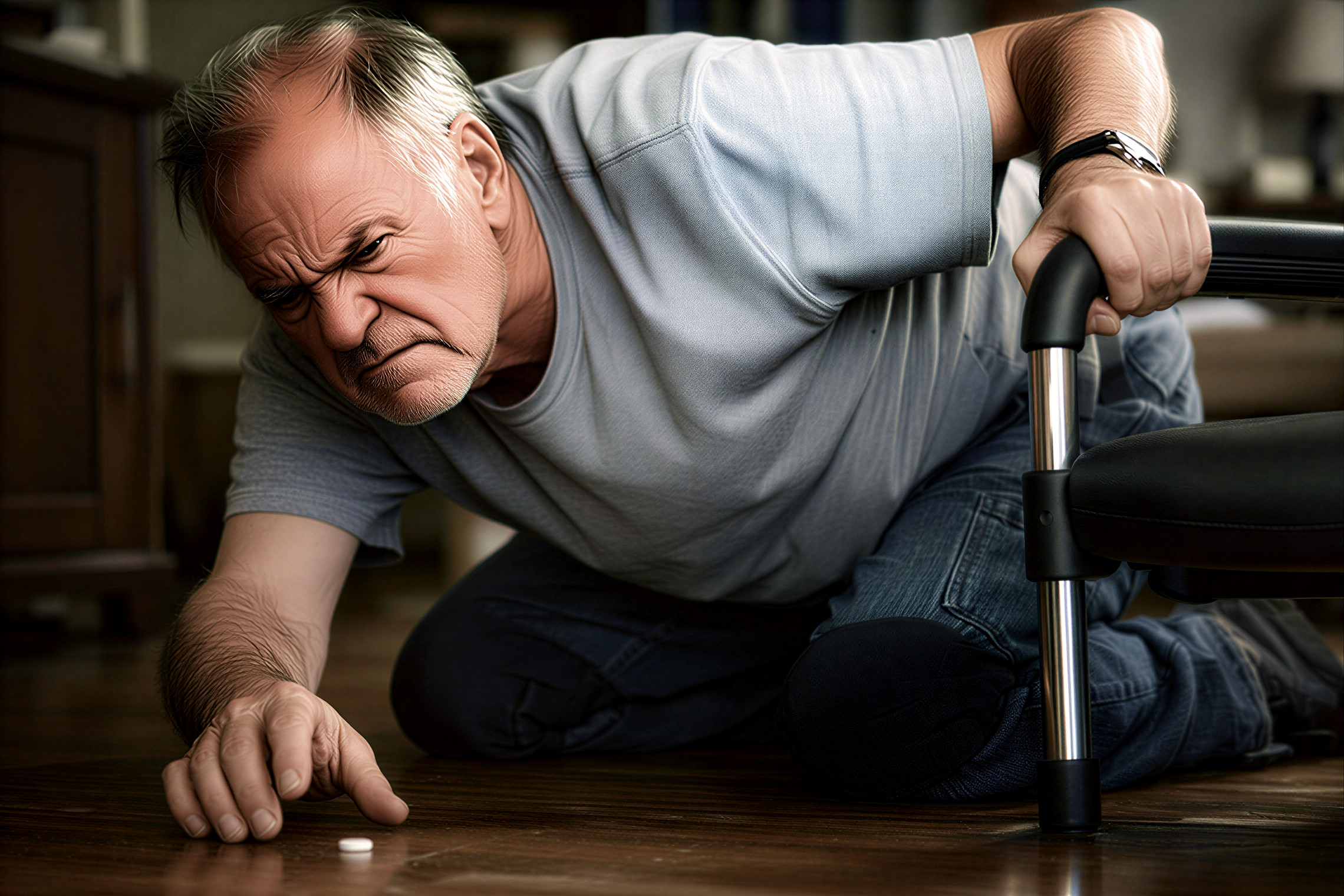
Picking something up off the floor comes with side effects, including dizziness, joint pain, and the sudden philosophical insight that kneeling was meant for younger knees. You head toward the floor with confidence and arrive with regret, the joints filing noise complaints on the way down. Getting back up requires planning, nearby furniture, and a reassessment of how badly you actually need that item. It’s not the bend that humbles you. It’s the moment you realize gravity has been waiting patiently for this exact opportunity.
The Solution
Reverse Ascent Assist Ligaments
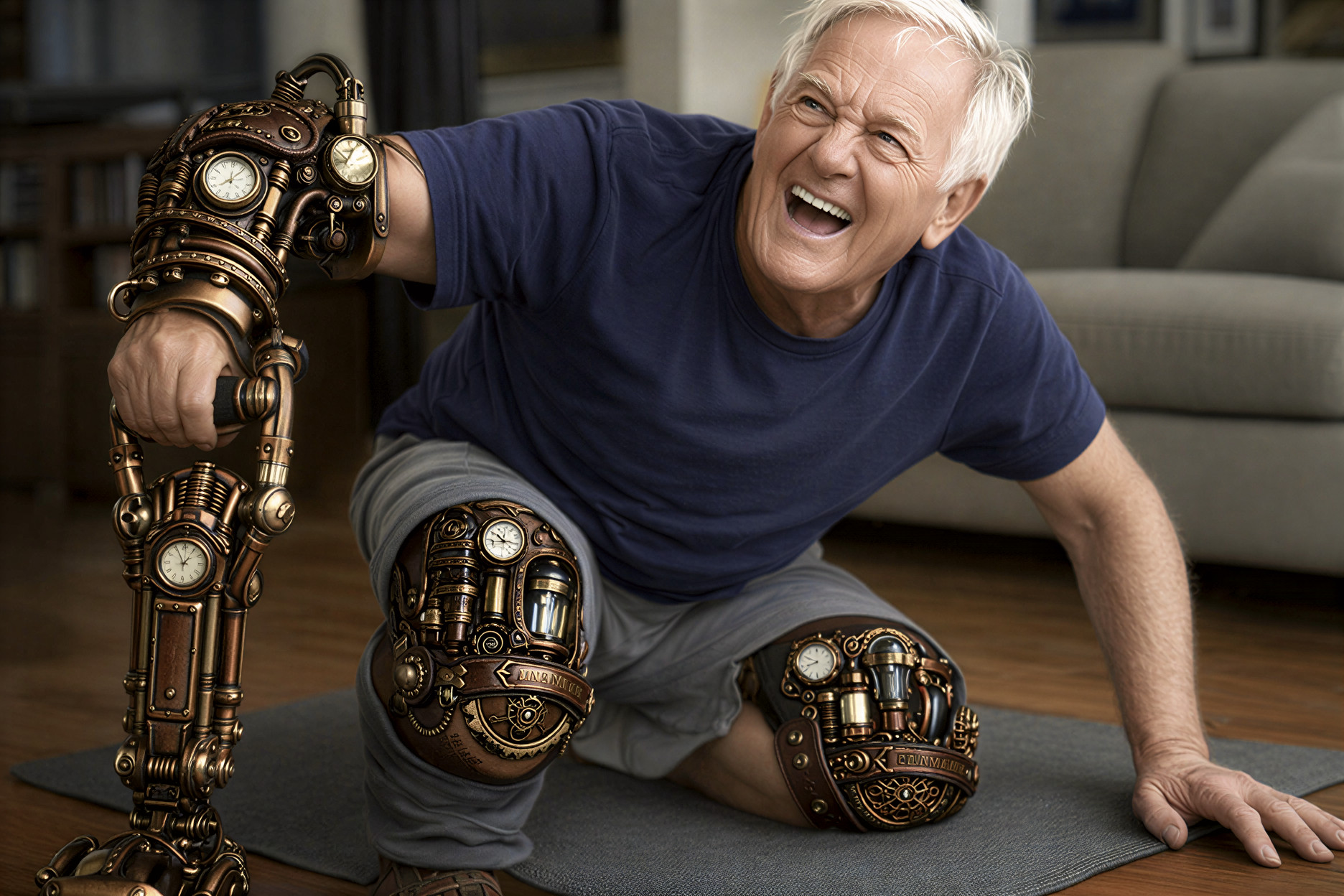
This procedure involves installing titanium, load-bearing ligaments that stretch and store mechanical energy as the body lowers toward the floor. When standing is initiated, the stored energy is released in a controlled manner, assisting upward movement. The system reduces reliance on quadriceps strength and balance, making the transition from floor level to standing smoother and less exhausting.
“Boingy stretchy helpers inside you go stretch-stretch when you go down and then pushy-push you back uppy-up when it’s time to standy-stand.”
Problem # 10
Turning Doorknobs or Unscrewing Jar Lids
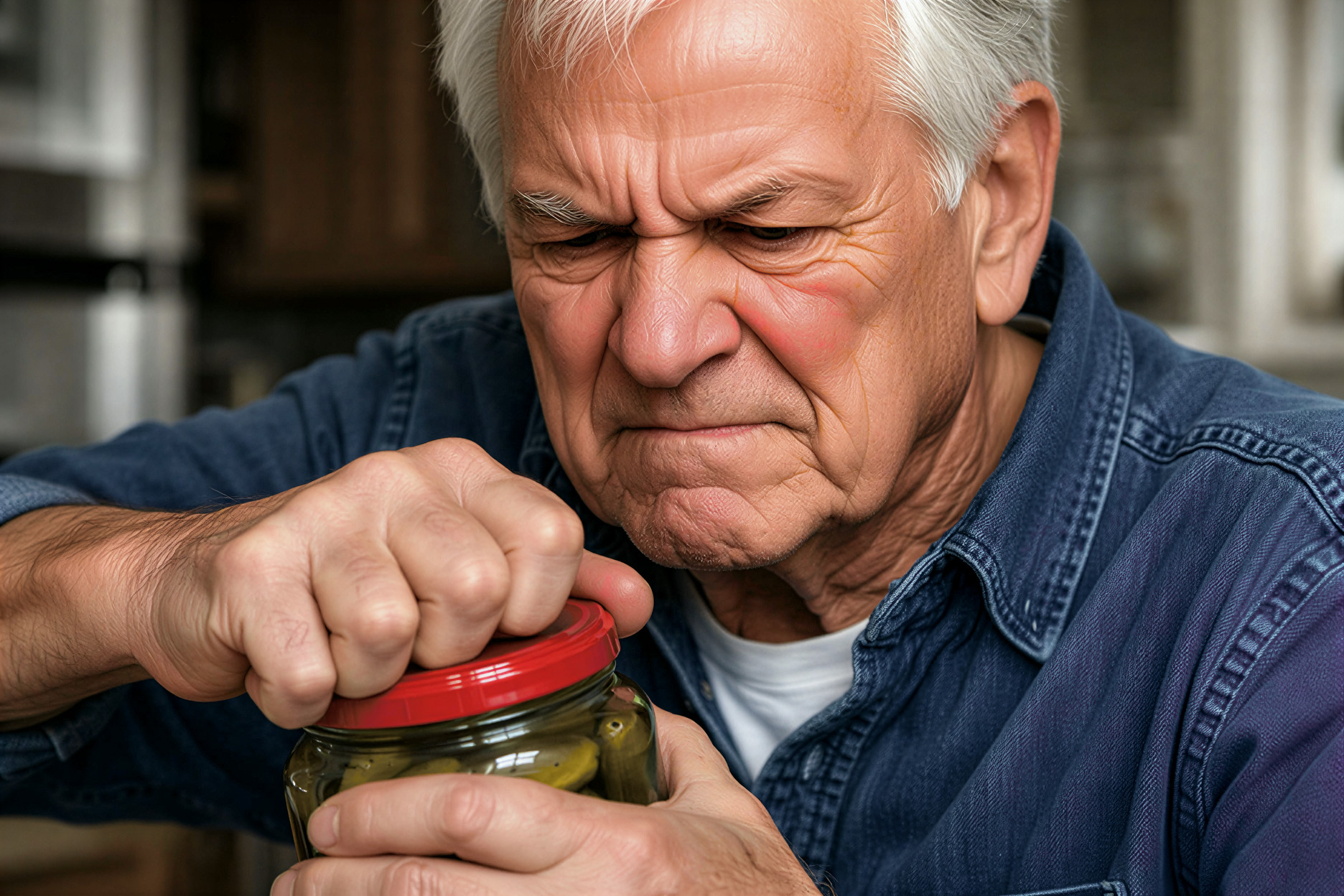
Turning doorknobs or unscrewing jar lids requires grip strength. Lots of it. Arthritis can turn this into an act of quiet rage, the kind you experience alone, jaw clenched, pretending nothing is wrong. The hand twists, the wrist complains loudly in a language only you can hear, and the object refuses to budge out of spite. There’s no audience, no applause, just a stubborn stalemate between you and an inanimate thing that suddenly has opinions. You keep your cool on the outside while inside you’re negotiating surrender terms.
The Solution
Rotational Torque Bypass Grafts
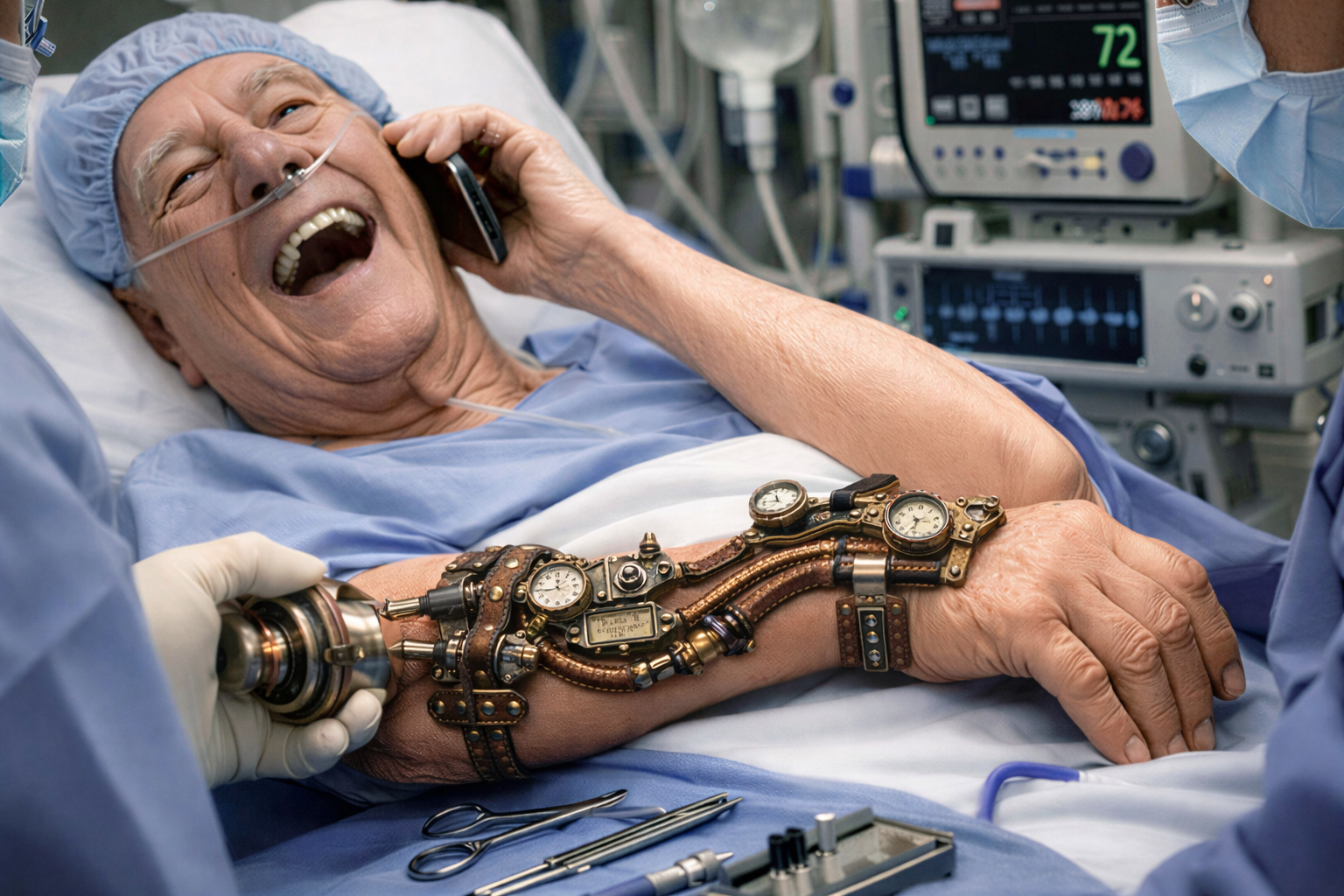
This surgical procedure installs permanent connective grafts that reroute twisting forces away from inflamed wrist joints and into the stronger forearm muscles. By redirecting the load path rather than increasing effort, rotation becomes smoother and less painful. The grafts engage only during torque-heavy movements, preserving fine hand control while reducing joint strain during tasks like opening jars or turning doorknobs.
“Twisty-work goes to big strong arm muscles instead of sore wristy-wrists, so turny-turn things feel less ouchie.”
Problem # 11
Cleaning Up Thoroughly After a Bowel Movement
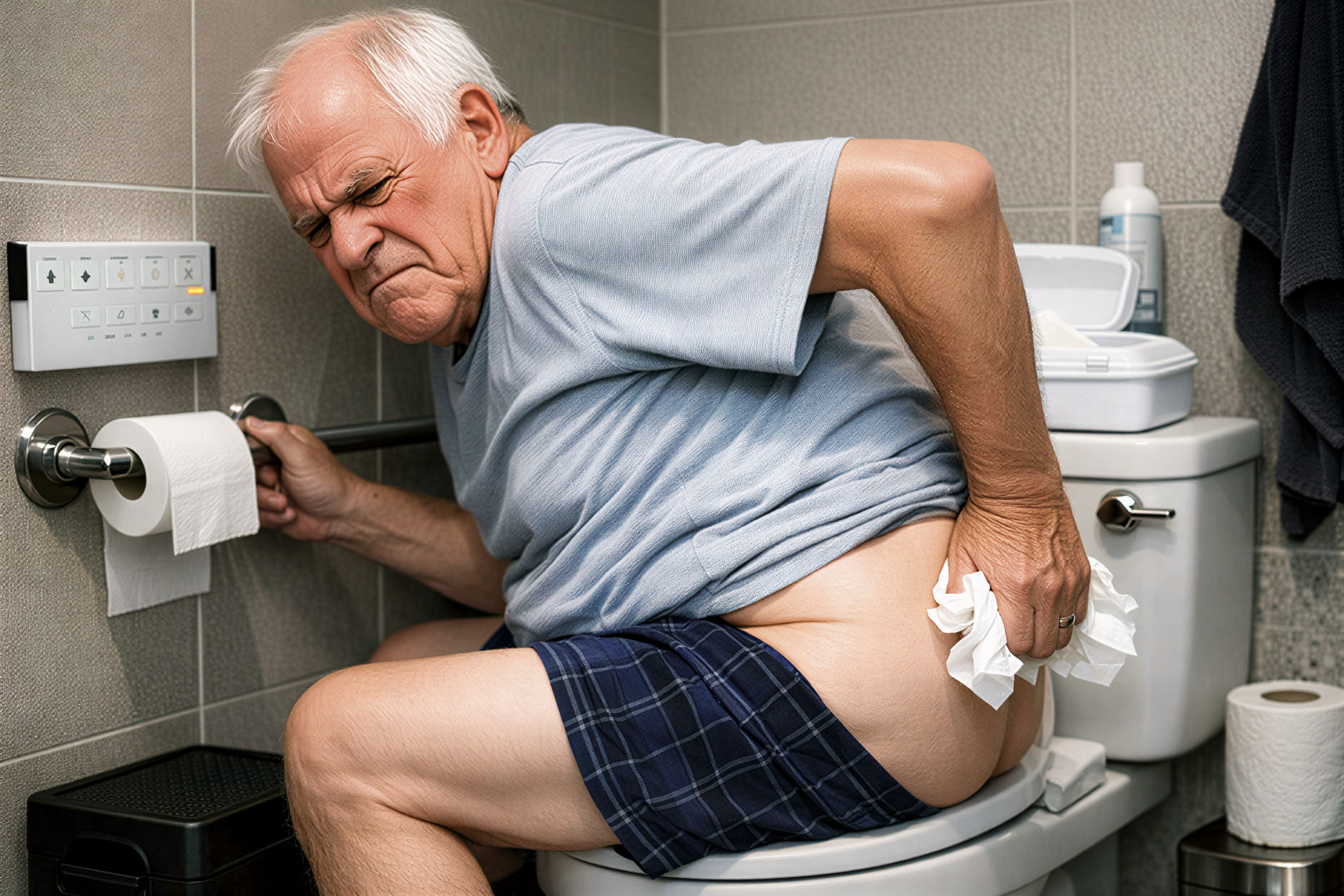
Cleaning up thoroughly after a bowel movement requires trunk rotation, shoulder mobility, balance, and endurance. A four-part harmony that rarely stays in tune. When even one of them falters, dignity doesn’t disappear, it becomes a logistical problem. Movements turn cautious. Timing stretches out. And you suddenly find yourself planning angles like a surveyor. What was once automatic now involves strategy, pacing, and a brief inventory of what body parts still work. The task gets done, but grace exits early, leaving you to finish things methodically and in silence.
The Solution
External Trunk Rotation Assistance Bands
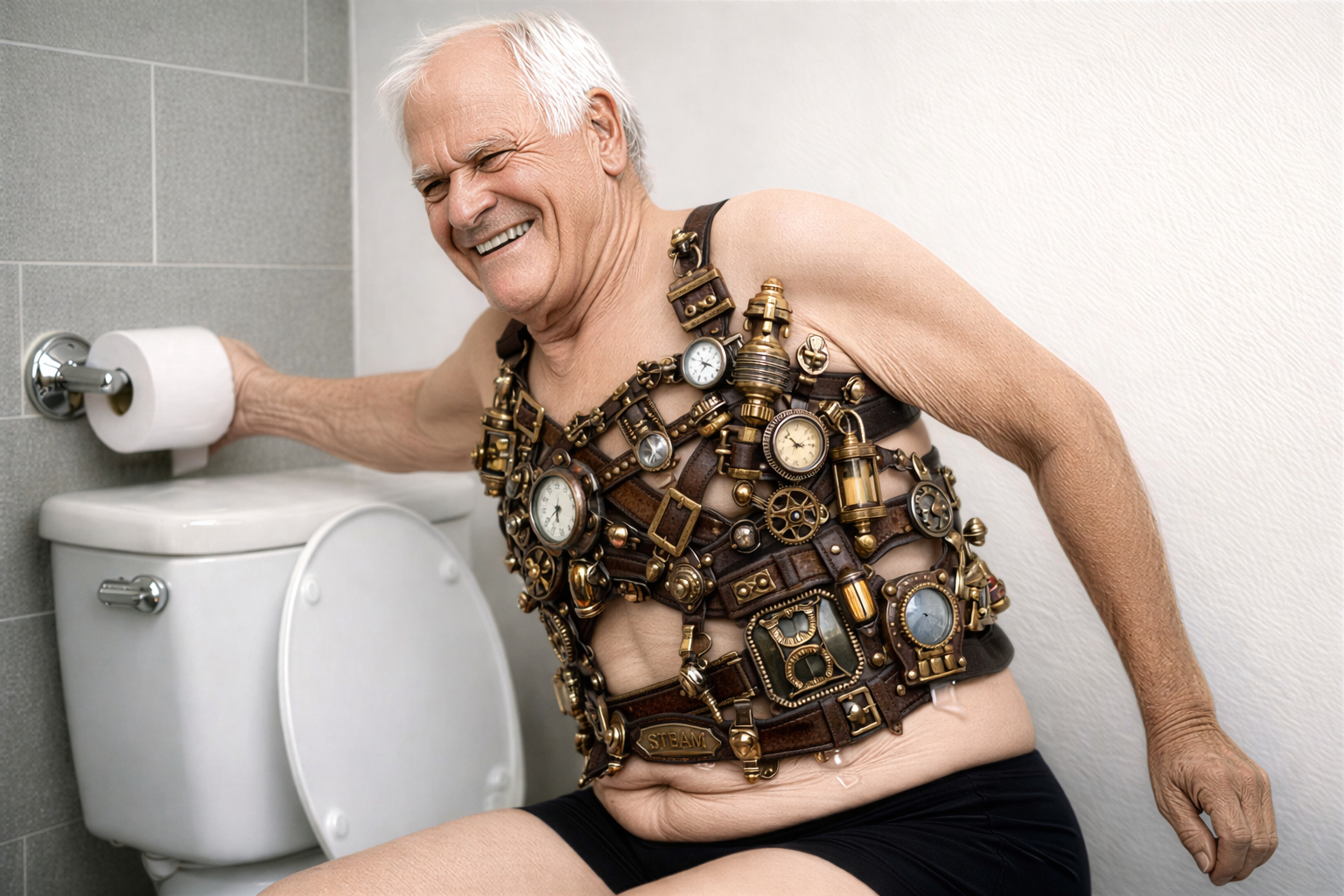
State of the art robotics permanently attach external elastic bands into the abdominal and lumbar fascia that engage during torso rotation. The bands provide gentle rotational assistance without pulling the body off balance or restricting movement. By reducing the muscular effort required to twist and reach, the system improves control and endurance during hygiene tasks while preserving natural posture and stability.
“Squishy stretchy helpers inside your tummy help you twisty-twisty and reachy-reach without tippy-falls or tired-tired feelings.”
Problem # 12
Getting On and Off the Toilet Safely
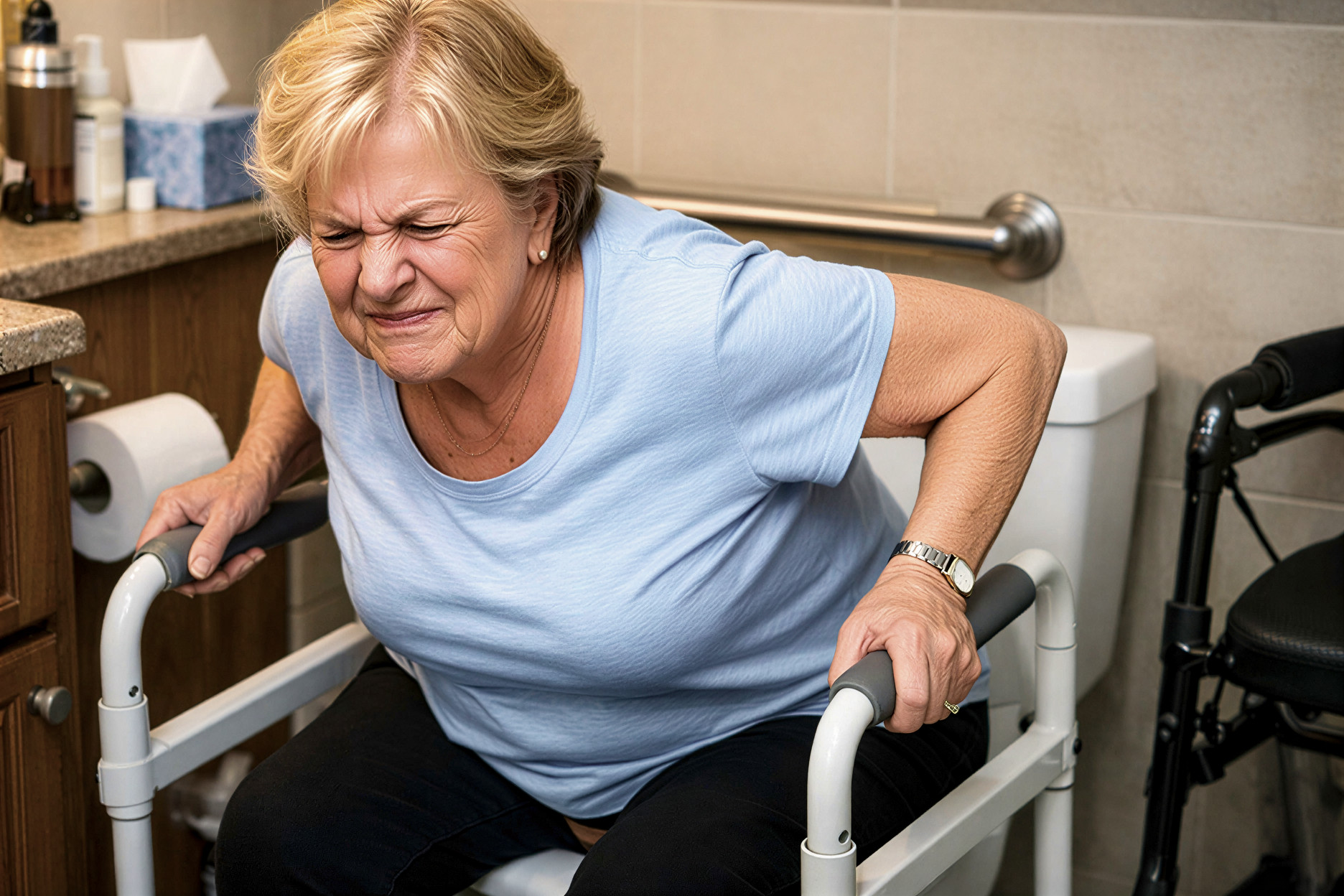
Getting on and off a toilet safely with low seat height paired with weak quads creates a moment of prayer you never put on the calendar. You sit down casually and immediately realize it was a mistake. Your thighs protest, knees stall, and halfway up you pause, suspended between faith and physics. There’s a quiet appeal made to anything listening while you negotiate leverage and dignity. Eventually you rise, triumphant but shaken, fully aware that the furniture won this round.
The Solution
Toilet-Specific Hip Angle Recalibration
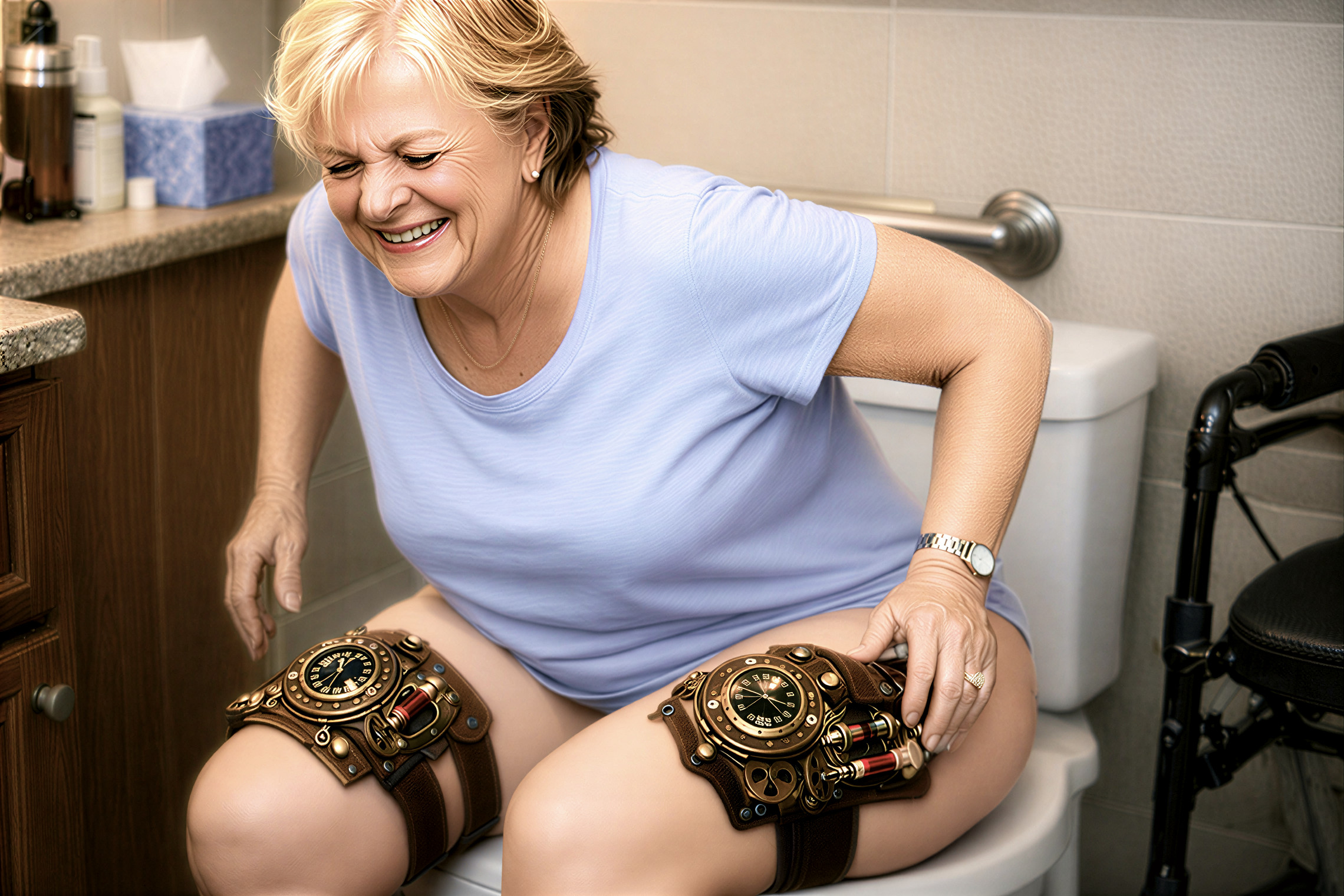
These orthopedic implants subtly modify hip joint geometry to improve leverage during low-seat sitting and standing. The recalibration applies only within the restricted angle range typical of toilet use, leaving normal walking unaffected. By optimizing force transfer at this vulnerable joint position, the procedure reduces stall points and instability without changing overall hip mobility.
“Your hip gets a teeny tweak so potty sits and standy-ups are easy-peasy, but your walky-walk stays the same.”
Problem # 13
Brushing Teeth for the Required Amount of Time
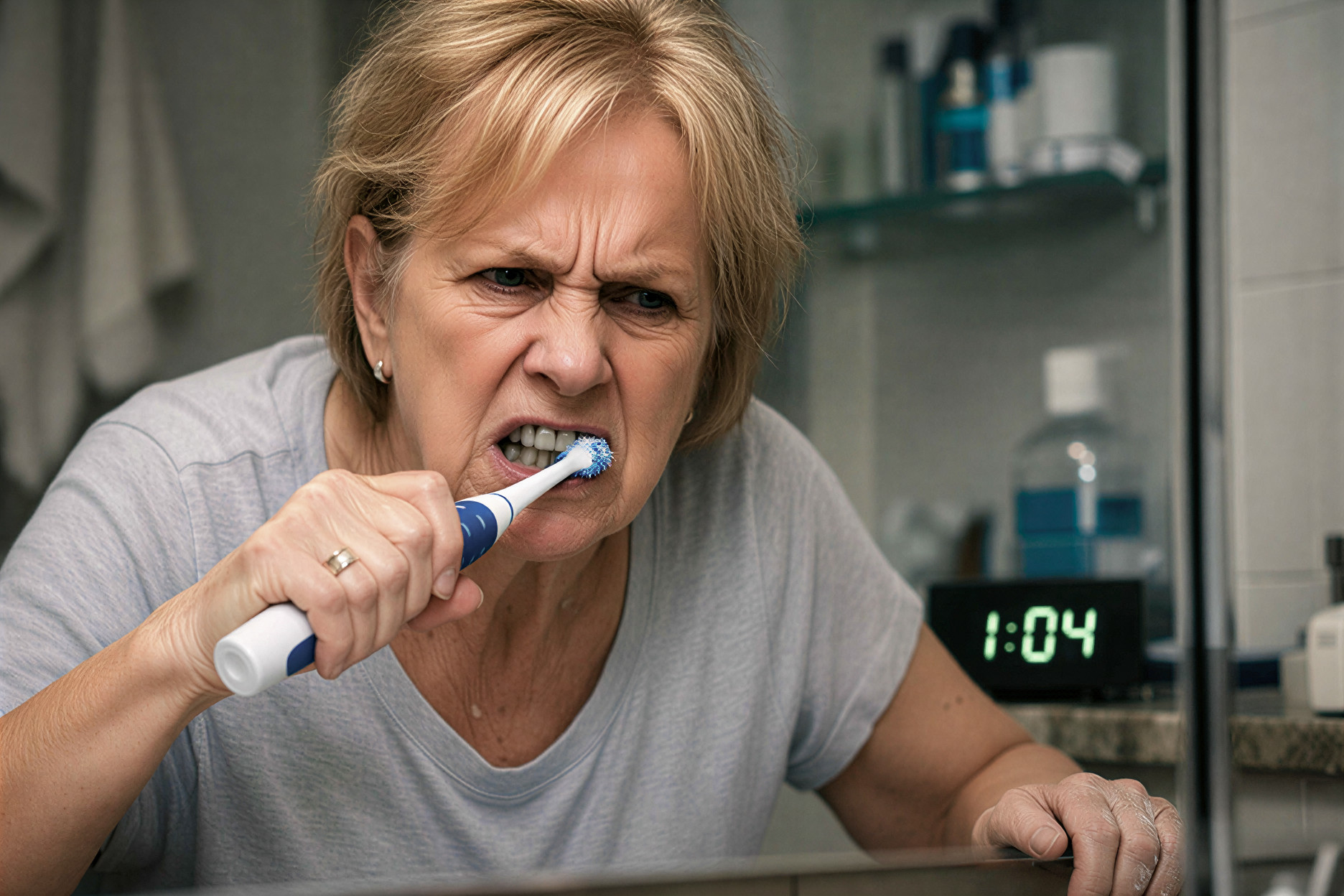
Brushing teeth for the required amount of time while standing with a toothbrush can easily turn into an unexpected audit of fatigue, tremor, and shoulder pain. Your grip tightens, then fades. Your arm starts broadcasting complaints halfway through the recommended minutes. Repetition exposes everything you hoped was still quietly functional. So, you push on, counting seconds like a parole hearing, leaning slightly, negotiating posture, determined to finish clean even if the shoulder is already filing paperwork. Dental hygiene survives, but it does so at the cost of discovering how long two minutes can actually feel.
The Solution
Shoulder Tremor Stabilization Implant
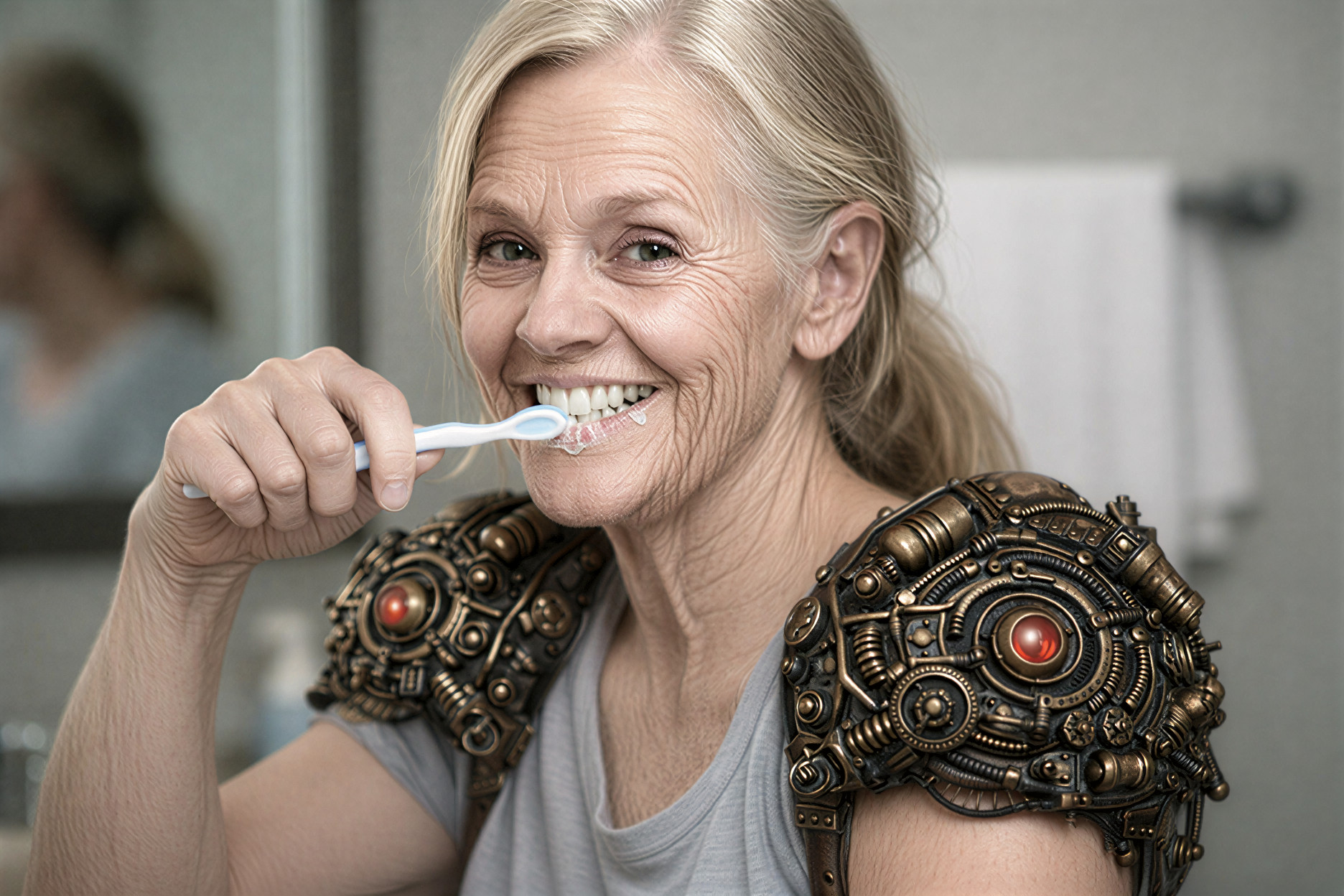
These surgically installed micro-stabilizers on the shoulders control pathways to counteract fatigue-induced micro-shaking. By smoothing irregular firing patterns during repetitive movements, the arm remains steadier over time. The system preserves normal strength and range of motion while reducing tremor, allowing tasks like brushing teeth to be completed without escalating strain or loss of control.
“Teeny arm helpers shush the shake-shakes when your arm gets sleepy, so it stays steady-eddy while you brushy-brush.”
Problem # 14
Trimming Nose and Ear Hair
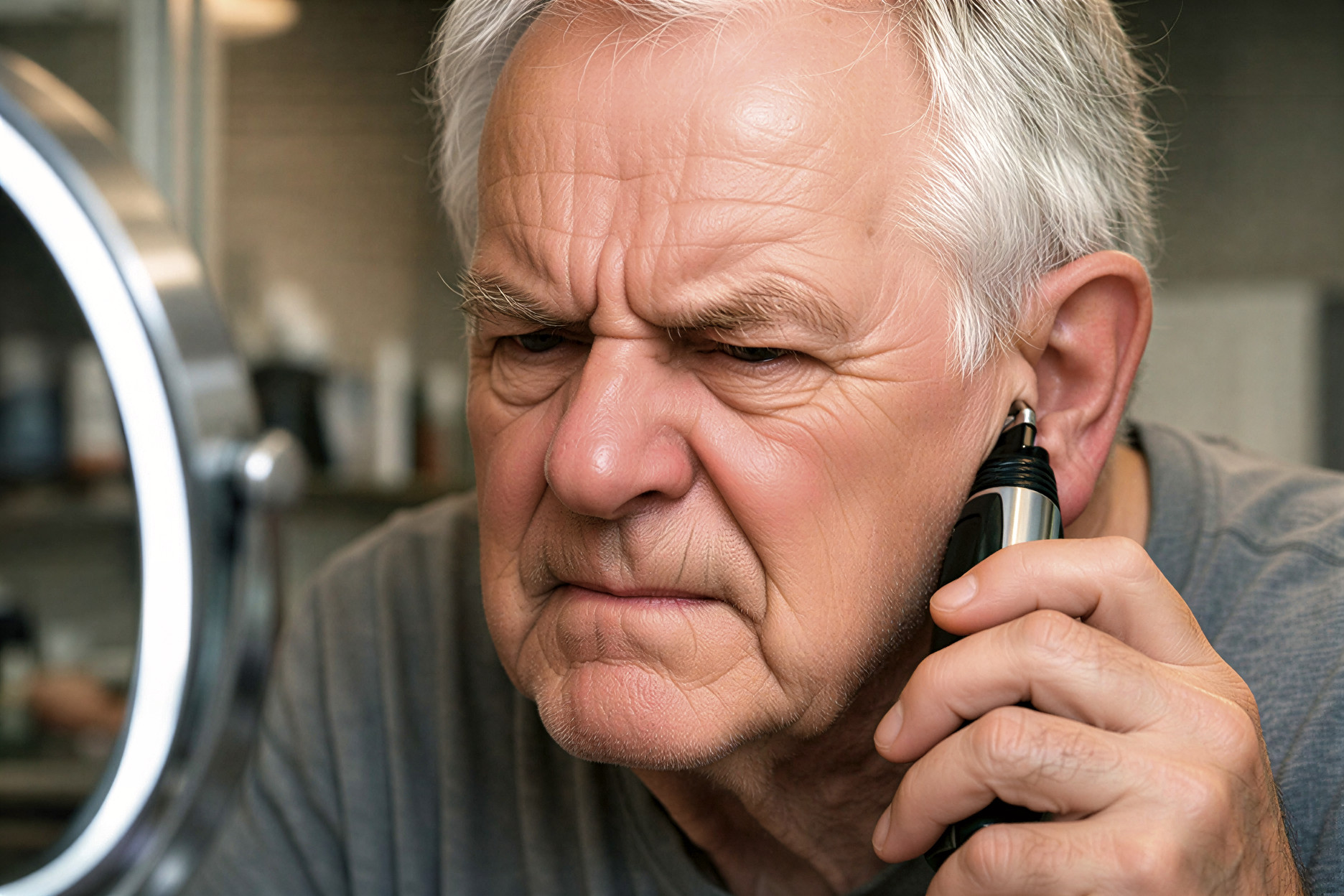
Trimming nose and ear hair demands close vision and steady hands that are the price of entry here. Tremors raise the stakes immediately. What should be light grooming becomes a precision exercise conducted inches from sensitive real estate. Your eyes lean in, your hand hesitates, and every small shake gets loud. You move slowly, breathing carefully, fully aware that one casual twitch could turn maintenance into incident. It’s not vanity at work. It’s damage control, carried out with focus normally reserved for defusing wires.
The Solution
Proximity Tremor Cancellation Nodes
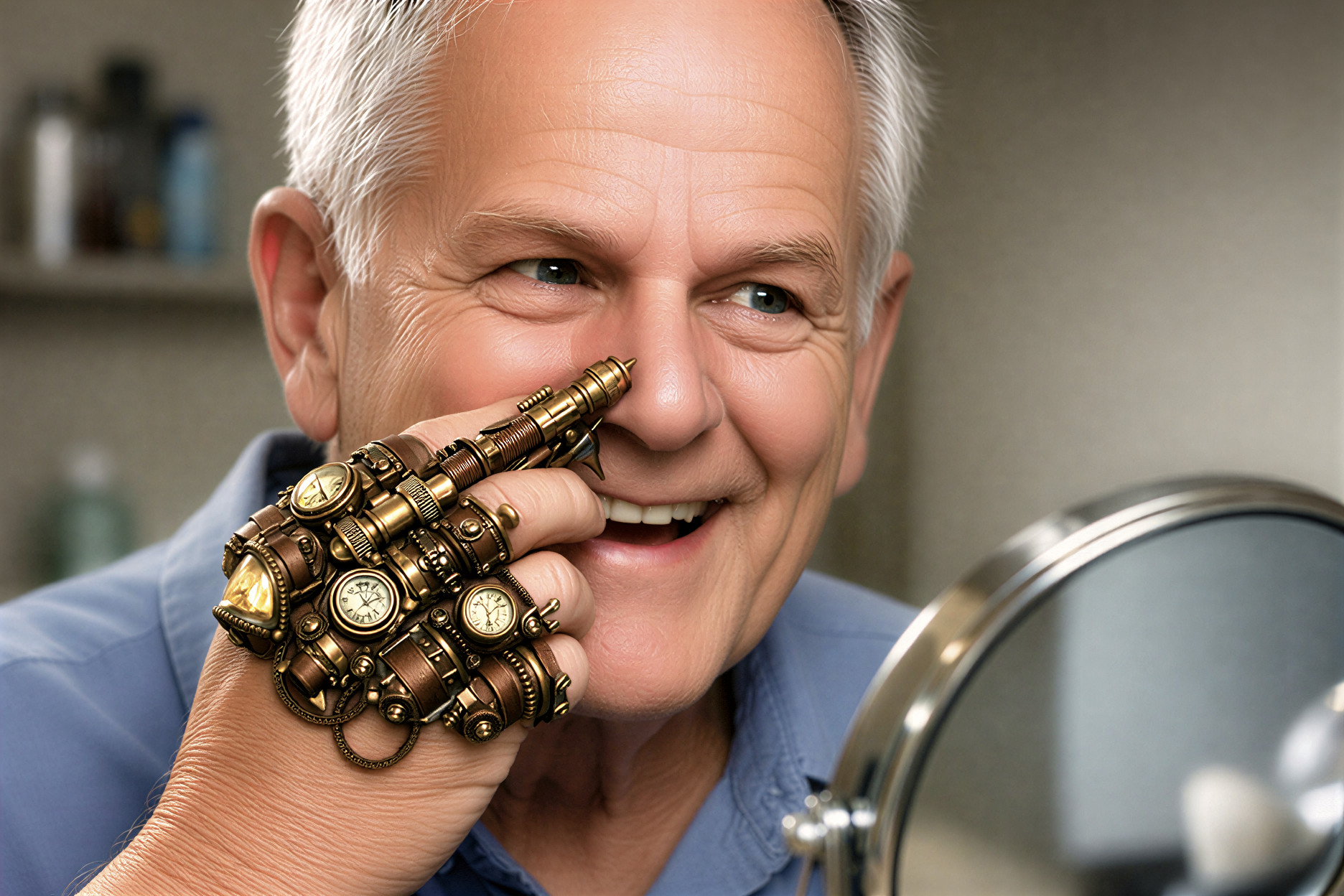
Neuromotor implant systems localize tremor-suppression nodes that activate only when the hands approach defined facial regions. Spatial sensors trigger micro-corrections that cancel involuntary shaking without affecting normal movement anywhere else. By limiting activation to high-risk zones, precision grooming tasks can be performed safely while preserving natural hand motion during all other activities.
“When your hand goes near your face, teeny shake-shush helpers turn on so your fingies don’t wibble-wobble while you do careful facey stuff.”

