“Yesterday’s cars lasted 30 years. Today’s cars last until they clear their throats.”
– Milo Trundle
By A. R. Smith
Senior Consumer Editor
Modern Living Magazine
July, 2025
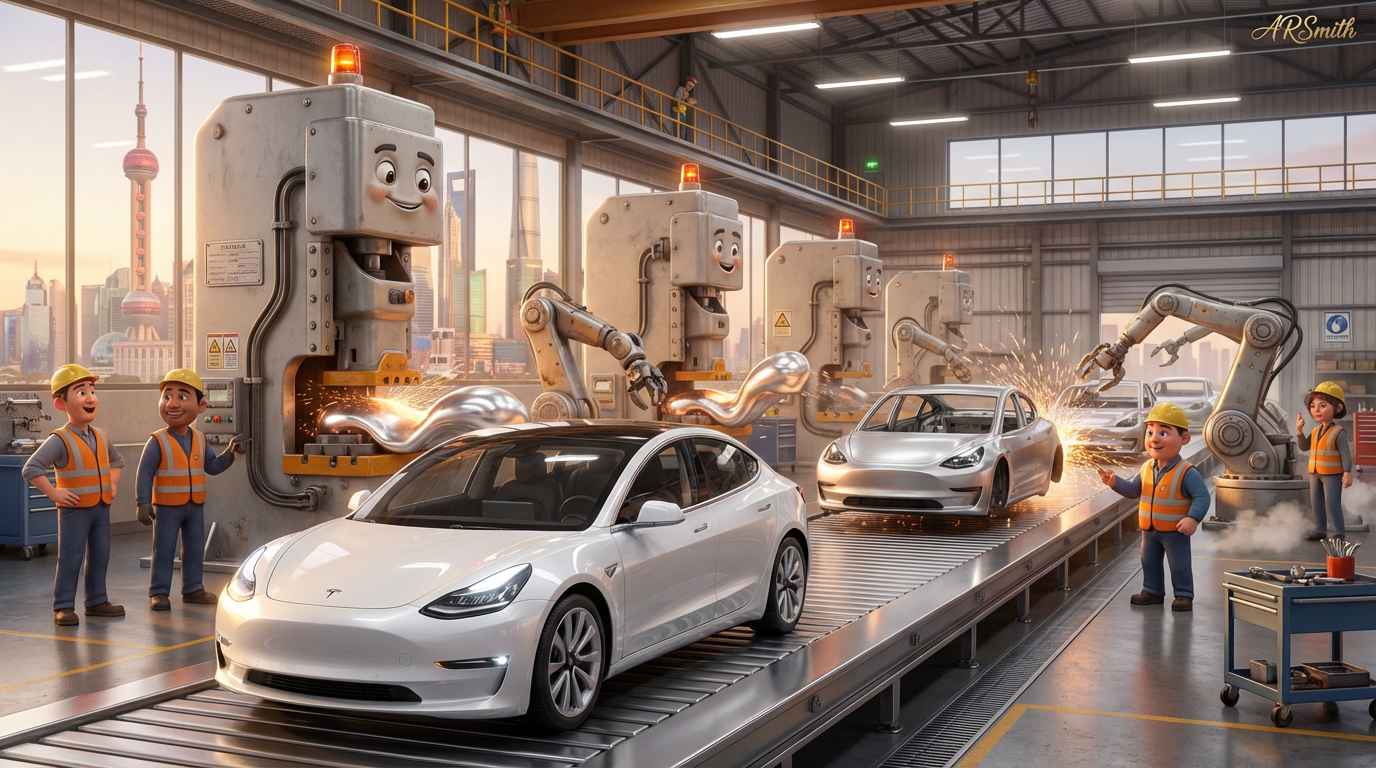
Even before I had time to finish buttering my bagel, somewhere in Shanghai, a brand-new Tesla Model 3 had rolled off the line. And, not just one, either. New cars pour out of their factories like overcaffeinated PEZ dispensers. At full tilt, they spit out a completed car every 60 seconds. Think about that. Most of us can’t even find our keys in that amount of time. Meanwhile, globs of raw aluminum slide into one end of the plant, get smacked around by a battalion of stamping presses, and emerge an hour later, a showroom-ready family car.
But, before we dive into the story of the new throwaway family cruisers, it’s worth pausing to remember how America first fell head over heels for the fine art of tossing things aside. My father’s generation used to repair stuff. Polish it, and keep it humming through multiple presidential administrations. But, somewhere along the way, we swapped that sturdy, Depression-era frugality for a national pastime of seeing how quickly we can upgrade, discard, and start over. So, here we are now, marveling at the speed of it all, wondering when exactly our cars joined disposable coffee cups, razors, and ex-boyfriends on the list of things designed to leave quietly in the night.
How The Disposable Culture Found Its Footing
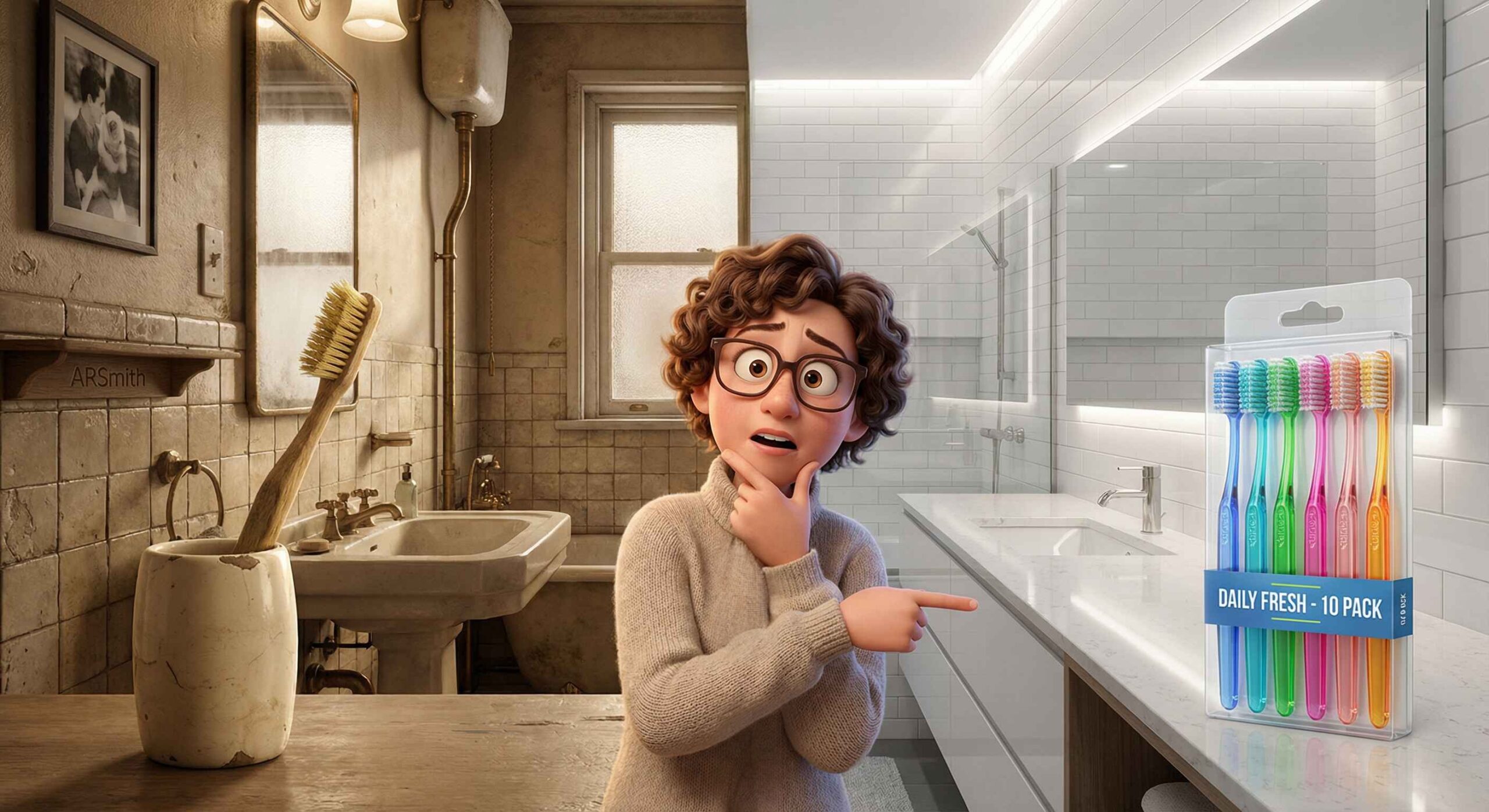
Let’s take a stroll down memory lane and compare yesterday’s battle-ready household gear with today’s fragile, blink-and-it-breaks multipacks that seem to be designed by people who hate longevity, beginning with your toothbrush.
Toothbrushes
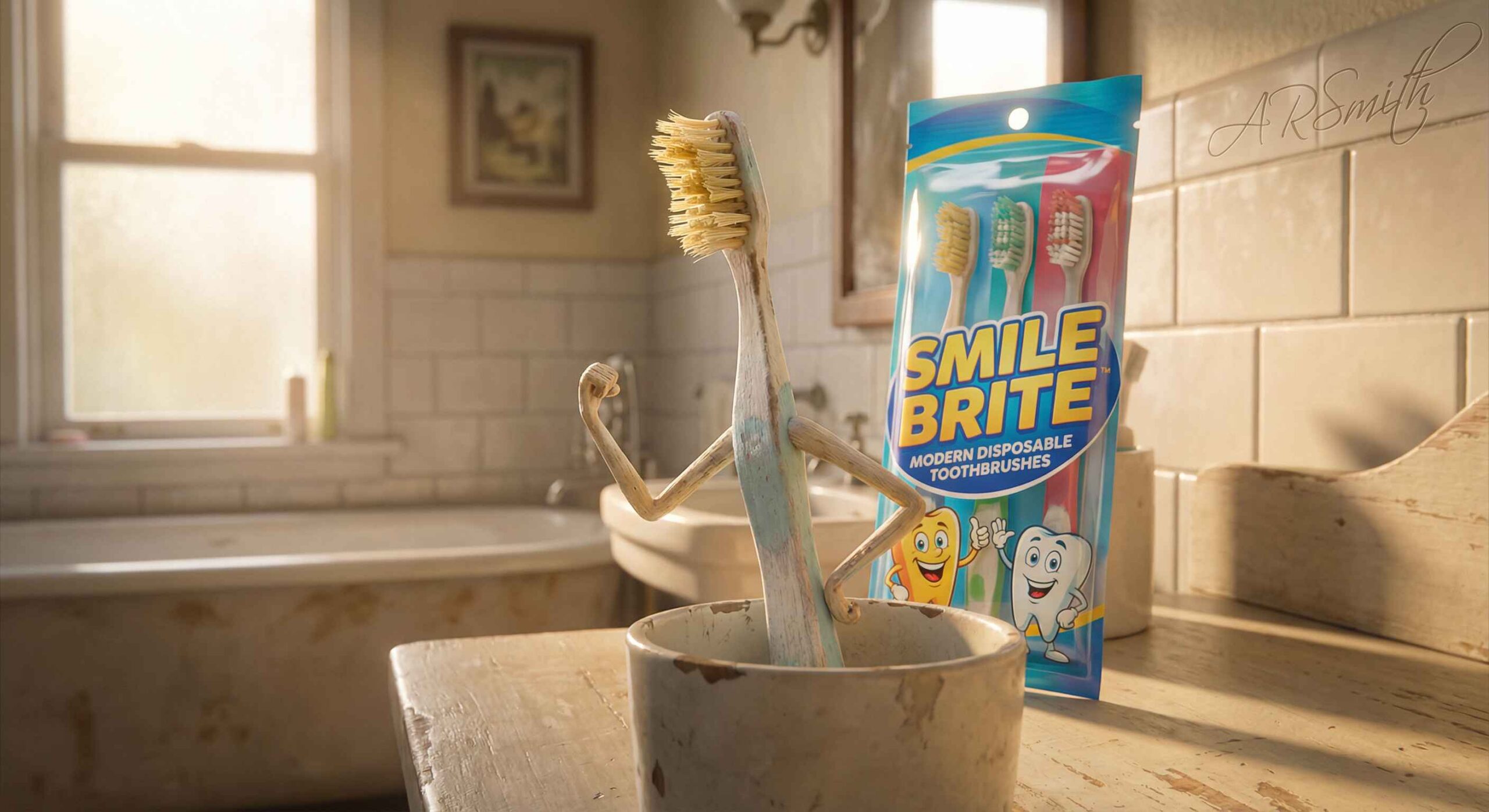
Way back when, a toothbrush was a commitment. It sat proudly in its holder long after Nixon resigned. It bleached, bent, and aged like driftwood, yet somehow remained functional.
Today, you’ll find cheerful ten-packs of toothbrushes squirreled away under the sink, destined to fray into sad dental pom-poms in less than a week. Disposable smiles for disposable living.
Pens
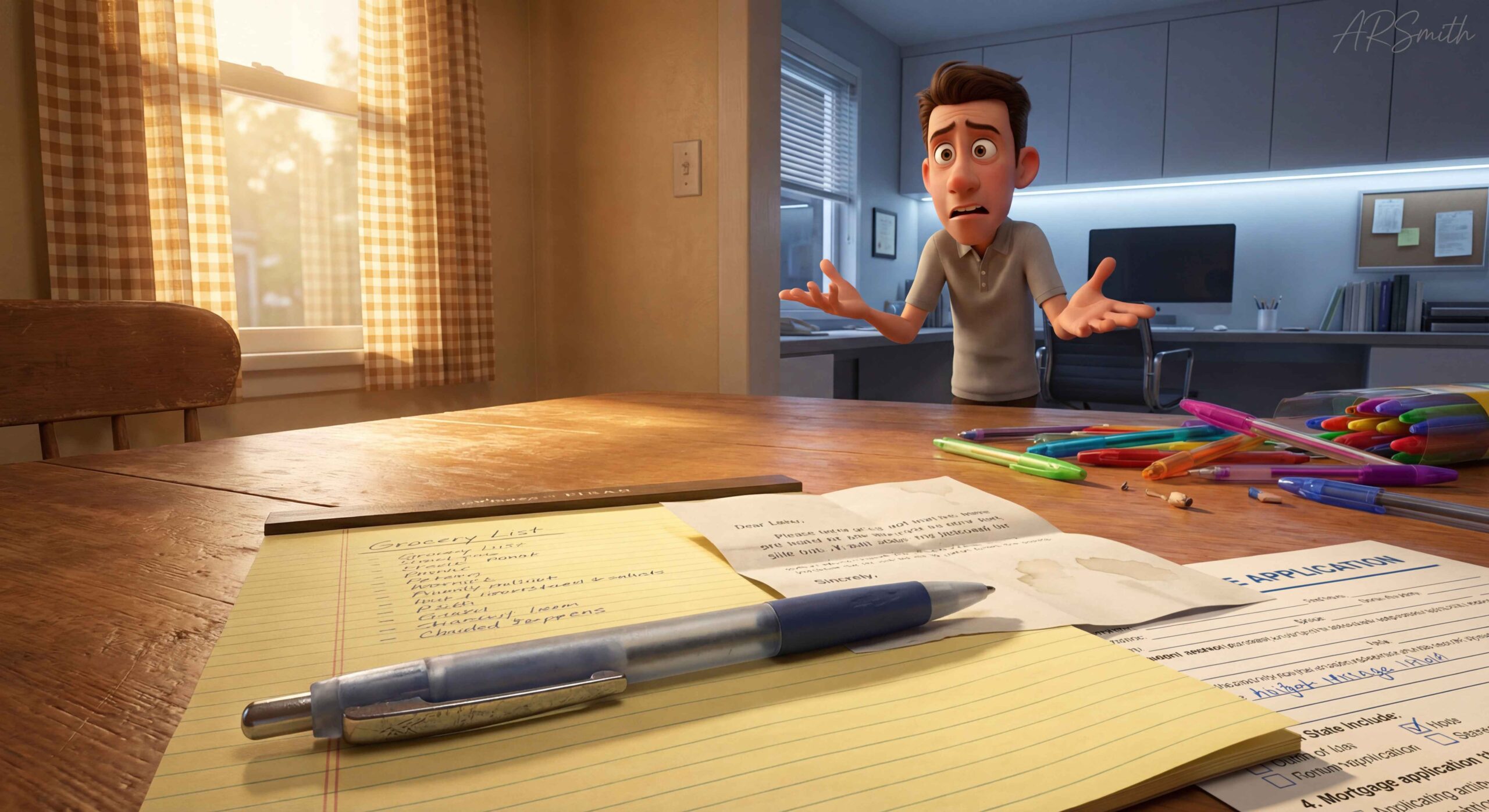
A ballpoint pen in the seventies might not impress anyone aesthetically, but it always wrote. It wrote grocery lists, phone numbers, break-up letters, and entire mortgage applications without complaint. Today you buy a twenty-pack, test every one, and discover that only one lasts until Tuesday.
Corded Telephones

Corded phones were tough, surviving drops, slams, and an eight-year-old’s meltdown while still providing a steady dial tone. Today’s smartphones are pampered royalty, needing a $60 armored case because a three-foot fall onto a pillow could end their lives. Sleek and powerful, yes, but somehow still more delicate than the person who just texted you “k.”
The Cultural Shift
There was a time we bought a single item, used it with care, misplaced it for a decade, found it wedged behind the refrigerator, and marveled that it still worked. Now we’re urged to buy everything in multipacks, not only because they’re cheap but because each piece seems to possess the lifespan of a startled mayfly. If progress means your hairbrush arrives as a six-pack because five won’t survive the week, maybe it’s time to warm up the fondue pot, slip into your finest polyester, and revisit an age when “made to last” meant exactly that. The, contrast with the way things are, beginning with your car.
The Car You Don’t Fix
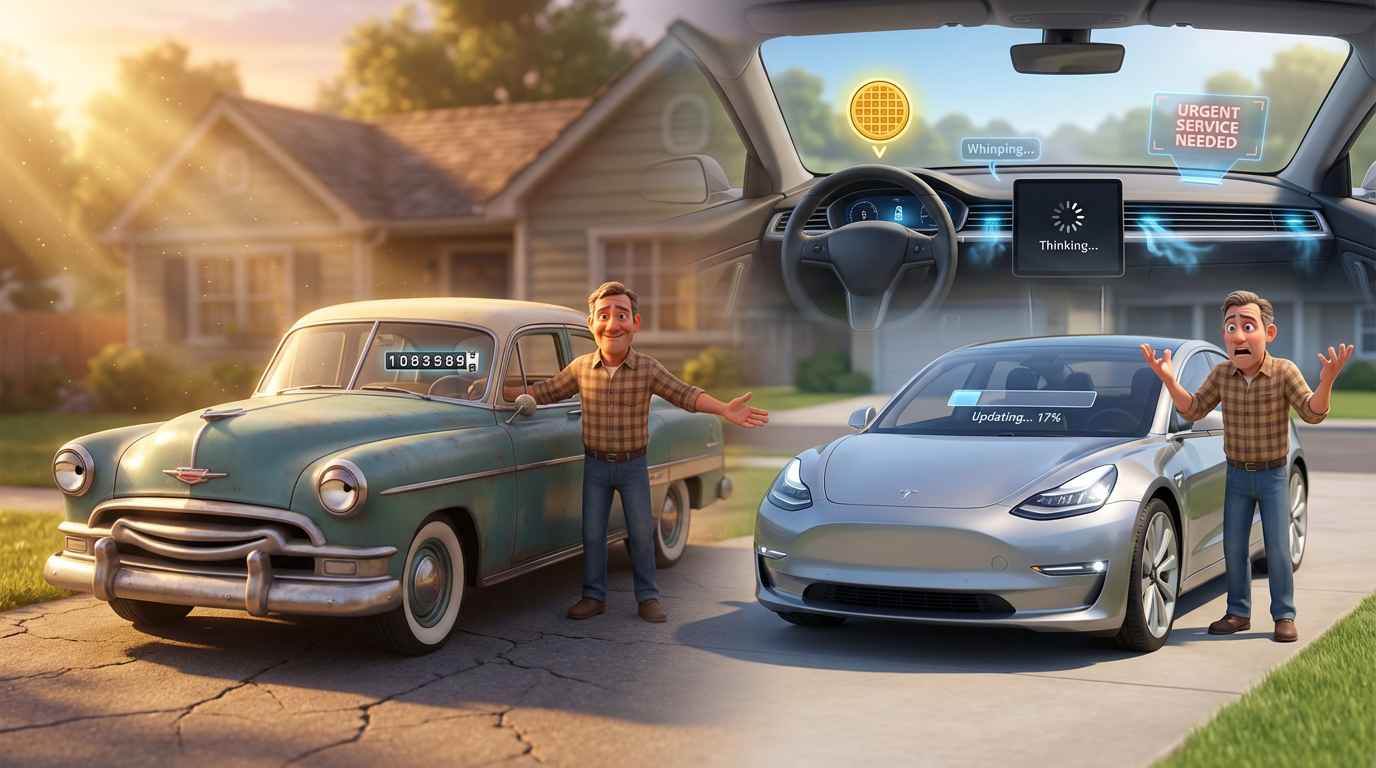
When your grandparents bought their car, they drove it until the odometer resembled a lottery jackpot. Proud owners bragged about racking up 200,000 miles the way mountaineers regale the perils of Mount Everest. Cars were companions, investments, monuments of steel. Today’s car is merely a polite acquaintance with only limited interest in a long-term relationship.
A modern vehicle develops symptoms rather than failures. It may:
- Display a lone warning light shaped like a waffle.
• Emit a soft whimper from the dashboard vents.
• Refuse to connect to Bluetooth because it’s “thinking.”
• Trigger an “Urgent Service Needed” message in the middle of a right turn.
• Update its software in mid-commute and forget what it was doing afterward.
In modern owner’s manuals, these are not problems. They’re upgrade reminders. Your car has fulfilled its purpose. It’s time to relegate it to the recycling bin and unwrap a fresh one.
The Six-pack Bundle
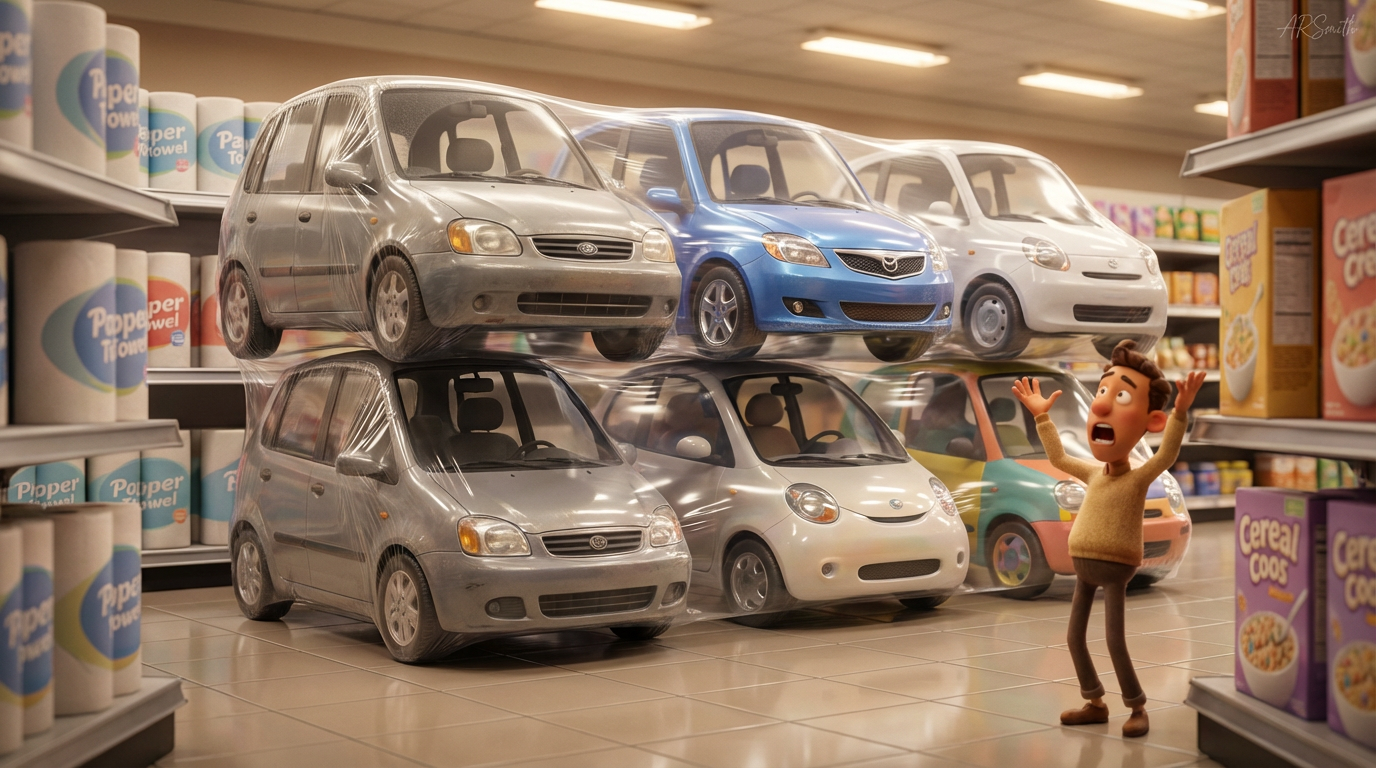
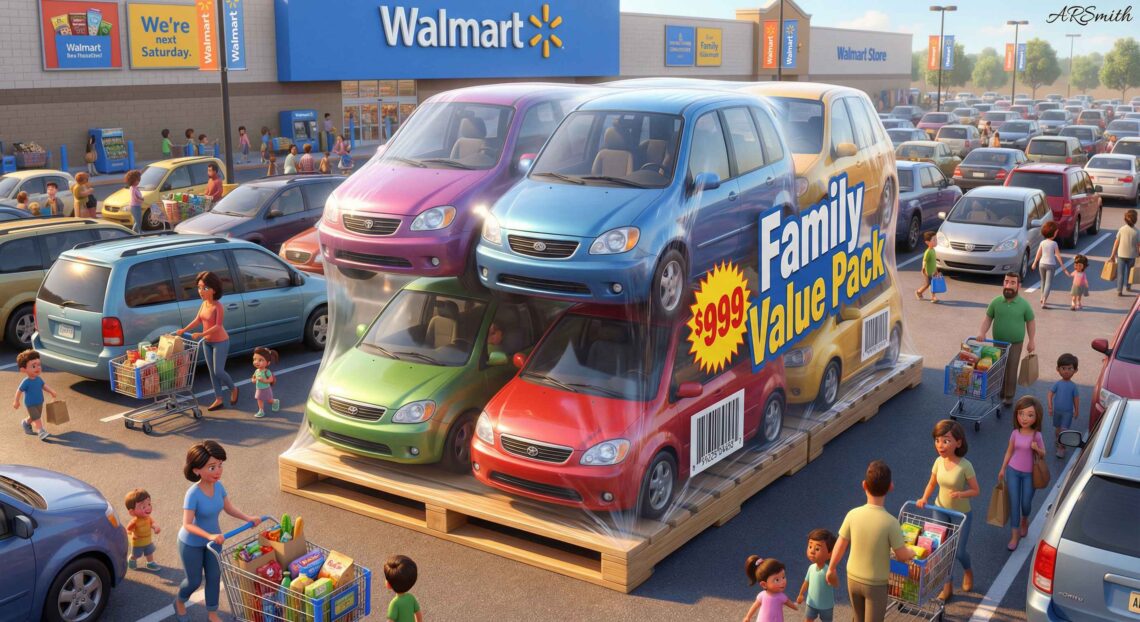
Automakers now offer their finest innovation. Vehicles that are sold in bundles, shrink-wrapped, pantry-stable, and nestled conveniently between the paper towels and cereal boxes at Walmart.
Each six-pack includes:
- A compact weekday commuter model.
- A slightly athletic “sport” unit with dreams of speed.
- A “spare” compact model for the trunk.
- A snack-sized pod car for quick errands.
- A “surprise” model just to meet production quotas.
- A midsize “optimist” model claiming it’s perfect for road trips no one will ever take.
They come in appealing colors like Parking Lot Gray, Snowstorm White, or Pre-owned Blue.
Your Evening Routine Reimagined
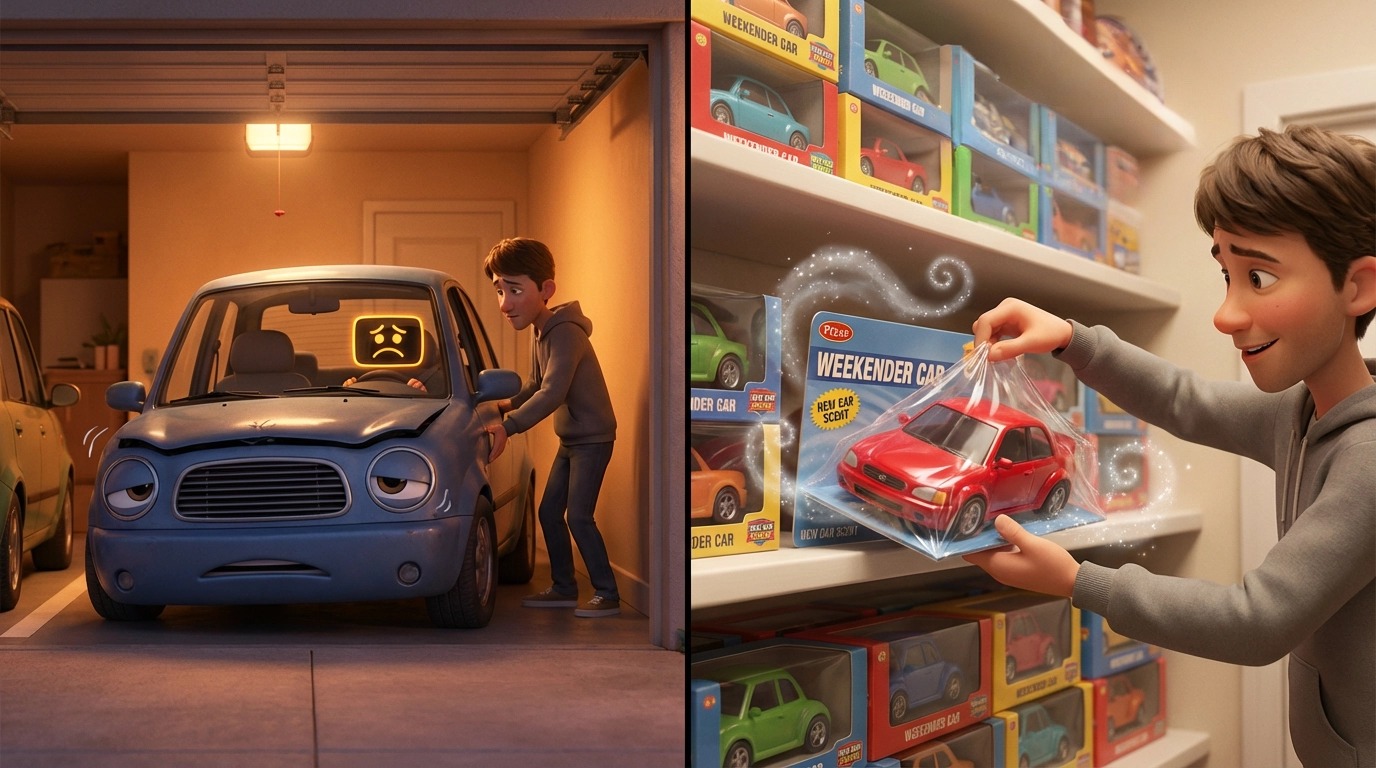
When you pull into your garage at the end of the day, your car coughs, whirs, and displays a sad cartoon face indicating it has lost the will to live. No shame. No judgment. You gently wedge it in for the last time. Then, you:
- You go inside your home and walk into the pantry.
- You pull down a shrink-wrapped replacement automobile from the shelf.
- You peel off the cellophane. You breathe in the plasticky aroma of your new affordable transportation.
- You say, “This one feels like it might last a whole weekend.”
Interview with a Disposable Car Engineer
Dr. Milo Trundle, Chief Engineer of Temporary Mobility Solutions
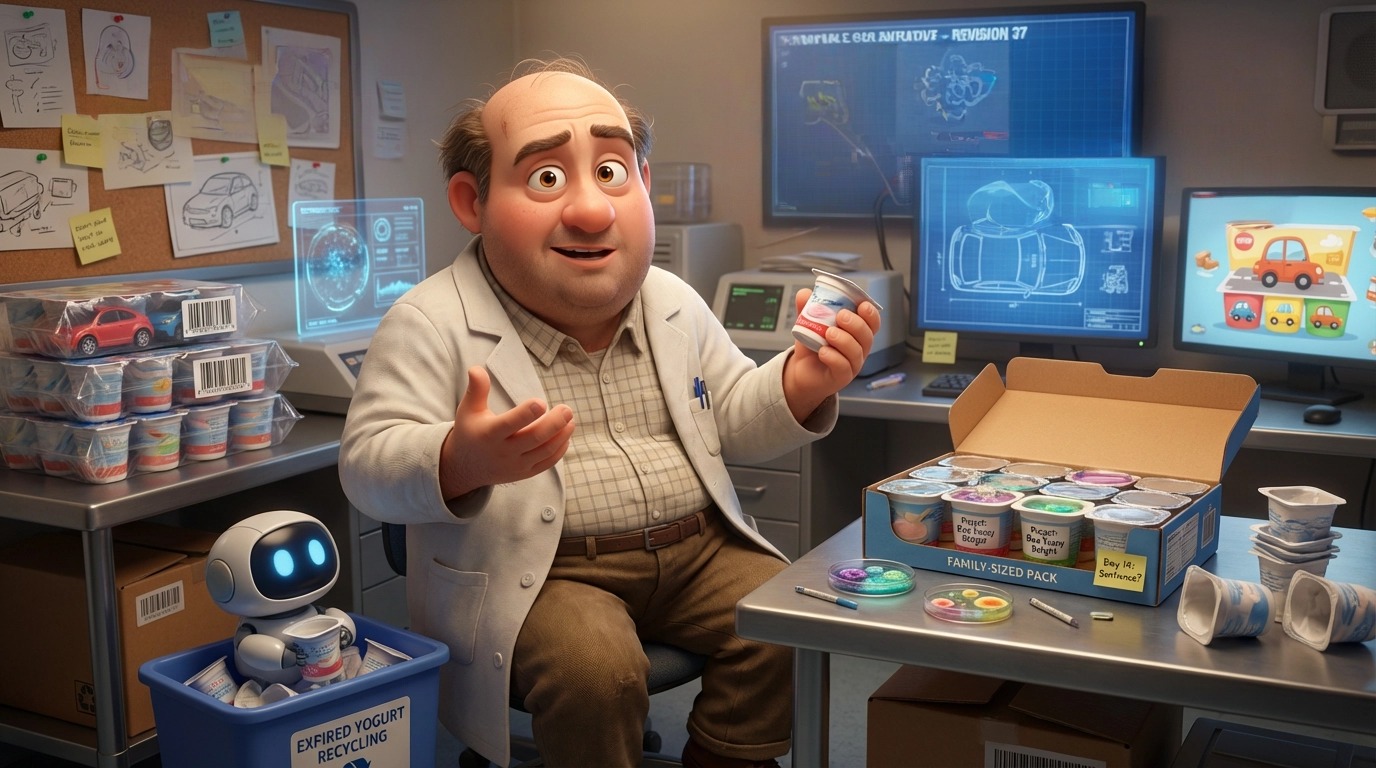
Q: Dr. Trundle, what inspired the disposable car movement?
A: I was eating a family-sized pack of yogurt cups and thought, “These expire faster than my last relationship.” Then it struck me. If people are willing to buy dairy in bulk knowing half of it will turn into a science experiment, they’ll absolutely buy automobiles the same way. It’s called consumer confidence. Or denial. I forgot which.
Q: Isn’t it wasteful?
A: Only existentially. Physically, our cars are crafted from responsibly sourced materials like recycled smartphone cases, discarded Anthony Robbins posters, and a secret polymer derived from old, pulverized Heisman Award trophies. Nothing goes to waste except, occasionally, the owner’s hope.
Q: Did you ever consider just making them last longer?
A: Of course. We entertained the idea of extending their durability by nine minutes. We even drew sketches. Then the finance team burst into the room, waving charts that looked like EKGs during a panic attack. The message was clear. Longevity is irresponsible. We shredded the sketches and rewarded ourselves with cupcakes.
Q: Any plans for a biodegradable model?
A: Absolutely. We’re testing one now that dissolves at the first sign of rain, snow, or someone nearby expressing mild disparagement. In field tests, one car disintegrated when a toddler pointed at it and said, “yucky.”
Q: What advice do you have for new owners?
A: Never name your car. Attachment complicates disposal, and the breakups can be messy. The attorney fees alone eliminate all the benefits of buying cars in bulk.
In a Nutshell
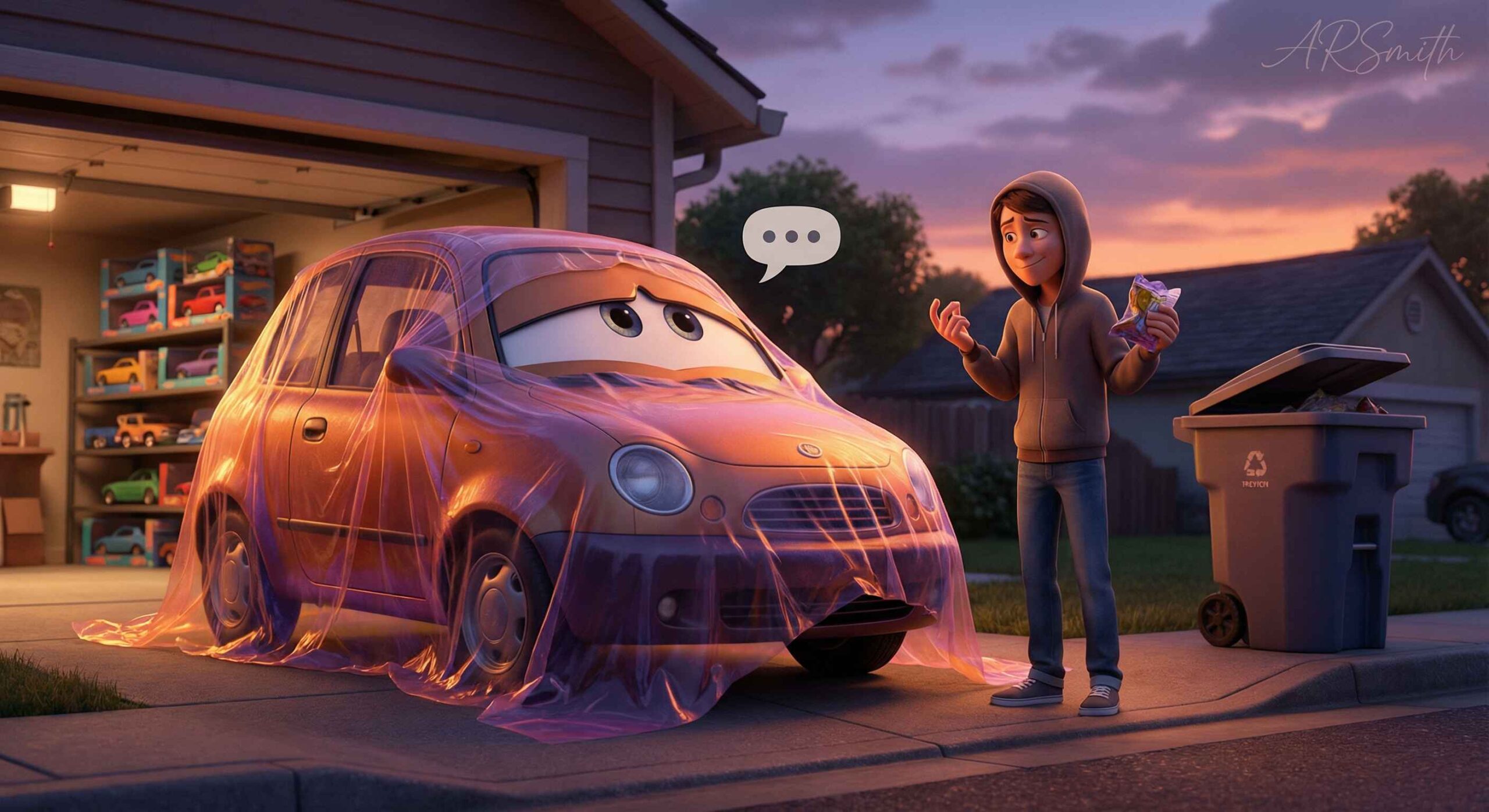
The disposable culture didn’t start with cars. It tiptoed in with toothbrushes and pens that once lasted through presidencies, marriages, and at least one bathroom remodel. Those loyal little soldiers eventually gave way to ten-packs of toothbrushes that shed bristles faster than your patience, and pens that write beautifully once in a while.
Today, we unwrap our automobiles like granola bars, drive them until the dashboard clears its throat, then escort them to the curb with all the ceremony of taking out the garbage. Ridiculous, wasteful, and somehow convenient. It’s the modern way. And somewhere, in the soft amber glow of a rotary phone, a 1970s magazine editor lets a single tear run down his cheek for the world we traded away.
New Magazine Ads
The All-New Auto-Pack Six
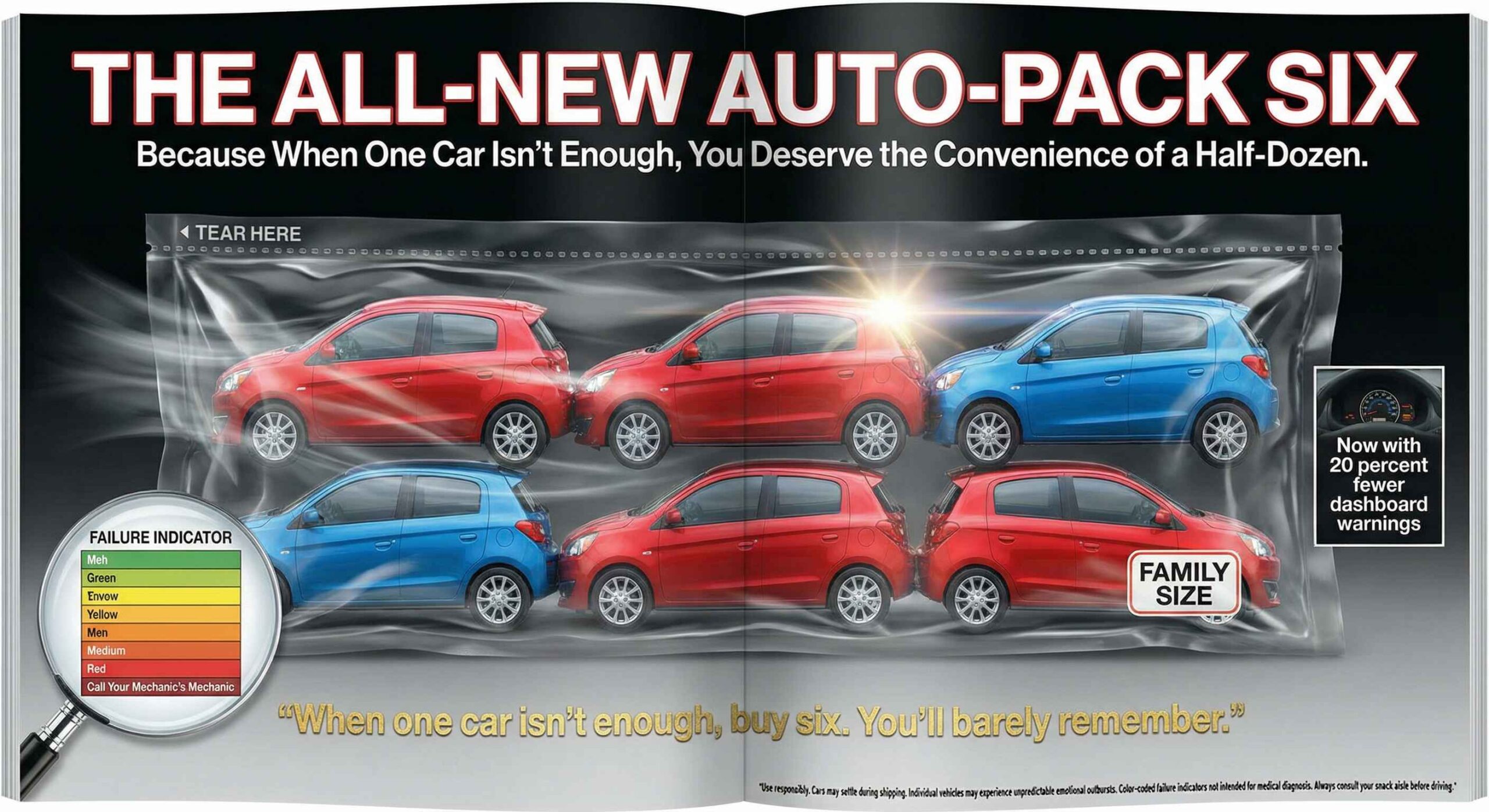
When one car isn’t enough, buy six. You’ll barely remember. Includes easy-tear-open packaging and color-coded failure indicators. Now with 20% fewer dashboard warnings!
Skip Airport Parking Forever
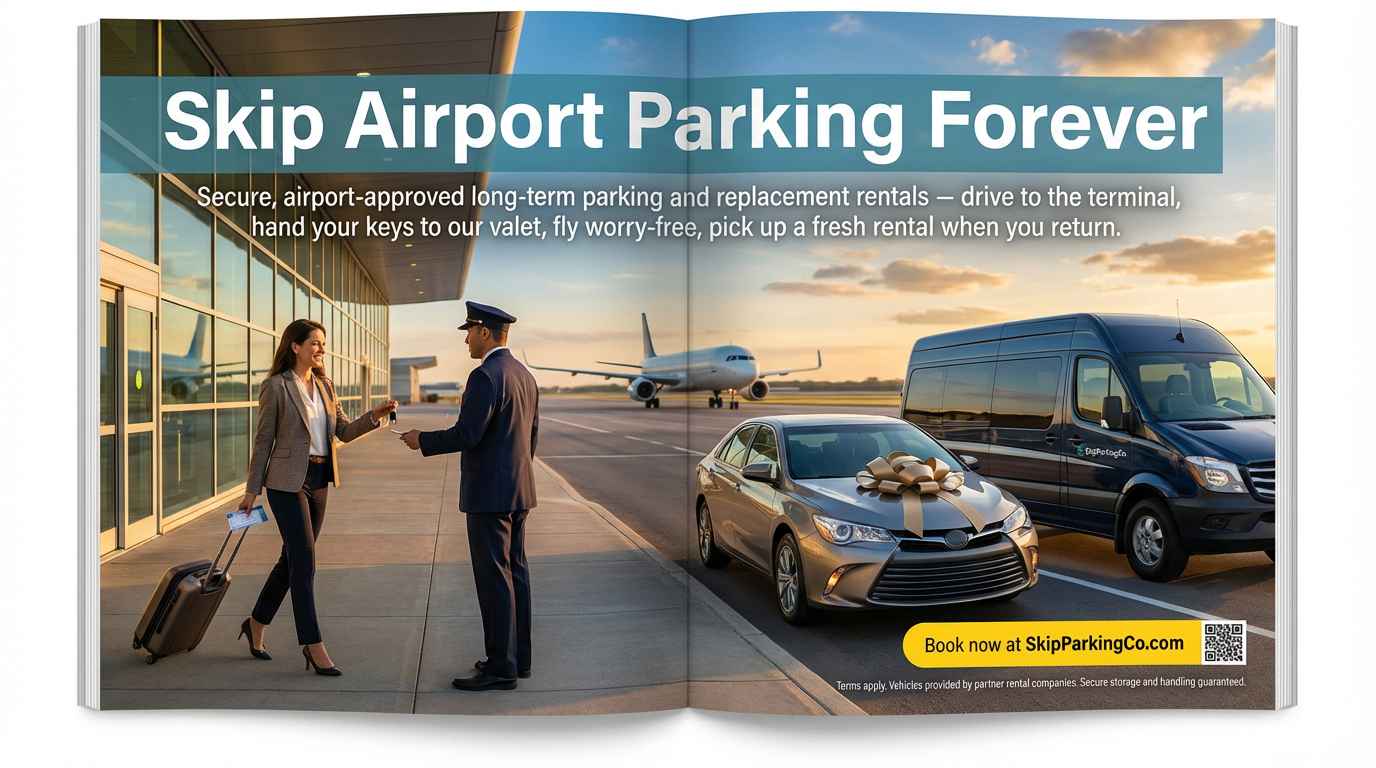
Why pay outrageous parking fees? Simply abandon your car at the terminal, fly away guilt-free, and unwrap a fresh replacement when you return home. Business travel just got beautifully disposable.
The Model X-Tra Large Car Recycling Bin
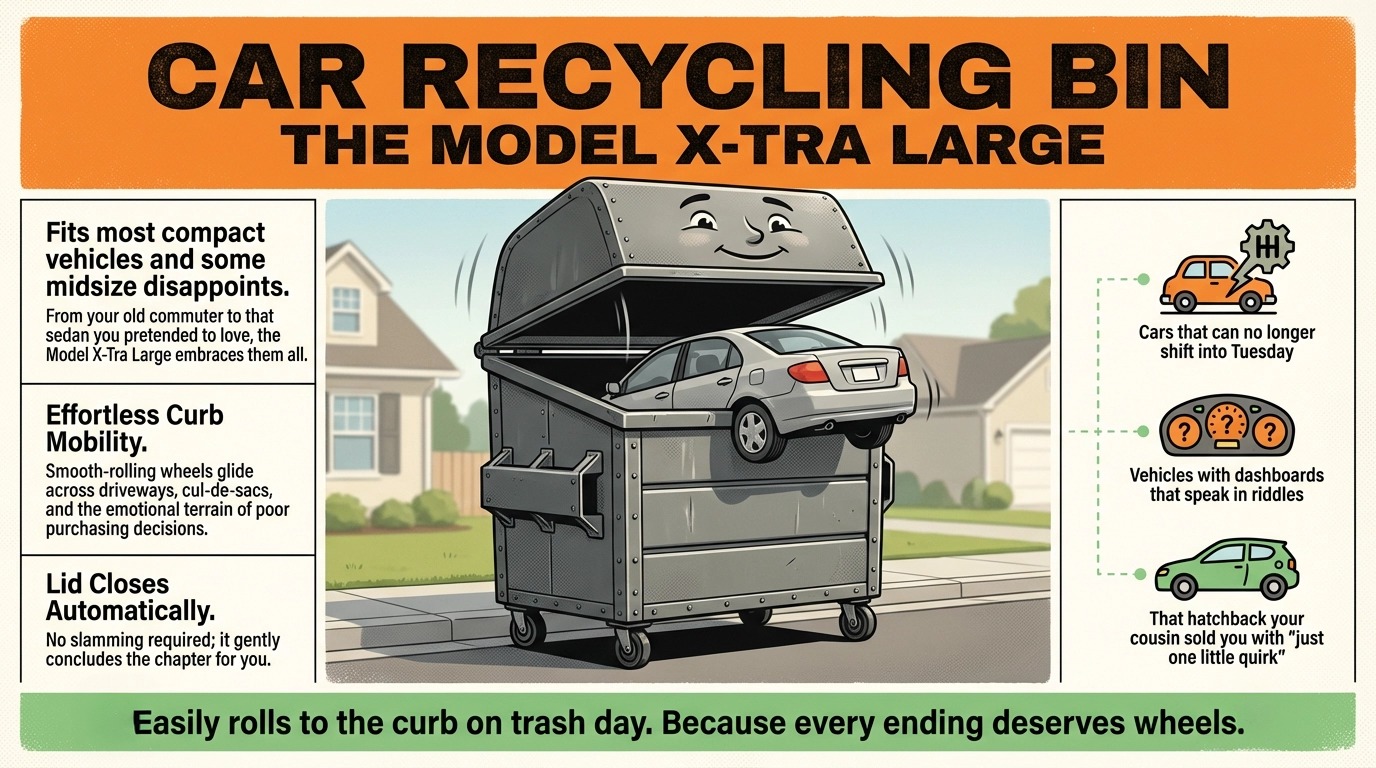
Fits most compact vehicles and some midsize disappointments. Features a cheerful lid that closes with “a sigh of acceptance.” Easily rolls to the curb on trash day.
About the Author
 A. R. Smith writes from the gritty Appalachian hamlet of Devil’s Elbow, a town so deep in the hills the sun has to file a request just to rise. He’s the author of such beloved consumer exposés as “The Great Tupperware Migration of ’84,” “My Microwave Tried to Kill Me,” and “The Swiss Army Knife That Refused to Open.” When he’s not skewering modern products, he spends his weekends hunting stump possums, a local delicacy best enjoyed with caution and a portable defibrillator.
He lives with his wife, Hollis Mae. Together they wrangle their three children: Juna Belle, Cinder Lou, and their boy Tater Joe. Rounding out the household is their pet cave otter, Moses, who naps aggressively and has been legally declared “mostly tame.”

