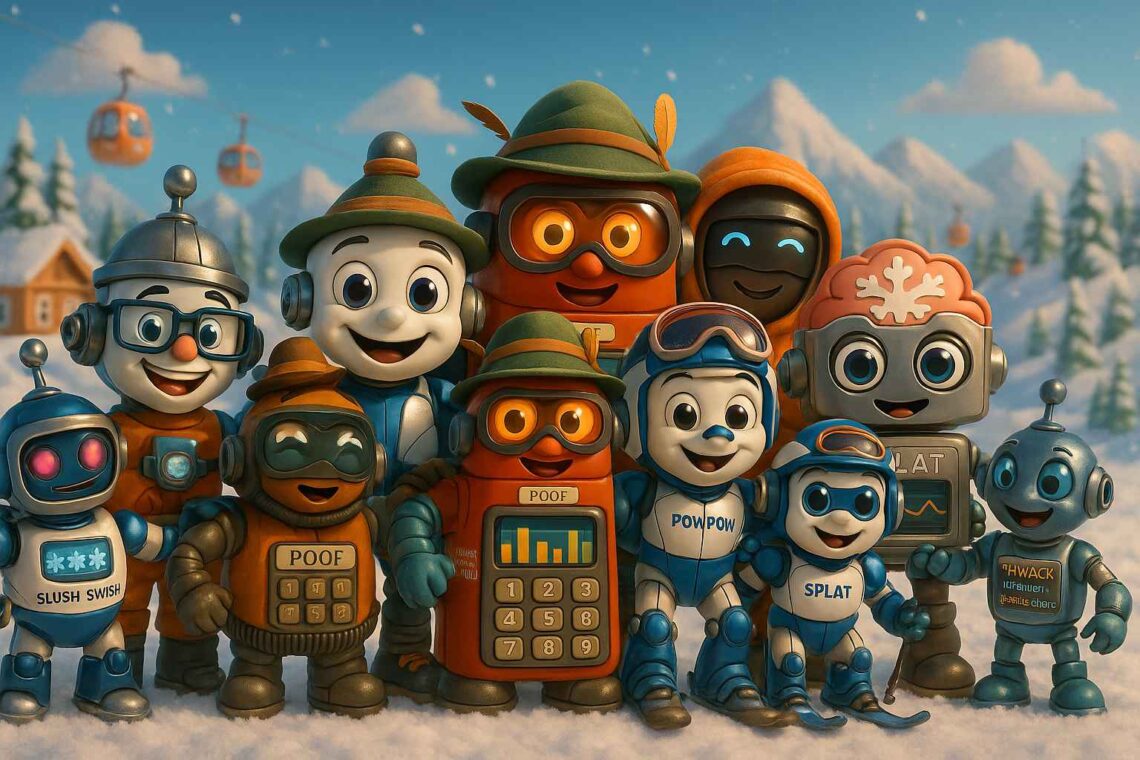
Our alpine ecologies, once governed by barometric serendipity and the heuristic instincts of frostbitten engineers, are now undergoing a paradigmatic metamorphosis into what can only be described as cybernetic ecotecture. The modern ski resort has transcended its mechanical adolescence. It is now an algorithmic organism. A confluence of computational cognition, environmental intuition, and mechanized stewardship. This is not modernization. It is a technocratic symphony unfolding beneath the gondola cables of the Anthropocene.
“Call it what you want—automation, innovation, digital frostcraft,” says Henri ‘Chip’ Meuller, Senior Director of Atmospheric Robotics at Vail’s Snow Intelligence Division. “But to me, it’s emotional climatology. We’re not just manufacturing snowflakes anymore. We’re engineering moods that happen to be frozen.”
Cryogenic Cognition and the Semiotics of Snow

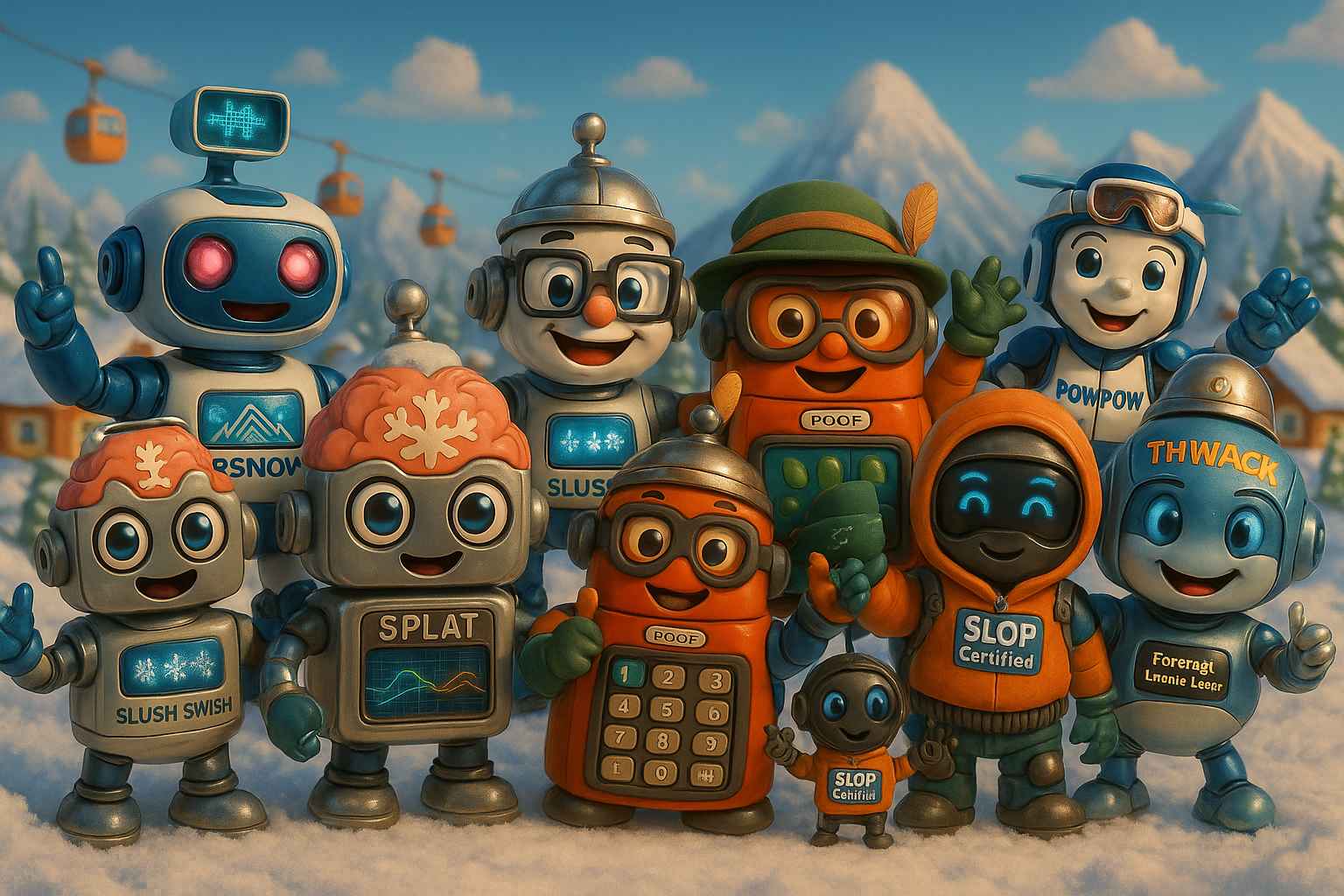
Snowmaking, historically a blunt-force ballet of hydraulics and hope, has evolved into a discipline of cryogenic precisionism. The new frontier, known as the Snow Layer Uniformity and Stabilization Hub (SLUSH), merges fluid dynamics with artificial intelligence. Gone are the primitive days of indiscriminate flake disbursement. The process is now governed by Yield-Oriented Dynamic Environmental Layering (YODEL), a polymodal AI algorithm that ingests terabytes of meteorological data, psychrometric variance, and barometric flux to delineate microclimatic snow windows with exquisite precision.
Each snow gun, retrofitted as a Pressurized Over-Water Precipitation Output Widget (POWPOW), is a sentient snow cannon capable of adaptive aerosolization through the Snow-Water Hydration Integrated Ventilation System (SWISH).
Within this network, air-water ratios are autonomously modulated through sensor fusion and feedback loops orchestrated by the Cryogenic Recalibration and Uniform Nanoflake Creation Hub (CRUNCH). The result is snow so molecularly pure that each flake is identical in shape, size, and personality. Resorts employing SLUSH–SWISH infrastructure report energy efficiencies exceeding 30%, alongside a reduction in hydrological waste. Digital thermodynamics has finally learned how to make a snow angel. According to Ingrid Krampf, Director of Subzero Synergy at Tyrol Tech’s Center for Applied Frost Studies,
“Our snow is molecularly identical across the entire resort. You can ski from St. Anton to St. Moritz and never feel a textural shift. It’s like skiing on the equivalent of copy-paste.”
In The Journal of Synthetic Hydrometeorology, Krampf’s team reported that resorts employing the SLUSH–SWISH architecture achieved energy efficiencies exceeding 30% and reduced hydrological waste by 40%. Digital thermodynamics has, at last, learned to make a snow angel.
The Cartography of the Invisible
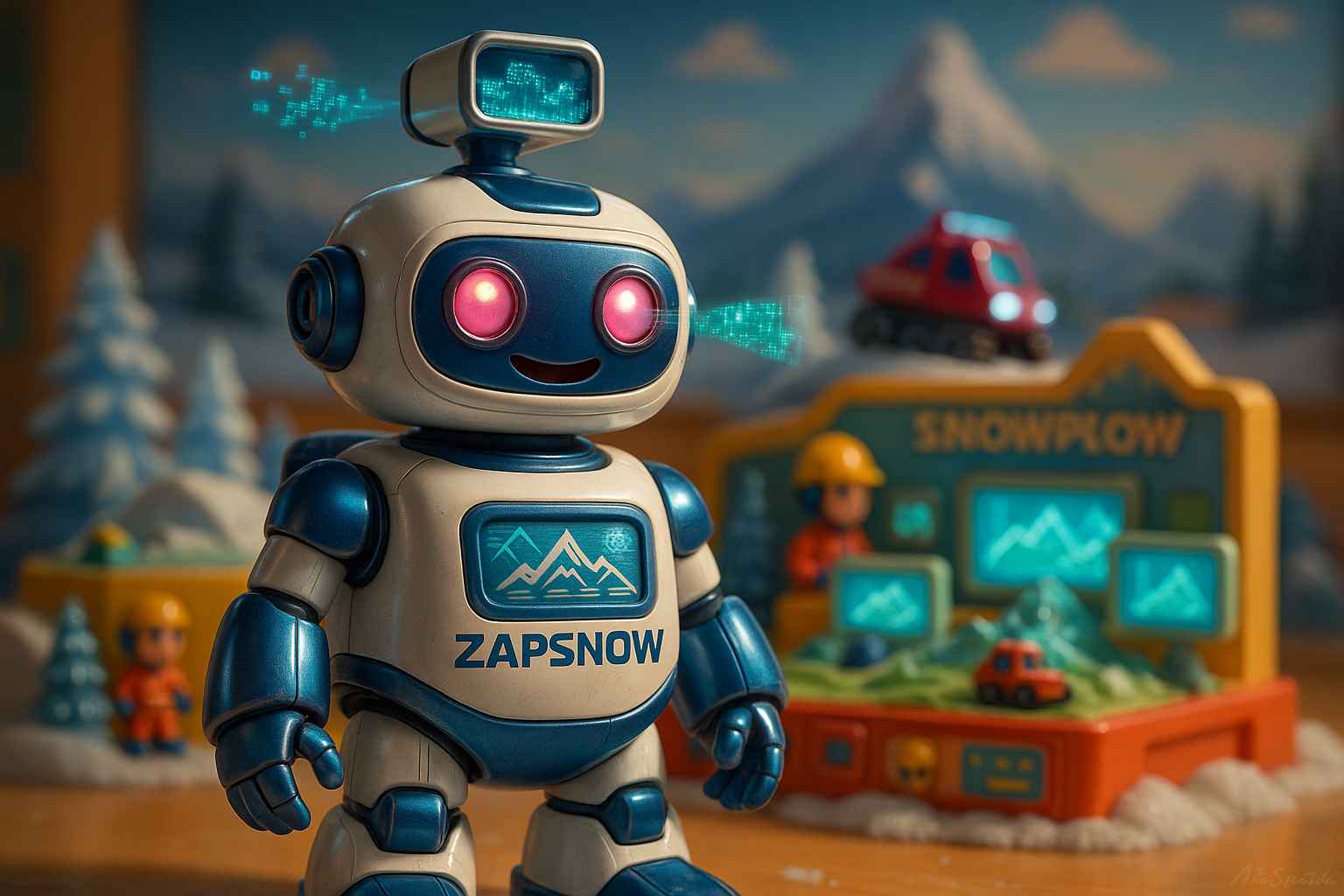
While the heavens are managed by YODEL, the earth beneath the skis is mapped by the Zenithal Atmospheric Photometric Snowfield Observation Web (ZAPSNOW), the laser-eyed overseer of the alpine world. Mounted on the steel backs of SnowCat 4.0 vehicles. These scanning sentinels emit millions of light pulses per minute, generating topographical blueprints with millimetric accuracy. The results are transmitted through RidgeNet-6G, a terahertz communication lattice, to the resort’s Snowfield Network Operations and Weather Performance Logistics Optimization Workflow (SNOWPLOW), the beating heart of terrain analytics.
“ZAPSNOW doesn’t just map the mountain—it eavesdrops on it,” says Dr. Björn Petrovic, Senior Terrain Cartographer at GlacialScope Systems GmbH. “Every ridge, ripple, and snowdrift whispers its coordinates in photons. By the time a groomer arrives, the mountain has already confessed its secrets and suggested where it wants to be touched up.”
Inside SNOWPLOW, environmental data are sculpted into predictive models by the Yield-Adjusted Hydrological Optimization Operator (YAHOO). This living digital atlas visualizes every slope, crust, and contour in pixel-perfect detail. Groomers, equipped with augmented-reality visors, now sculpt terrain like cybernetic artisans, their snow cats pirouetting through the night. The result is flawless piste geometry, reduced fuel consumption, and the elimination of snow famine, the once-mythic patches of exposed dirt that haunted every mountain manager’s dreams.
Ropeway Sentience and the Semiotics of Safety
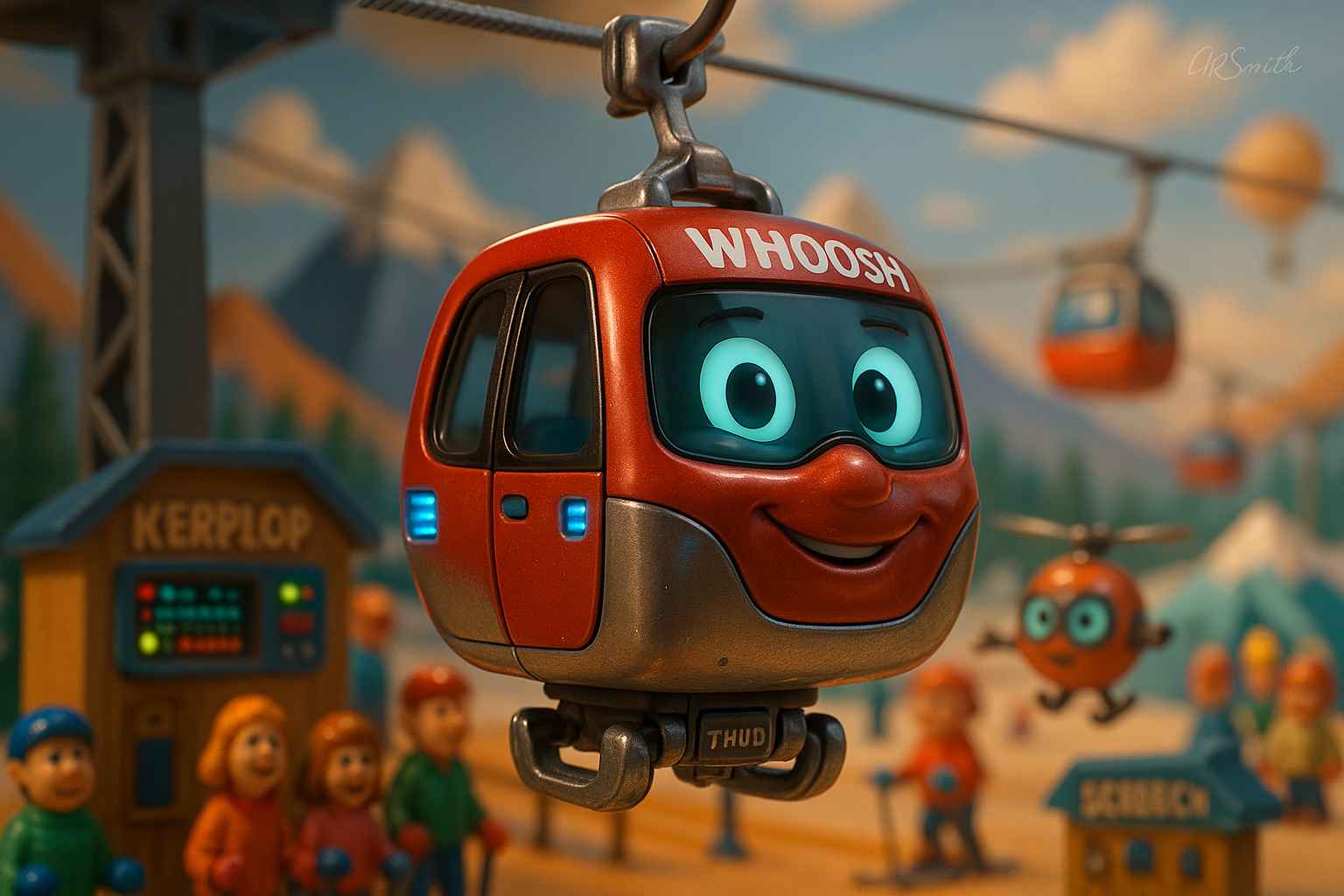
Suspended high above this digital landscape are gondolas and chairlifts that have evolved beyond mere machinery. The modern cable system, governed by the Wind Harmonic Operational Oversight Safety Hub (WHOOSH), possesses the reflexes of a hawk and the empathy of a mother hen. Each tower and cable is embedded with Terrain Hydration and Underlayer Dynamics (THUD), sensors that monitor oscillation, torque, and wind drag in real time. “People think the lift just carries skiers uphill,” says Dr. Greta Umlaut, Chief Cableway Cognition Engineer at the Swiss Institute for Aerial Kinetics.
“In reality, WHOOSH runs a full psychological assessment every time a rider grips the safety bar,” says Dr. Umlaut. ‘If it detects panic, overconfidence, or that special brand of tourist confusion, it subtly adjusts the lift’s sway to calm the rider’s nervous system. We call it empathic torque modulation. The lawyers call it preventative therapy.”
At the loading zones, Kinetic Environmental Redistribution and Precipitation Layer Optimization Platform (KERPLOP) modules parse the choreography of skiers boarding and disembarking. When anomalies occur, such as a loose pole, a tangled strap, or an uncoordinated tourist, WHOOSH instantaneously communicates with Skiway Control, Regulation, and Elevation Engine for Chairlift Harmonization (SCREECH), which applies micro-corrections before disaster strikes. The reaction time is simultaneously measured in microseconds by the Weather-Height Unified Meteorological Processor (WHUMP) faster than your average mountain-goer can say “supercallifraticexpeallidocis!” The cable system has thus become self-aware, self-balancing, and just self-righteous enough to file its own safety report to the National Ski Area Association (NSAA).
The Semiotics of Flow

In industry parlance, the Holy Grail of resort experience is the Surface Precipitation Layer Analysis Technology (SPLAT), a state of perpetual motion where skiers, lifts, and algorithms flow together in synchronized grace. SPLAT relies on omnipresent data harvesting through Kinetic Energy Redistribution and Precipitation Optimization Workflow (KERPOW), which models human migration patterns from lift line to latte bar with eerie precision.
“The human skier,” says Dr. Renaud Laplace, Director of Flow Dynamics at EigerSim Labs, “is simply another variable in the mountain’s operating system. We’ve turned slope chaos into synchronized choreography.”
All operations converge in the Moisture Utilization and Snowpack Harmonizer (MUSH), a visual command hub that transforms crowd dynamics into mesmerizing color fields. SLOSH’s predictive engine, the Snow Layer Uniform Redistribution Protocol (SLURP), calculates guest trajectories with uncanny foresight, flagging high-risk intersections and overconfident snowboarders in real time. When congestion looms, SPLAT activates its Dynamic Runoff Optimization and Outflow Logistics (DROOL), a small armada of friendly drones that hover overhead, shouting polite reminders like “Stay in your own lane, dufus!” down to the skiers on the snow. Guests receive live updates on their smartphones via the resort’s High-Output Operational Hydration and Reactive Aeration Hub (HOOHRAH), ensuring a state of digitally assisted bliss that stops just short of total mind control.
Algorithmic Economics and Predictive Demand Symmetry

Even the financial backbone of skiing has succumbed to computational sorcery. Fixed ticket pricing, that relic of analog capitalism, has been supplanted by the Pneumatic Output Oscillation Facility (POOF). POOF cross-analyzes atmospheric models, social media sentiment, and guest biometrics to produce price shifts so fast economists call it “quantum capitalism on skis.”
“Economics used to lag behind the weather,” says Dr. Clarissa Mint, Chief Algorithmic Economist for SnowFi Analytics and editor-in-chief of Quantitative Frost: Journal of Predictive Recreation. “Now POOF ensures markets respond faster than a guest returning their cold cheeseburger.”
At the core of this system is the Wind-Operated Balance and Base Leveling Engine (WOBBLE), a proprietary metric correlating flake density, skier enthusiasm, and willingness to pay $35 for a bowl of canned chili. When YODEL forecasts mediocre snow, POOF lowers rates to maintain skier flow. And, when storms promise thigh-deep powder, it spikes prices in sync with guests’ collective euphoria. The result is a perfectly balanced marketplace where weather and greed coexist in harmony.
Augmented Custodianship and the Ethics of Automation
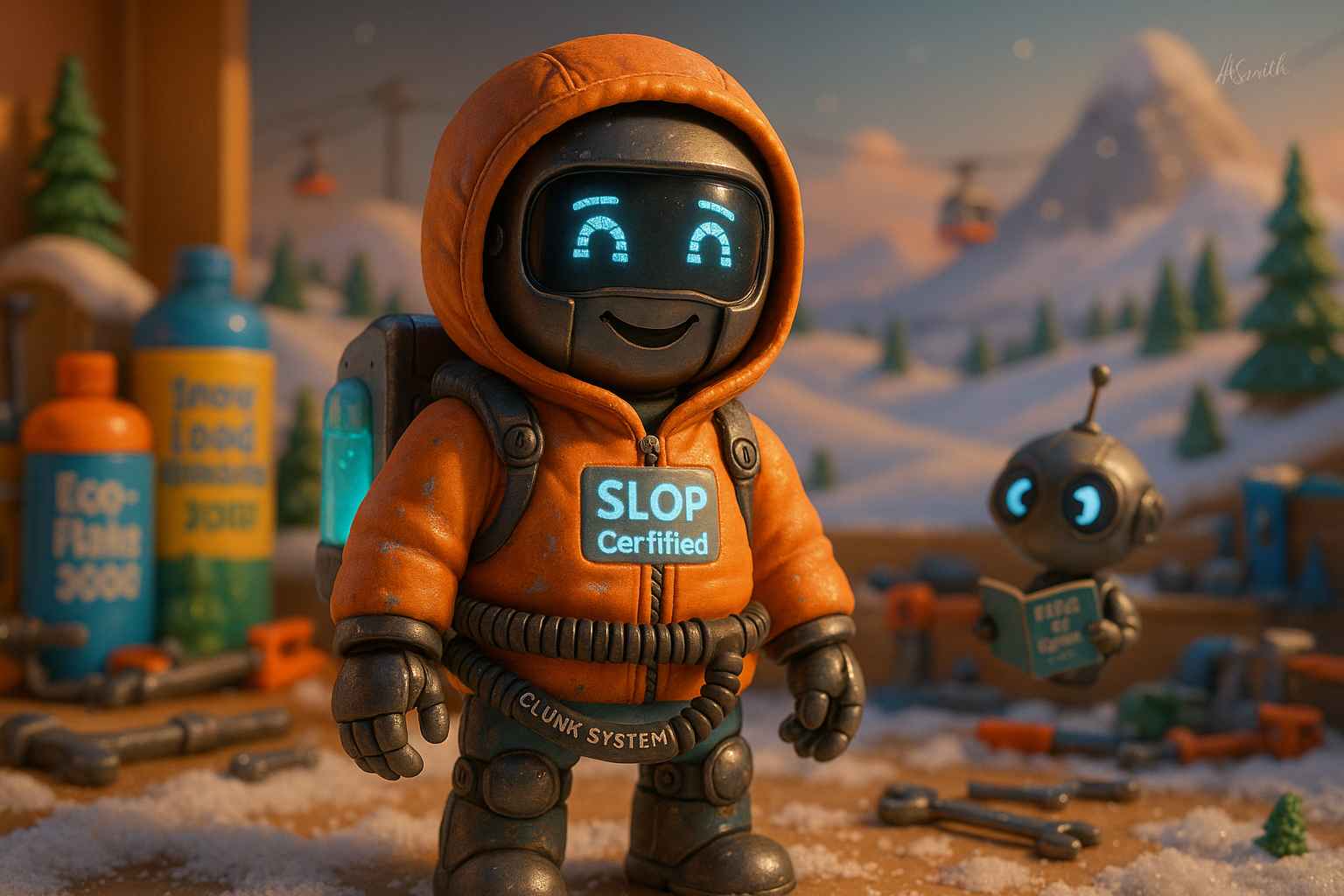
Skeptics lament the loss of rustic authenticity, but they misunderstand the new age of stewardship. The slope technician of the 21st century is no longer a wrench-wielding repairman but a Cybernetic Alpinist, fluent in meteorology and machine learning, resulting in existential dread.
Their work is guided by the Snow Load Optimization Protocol (SLOP), ensuring ecological accountability across all systems. Under this initiative, snowmaking becomes moral calculus, with each liter of water and joule of energy tracked through the Compressed Liquid Utilization and Nozzle Kinetics (CLUNK). CLUNK certifies that every artificial flake contributes meaningfully to both recreation and redemption. The mountain no longer just entertains. It confesses.
“Each artificial flake is spiritually accounted for,” explains Dr. Kiara Lüft, Professor of Applied Cryo-Morality at Innsbruck Polytechnic. “In many ways, snowmaking is now a sacrament.”
Climatic Resilience and the Predictive Sublime

As the climate grows unruly, resorts have embraced Thermal Hydration and Wind-Assisted Cryogenic Kinetics (THWACK), a neural simulation matrix trained on centuries of snow lore and modern chaos theory. THWACK doesn’t just predict storms. It dreams them into existence. This clairvoyant system enables resorts to reposition lifts, adjust reservoir levels, and prepare bar menus before the first cloud even stirs.
Meanwhile, the Snow-Wind Operations and Overhead Optimization Systems Hub (SWOOSH) patrols the upper atmosphere, deploying reflective aerosols to optimize albedo and occasionally writing “Shred Responsibly” across the sky. Working in tandem, the Glacial Lubrication and Output Protocol (GLOP) moderates solar impact, prolonging the life of snowpack by refracting sunlight just enough to keep tourists pink but not blistered. The future of snow, it seems, will not be forecast. It will be authored.
“Climate intervention is just storytelling at altitude,” says Dr. Nora Sleet, Head of Reflective Aesthetics at Glacier Works Geneva. “When we use GLOP to refract sunlight, we’re painting the snowpack’s mood.”
The Cybernetic Mountain and the Ontology of Descent

The postmodern ski resort is no longer a collection of lifts and lodges. It is a living, breathing organism of sensors, drones, and digital frost. Every chair rotation, flake extruded by POWPOW, and skier’s carving arc feeds into a humming network of feedback and finesse. This is the cybernetic sublime: the mountain, alive with algorithms, whispering “schuss” beneath the stars.
And yet, amid the circuitry and sensors, the essence remains: the raw joy of speed, the laughter echoing off powder, and the sting of cold air slicing through skiers’ lungs like a Roto-Rooter. At its height, the technology disappears, becoming invisible, frictionless, anticipatory. The skier descends through a world alive with unseen intelligence, and in that descent, the ancient thrill of motion meets the mathematics of precision.
Our mountains, once ruled by avalanches and instinct, now dance to the rhythm of code and snow. But the soul of skiing endures. Sharper, safer, and infinitely smarter, carried on the soft, eternal whoosh that has finally learned to love the snow.
“We’ve taught the mountain to feel,” says Sleet, “But it still prefers a good storm.”
Citations
- Vonderflock, P. (2024). “Emotive Algorithms and the Flake Identity Crisis.” Journal of Applied Cryosemantics, 18(2), 114–137.
- Mint, C. (2025). “Behavioral Economics in Frozen States: A Model of Predictive Recreation.” Quantitative Frost, 9(1), 22–44.
- Lüft, K. (2025). “Ethical Precipitation and the Digital Soul of Winter.” Proceedings of the Alpine Institute of Morality and Moisture, 1(1).
- Niederkabel, R. (2024). “Compassionate Cableways: Machine Empathy in Aerial Transport Systems.” Swiss Journal of Ropeway Ethics, 7(4), 201–223.
- Sleet, N. (2023). “Skywriting for the Anthropocene.” GlacialWorks Annual Report on Reflective Aesthetics, 11, 5–18.

