London Bridge Is Falling Down
A repetitive rhyme about the collapse of London Bridge and many humorous attempts to repair it with different materials.
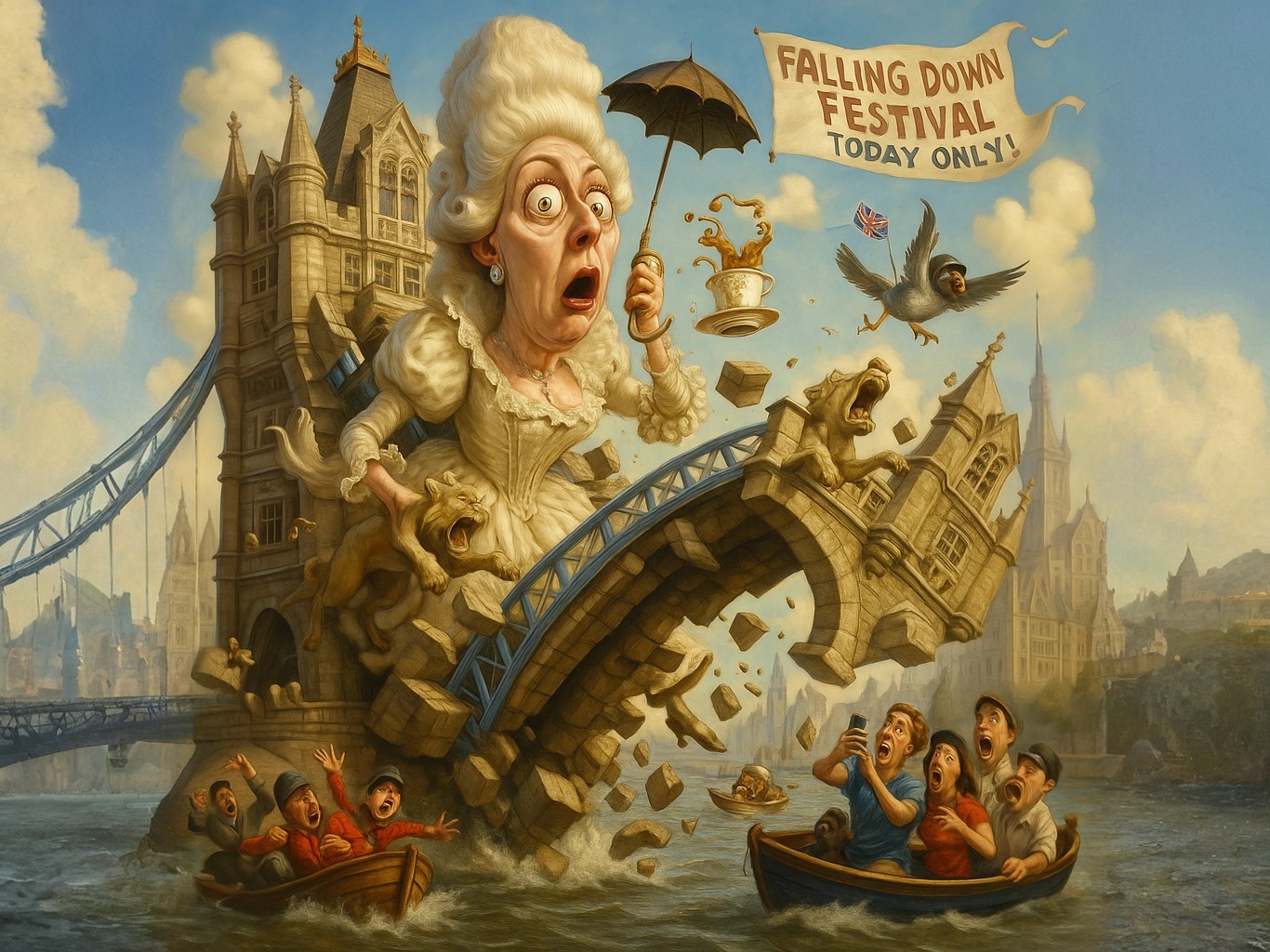
London Bridge is falling down. And you know what? Of course it is. Everything falls down. Buildings, paychecks, my pants the second I bend over in the shoe store. Nothing lasts. You put your heart, your sweat, your life into holding something together, and sooner or later it crumbles. Just like me, every day, sitting in a chair surrounded by women who think a size six foot can magically fit into a size four stiletto if they yell at me loud enough. Yeah, London Bridge fell down. Join the club.
So the rhyme says they tried fixing it. With wood, with clay, with sticks. That’s what people do—they see something broken, and instead of admitting it’s done, they throw junk at it. Like Peg with her “quick fixes.” She says, “Al, maybe if you took me to the Bahamas, our marriage would be better.” Sure, Peg, nothing says happiness like sweating on a beach while you nag me about how the cabana boy makes more money than I do. Or Bud, “Dad, give me twenty bucks and I’ll finally get a girlfriend.” Right, Bud. The bridge is already falling down, and you think duct tape and desperation will keep it standing.
But here’s the truth: sometimes things are supposed to fall. A bridge collapses, a dream shatters, a shoe salesman realizes he’ll never be anything more. That’s life’s way of saying, “You thought you were building something, but really, you were just stacking garbage.” And the kicker? The rhyme makes it sound funny. Like it’s all a game. Ha-ha, the bridge is falling again! But when it’s your bridge—your job, your marriage, your wallet—it’s not a nursery rhyme. It’s Tuesday.
And what do they do every time the bridge falls? They rebuild. Over and over, like idiots. That’s me. Every payday, thinking maybe this time the check will stretch far enough. Maybe Peg won’t blow it all on bonbons. Maybe Kelly won’t beg for money to buy another outfit she’ll ruin before midnight. Maybe Bud won’t use it on some scam that still leaves him alone on Saturday night. But no. It falls. It always falls. And like London Bridge, I patch it up just enough to watch it collapse again.
You know the worst part? Everyone’s standing around watching. Singing about it. Laughing. Nobody helps. Nobody cares. That’s what life is—a crowd pointing at your misery while you hold the pieces together with spit and a prayer. And if you’re lucky, they’ll write a song about how pathetic you are so people can teach it to their kids. Imagine that. A whole new generation laughing at you before they even hit kindergarten.
So what’s the lesson? Don’t build bridges. Don’t start projects. Don’t climb too high or dream too big. Stay where it’s already broken. You can’t fall if you never get up. And if by some miracle you find yourself on solid ground, don’t call it a bridge—call it a chair. Sit down. Stay put. And pray Peg doesn’t collapse on top of you, because trust me, no amount of wood or clay is putting that back together.
Mary Had a Little Lamb
A sweet tale of Mary’s devoted lamb, which follows her everywhere, even into school, delighting the children who see it.
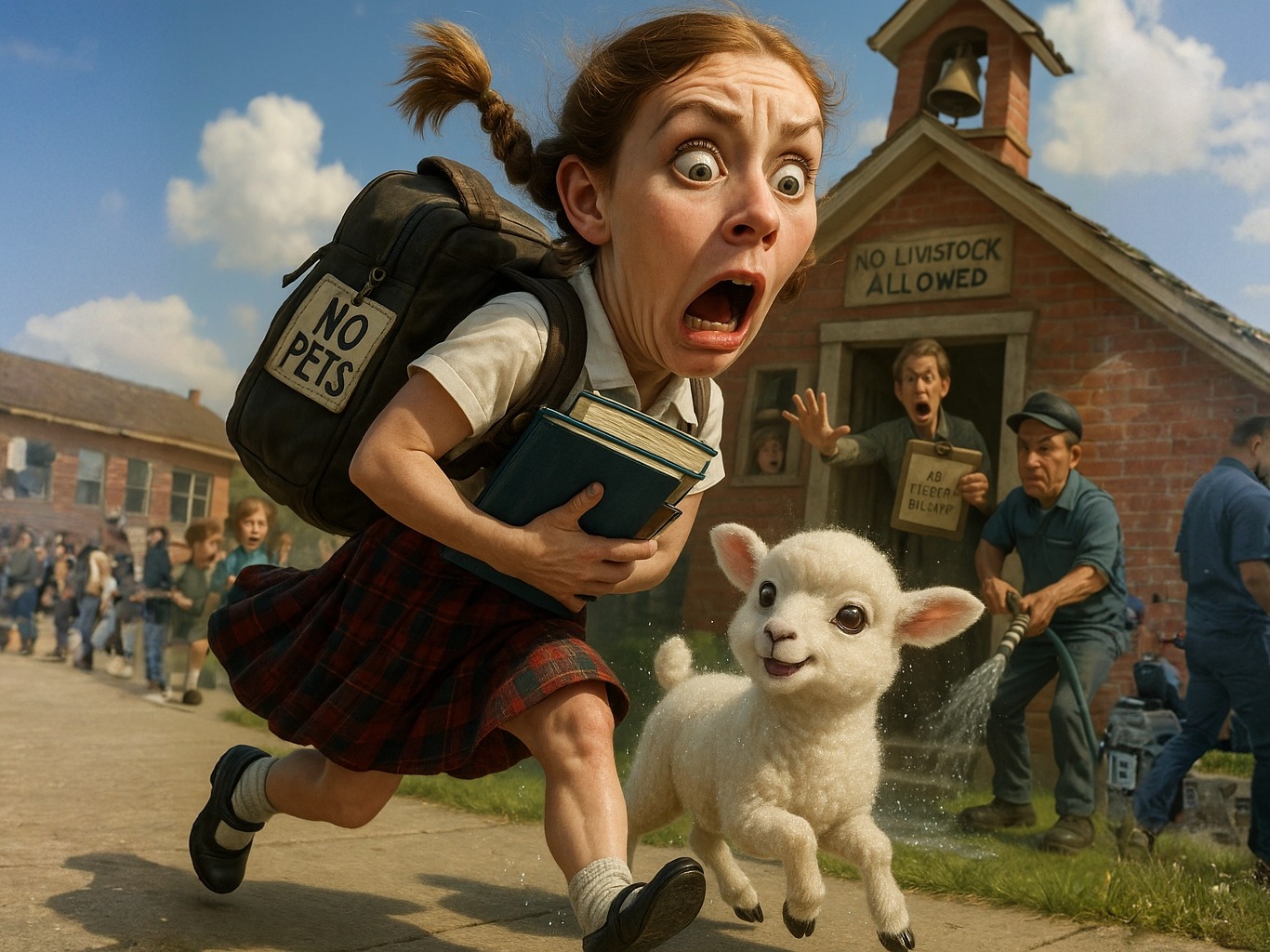
Mary had a little lamb. Of course she did. Because kids get pets, Peg gets bonbons, Kelly gets new clothes, Bud gets money he’ll never pay back, and what do I get? I get a shoe store that smells like feet. Life hands out lambs to some people, and to me it hands out corns and bunions in wide widths.
The lamb follows Mary everywhere. Isn’t that adorable? Meanwhile, I can’t walk two feet in my own house without Peg following me with a list of things I didn’t do, like fix the faucet, take out the trash, or magically become rich so she can stop watching Oprah reruns. Mary’s got loyalty, devotion, pure love. I’ve got a wife who thinks a romantic evening is letting me watch half the Bears game before she changes the channel to some talk show where a guy cries about his mother.
And the lamb goes to school with her. Yeah, sure, the kids think it’s cute. You know why? Because they don’t have to clean up after it. They just get the fun part—the fuzzy animal running around like life’s a big petting zoo. It’s the same reason people laugh when they hear I sell shoes. They don’t smell the customers’ feet. They don’t hear “Do you have this in a seven wide?” for the fiftieth time that day. They just laugh and walk away. Same thing here—the kids get joy, Mary gets a follower, and the janitor gets poop on the floor.
And you know what happens with followers? They become dependents. The lamb follows her everywhere, which means Mary’s stuck. She can’t sneak out, she can’t be free, she can’t live her life without a ball of wool tagging along. That’s marriage. You think it’s love, then suddenly it’s a constant presence eating your food, draining your wallet, and leaving fur—or in Peg’s case, chip crumbs—all over the couch.
So what’s the lesson here? Don’t let anything follow you home. Not lambs, not wives, not kids who promise they’ll “pay you back next week.” Because once it starts, it never stops. The lamb doesn’t just vanish. It grows up. It eats more. It costs more. Next thing you know, you’re broke, you’re tired, and you’re still surrounded by sheep, only none of them are as useful as Mary’s.
Advice? Keep walking. Pretend you don’t hear it bleating behind you. Because once you let it in, you’ll never get it out. Take it from me—every day I come home, and instead of a cute little lamb, I get Peg on the couch saying, “Al, where’s the money?” And unlike Mary’s lamb, I don’t see any children clapping their hands in delight. Just my own kids, already reaching for my wallet.
Oh, Have You Seen the Muffin Man
A traditional nursery rhyme about a muffin seller on Drury Lane, sung in playful repetition, often used in children’s games, evoking old London street-vendor traditions.
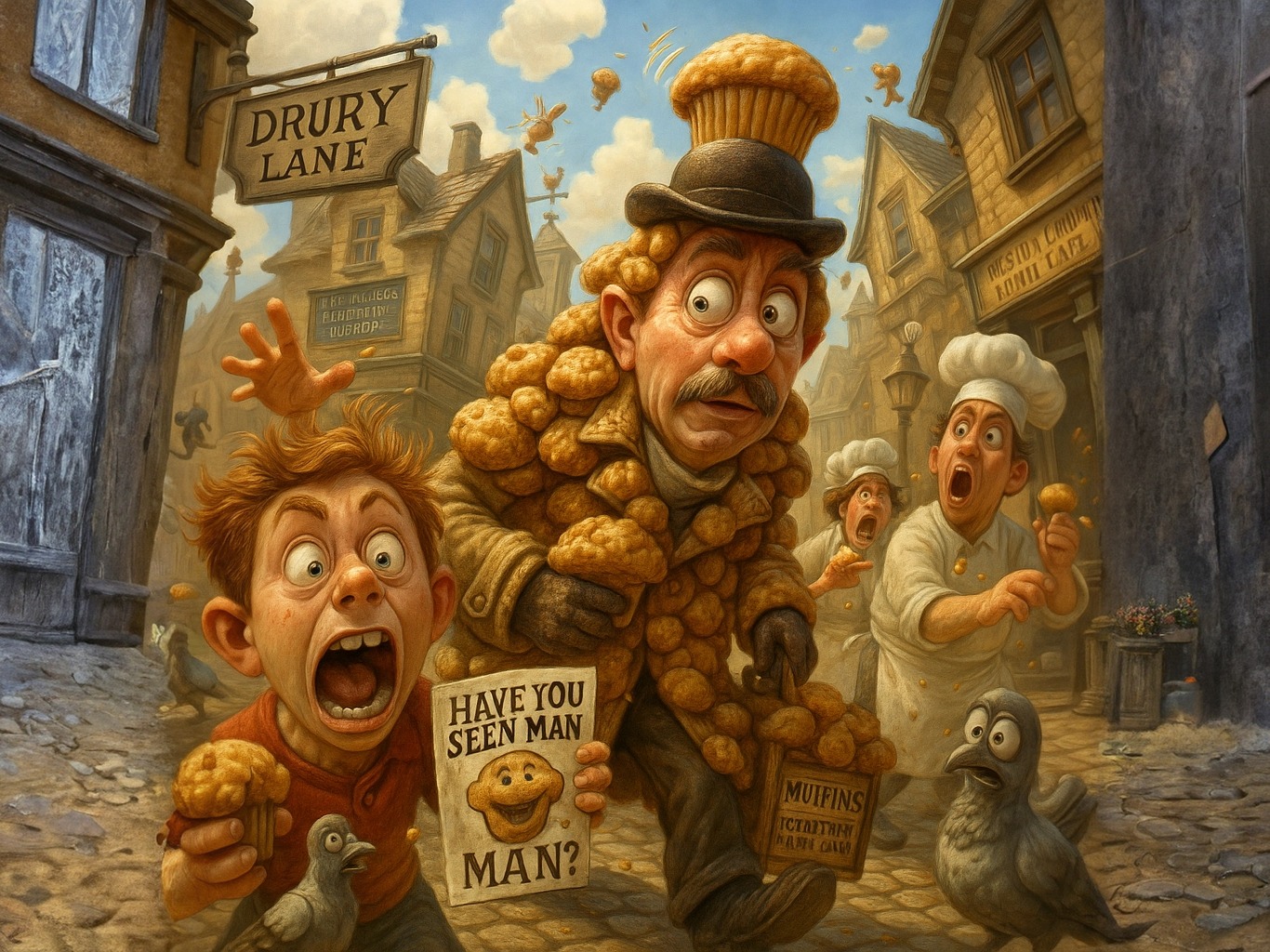
Oh, have you seen the Muffin Man? Yeah, I’ve seen him. He’s the guy on Drury Lane peddling muffins like he’s got the secret to happiness baked inside. Everyone sings about him like he’s some kind of hero. Meanwhile, I’m stuck at the shoe store selling pumps to women who treat me like I’m the one who made their feet look like meatloaf. If there’s a song about me, it goes, “Oh, have you seen the Shoe Man? He’s dead inside, but hey, buy one get one half-off.”
This Muffin Man strolls around London, handing out bread like it’s joy. Me? I hand out money to Bud every time he says he’s “working on his rap career.” He thinks he’s the next big thing—yeah, the next big disappointment. Kelly? She hears about the Muffin Man and asks me if muffins come with fries. If brains were muffins, that girl would still burn them in the oven. And Peg—Peg doesn’t need to sing about the Muffin Man. She eats enough muffins to qualify for a loyalty card. Meanwhile, I’m the guy footing the bill for pastries that disappear faster than my will to live.
And Drury Lane? Sounds fancy. My Drury Lane is Polk High, where I scored four touchdowns in a single game—my crowning achievement before life sentenced me to a wife, two freeloaders, and a job fitting women’s sweaty hooves into open-toed nightmares. The Muffin Man gets a nursery rhyme. I get bunions, back pain, and Peg asking why I never bring home flowers. Lady, I can’t even bring home my dignity.
So what’s the lesson here? If you’re sweet and fluffy, people sing songs about you. If you’re Al Bundy, people sing songs at your expense while you pay the electric bill. Kids laugh and clap, pretending life is a jolly old muffin walk. The truth? Life’s not a muffin. Life’s a stale loaf of bread—hard, tasteless, and impossible to chew without losing a tooth.
My advice? Don’t waste your time chasing the Muffin Man. He’s just another guy selling you carbs while you’re already fat on disappointment. You want real wisdom? Be like me: accept that your life peaked in high school, that your wife will never stop nagging, and that your kids will drain your wallet faster than a broken faucet. Sure, it’s depressing, but at least it’s honest.
So, yeah, I’ve seen the Muffin Man. And he’s got it easy. He gets a song. I get Peg. If you’re keeping score, muffins: one, Bundy: zero.
Old King Cole
A merry old monarch who delights in music, summoning his fiddlers three while enjoying his pipe and bowl.
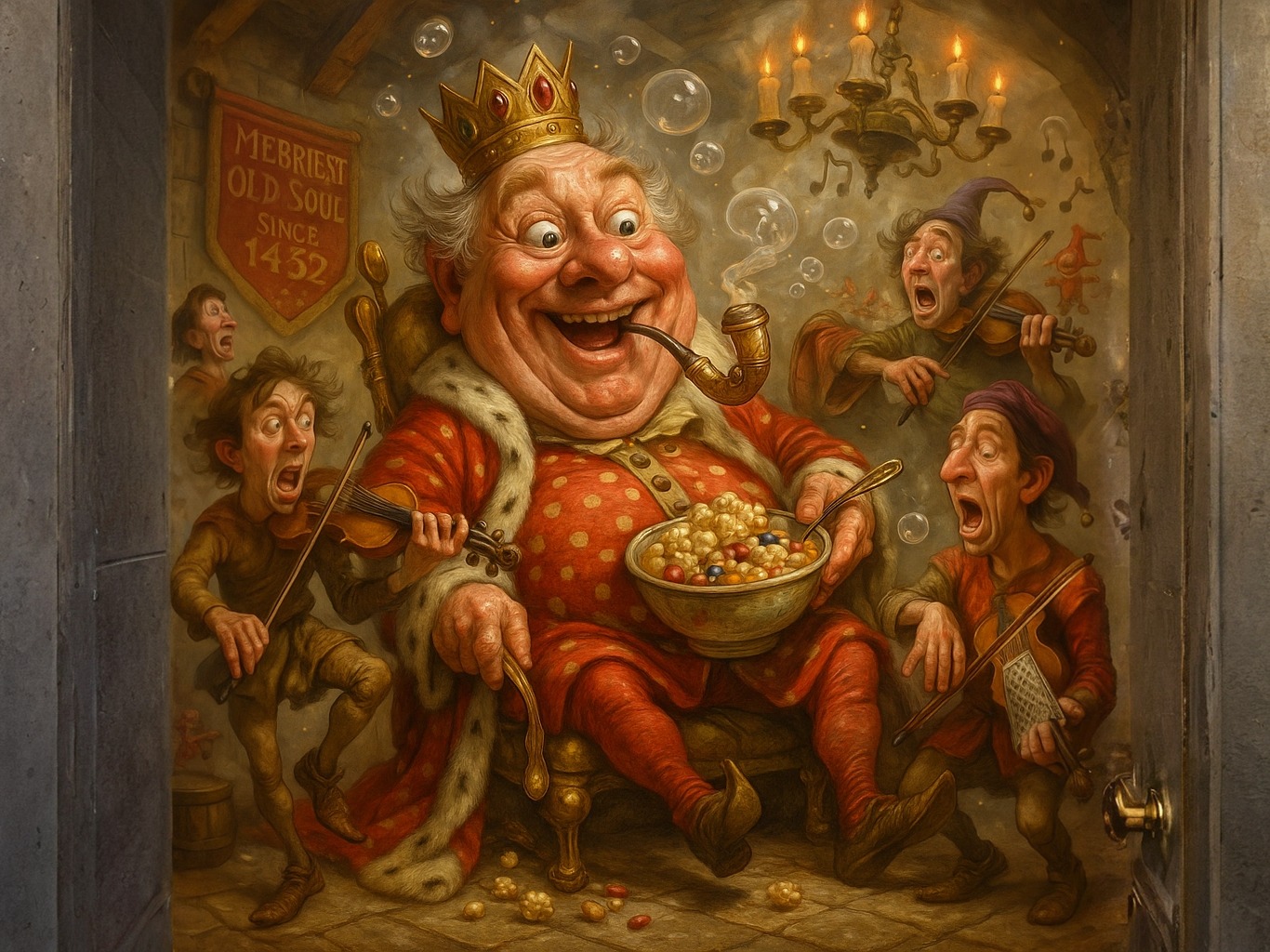
Old King Cole was a merry old soul. Yeah, because he was a king. You sit on a throne all day, smoke a pipe, drink from a bowl, and call up your fiddlers like it’s happy hour at Buckingham Palace—sure, you’re gonna be merry. Try selling women’s shoes for twelve hours, come home to Peg’s voice demanding money for bonbons, and then tell me how merry you feel. Spoiler: you don’t.
The guy’s got fiddlers on demand. Three of them. Anytime he wants. That’s his big joy—music on tap. Meanwhile, the only sound I hear on demand is Peg crunching snacks and Bud whining that he needs twenty bucks for a date that won’t happen. And Kelly? Every time she opens her mouth, it’s like a fiddle screeching off-key, only worse, because at least fiddlers stop eventually. Kelly keeps going until she gets her hands on my wallet.
And let’s not forget the pipe and the bowl. Old King Cole gets to kick back, puff away, sip something nice, and laugh while people play music for him. I get to collapse into a couch that’s sunk deeper than the Titanic while Peg hogs the remote and “accidentally” eats the last slice of pizza. My pipe is the clogged one under the sink, and my bowl is full of Frosted Flakes because dinner didn’t happen. That’s the Bundy version of royalty.
But let’s think about it—what’s the rhyme really saying? That if you’re rich enough, you can buy yourself a good time. You want music? You hire it. You want comfort? You smoke it. You want joy? You drink it. Easy. Meanwhile, guys like me—working stiffs—we get joy from not stepping on a Lego in the living room. Or from finding out the Bears only lost by 20 this week. That’s my fiddler three: disappointment, debt, and Peg.
And everybody sings this rhyme like it’s some fairy tale of happiness. “Oh, what a merry king!” Sure, because he doesn’t have to live in Chicago with two kids who think Dad’s wallet is a bottomless pit. Old King Cole’s biggest problem is choosing which tune he wants to hear. My biggest problem is choosing which bill I can pay without the lights getting shut off.
So what’s the lesson here? Don’t look at kings. Don’t look at fiddlers. Don’t look at bowls, pipes, or thrones. Look at reality. The truth is, some people get to sit on top, smoking and laughing, while the rest of us sit in a shoe store waiting for the clock to put us out of our misery.
My advice? Don’t chase being merry. Don’t expect music. Don’t expect comfort. Just accept that life’s tune is always off-key, the pipe’s always empty, and the only bowl you’re getting is the one Peg hands you after she licks it clean. That’s not royalty—that’s marriage. And believe me, no rhyme in the world makes that sound merry.
Old Mother Hubbard
A humorous rhyme about a woman who finds her cupboard bare when she seeks food for her hungry little dog.
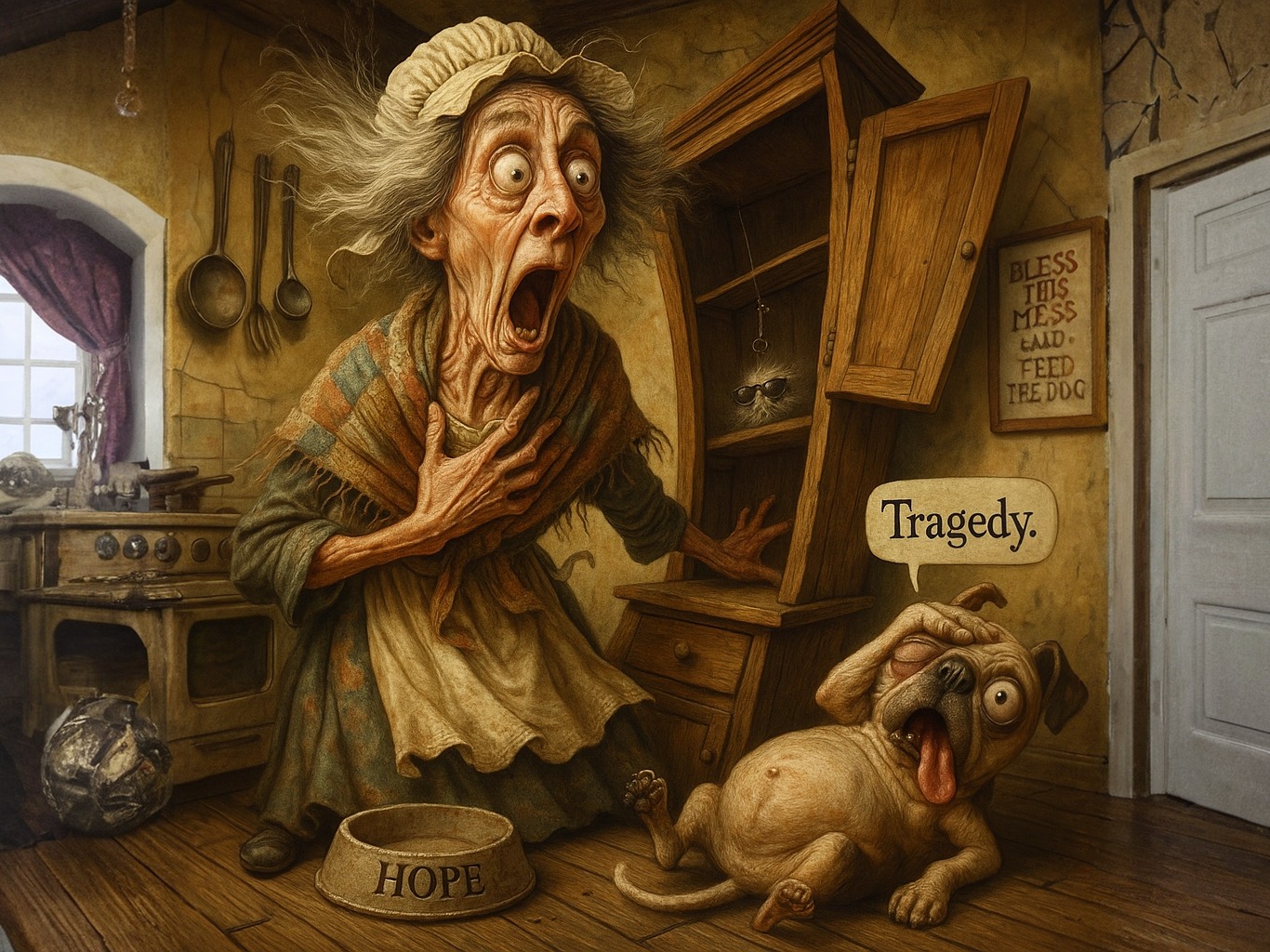
Old Mother Hubbard went to the cupboard to get her poor dog a bone. And surprise, surprise—the cupboard was bare. Welcome to my life. You think I’ve ever opened the fridge and found something I actually wanted? No. It’s always empty, unless Peg’s filled it with bonbons and freezer-burned Salisbury steak. The dog in this story gets nothing, and I can relate. I come home hungry after twelve hours of smelling sweaty feet, and the only thing waiting for me is Peg asking why I didn’t stop for milk.
Now, people laugh at this rhyme. Oh, the poor dog, no bone! Cute. But think about it. That dog represents all of us—the working stiffs. Loyal, tired, starving, hoping for a scrap. And when we finally think someone cares enough to throw us one, the cupboard’s empty. That’s marriage. That’s kids. That’s the shoe store. You keep waiting for the reward that never comes.
And you gotta love the “little dog.” At least he’s small. My mutts, Bud and Kelly, they don’t just want a bone. They want a new car, a new wardrobe, gas money, rent money, food money—you name it. And every time I tell them the cupboard’s empty, they don’t scurry away like this dog—they whine louder. Kelly bats her eyes, Bud sulks, and Peg just stares at me like it’s my fault money doesn’t magically appear.
The truth is, the cupboard’s always bare. Doesn’t matter how much you work, how much you bring home. By the time everyone else gets their share, there’s nothing left for you. And when you finally point it out, what happens? They look at you like you’re the problem. Like you should’ve filled it better. Like maybe if you sold more shoes, we wouldn’t be scraping crumbs. Sure, Peg. Because women with feet like loaves of bread are just dying to buy heels.
What’s the lesson? Don’t expect bones. Don’t expect full cupboards. Don’t expect gratitude. Because life’s just one long trip to the cupboard, finding it bare, and then getting blamed for it. That’s the cosmic joke.
My advice? Be the dog. At least dogs don’t expect much. They don’t whine about college money or demand a trip to the mall. Throw them a bone, they’re happy. No bone? They sleep. Simple. Meanwhile, guys like me—fools—we expect fairness. We expect a stocked cupboard. We expect maybe one day we’ll come home and the fridge will have a steak with our name on it. But no. The only thing with my name on it is a bill.
So here’s the Bundy truth: life’s a bare cupboard. You can dress it up, paint it, clap your hands to a rhyme, but when you open the doors, it’s still empty. And when you’re lucky enough to scrape something out, Peg’s already licked the spoon clean.
One, Two, Buckle My Shoe
A counting rhyme that teaches numbers through rhymed couplets, pairing each with simple actions like buckling shoes or shutting doors, used to amuse and educate young children.
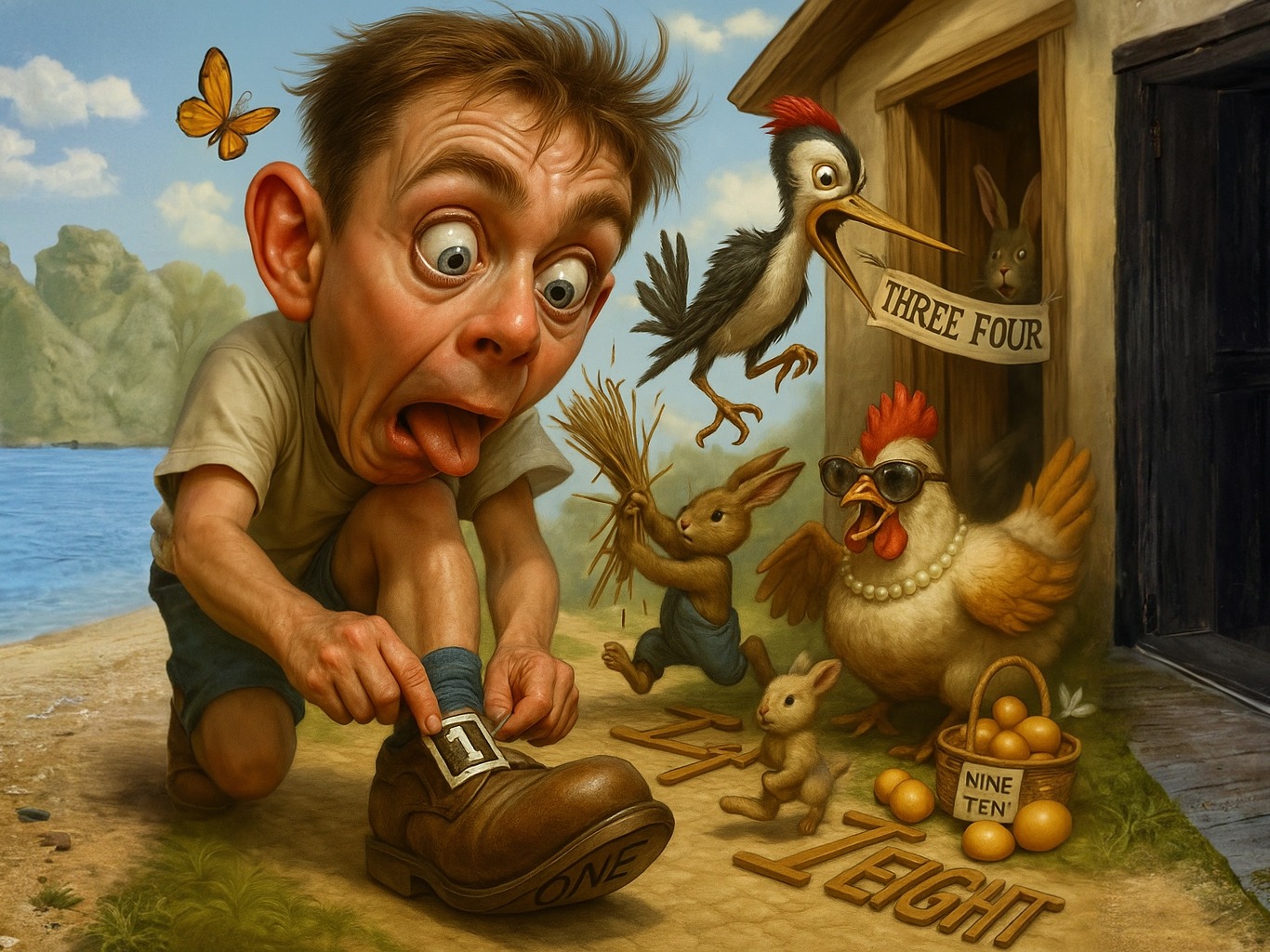
One, two, buckle my shoe. Yeah, because nothing says joy like teaching kids to count by reminding their future selves they’ll be stuck lacing up someone else’s sneakers for a living. I’ve been buckling shoes my whole miserable life, and let me tell you, it’s not a rhyme—it’s a sentence. Twelve hours at the store, hunched over, strapping Velcro onto feet that smells like roadkill in August. If life’s a game of numbers, I lost before the coin toss.
Three, four, shut the door. That’s right. Shut it. Lock it. Bolt it. And pray Peg doesn’t get in with another “brilliant” idea, like redecorating the living room in “early dumpster chic.” You know what’s behind every door in my house? Disappointment. Open one, there’s Bud asking for cab fare to take a girl home—yeah, like that’s ever happened. Open another, Kelly’s staring at a mirror, trying to figure out which side her brain’s on. And then there’s the fridge door. You open it, and surprise: Peg ate everything except my dreams, which she left rotting on the top shelf.
Five, six, pick up sticks. Sticks? Try bills. Try broken promises. Try the shattered remains of my self-respect every time a woman at the store asks me if I “have this in a slim heel.” Lady, if I had slim anything, I wouldn’t be here. My life isn’t about picking up sticks. It’s about sweeping up after everyone else while they walk out the door with my money and leave me the crumbs.
Seven, eight, lay them straight. Yeah, right. Because life’s real straight and orderly. Like Peg’s “budgeting.” Her idea of laying things straight is lining up bonbon wrappers on the couch cushion. My finances look like a Chicago pothole map—holes everywhere, no one fixing them, and I’m the guy who falls in every damn one.
Nine, ten, a big fat hen. Well, there’s finally some honesty. My whole life is one big fat hen—sitting on the couch, squawking orders, eating everything in sight, and never laying a single golden egg. And guess what? I’m the rooster who gets pecked every time he tries to leave the coop.
So what’s the big life lesson here? Maybe it’s that counting doesn’t make life better. It just reminds you how long you’ve been suffering. Kids sing it with laughter. Adults live it with regret. You buckle shoes, you shut doors, you pick up the pieces, and at the end of the day, all you’ve got is a hen squawking at you from the couch and two chicks draining your wallet.
Advice? Don’t bother counting. Numbers don’t matter. You could be Jack be Nimble or the Muffin Man. Either way, you end up broke, tired, and mocked by your own family. My system? Skip straight to zero. It saves time.
Pat-a-Cake, Pat-a-Cake, Baker’s Man
A playful clapping rhyme about baking a cake, marking it with a child’s name, and placing it in the oven.
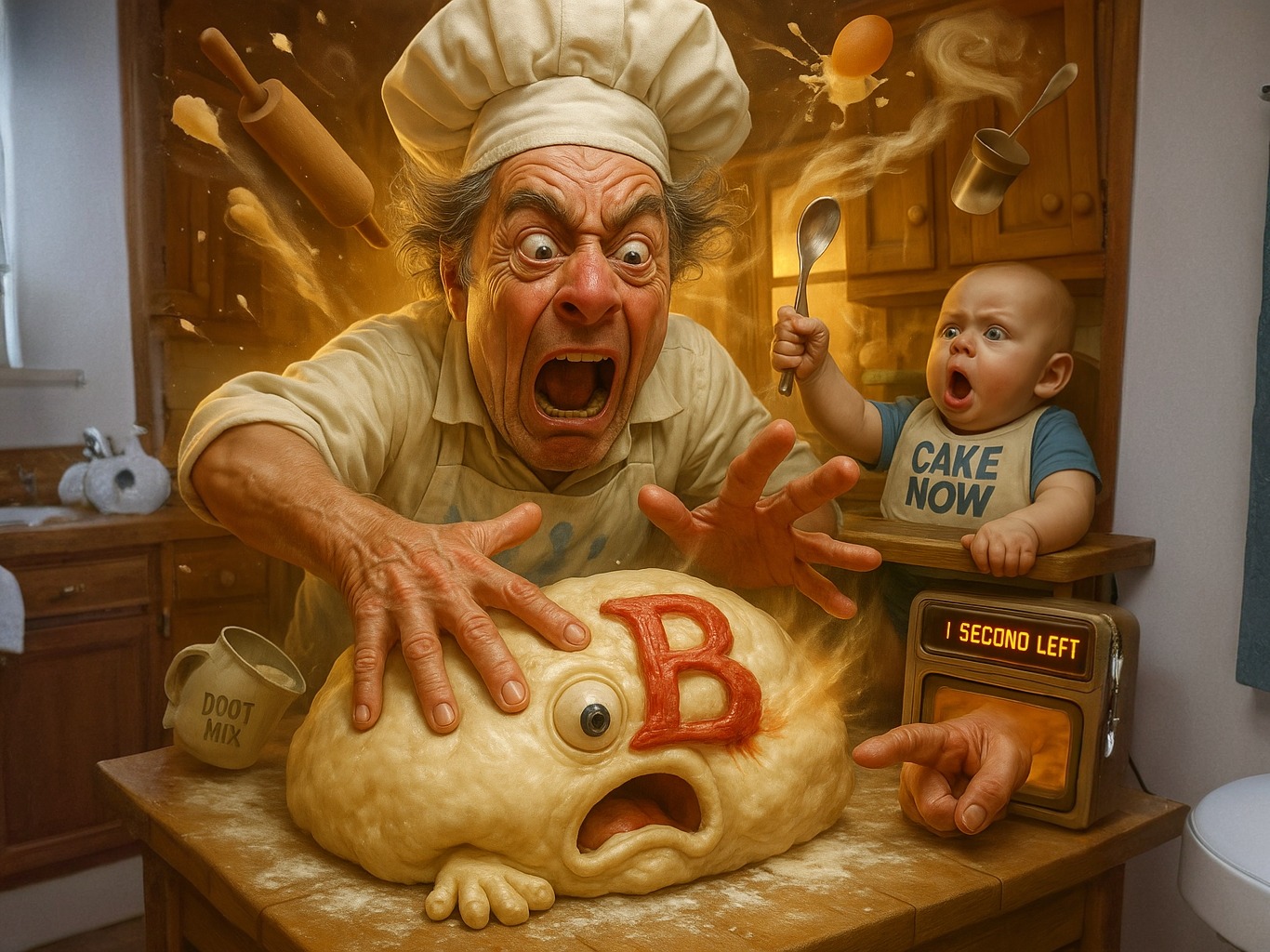
Pat-a-cake, pat-a-cake, baker’s man. Yeah, clap your hands, smile, pretend life’s all sugar and frosting. Meanwhile, I’m standing in a shoe store where the closest thing I’ve got to a cake is the smell of a customer’s feet that have been marinating in sneakers since the Reagan administration. They’re singing about baking cakes, I’m just trying to bake up enough excuses to get out of dinner with Peg.
So this baker’s man is supposed to “bake me a cake as fast as you can.” Sure, because everything in life is about someone else doing the work while you sit there clapping. That’s Peg in a nutshell. “Al, fix the sink. Al, pay the bills. Al, bring home the cake.” Meanwhile, what’s she doing? Sitting on the couch with frosting on her fingers, watching me juggle disasters like some half-dead clown.
And then you “mark it with a B.” Yeah, that’s real cute—put someone’s name on it, personalize it. You know what happens if I ever marked something with a B? Bud would think it’s his, demand money for it, and then still screw it up. If I marked it with a K, Kelly would take it, burn through it in one night, and then cry that she needs more. And if I marked it with a P for Peg? Forget it. I’d never see a crumb. She’d devour the whole thing, then lick the pan, and still complain that it wasn’t enough.
And then they say, “Put it in the oven for baby and me.” Great idea—stick it in the oven. You know what I’d put in the oven? Myself, if it meant I didn’t have to hear one more round of Bud’s begging or Kelly’s whining. At least then I’d finally be warm and toasted instead of cold and broke.
The rhyme makes it sound fun, like life’s one big bakery where everyone gets a slice. Well, here’s the truth—most of us are outside looking through the glass, watching everyone else eat cake while we scrape by on crumbs. Some of us don’t even get crumbs. Some of us get Peg, who eats the crumbs before they hit the floor. And if life does give you a cake, it’s stale, dry, and somebody’s already blown the candles out.
So what’s the lesson? Don’t wait for anyone to bake you a cake. Don’t expect it. Because if it shows up, it won’t have your name on it—it’ll have someone else’s. And by the time you get near it, it’ll already be gone. My advice? Lower your expectations. Forget cakes. Forget ovens. Forget baker’s men. You want a treat? Buy a cheap six-pack, drink it warm, and call it dessert. It won’t taste good, but at least nobody will clap their hands and steal it before you get a bite.
Peter Peter Pumpkin Eater
A short nursery rhyme about Peter, who kept his wife inside a pumpkin shell, reflecting playful nonsense verse with themes of marriage, control, and humorous absurdity.
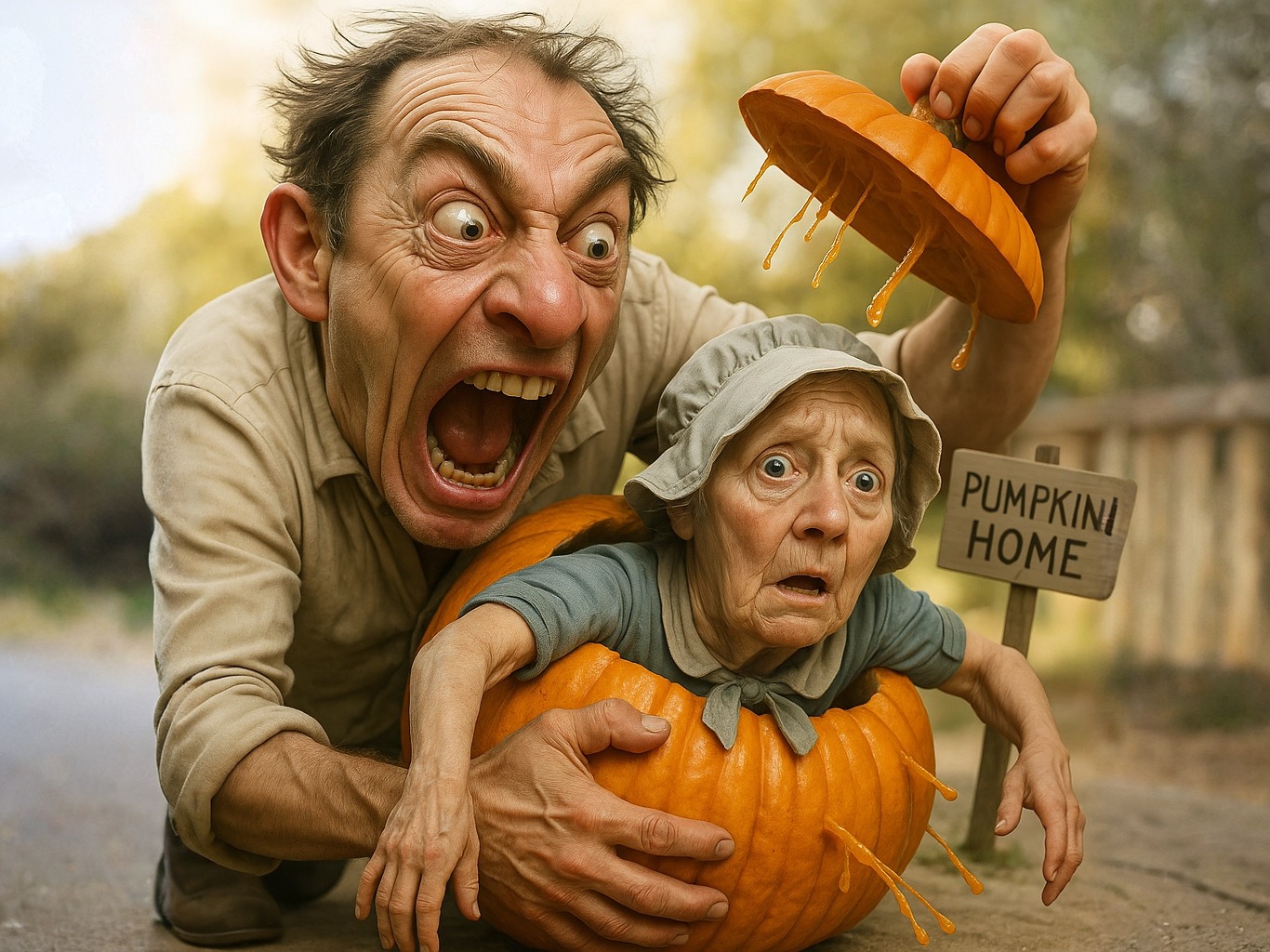
Peter, Peter, pumpkin eater. Yeah, I know the guy. He locked his wife in a pumpkin shell and somehow they called that “keeping her well.” Let me tell you, if pumpkins fixed marriages, I’d be sleeping in the produce aisle at the Jewel-Osco instead of on my couch listening to Peg complain that the remote’s too far away. A pumpkin shell. Must be nice. Peter gets to hide his wife in squash. Me? I get Peg sprawled out like she owns the living room, eating bonbons until the cushions sink deeper than my hopes for happiness.
Now, everybody laughs at this rhyme like it’s some cute little joke. “Ha-ha, Peter put his wife in a pumpkin.” You know what that is? That’s a dream. That’s a fantasy us married men only whisper about when we’re stuck in traffic thinking about all the better choices we didn’t make in life. Locking Peg in a pumpkin? That’s not absurd—it’s mercy. For me, not her. She’d probably eat her way out in two days flat anyway. Pumpkins are food to Peg the way money is to Bud—gone before you even notice it was there.
And control? That’s what they say the rhyme’s about—marriage and control. Yeah, right. Like any husband’s in control. Look at me. I can’t even control which channel’s on TV in my own house. Bud controls my wallet, Kelly controls my gas tank, Peg controls my last shred of dignity. If I tried the pumpkin trick, I’d end up stuck inside it myself, listening to Peg nag from the outside about how the shell isn’t big enough.
You want themes? How about “playful nonsense”? My whole life is playful nonsense, only without the playful part. Peter gets nonsense that rhymes. I get nonsense that moans, spends my money, and eats everything in the fridge before I get home. Marriage isn’t a pumpkin shell, it’s a prison cell. And instead of a key, I got Peg, Bud, and Kelly carving their initials into the bars.
What’s the lesson? Don’t get married. Or if you do, don’t marry someone who thinks a home-cooked meal is dialing Pizza Hut. If you have kids, don’t expect gratitude. Expect handouts. Every Bundy tradition starts with me reaching into my empty pockets and ends with them stomping off because I didn’t pull a rabbit out of a hat. Life teaches you numbers, rhymes, and futility, all wrapped in one. And if you’re lucky, you get a rhyme written about your misery.
So here’s my advice: Be like Peter. Build yourself a pumpkin, climb inside, and never come out. It’s quieter in there. No Peg, no kids, no shoes, no women screaming that a size ten feels “snug.” Just you, the seeds, and silence. And trust me, silence is sweeter than any muffin man, mulberry bush, or candlestick jumper. The world laughs at Peter, but I salute him. At least he figured out what most of us never do—you can’t escape marriage, but you can bury it in produce.
Polly Put the Kettle On
A playful rhyme in which Polly sets the kettle for tea, but Sukey later takes it off when the boys intrude.
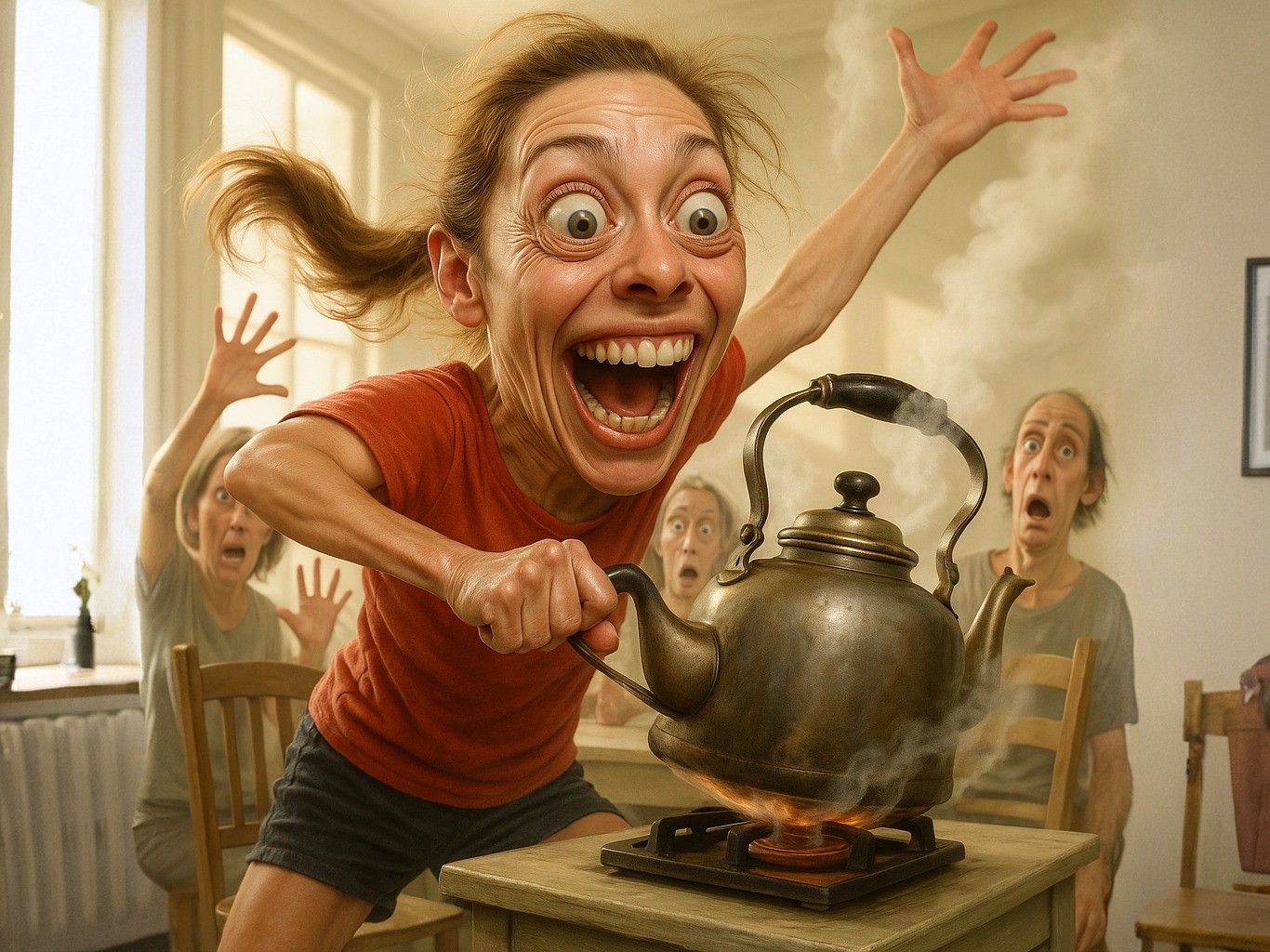
Polly Put the Kettle On. Great. Another rhyme about women pretending to do something useful while the men get shoved aside. Polly puts the kettle on, Sukey takes it off, and in the middle? The boys get told to leave like they’re the problem. Sound familiar? That’s my whole life. Every time I try to sit down, Peg takes the remote, Kelly takes my money, and Bud takes my last ounce of patience. Meanwhile, I’m the one getting shoved out of my own living room like an unwelcome guest.
You ever notice how easy it is for them? Polly doesn’t actually make the tea. She just plops the kettle on the stove and acts like she’s Queen of England. That’s Peg. She microwaves a TV dinner and then tells everyone she “cooked.” Meanwhile, I’ve worked twelve hours, got screamed at by a woman with corns the size of golf balls, and my dinner is a half-warm Salisbury steak covered in sadness.
Then Sukey takes the kettle off. Big accomplishment. She takes something someone else started and calls it work. That’s Kelly. Spends her whole life taking stuff off—clothes, boyfriends, brain cells—and still acts like she deserves a medal. Polly and Sukey, Peg and Kelly—it’s like the rhyme knew my life before I did.
And then the kicker: “They all want the boys to go away.” Of course they do. Boys just get in the way of their tea parties and bonbon binges. That’s me at home. The second I walk in, I’m in the way. “Al, move. You’re blocking the TV.” “Al, stop breathing so loud.” “Al, give me money for gas.” I could vanish tomorrow and the only thing they’d notice is the bills stopped getting paid.
But here’s the real truth in this rhyme: the kettle never boils. Think about it. They put it on, take it off, put it on, take it off. Nothing ever gets finished. That’s marriage. That’s life. You think you’re working toward something, and then boom—Peg yanks the kettle off just as it starts to bubble. I’ve been bubbling for thirty years, and let me tell you, I’m one pot away from exploding.
So what’s the lesson? Life’s not about tea or kettles. It’s about being told to sit down, shut up, and get out of the way while someone else pretends to work and you foot the bill. My advice? Don’t wait for the tea. Don’t expect the kettle to boil. Just grab a six-pack, find your couch crater, and let Polly and Sukey play house all they want. Because in the end, no matter what they put on or take off, the only thing you’re getting served is more misery—lukewarm, and without sugar.
Ring a Ring o’ Roses
A circle game rhyme often associated with illness, where children dance in a ring before falling down together.

Ring a Ring o’ Roses. A song about kids holding hands, spinning in circles, laughing like life’s a carnival ride, then falling flat on their faces. Sounds like marriage. You start off spinning, all dizzy with excitement, and then twenty years later, you’re face-first in the dirt, your wallet empty, your pride gone, and Peg yelling at you because the roses you bought last year died quicker than my dreams.
They say it’s about the plague. Makes sense. Nothing says childhood fun like a disease that wipes out half the population. Kind of like how Peg wipes out half my paycheck before I even make it home from the shoe store. A ring of roses? Yeah, more like a ring of bills, each one choking the life out of me. I don’t dance in it, I drown in it.
Then there’s “pocket full of posies.” Flowers in the pocket to cover the stench of death. You know what’s in my pocket? Lint. Maybe a coupon for half-off arch supports if I’m lucky. And death? Oh, it’s there. Every time I step into the shoe store, I feel it breathing down my neck like one of those fat customers who insists they’re a size six when I’m staring at their foot that looks like it belongs in a canoe.
“Ashes, ashes, we all fall down.” Yeah, no kidding. I’ve been falling down since the day I said, “I do.” Fell down the steps of responsibility, rolled into a pit of bills, and landed flat on my back under Peg, asking for money, Bud, asking for gas, and Kelly, asking for brain cells she’ll never get. Falling down? I’m practically living in the basement of life, and the landlord won’t even fix the light bulb.
And these kids—they sing it, they giggle, they collapse like it’s all just a game. That’s because they don’t know yet. They haven’t met Peg. They haven’t worked a dead-end job where the highlight of your day is telling a sweaty broad her feet smell too bad to try on sandals. They haven’t had kids who see you not as a father, but as a busted ATM. Wait until they do. Then the song won’t sound so funny. It’ll sound like prophecy.
So what’s the lesson? Life’s a circle. You run around, thinking you’re going somewhere, holding hands with people who just drag you down, and in the end, you all collapse in the dirt together. The trick isn’t to avoid falling—you can’t. The trick is to laugh when you hit the ground, because trust me, everyone else already is. And if you’re real lucky, maybe you land face-first, so you don’t have to watch Peg’s smile while you do.
Click here to go to Grimm Prospects – Episode III
